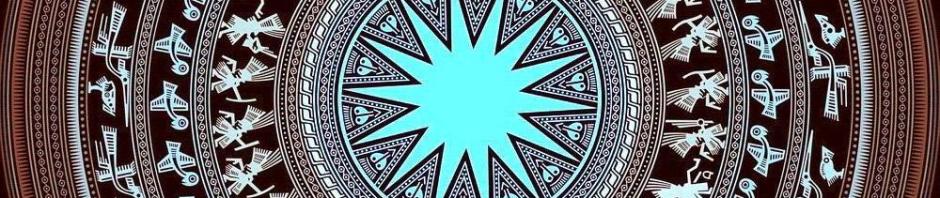
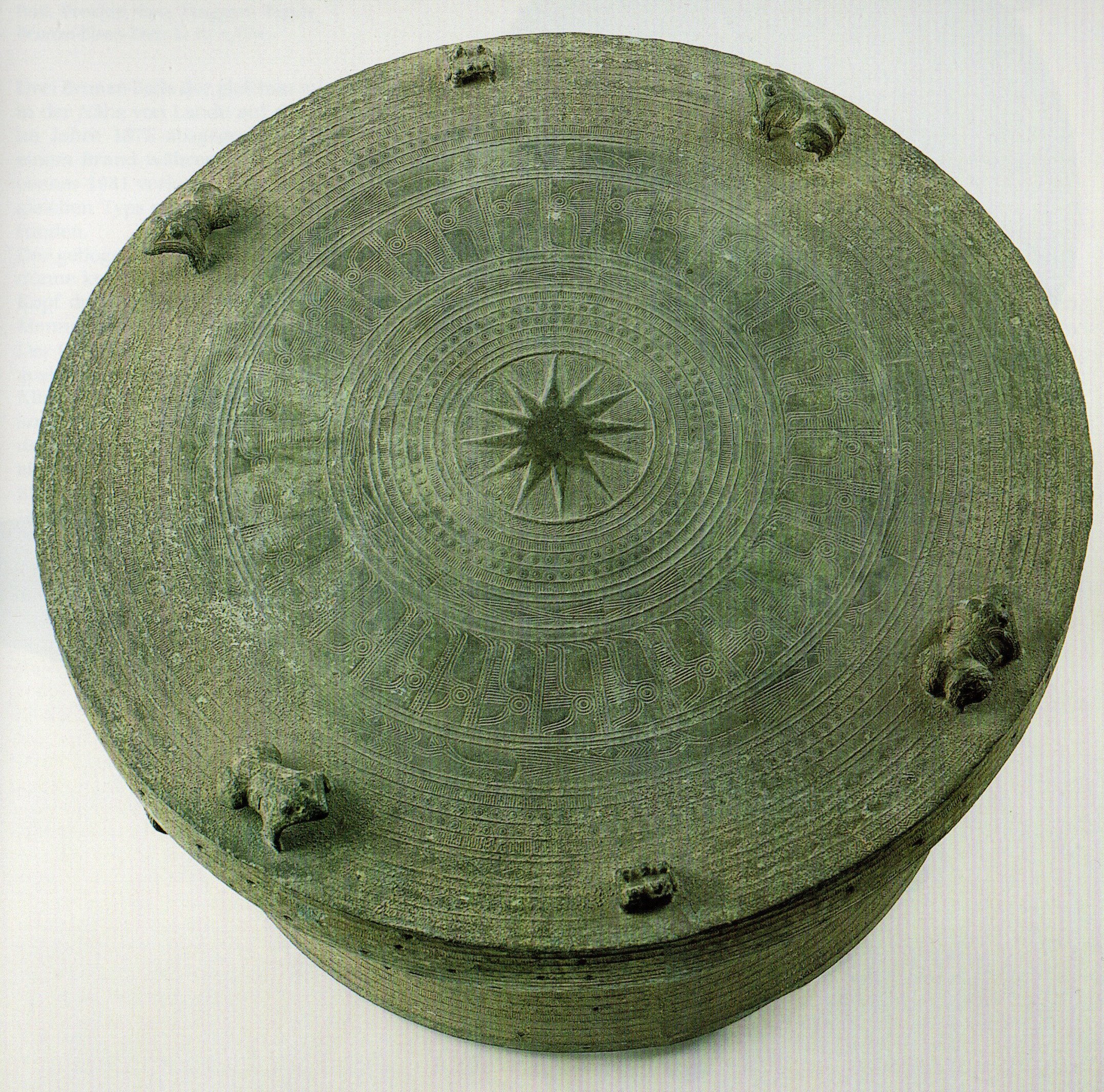
The Đông Sơn drum is a type of ancient bronze drum created by the Đông Sơn culture that existed in north Vietnam. The drums were produced from about 600 BCE or earlier until the third century; they are one of the culture’s most astounding examples of ancient metalworking. The drums, cast in bronze using the lost-wax method are up to a meter in height and weigh up to 100 kilograms (220 lbs). Đông Sơn drums were apparently both musical instruments and objects of worship.

They are decorated with geometric patterns, scenes of daily life, agriculture, war, animals and birds, and boats. The latter alludes to the importance of trade to the culture in which they were made, and the drums themselves became objects of trade and heirloom items
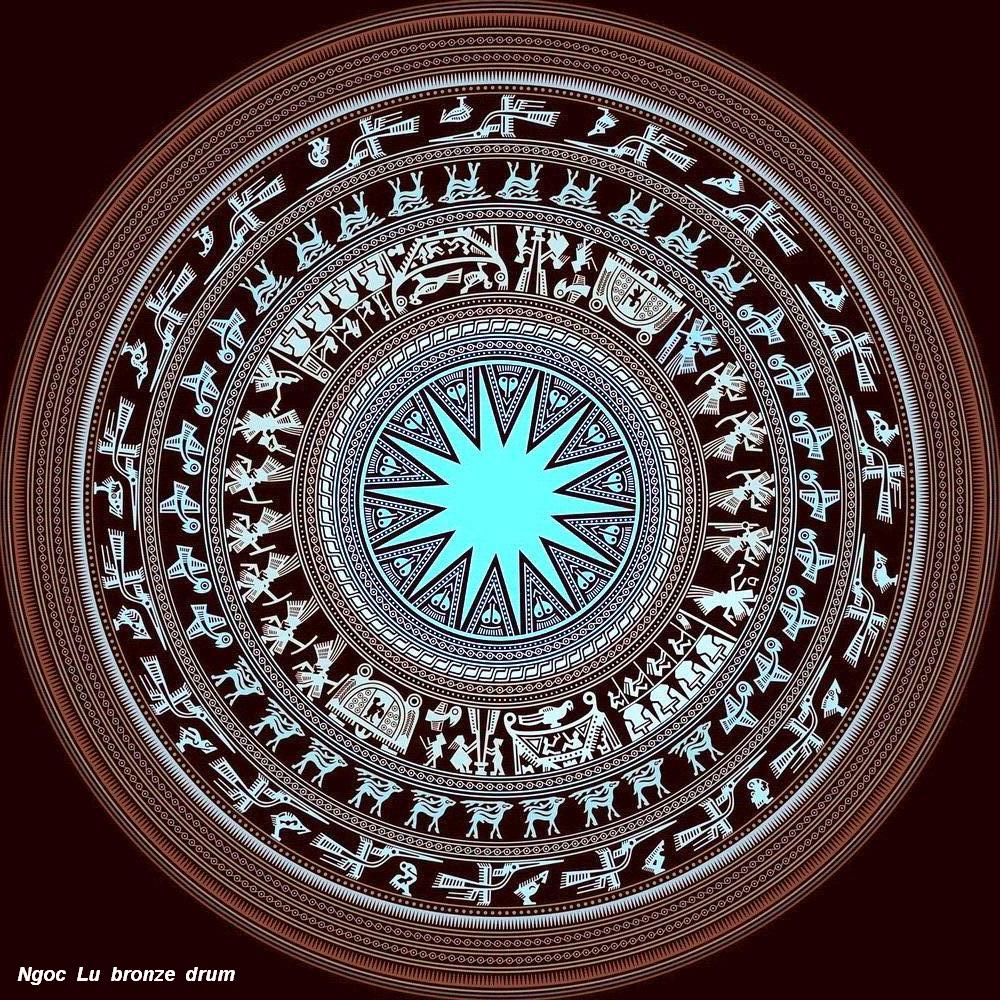
The Dongson drums are characterised by the starburst in the middle which is then surrounded by birds, animals and people in a characteristic style. More than 200 have been found, across an area from Malaysia to Indonesia to Southern China. The discovery of Đông Sơn drums in New Guinea, is seen as proof of trade connections – spanning at least the past thousand years – between this region and the societies of Java, Vietnam and China.

The largest Dong Son type drum found in Indonesia is the Makalamau Drum which was discovered on the island of Sangeang off the island of Sumbawa.


The Makalamau Drum is 122 centimetres in diameter and in the centre is a twelve-pointed star encircled by twelve concentric bands ornamented with geometric or figurative designs. The body of the drum is decorated with scenes of elephants and horses led by human figures, as well as fish, birds and boats, The outermost band is ornamented with four sculptured frogs paced equidistant around the rim. It is believed that in the cosmology of the drum makers, the star represents the sun and the frogs the rain. The sun and the rain, induced by the thunderous sound produced when beating the hollow brass drum, were necessary to yield crops and sustain life.



 spiceislandsblog
The drums are indeed testimony to trade routs way before European forays in the region. Thanks Ian.