
I had written an Authors Note to go in the book, but somehow in the editing process it fell off the back of the truck. However, I was able to find it and thought it should go in the Blog.
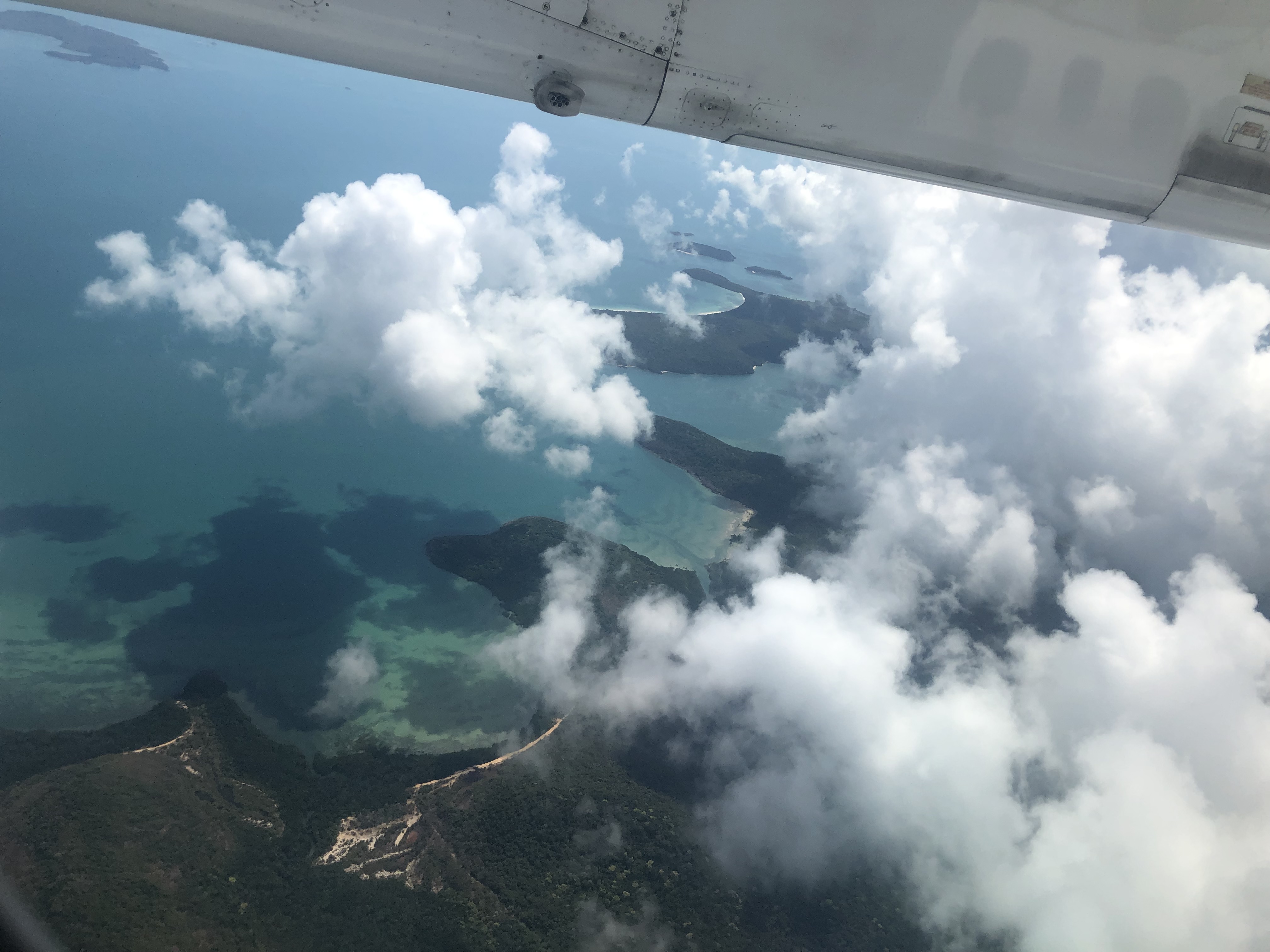
As the flight from Cairns descends towards Horn Island, I have my first view of the Torres Strait. Below me lies the Albany Passage, Albany Island, Adolphus Island, and the Adolphus Channel, with the Quetta Rock lurking somewhere beneath its surface and in the far distance is a smudge of Murray Island on the horizon. After years of research for this book, I have a mental map of the Torres Strait, which now has to fit with reality. On the other side of the plane, the view would be of the Endeavour Strait and British Royalty, which is the Cape of the Duke of York and the Island of the Prince of Wales.
I had half a day to walk around the township of Thursday Island. Unfortunately, it was the wrong half of the wrong day, as nothing much happens on Sunday on Thursday. Even the pubs are shut until midday. It is no surprise that it was called ‘Thirsty Island’, as the pubs are the best place to find cool air and cold drinks, and at midday, I am standing at the door of the most northern pub in Australia waiting for it to open.
In the afternoon, we have a bus tour of the island, the port, the main street, the church (today is Sunday, so tourists can’t go inside), the fishing beach, and the cemetery. This heritage-listed cemetery also contains graves of the Japanese, Chinese, Malay and Filipinos who populated Thursday Island when diving for pearl shell was the major industry. (today is Sunday, so tourists can’t go inside) Then, our tour takes us to the island’s north side and the fort at the high point. From the fort, there is a magnificent view of the surrounding islands, including Wednesday and Friday. On this day of brilliant sunshine, calm seas and no wind, it is hard to believe this is one of the world’s most dangerous waterways.

I joined a cruise of the islands, and our next port of call is Badu Island. Visitors should know that it is required to submit a written application requesting permission to visit the islands to the Torres Strait Islands Regional Community beforehand. In 1904, Papuan Industries Limited was founded on Badu to enable the islanders to operate their own pearl luggers at the peak of the pearl shell industry in the late 1950s. The Badu fleet of 13 boats employed a workforce of 200 men, and they were some of the last of the pearl divers employed in that industry. Turtle, dugong and rock lobster hunting are the main occupations of Badu men; however, only at certain times of the year and depending on the mating and hatching seasons.
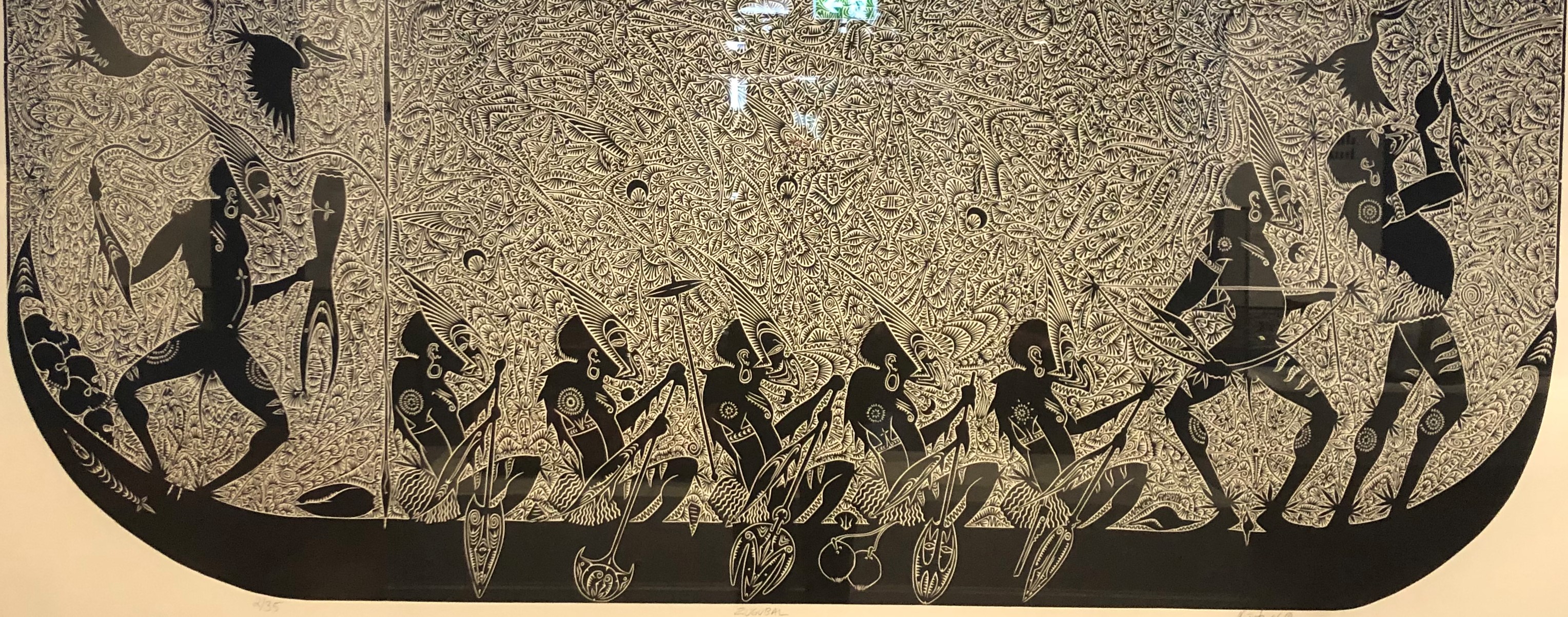
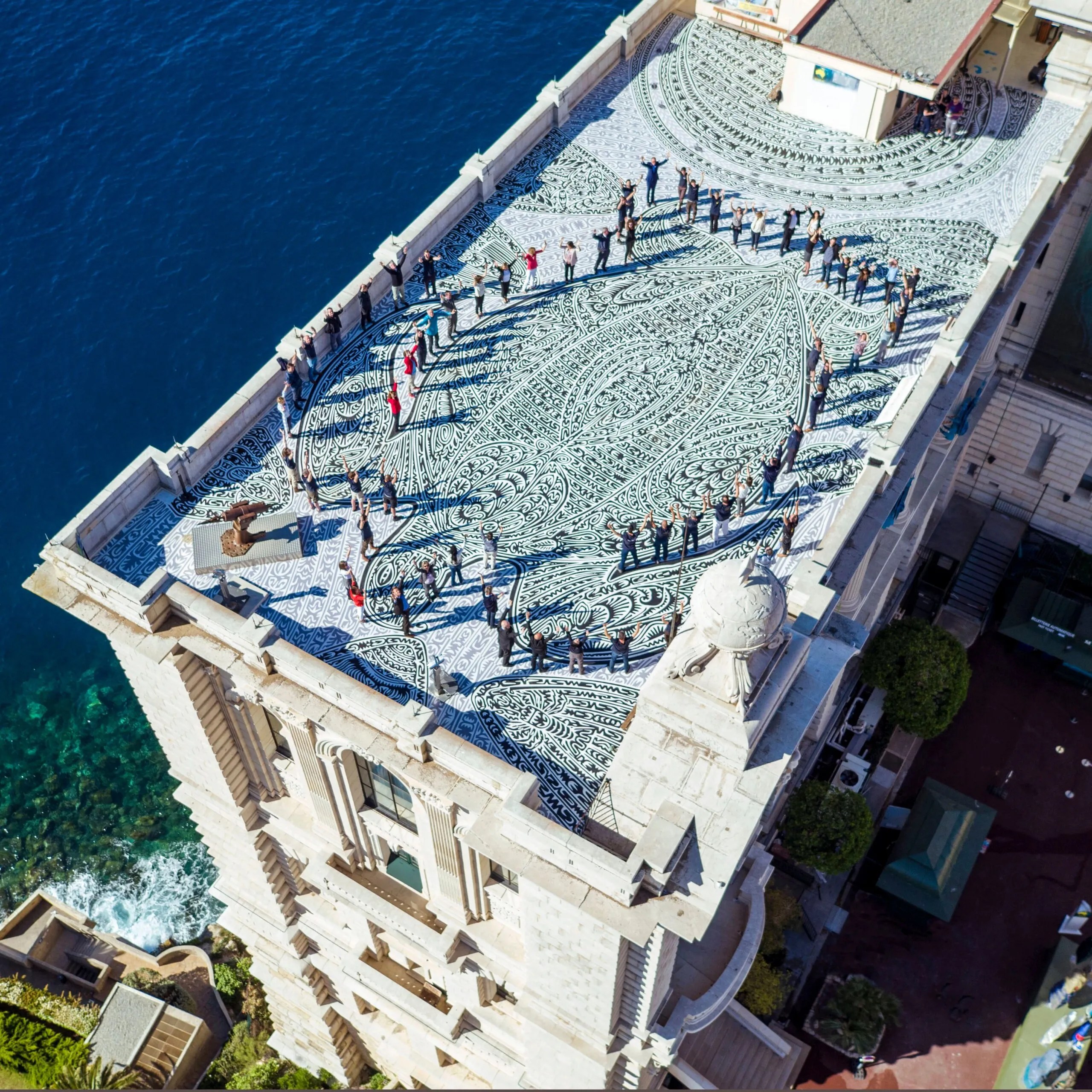
In April 2016, Alick Tipoti was a featured artist in the exhibition of Australia, Oceania Arts by Peoples of the Sea, held at the Oceanographic Museum in Monaco. A stunning feature of the exhibition was a large-scale graphic of his Mating Turtles artwork, which covered the entire museum rooftop. Alick Tipoti, Laurie Nona and Joseph Au were pivotal, together with whole community support, in establishing the Badu Art Centre. Badu artists produce works using various media, including printmaking, etching, jewellery, textiles and carving, reflecting their strong cultural traditions and links to the sea.
From Badu Island, we sailed to Cape York to do the obligatory scramble over the rocks at the Tip, at the northernmost point of the Australian Mainland. There were also some ‘overlanders’ who had travelled all the way up in four-wheel drive vehicles and were suitably covered in mud and dust. I would have liked to have heard their comments about the effete ‘cruisers’ who were there celebrating by drinking complimentary champagne. From Cape York, we anchored in the Albany Channel, across from the former colonial settlement of Somerset; however, on this day, no currents were ripping through the Channel and no problem getting an anchorage. I decided to climb to the top of the island, which provided a magnificent view over the Adolphus Channel and the submerged Quetta Rock to the flat-topped Mount Adolphus Island.

When I told someone I was writing a book about the Torres Strait, they told me I should listen to the music of the late Seaman Dan. It took me a while to get there, but what an amazing man. Like many in the Strait, he has a multicultural ancestry with African-American, Polynesian and Melanesian ancestors from Jamaica, the Loyalty Islands, and Samoa. In his biography, there is a wonderful photo taken in the 1920s of young Thursday Island musicians posing with their guitars, ukeleles and banjos, young men with the names of Baddah Bin Gapore, Ketchell Anno, Manji Ah Boo, Johannes Tatipata, Jaffa Ah Mat, Solomon Toulasik and Jeffrey Doolah. Names that indicate origins all the way from Southeast Asia to the Torres Strait to the Pacific Ocean, and they would have had a repertoire of music from all those places.
The young Henry Gibson Dan was born on Thursday Island in 1929, and at the age of nine, he moved with his mother to Coen and later to Cairns. After the war, at the age of sixteen, he moved back to Thursday Island, where he started working on the pearling luggers, which he continued on and off for the next forty years as a crewman, engineer, stern tender, diver and skipper while acquiring the name of Seaman Dan. Writing, singing and playing music with his friends was a hobby, a second income and a social life, as they played at house parties, barbecues, community halls, hotels and pubs. Amazingly, at the age of seventy, he embarked on a career as a professional musician and wrote and recorded more than sixty songs and over eight albums. With famous titles such as ‘Welcome to the Torres Strait’, ‘Follow the Sun’, ‘TI Blues’, ‘Old TI’ and ‘Forty Fathoms’ which led to him performing across Australia and Overseas, as well as being nominated for multiple ARIA Awards. His song ‘Isles of the Torres Strait’ best describes Ngurapai (Horn Island) and the nearby islands of the Torres Strait:
Between the Coral and the Arafura Sea/ Are the isles of the Torres Strait/ These are the islands of magic/ Where skies of blue are calling me/ Where balmy air and tropical moonlight/ Shines on the golden sands of Ngurapai
Gliding along the sands of the blue waters/ Pointing our bow to Zuna Isle/ Then moving fast to Muralag/ With flooding tide we’re off to Gialag/ Sailing on to Keriri/ Then we go by Waiben too/ Travelling with the ebbing tide/ We sail home again for Ngurapai
Heading out from Horn Island/ Pointing our bow to Entrance Isle/ Then moving fast to Prince of Wales/ With flooding tide we’re off to Friday Isle/ Sailing on to Hammond Island/ Then we sail by TI too/ Between the Coral and the Arafura seas/ Are the islands of the Torres Strait/ Are my islands of the Torres Strait.
(Seaman Dan)





 spiceislandsblog
I’ve just finished Dangerous Passage by renowned Malay Archipelago specialist, Ian Burnet. The navigation of Torres Strait is an underestimated marine gateway between the Pacific and Indian Oceans whose story needs to be told. We learnt that this tangle of reef systems has protected the East Australian coast from European prying eyes for over two centuries. As with Burnet’s other books, this was meticulously researched and his narrative style is engaging with a free flowing storyline. A much need book for all lovers of Australian history.