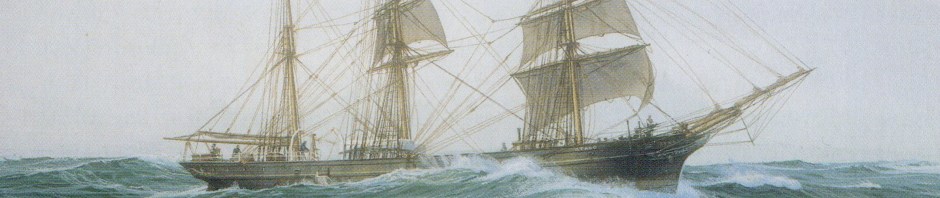
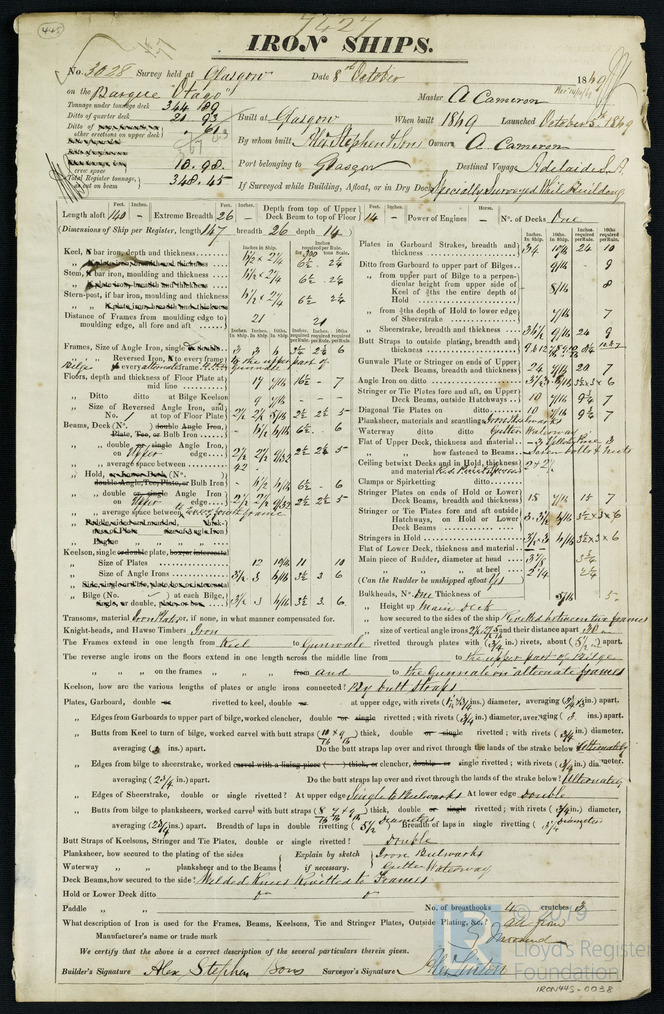
The Otago was a three-masted iron barque of 348 tons built in Glasgow in 1869 for Captain Angus Cameron, who sailed her to Port Chalmers, Otago, New Zealand in 1871. This was her maiden voyage, and she reached Port Chalmers in 88 days, which was something of a record. Captain Cameron was frustrated by the weather conditions while trying to enter Port Chalmers and had to ask for tugboat assistance, so he was unable to complete the voyage under sail.
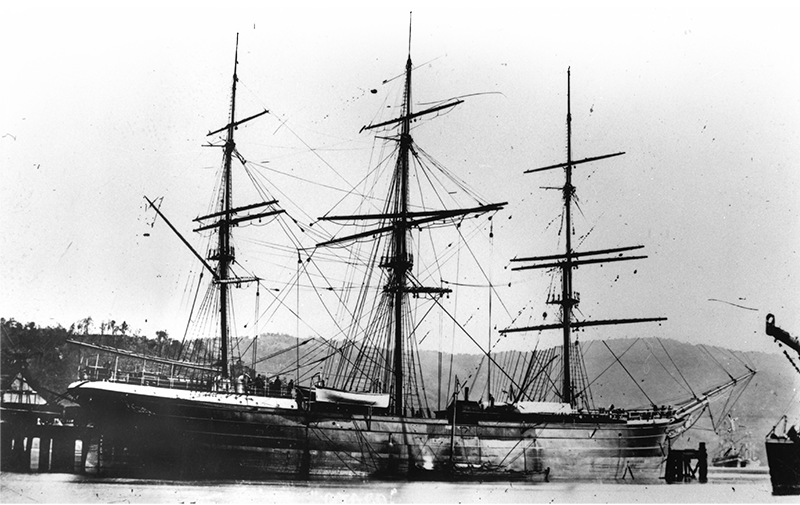
The Otago sailed to Australia, where she was purchased in 1872 by three Adelaide businessmen. From 1872 until 1888 the Otago traded between Australia/New Zealand and Great Britain.
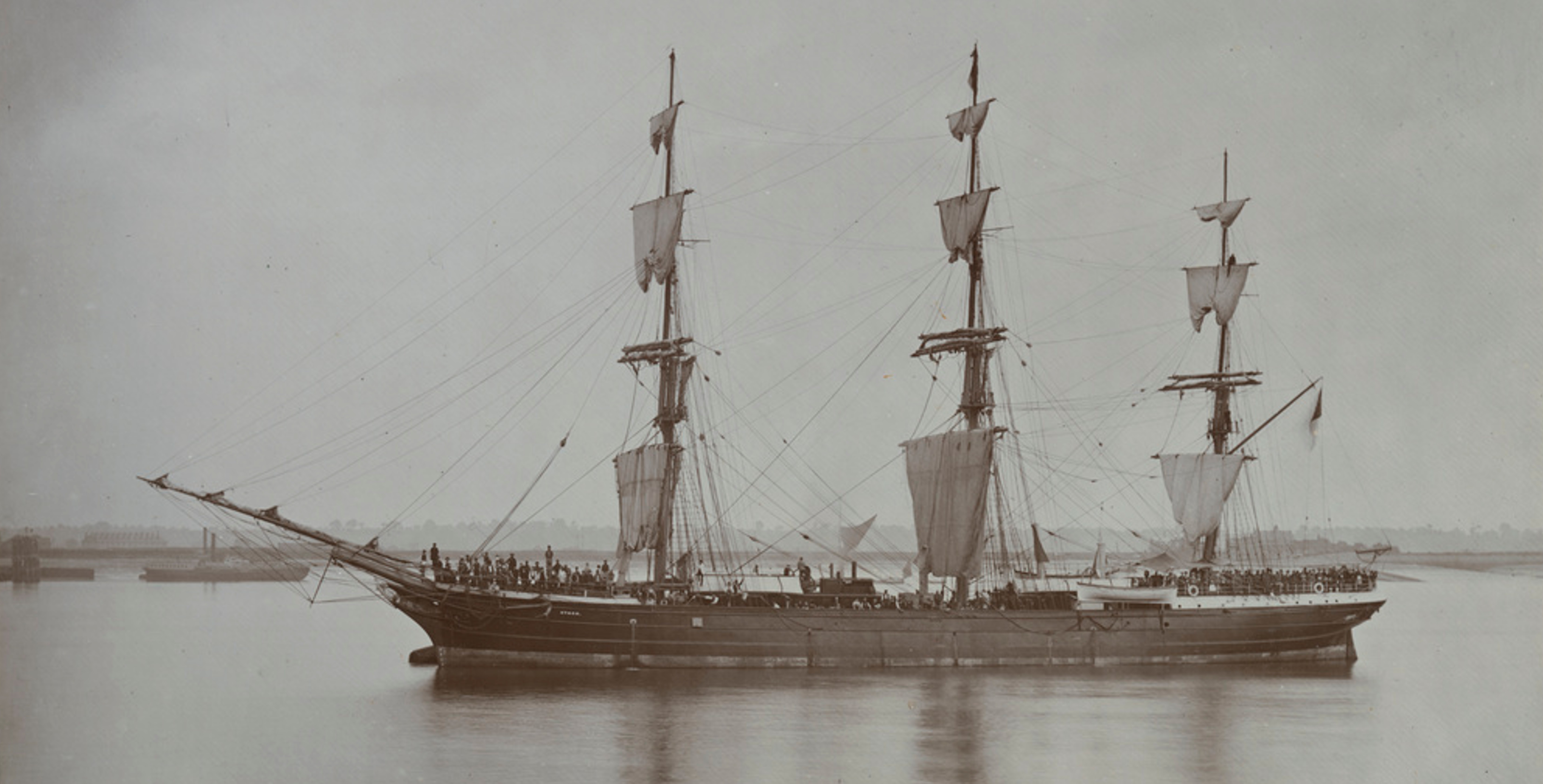
In 1888, the Otago was chartered to transport a cargo of coal from Newcastle (NSW) to Haiphong in Vietnam. She then sailed to Hong Kong and to Bangkok to collect a cargo of teak logs for Sydney. The captain died enroute to Bangkok. According to the First Mate, he had spent the last few weeks of his life in his cabin, not paying the least attention to his ship, playing his violin day and night. One evening, feeling very ill, he had thrown his violin overboard, died, and the following day was buried at sea. The Mate then sailed the Otago for Bangkok to report the events. It was unlikely that there would be a new master sitting in Bangkok, and no doubt the mate had hoped that the owners would simply confirm his acting command for the voyage back to Australia.
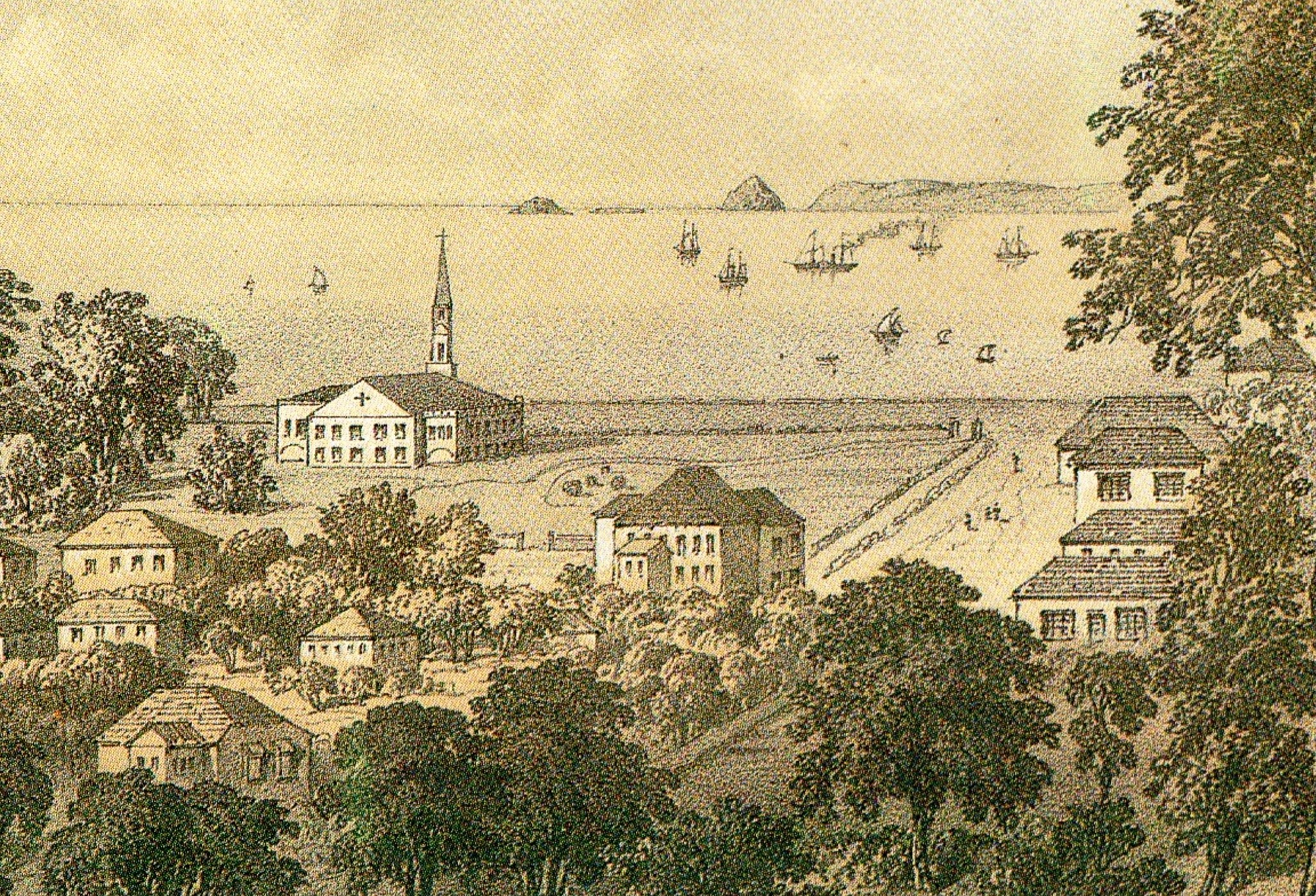
However, Joseph Conrad had his Masters ticket and was in Singapore waiting for a berth back to England. A message reached him at the Sailor’s Home that the Harbour Master would like to see him urgently. Konrad knew the message must relate to a ship and as he made his way along the waterfront he scanned the Singapore Roads looking for which ship it might be. The Harbour Master explained that the master of a British ship had died enroute to Bangkok and the Consul-General there had cabled to him a request for a competent man to be sent to take command. He gave Konrad an agreement which read:
This is to inform you that you are required to proceed in the S.S. Melita to Bangkok and you will report your arrival to the British Consul and produce this memorandum which will show that I have engaged you to be the Master of the Otago.
To be offered the command of his first ship was a source of intense excitement and is lyrically evoked in Conrad’s writing: A ship! My ship! She was mine, more absolutely mine for possession and care than anything in the world; an object of responsibility and devotion. She was there waiting for me, spell-bound, unable to move, to live, to get out into the world (till I came), like an enchanted princess. Her call had come to me as if from the clouds. I had never suspected her existence. I didn’t know how she looked, I had barely heard her name, and yet we were indissolubly united for a certain portion of our future, to sink or swim together! Conrad wrote of his first experiences as captain of the Otago in his books ‘The Shadow Line’ and ‘The Secret Sharer’.
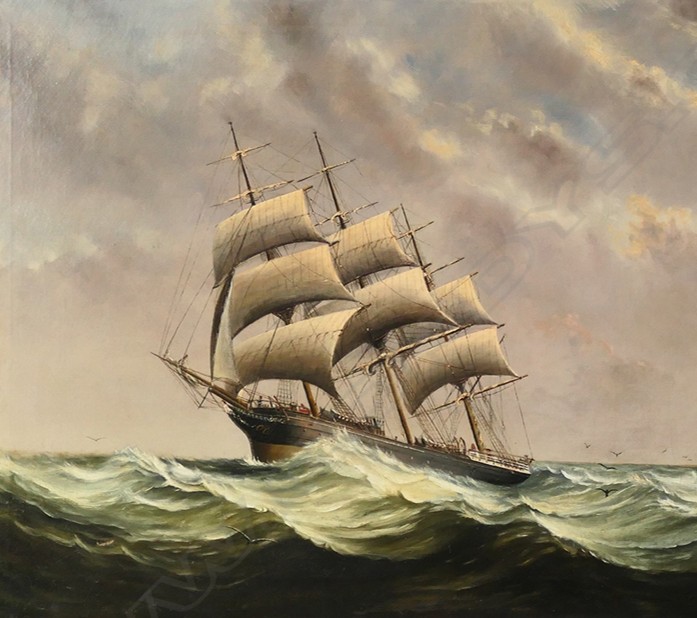
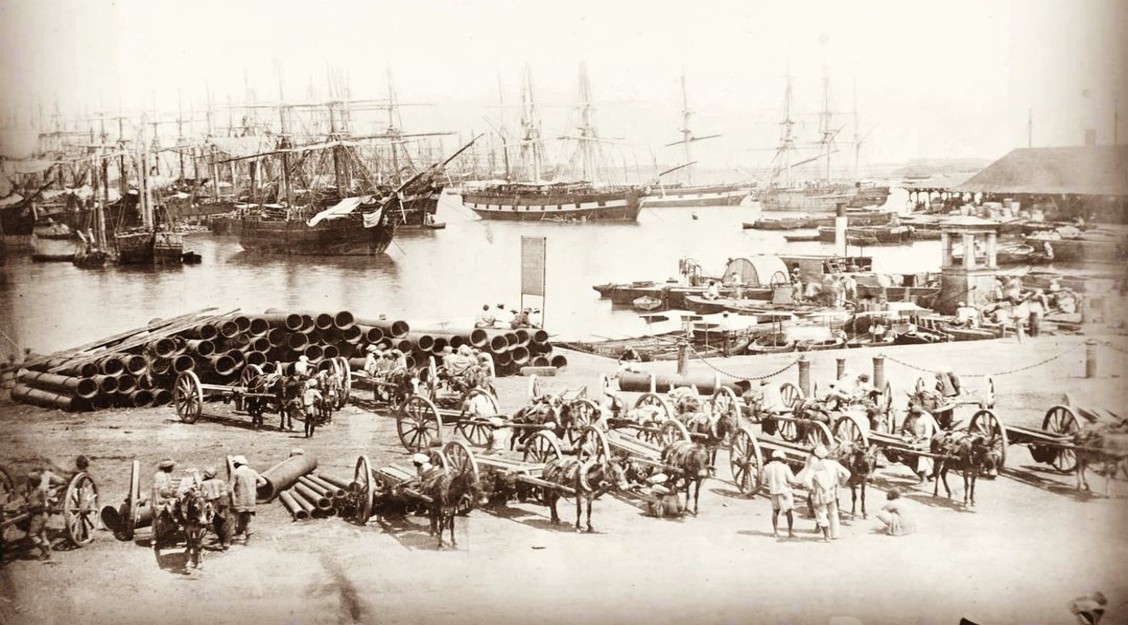
In 1888-1889, Conrad sailed the Otago from Bangkok to Sydney with its cargo of teak logs, then from Sydney to Mauritius via the Torres Strait for a cargo of sugar, and then left the Otago in Adelaide to return to Britain.
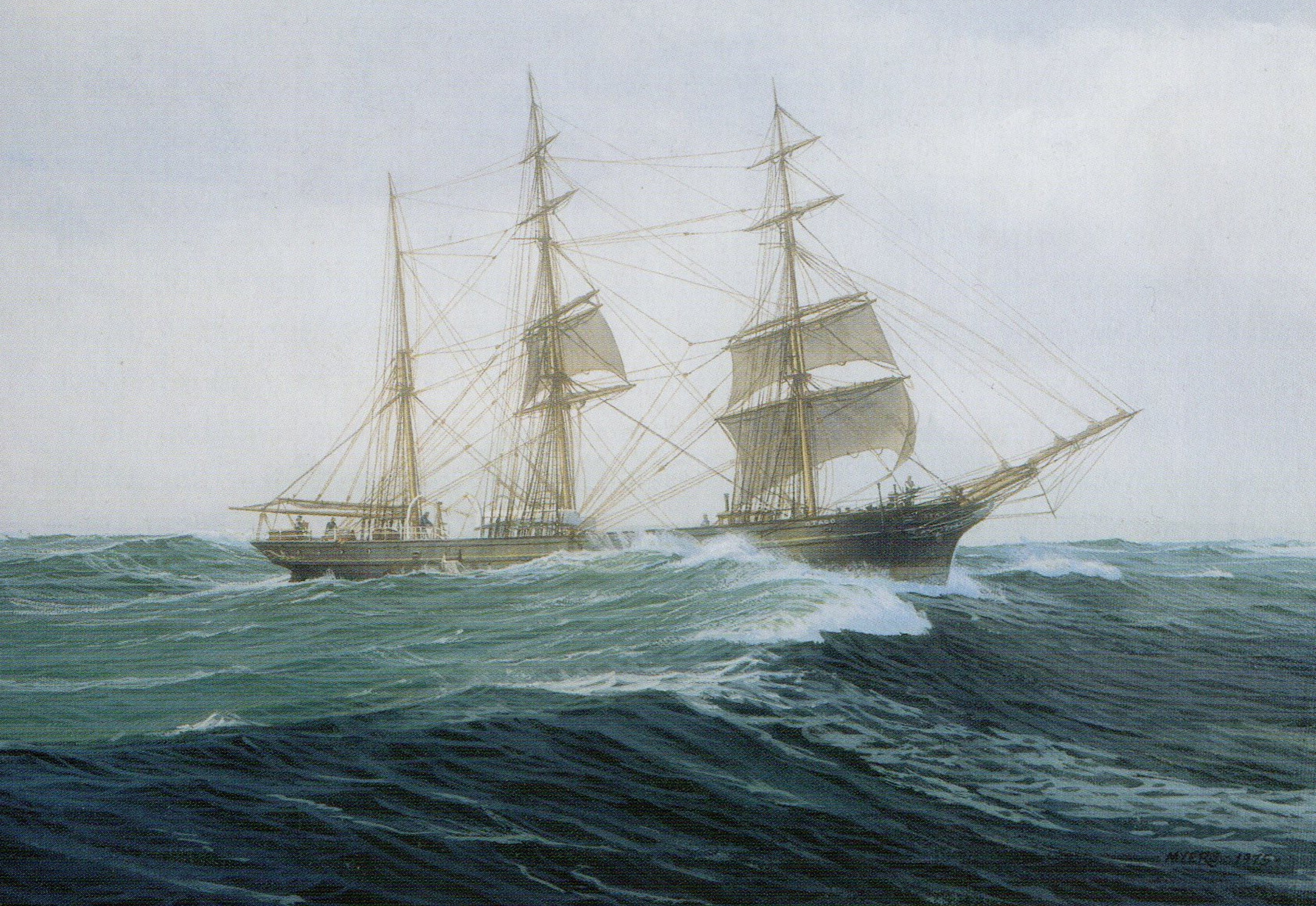
Sailing the ‘Roaring Forties’ in the Otago was challenging, yet Conrad describes it as an invigorating experience with the wind roaring and the spray flying: It was a hard, long gale, grey clouds and green sea, heavy weather undoubtedly, but still what a sailor would call manageable. Under two lower topsails and a reefed foresail the barque seemed to race with a long steady sea that did not becalm her in the troughs. The solemn thundering combers caught up with her from astern, passed with a fierce boiling up of foam level with the bulwarks, swept on ahead with a swish and a roar; and the little vessel, dipping her jib-boom into the tumbling froth, would go running in a smooth glassy hollow, a deep valley between two ridges of sea, hiding the horizon ahead and astern.
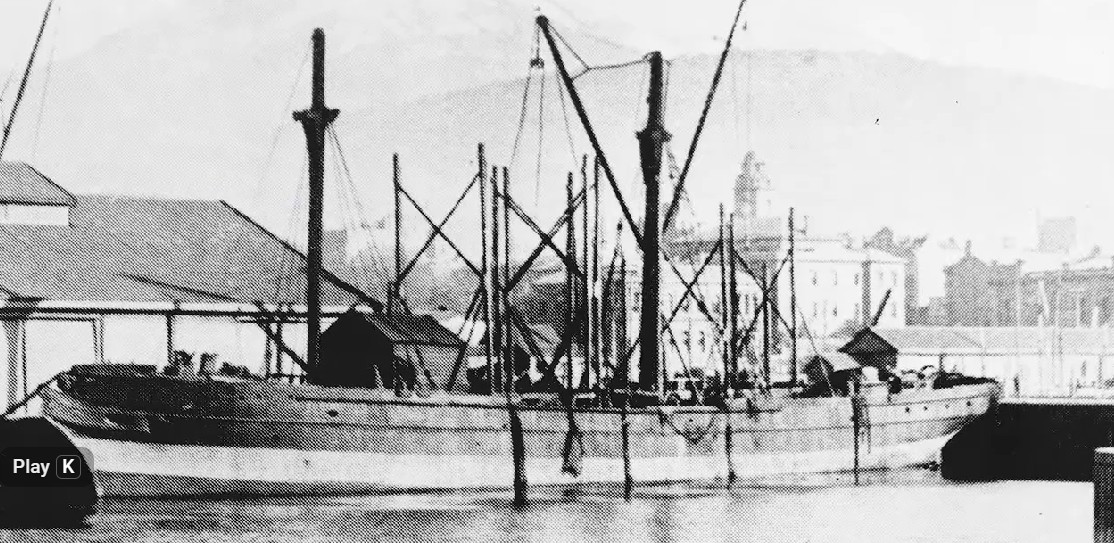
In 1903, Otago’s sailing life was over and she suffered the ignominy of being stripped and used as a coal hulk in Hobart. In 1931, she was sold for scrap, but not before various items of historic interest were saved for museums around the world. The ship’s wheel was presented to ‘The Company of Master Mariners’ in London. The stern was removed and sent to the Maritime Museum in San Francisco. The companionway hatch is in the Maritime Museum in Hobart, and the ship’s bell was gifted to Geelong College.
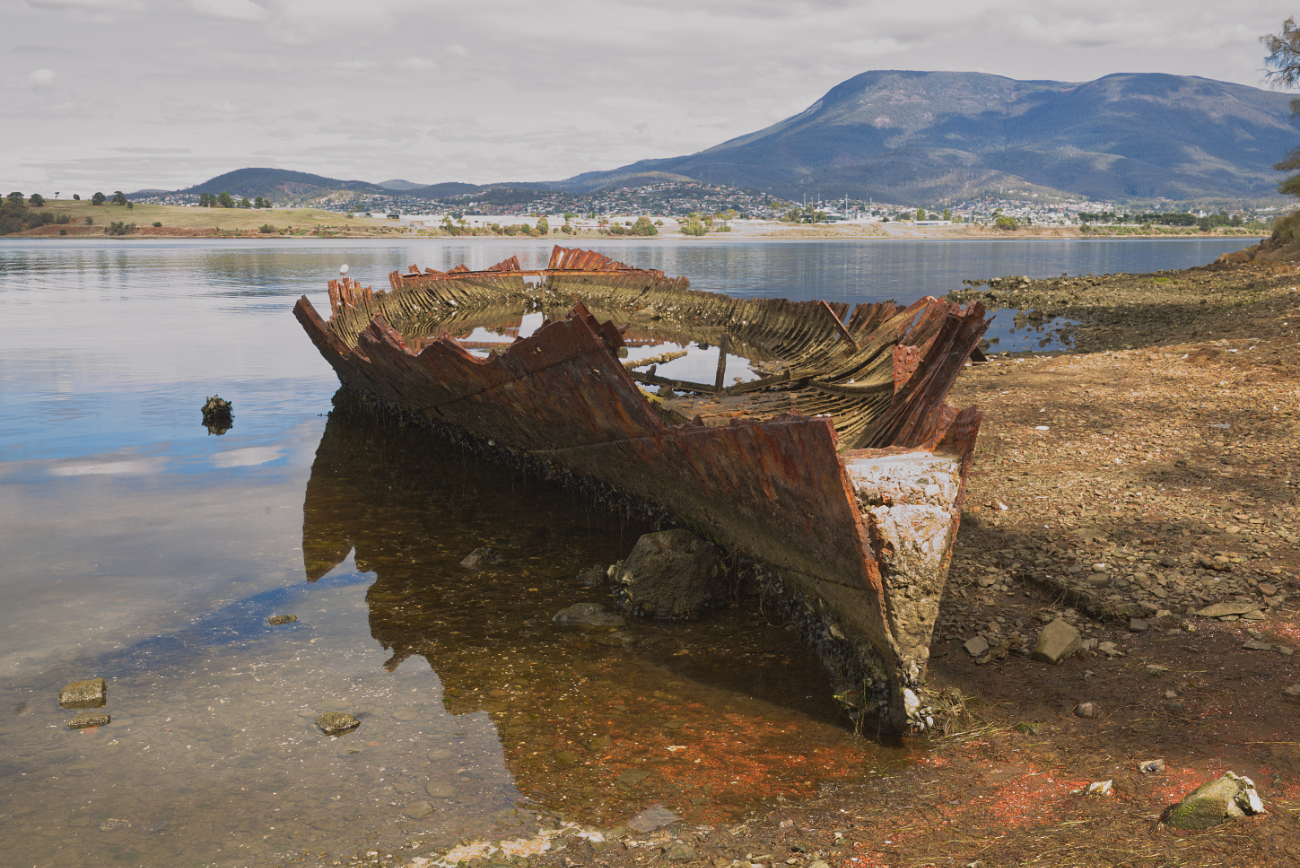
The remains of the barque Otago still rests on the banks of the Derwent River in what is now known as Otago Bay.


 spiceislandsblog