From Jozef Konrad Korzeniowski to Joseph Conrad – An Outcast of the Islands

The fact that his first book, Almayer’s Folly, almost immediately met with extraordinary critical acclaim would have certainly started Joseph Conrad thinking about another book. Conrad’s imagination returned to East Borneo, the Berau River, and his meeting there with Carel de Veere, who became his Peter Willems and the main protagonist of An Outcast of the Islands.

The first time myself and Captain Craig dined with Almayer there was Carel de Veere sitting at the table with us in the manner of a skeleton at a feast, obviously shunned by everybody, never addressed by anybody, and for all recognition of his existence getting now and then from Almayer a venomous glance which I observed with great surprise … Didn’t that fellow bring the Arabs into the river!

The Vidar at the port and quay in Macassar, 1883, J.C.Rappard, Antique Maps of Indonesia

Peter Willems obtained employment with a prominent shipping agent in Macassar and to his own surprise, found himself adept at business practices. During his 14 years of service with the Hudig Company he found himself handling Hudig’s most confidential business transactions – chests of opium which were silently transferred from one vessel to another, sensitive negotiations with ruling Sultans, the illegal shipments of arms and gunpowder to both sides of a local power struggle. These transactions required large sums of cash to exchange hands and some of it may have even stayed in Peter Willems hands. He was boastful of his own abilities and experienced that irresistible impulse to impart information that is inseparable from gross ignorance. As Conrad wrote:

There is always some one thing which the ignorant man knows, and that thing is the only thing worth knowing, it fills the ignorant man’s universe. Willems knew all about himself. On the day when, with many misgivings, he ran away from a Dutch East-Indiaman in Semarang Roads, he had commenced that study of himself, of his own ways, of his own abilities, of those fate-compelling qualities of his which led him toward that lucrative position which he now filled. Being of modest and diffident nature, his successes amazed, almost frightened him, and ended as he got over the succeeding shocks of surprise by making him ferociously conceited. He believed in his genius and his knowledge of the world. Others should know of it also; for their own good and his greater glory.

This is the beginning of a moral tale. Willems had departed from the straight and narrow and has made what he describes as a ‘little excursion’ into dishonesty for a cause that is not immediately explained, but as soon as this has achieved its desired effect, then, he is resolved to return to the straight and narrow path. But somehow, we know that this is not going to happen.

Willems dishonesty is discovered, he is fired from his job, and he retreats to the Berau River where he lives as an ‘Outcast of the Islands’.

https://www.ianburnetbooks.com

Posted in Uncategorized | Tagged , , , , , , , , , , | 1 Comment

From Jozef Konrad Korzeniowski to Joseph Conrad – Almayer’s Folly

In A Personal Record, Conrad describes writing the tenth chapter of Almayer’s Folly on board the Adowa in Rouen harbour. The remaining two chapters, which brought his novel to its fatal conclusion, were completed in only three months and on 22May 1894 he sent it off to a publisher. His choice of potential publisher was T. Fisher Unwin, a patron of letters and of considerable reputation. Conrad said that ‘Acceptance, came some three months later, in the first typewritten letter I ever received in my life’. He could scarcely have realised his own good fortune, that a first work, even of originality and merit, would be immediately accepted. An extremely unusual event and had he been more familiar with the world of publishing he would have recognised this as a miracle.

Every miracle needs a miracle worker, and this person was Edward Garnett, a man younger than Conrad and a professional reader who was then advising Fisher Unwin. Garnett immediately recognised the rare quality of Conrad’s work and was particularly intrigued by the identity of this new voice.. The strangeness of the tropical atmosphere, the poetic realism of his romantic story, made him think he was of eastern origin. No doubt he was quite surprised to meet a 38 year old master mariner of Polish origin.

Almayer’s Folly is the story of Kaspar Almayer, a man who betrays his own integrity, because he accepts Tom Lingard’s promise of his inheritance on the condition that he marries his adopted daughter. They then move to an isolated trading post on the Berau River in northeast Kalimantan and it is from this initial mistake that follow all his later woes.

From the opening sentence when Almayer stands on his veranda watching the river swollen with rain, a reader will know they are in the presence of a writer blessed with astonishing ability

One of those drifting trees grounded on the shelving shore, just by the house, and Almayer, neglecting his dream, watched it with languid interest. The tree swung slowly around, amid the hiss and foam of the water, rolling slowly over, raising upward a long denuded branch, like a hand lifted in mute appeal to heaven against the river’s brutal and unnecessary violence. Almayer’s interest in the fate of the tree increased rapidly. He leaned over to see if it cleared the low point below. It did; then he drew back, thinking that now its course was free down to the sea, and he envied the lot of that inanimate thing now growing small and indistinct in the deepening darkness.

All the hallmarks of Conrad’s fiction are stamped on the opening pages. The alienation of the individual, the uncaring brutality of the natural world, the serpentine sentences which begin with close observation and finish with a flourish of dark rhetoric.

https://ianburnetbooks.com

Posted in Uncategorized | Tagged , , , , , , , , | 2 Comments

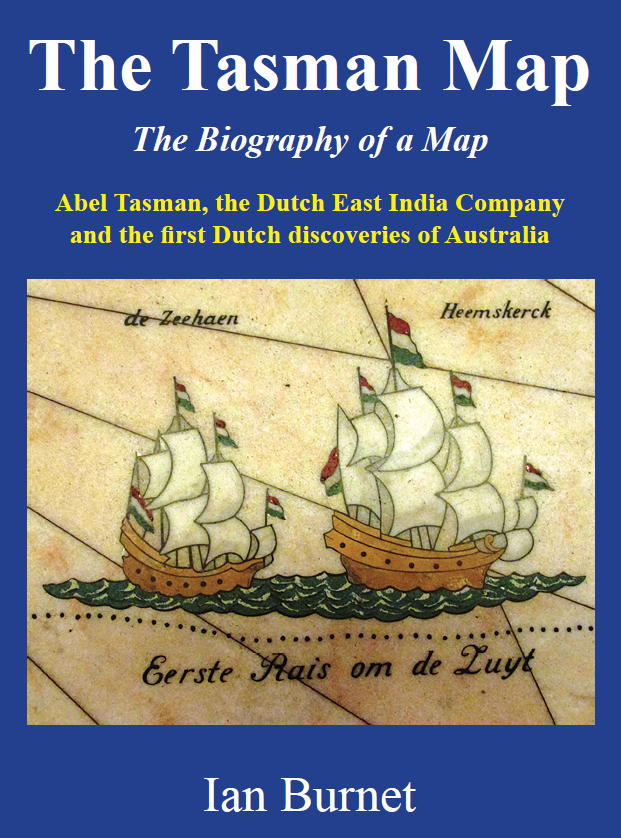
The Tasman Map – Abel Tasman, the Dutch East India Company and the first Dutch discoveries of Australia

The first edition of this book, published in 2019, has been sold-out for some time.

I have published an updated edition in 2024 with a new Forward and Preface. The book is available from the usual online retailers, from the State Library NSW bookshop, on order from your favorite bookshop, or directly from myself via the comment form on this website.

https://www.ianburnetbooks.com

Posted in Uncategorized | Tagged , , , , , , , , , | 4 Comments

Test Post for WordPress

This is a sample post created to test the basic formatting features of the WordPress CMS.

Subheading Level 2

You can use bold text, italic text, and combine both styles.

  1. Step one
  2. Step two
  3. Step three

This content is only for demonstration purposes. Feel free to edit or delete it.

Posted in Uncategorized | Leave a comment

Test Post for WordPress

This is a sample post created to test the basic formatting features of the WordPress CMS.

Subheading Level 2

You can use bold text, italic text, and combine both styles.

  1. Step one
  2. Step two
  3. Step three

This content is only for demonstration purposes. Feel free to edit or delete it.

Posted in Uncategorized | Leave a comment

Test Post for WordPress

This is a sample post created to test the basic formatting features of the WordPress CMS.

Subheading Level 2

You can use bold text, italic text, and combine both styles.

  1. Step one
  2. Step two
  3. Step three

This content is only for demonstration purposes. Feel free to edit or delete it.

Posted in Uncategorized | Leave a comment

Test Post for WordPress

This is a sample post created to test the basic formatting features of the WordPress CMS.

Subheading Level 2

You can use bold text, italic text, and combine both styles.

  1. Step one
  2. Step two
  3. Step three

This content is only for demonstration purposes. Feel free to edit or delete it.

Posted in Uncategorized | Leave a comment

Joseph Conrad in Singapore

A metal plaque dedicated to Joseph Conrad stands in front of the Fullerton Hotel in Singapore. The text on the memorial describes Conrad as a “British Master Mariner and great English writer who made Singapore and the whole of Southeast Asia better known to the world”.

The memorial plaque in honour of Joseph Conrad, located in front of the Fullerton Hotel,

The plaque, which is well over 2 m high, can be found just across a small road from the hotel, close to Cavenagh Bridge. Flanked by shrubbery, the memorial’s placement is no coincidence. Conrad had been a seaman before turning to writing and Singapore had served as his homeport for five months in the late 1880s. Conrad would have been a regular visitor to the spot where the Fullerton Hotel is now because this was where the Master Attendant’s Office had been. (The Master Attendant, whom Conrad referred to as the Harbour Master, was responsible for the control of shipping in the roadstead.)

The Master Attendant’s Office next to Cavenagh Bridge, 1890. The distinctive roof of the post office can be seen in the background. Photo by G.R.Lambert. Lee Kip Lin Collection, National Library, Singapore.

Although Conrad did not spend much time in this region, it made a deep impression on him; about half of everything he wrote revolves around this part of the world. This includes five novels and more than a dozen short stories and novellas. Many of them were directly based on his experience as first mate on a ship that sailed regularly from Singapore to a small trading post about 48 km up the Berau River on the east coast of Borneo between 1887 and 1888. 

The people, places and events Conrad encountered in the region come alive in works like Almayer’s Folly (1895), The Outcast of the Islands (1896), Lord Jim (1900), Victory (1915) and The Rescue (1920). It is his excellent visual memory of people, landscape, estuaries, rivers, climate, jungle foliage, commerce, local politics, religion and dress that bring his fictional world to life.

Portrait of Joseph Conrad by George Charles Beresford, 1904. © National Portrait Gallery, London.

Conrad first set foot on Singapore’s shores in 1883. At the time, he was the second mate on the Palestine, which was carrying coal from England to Bangkok. The ship set off from Newcastle in November 1881 but while crossing the English Channel, the Palestine met strong winds and started to leak. It limped back to Falmouth in Cornwall for repairs and finally left for Bangkok on 17 September 1882. Unfortunately, in March 1883, its cargo of coal caught fire and the ship sank near Sumatra. The officers and crew were rescued and taken to Singapore on the British steamship Sissie. Here, the Sissie joined the forest of masts anchored in New Harbour (renamed Keppel Harbour in 1900) while around them were hundreds of Chinese tongkangs (a small type of boat used to carry goods along rivers) and Malay prows unloading goods from trading vessels. 

This was Conrad’s first view of Singapore. Before him was Johnston’s Pier, the Master Attendant’s Office, the entrance to the Singapore River and warehouses filled with goods that were in transshipment to the Malay Peninsula, Borneo, the Dutch East Indies and Hong Kong. In the centre was Fort Canning Hill (the former Government Hill). Below that lay the European town, the mansions of prominent European merchants and St Andrew’s Cathedral.

Johnston’s Pier was where passengers would disembark when they arrived in Singapore, c. 1910s. It was demolished and replaced by Clifford Pier in the mid-1930s. Courtesy of National Archives of Singapore.

Singapore is the “Eastern port” referred to in Lord JimThe End of the Tether (1902) and The Shadow-Line (1917), even though Conrad never names the port. In The End of the Tether, Captain Henry Whalley of the steamer Sofala describes the busy harbour with the ships and the Riau Islands in the background:

“Some of these avenues ended at the sea. It was a terraced shore, and beyond, upon the level expanse, profound and glistening like the gaze of a dark-blue eye, an oblique band of stippled purple lengthened itself indefinitely through the gap between a couple of verdant twin islets. The masts and spars of a few ships far away, hull down in the outer roads, sprang straight from the water in a fine maze of rosy lines pencilled on the clear shadow of the eastern board.”

Close to the Master Attendant’s Office was Emmerson’s Tiffin Rooms on Flint Street, which drew sailors, merchants and visitors to its daily lunch menu. It advertised a Tiffin à la carte that is best described as Mulligatawny soup and a Malay chicken curry and rice. These men liked the noisy camaraderie of the place, where patrons exchanged tales of ships, sailors, disasters at sea, piracy, and the latest rumours.

At the junction of Flint Street and Battery Road was the ship chandler McAlister and Company. A vast cavern-like space, the store contained every sundry item that a ship needed to put to sea.

In this 1890 map, the Master Attendant’s Office can be seen in the top left, next to the post office. McAlister and Company is located at no. 5, at the junction of Flint Street and Battery Road. Emmerson’s Tiffin Rooms is listed as occupying the upper floors of nos. 1 and 2. Image reproduced from B.E. D’Aranjo, The Stranger’s Guide to Singapore (Singapore: Sirangoon Press, 1890), 4f, 4g. (From National Library Online).

Records show that Conrad was discharged from the Palestine on 3 April 1883 and he remained in Singapore for the whole of April while waiting for a passage back to England. He would have stayed in the Officers’ Sailors Home on High Street, behind St Andrew’s Cathedral, until he embarked on his return passage in May that year. In The Shadow-Line, he describes the home, which he refers to as the Officers’ Home, as a “large bungalow with a wide verandah and a curiously suburban-looking little garden of bushes and a few trees between it and the street. That institution partook somewhat of the character of a residential club, but with a slightly Governmental flavour about it, because it was administered by the Harbour Office. Its manager was officially styled Chief Steward”.

Conrad also frequented the port area, including the various cafes and bars where seamen congregated to swap stories and compare voyages. It is likely that while waiting to return to England in 1883, he would have become acquainted with the scandal around the pilgrim ship Jeddah, whose events provided the inspiration for the setting of Lord Jim

While bringing close to 1,000 Muslim pilgrims from Singapore and Penang to Mecca in 1880, the Jeddah ran into trouble and began taking in water. The ship’s captain and some of the officers escaped in a lifeboat, leaving behind all the passengers on board. The captain and the officers were subsequently rescued and brought to Aden, in Yemen, where the captain claimed that the Jeddah had sunk with all lives lost. Fortunately for the passengers, but unfortunately for the captain, the Jeddah did not sink. Instead, it was rescued by a passing ship and towed to Aden, where it arrived a few days after the rescued captain and officers. The captain’s deception was thus exposed and the fact that the captain had abandoned his passengers and lied about the sinking caused an enormous scandal.

In Lord Jim, a pilgrim ship named the Patna undergoes a similar experience and the incident becomes the talk of the town. In the novel, Conrad writes: “The whole waterside talked of nothing else… you heard of it in the harbour office, at every shipbroker’s, at your agent’s, from whites, from natives, from half castes, from the very boatmen squatting half-naked on the stone steps as you went up.” The events around the Patna scandal sets the stage for introducing the main protagonist of the novel, the first mate named Jim, who escapes with the captain and subsequently lives with the guilt and shame of his actions. Jim, himself, has a real-life analogue in the first mate of the Jeddah, Augustine “Austin” Williams, who joined the captain in abandoning the ship. After the inquiry, Williams remained in Singapore and worked as a water clerk for McAlister and Company.

In February 1887, Conrad signed on as first mate of the Highland Forest, a three-masted barque of a little over 1,000 tons. It was berthed in Amsterdam while waiting to load general cargo for a voyage to the port of Semarang on the north coast of Java. It was a rough voyage and Conrad met with an accident when one of the minor spars (used in the rigging of a sailing vessel to support its sail) fell against his back and sent him sliding on his face along the main deck for a considerable distance. In Lord Jim, Jim suffers a similar accident, and as a result, Jim “spent many days stretched on his back, dazed, battered, hopeless, and tormented as if at the bottom of an abyss of unrest. He did not care what the end would be, and in his lucid moments overvalued his indifference”.

As Conrad’s injuries persisted even after the Highland Forest had unloaded its cargo in Semarang in June 1887, he reported to the Dutch doctor there that he was experiencing “inexplicable periods of powerlessness and sudden accesses of mysterious pain”. The doctor told him that the injury could remain with him for his entire life. He said: “You must leave your ship; you must be quite silent for three months – quite silent.”

Conrad was discharged from the Highland Forest on 1 July 1887 and sent on the next ship for hospitalisation in Singapore. Here, he was registered at the hospital as a “Distressed British Seaman” to recuperate. In The Mirror of the Sea, a collection of autobiographical essays, Conrad describes what it was like lying on his back in a Far Eastern hospital and having “plenty of leisure to remember the dreadful cold and snow of Amsterdam, while looking at the fronds of the palm-trees tossing and rustling at the height of the window”. Conrad’s experience is the likely inspiration for the scene in Lord Jim when the young seaman recuperates in a hospital in that unnamed Eastern port:

“The hospital stood on a hill, and a gentle breeze entering through the windows, always flung wide open, brought into the bare room the softness of the sky, the languor of the earth, the bewitching breath of the Eastern waters. There were perfumes in it, suggestions of infinite repose, the gift of endless dreams. Jim looked every day over the thickets of gardens, beyond the roofs of the town, over the fronds of palms growing on the shore, at that roadstead which is a thoroughfare to the East, – at the roadstead dotted by garlanded islets, lighted by festal sunshine, its ships like toys, its brilliant activity resembling a holiday pageant, with the eternal serenity of the Eastern sky overhead and the smiling peace of the Eastern seas possessing the space as far as the horizon.”9

As soon as he could walk unaided, Conrad checked out of the hospital for a further period of rehabilitation and to look for a berth back to England. While waiting, he stayed in the Officers’ Sailors Home again and spent time with the other seamen in the port. Once Conrad had fully recovered, he would walk daily from the Officers’ Sailors Home towards the Master Attendant’s Office to look for a passage home. Along the way, he would have passed the white spire of St Andrew’s Cathedral, the frontages of the new government buildings, the famous Hotel de l’Europe (site of the former Supreme Court building and part of the National Gallery Singapore today) and along the shaded Esplanade with its enormous trees towards the Singapore River. He would then cross Cavenagh Bridge to reach the Master Attendant’s Office at the other end of the bridge.

Hotel de l’Europe on the corner of High Street and Esplanade Road, c. 1906. Lim Kheng Chye Collection, courtesy of National Archives of Singapore.

Cavenagh Bridge, opened in 1869, straddled the entrance to the Singapore River and provided one of the most famous views of Singapore. In the late 19th century, Boat Quay would have been packed with a myriad of lighters, tongkangs and sampans bringing goods and people onto the river. The crescent of buildings and warehouses along the quay was taken up with the unloading and loading of these boats. Hundreds of coolies unloaded huge crates, casks, boxes and bales of British manufactured goods into the warehouses, followed by the loading of bales of gambier, bundles of rattans, and bags of tin, sago, tapioca, rice, pepper and spices for export to foreign markets. Conrad describes this scene in his book, The Rescue:

“One evening about six months before Lingard’s last trip, as they were crossing the short bridge over the canal where native craft lay moored in clusters… Jӧrgenson pointed at the mass of praus, coasting boats, and sampans that, jammed together in the canal, lay covered with mats and flooded by the cold moonlight, with here and there a dim lantern burning amongst the confusion of high sterns, spars, masts, and lowered sails.”

View of Boat Quay from Cavenagh Bridge, c. 1906. Arshak C. Galstaun Collection, courtesy of National Archives of Singapore.

In August 1887, Conrad was hired as first mate on the trading ship Vidar. He found the vessel berthed at the Tanjong Pagar docks, a squared-off compound of warehouses, coal sheds and workshops. According to the Singapore and Straits Directory, its owner, Syed Mohsin Bin Salleh Al Jooffree, also owned several other steamers. The Vidar was a picturesque old steamship with a colourful crew, and its captain, James Craig, had sailed the local waters for the last 10 or 12 years and knew them like the back of his hand. Not only did he have to navigate an often dangerous archipelago, filled with marauding pirates and treacherous rivers, he also had to deal with local traders – Dutch, English, Chinese, Arab, Malay and Bugis – in each of these unusual ports. Besides the captain and the first mate, there were two European engineers, a Chinese third engineer, a Malay mate, a crew of 11 Malays, as well as a group of Chinese coolies who worked as deckhands for the loading and unloading of cargo.

This was a microcosm of the people of the archipelago and they would all have communicated in bazaar Malay which was the commonly used trading language of the region. Already an accomplished linguist, Conrad would have quickly picked up a good knowledge of Malay and this would have brought him into direct contact with the people he later describes in his books.

On the Vidar, Conrad makes four voyages from Singapore to the Berau River in Borneo before signing off from the ship on 4 January 1888. He lowered himself and his seabag into a sampan in the harbour and was rowed ashore to Johnston’s Pier from where he took a horse-drawn cab to the Officers’ Sailors Home. 

He had just given up a good berth and a comfortable life in a fine little steamship with an excellent master. However, Conrad’s ambition was to command a sailing ship, a square rigger, not in the comfortable waters of the East Indies, but on the great oceans of the world. In The Shadow-Line, which is based on Conrad’s own experience of his first command, the protagonist, who was accompanied by his captain, describes a similar event, of signing off from a ship, as taking place in the Harbour Office, in a “lofty, big, cool white room” where everyone is in white.

“The official behind the desk we approached grinned amiably and kept it up till, in answer to his perfunctory question, “Sign off and on again?” my Captain answered, “No! Signing off for good.” And then his grin vanished in sudden solemnity. He did not look at me again till he handed me my papers with a sorrowful expression, as if they had been my passports for Hades. While I was putting them away he murmured some question to the Captain, and I heard the latter answer good-humouredly: “No. He leaves us to go home.” “Oh!” the other exclaimed, nodding mournfully over my sad condition.”

Conrad was ashore for two weeks when he received a message on 19 January 1888 that the Harbour Master would like to see him urgently. The Harbour Master explained that the master of a British ship, the Otago, had died in Bangkok and the Consul-General there had cabled him to request for a competent man to take command. Since Conrad already had his Master’s ticket, the Harbour Master gave him an agreement which read:

“This is to inform you that you are required to proceed in the S.S. Melita to Bangkok and you will report your arrival to the British Consul and produce this memorandum which will show that I have engaged you to be the Master of the Otago.”

Joseph Conrad commanded the Otago between 1888 and 1889. Courtesy of State Library of Queensland.

Conrad would undoubtedly have been thrilled by this twist of fate. Perhaps he felt the same way the protagonist did in The Shadow-Line, who likewise had just been given his first command:

“And now here I had my command, absolutely in my pocket, in a way undeniable indeed, but most unexpected; beyond my imaginings, outside all reasonable expectations, and even notwithstanding the existence of some sort of obscure intrigue to keep it away from me. It is true that the intrigue was feeble, but it helped the feeling of wonder – as if I had been specially destined for that ship I did not know, by some power higher than the prosaic agencies of the commercial world.”

The Melita was leaving for Bangkok that evening and Conrad would be on it. He arrived in Bangkok on 24 January 1888 and as the coastal steamer came up the river, its captain was able to point out Conrad’s new ship. The lines of its fine body and well-proportioned spars pleased Conrad immensely as this was a high-class vessel, a vessel he would be proud to command. 

After almost two years away, Conrad returned to London in May 1889, idle and without a ship. His memory and imagination returned to Singapore and the Malay Archipelago, and he began writing a novel based on his voyages from Singapore on the Vidar. As he wrote in his autobiographical work, A Personal Record (1912), the characters from his time on the Berau River began to visit him while he was in-between work in London:

“It was in the front sitting-room of furnished apartments in a Pimlico square that they first began to live again with a vividness and poignancy quite foreign to our former real intercourse. I had been treating myself to a long stay on shore, and in the necessity of occupying my mornings, Almayer (that old acquaintance) came nobly to the rescue. Before long, as was only proper, his wife and daughter joined him round my table and then the rest of that Pantai band came full of words and gestures. Unknown to my respectable landlady, it was my practice directly after my breakfast to hold animated receptions of Malays, Arabs, and half-castes.”

These characters and places eventually end up populating Almayer’s Folly, Conrad’s first novel. Published in 1895, the work would launch Conrad’s career as a writer. He would go on to draw upon his experiences in the Malay world in subsequent novels and short stories. Along the way, he helped craft a particular image of Singapore, the Malay Archipelgo and the Dutch East Indies in the imagination of the reading public.

This article was published by the National Library Singapore in their magazine BiblioAsia with the text by Ian Burnet and the images supplied by the National Library Singapore.

Ian Burnet is the author of the book, Joseph Conrad’s Eastern Voyages – Tales of Singapore and an East Borneo River.

https://www.ianburnetbooks.com

Posted in Uncategorized | Tagged , , , , , , , , , , , , , | 4 Comments

2013 – 2023 The top ten posts of the decade

After 10 years of blogging there have been 152502 views by thousands of followers and here are the top blogs of all time. Please go to the search button to find the blogs you may have missed.

Thanks to all those followers for your interest in Indonesia

https://www.ianburnetbooks.com

Posted in Uncategorized | Tagged , | 4 Comments

The Makalamau Drum is shattered in Museum fire (Updated)

The largest Dong Son type drum found in Indonesia is the Makalamau Drum which was discovered on the island of Sangeang off the island of Sumbawa.

The Makalamau Drum is 122 centimetres in diameter and in the centre is a twelve-pointed star encircled by twelve concentric bands ornamented with geometric or figurative designs. The body of the drum is decorated with scenes of elephants and horses led by human figures, as well as fish, birds and boats, The outermost band is ornamented with four sculptured frogs paced equidistant around the rim. It is believed that in the cosmology of the drum makers, the star represents the sun and the frogs the rain. The sun and the rain, induced by the thunderous sound produced when beating the hollow brass drum, were necessary to yield crops and sustain life.

Photo: Ian Burnet

Central Jakarta Police Chief Komarudin told reporters that the National Museum’s Building A, which housed prehistoric artifacts, was engulfed by the fire on Saturday September 16, resulting in the destruction of at least four rooms. It is suspected that the fire was triggered by a short circuit that occurred in the museum renovation project area. He said the fire was brought under control within hours and no injuries were reported.  “Experts will provide us with an assessment of the losses, but the fire has destroyed display rooms, and the lobby, and even caused the roof to collapse. The museum contained many flammable materials,” he explained.

The National Museum Fire. Photo: Hidayat Azriel

At least 817 historical objects were impacted by a fire that broke out at the National Museum on Saturday (September 16), the National Museum’s Acting Head of Museum and Cultural Properties, Ahmad Mahendra, stated. “The affected collections and historical objects are either made of bronze, ceramics, terracotta, and wood or miniatures and replicas of prehistoric objects that were found intact or lightly to severely damaged,” Mahendra noted here on Tuesday.

Education and Culture Minister Nadiem Makarim at the National Museum on Saturday while speaking to reporters.

Unfortunately, the intensity of the fire caused the bronze base of the Makalamau Drum to seriously overheat and then shatter when the fire was flooded with water. Fortunately, the upper surface of the Makalamau Drum has remained mostly intact, and it is hoped that this historic Dong Son drum will be able to be restored.

.
The remains of the Makalamau Drum are now on display in the newly reopened and restored National Museum, after the fire.

https://www.ianburnetbooks.com

Posted in Uncategorized | Tagged , , , , | 1 Comment