Malacca — Where it all started!

Image

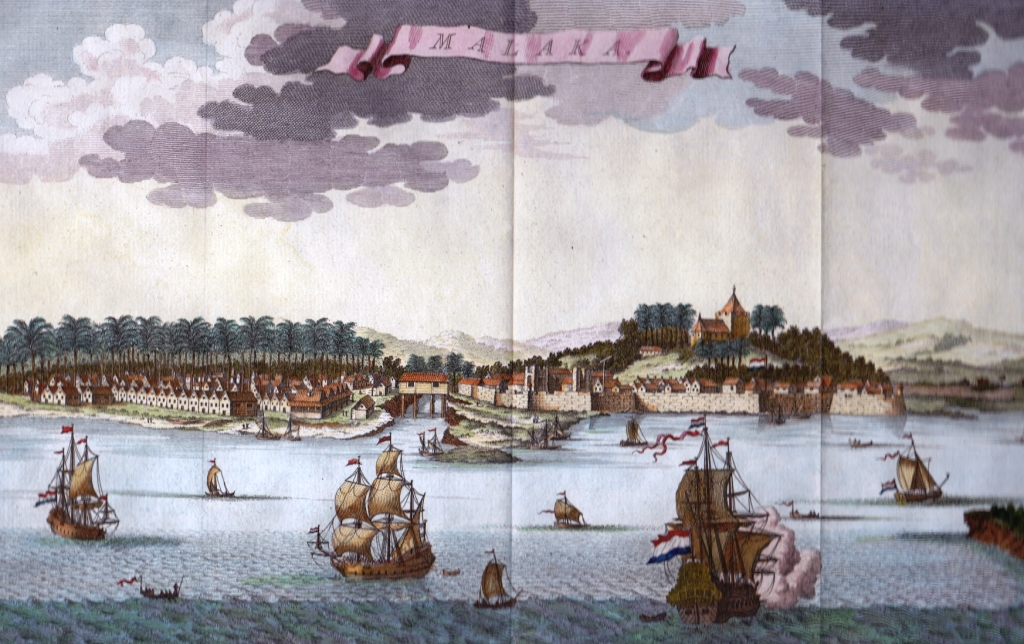
For centuries Malacca was the fulcrum of East – West trade and was best described by its early Portuguese resident Tome Pires in 1514:

“Men cannot estimate the worth of Malacca, on account of its greatness and profit. Malacca is a city that was made for merchandise, fitter than than any other in the world; the end of monsoons and the beginnings of others. Malacca is surrounded and lies in the middle, and the trade and commerce between different nations for a thousand leagues on every hand must come to Malacca”.

It was my pleasure to recently give an ‘East Indies’ book talk in Malacca sponsored by the Malaysian Heritage Society and the Malacca History Club, at the Riverine Restaurant. Please follow the link to see the talk:


http://www.ianburnetbooks.com

Posted in Uncategorized | Tagged , , , , , , , , , , | Leave a comment

Ubud Writers and Readers Festival 2013

UWRFlogo

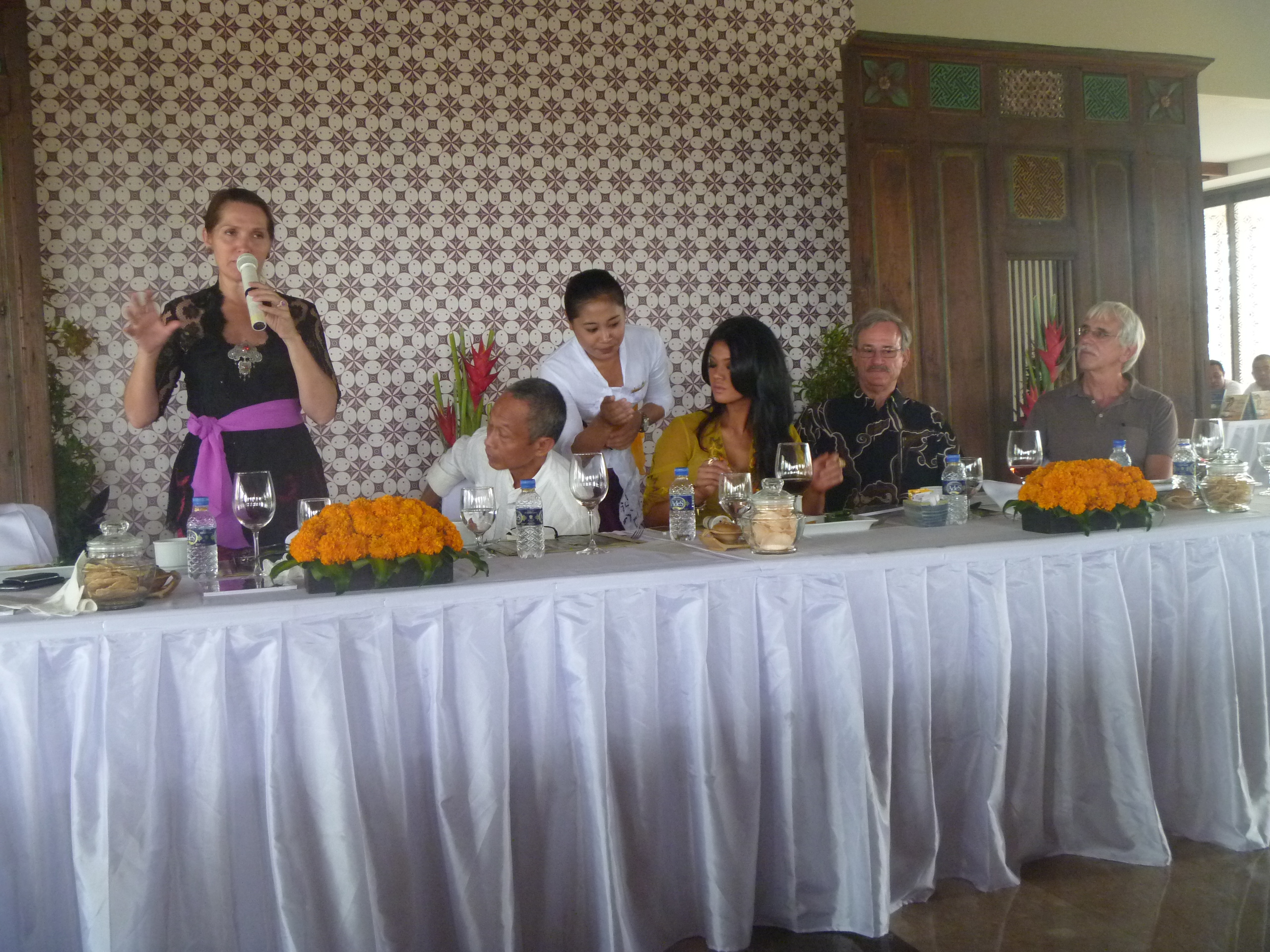
The Ubud Writers and Readers Festival is not just about writers, readers and books but is now a multi-cultural extravaganza that includes music, dance, poetry, performance, film, food and cooking. From when it was created by Janet de Neefe ten years ago to breathe new life into Bali after the 2002 bombings it has grown into an event that is uniquely Bali and is probably unrivalled anywhere else in the world. It has been a wonderful week, truly memorable for the writers and readers we have met from across the Indonesian archipelago and around the World —- how could anyone who loves books not be interesting! P1010914

I was fortunate to participate in three events which are listed below. My challenge now is to be back for another UWRF with another book to talk about.

The Kitchen
For a taste of Indonesia, visit the Festival kitchen & try legendary dishes from Sumatra to Bali, prepared by some of Indonesia’s most creative chefs.
Take a voyage on the high seas to Indonesia’s fabled Spice Islands with Ian Burnet. Served with Balinese afternoon tea.

Rosenberg_Spicejak2Final_crop - web

Across the Spice Islands
Two men who have dedicated their lives to spices: Ian Hemphill – a modern-day spice merchant & Ian Burnet – authority on Indonesia’s spice islands & trade. Join them in an exotic journey from India to Indonesia along the legendary spice route, discussing the romance of spices & their impact on the modern world.

ubudwriters2

The Romance of Rice
Join our esteemed guests for a glorious Indonesian feast of food & mind, celebrating the most important ingredient in Indonesian cooking – rice. Anthropologist J. Stephen Lansing will discuss his lifelong passion for Bali’s majestic paddy fields & his part in creating the UNESCO world-heritage site of Jati Luwih. Ian Burnet will spice it up with swashbuckling stories of the ancient spice trade of the East Indies, while Ketut Yuliarsa will wax lyrical about his home. Janet DeNeefe will share tales from Fragrant Rice & celebrity chef Farah Quinn will add glamour with anecdotes about her favourite rice-based dishes. William Wongso – acclaimed authority on Indonesian food – will prepare traditional culinary dishes from Sumatra to Bali in a taste sensation you’ll never forget.

P1010932

Posted in Uncategorized | Tagged , , , , , , , , , | 1 Comment

‘East Indies’ Book Launch September 21, 2013

<img src="https://spiceislandsblog.com/wp-content/uploads

Image


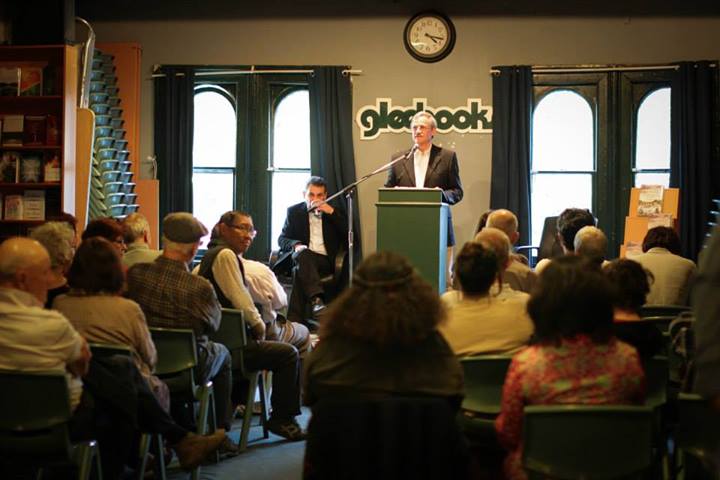
SydneyBookLaunch2Adrian Vickers (Professor of South East Asian Studies at Sydney University) kindly launched the book ‘East Indies’ in front of an audience of 60 attendees at Gleebooks in Sydney. Here is the link to the video showing the last few minutes of Adrian’s introduction and the response.

Posted in Uncategorized | Tagged , , , , , , , , , , , , , | Leave a comment

Ian Burnet: The Spice Trades’ untold stories —— from Tempo Magazine, September 8 2013

WordpressPhoto_SpiceIslandsEastIndies

Very early on in his life, Ian Burnet knew he was destined for a life of adventure. Growing up in a small isolated country town in his native Australia instilled in him an obsessive ambition to get out of town a fast as possible. After graduating with a Bachelor of Science degree in Geology and Geophysics from the University of Melbourne in 1966, he resolved to see the rest of the world, starting work as a geologist on some of the first off shore oil field explorations in Indonesia.
Along the way, the young man became intrigued with the fascinating history of this maddeningly complex country. In 2011, Ian published Spice Islands, a history of the archipelago’s spice trade. Following up on his successful first book,he wrote East Indies, which will be published in September 2013. Ian presently organizes sailing voyages to Maluku, the original spice islands of Dutch colonial history. He shared his story with Tempo contributor, Bill Dalton.

When was your first visit to Indonesia?
In 1968, just after the events described in the book The Year of Living Dangerously took place. The first off shore oil exploration contracts had just been awarded to foreign companies, and as a young 24-year-old geologist, I came here to work for an American seismic exploration company. I spent more than 12 years living in Indonesia and another 10 years travelling back and forth during my career as a geologist. I now spend about 3-4 months a year here, researching and writing. As long as the stories keep coming, I will continue writing about this incredible and mystifying country.

When did you start writing?
Not until 2006, when I first started work on the manuscript for Spice Islands. Most of the first draft was written when my wife and I were living in Bali. Spice Islands was also the first piece of writing I ever published. Although the book has been well received, it was a labor of love and I don’t make my living from it. Fortunately, I have a retirement income. Otherwise I would be a ‘starving artist’.

What is your book Spice Islands all about?
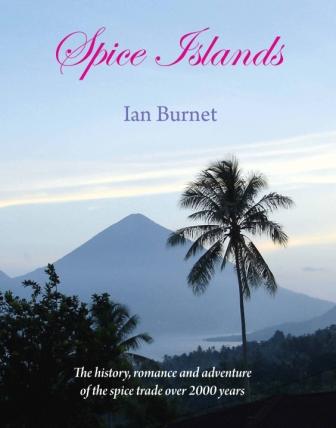
The book tells of the disproportionate effect that the tiny and largely forgotten islands of Ternate and Tidore in northern Moluccas have had on world history. These islands were the only place on the planet in the 16th and 17th centuries where cloves grew, and where the global spice trade began. On reaching Europe, these simple flower buds were literally worth their weight in gold. It was the Portuguese and Spanish who competed to reach the Spice Islands that drove what is known as ‘The Age of Discovery’ and the first circumnavigation of our planet. We all know about the great explorers Christopher Columbus,Vasco da Gama and Magellan, but we don’t know how they are linked together in their quest to reach the Spice Islands, and profit from the fabulous riches of the spice trade.

How did you get the idea of writing a book on the subject?
Kids going to school in Australia in the 1950s learnt nothing about Asian history. When I knew I was coming to work in Indonesia, I read all that I could find on Indonesian history and the ruthless Dutch East Indies Company. But it was a real surprise when I arrived here to learn that the Portuguese and the Spanish had been in Indonesia for 100 years before the Dutch! More than 30 years later, I realised that no one had written a complete history of the spice trade from an Indonesian perspective. This was an ‘untold story’ that had to be told.

Where did you do the historical research?
Fortunately, the inspiration for the book came in 2001 when I was living and working in London, so I had access to all the excellent research materials in the British Library. Subsequently, I spent a lot of time in the National Libraries of Indonesia, Singapore and Australia.

Where did you find the wonderful historic maps in your books?
They say that a picture is worth 1,000 words, but a historic map is worth 10,000 words. I took great pleasure in collecting all the images that go with both books, in particular the historic maps and paintings. The most memorable book talk I have given was at the State Library of NSW when, in conjunction with the presentation, my hosts had on display original copies of three of the historic maps in the book, plus an original copy of Linschotens’ magnificent Itinerario.

During your field research was there any time that you were in danger?
The mass killings occurred in Ambon, Halmahera, Tidore and Ternate in 1999, 2000 and 2001 respectively. I realized that I could not complete the book without travelling to the Spice Islands, and was planning a trip in 2005. I asked the Indonesian travel agent if he had heard of any unrest,he said no and that it had all been quiet for a couple of years. The next day we read of a bomb exploding in a market in Ambon. So my trip was delayed until 2006. As it turned out, there were no problems.

What was your vivid recollection of that trip?
Visiting the Sultan’s Palace in Ternate and meeting the sultan’s sister, Ibu Rini. A marvelous woman! She showed me around the museum in the palace, pointing out the most arresting Indonesian, Portuguese and Dutch historical artifacts. When the Japanese invaded Indonesia, the Dutch evacuated the sultan and his family to Australia. As a young child she went to school in Brisbane. Ibu Rini showed me a photograph of the family standing outside their house in Brisbane. So there’s a real Australian connection there.

Any advice to a beginning writer?
I am inspired to write stories that I would be interested in reading myself. I think that if you were not self-motivated, it would be very difficult to actually finish a book that contains so much research. My advice would be to first find an ‘untold story’ that you are really excited about. Secondly, it is really all about doing a lot of deep research to dig out unknown facts. Thirdly, although I am writing about factual history, I am trying to tell an adventure story, which will hopefully motivate the reader to turn the next page.

Tell us about the sailing voyages you organize to the Spice Islands?
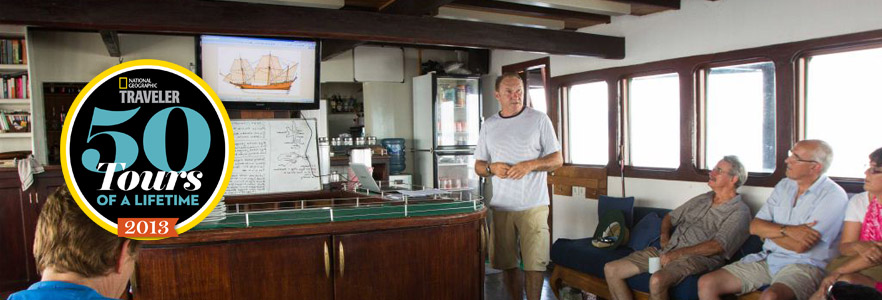
With the publication of the book, there was great interest in the Spice Islands, but most foreigners were unsure how to travel there. Together with a company called SeaTrekBali, our voyages allow guests toexplore the islands from Ambon to Banda to Ternate for 12 days on a traditional Indonesian built Bugis pinisi boat.We filled the vessel in 2012, and we expect to do the same again this October.

What is your next book about?
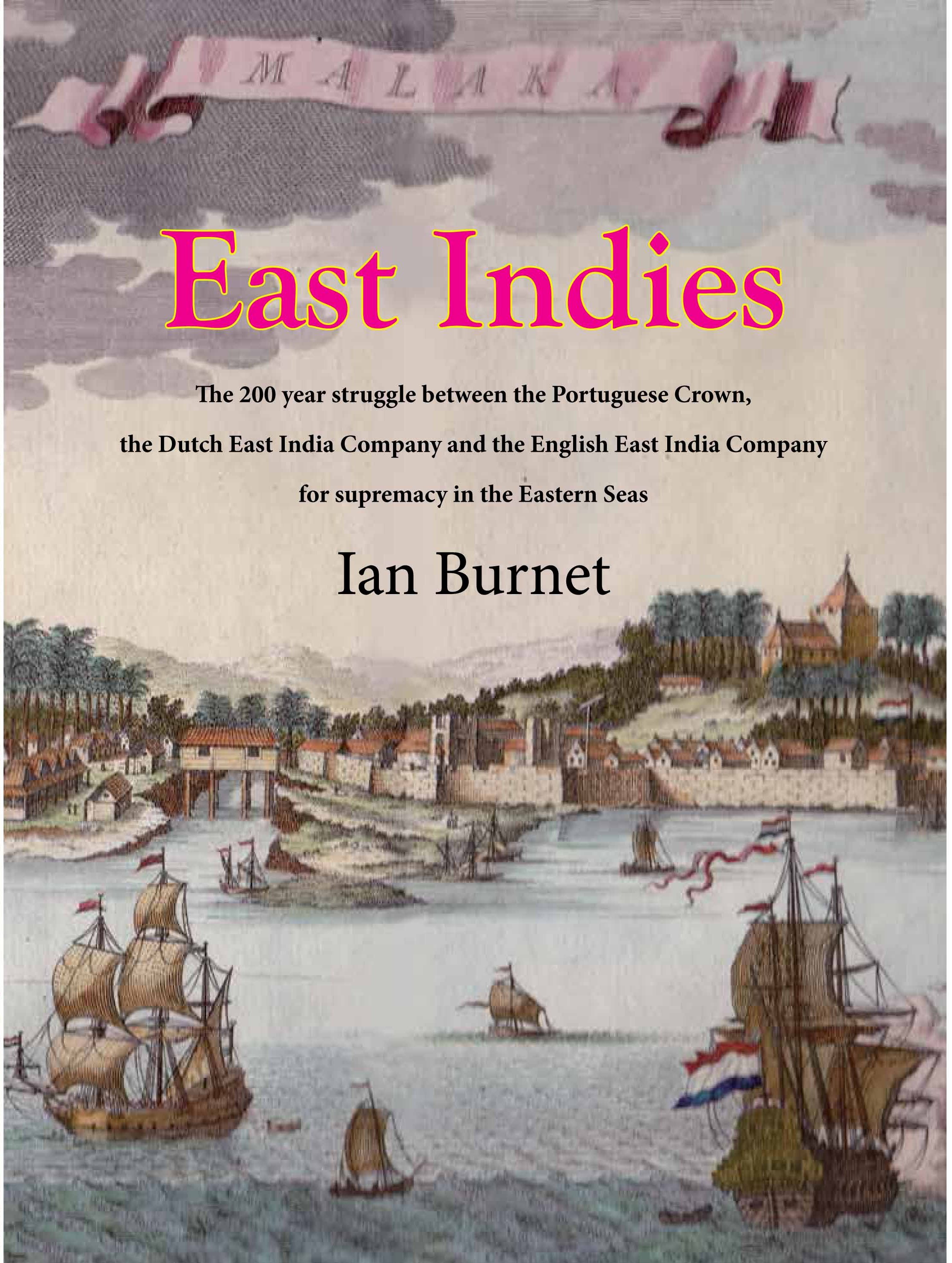
East Indies follows the old trade routes and the historic port cities across the East Indies and the Orient. Beginning in Malacca, which was one of the world’s largest trading ports in the 16th century, it tells the story of the 200-year struggle between the Portuguese Crown, the Dutch East Indies Company and the English East India Company for trade supremacy in the Eastern Seas. The story takes us to the ports of Banten, Ternate, Banda, Ambon, Solor, Johor, Tanjung Pinang, Penang, Macassar and Bencoolen (Bengkulu—Ed). The book documents the founding of the historic port city of Batavia and concludes with the founding of the modern port cities of Singapore and Hong Kong.

Just out of curiosity, do you personally like spices in your food?
Yes! My favorite Indonesian food has always been fiery nasi padang. I cook what my wife calls ‘survival food’ without many spices, but I have recently become an expert at making a really delicious Indonesian nutmeg cake! ●

See more details about these books on the author website http://www.ianburnetbooks.com

Posted in Uncategorized | Tagged , , , , , , , , , , , , , , , , , | Leave a comment

Spice Islands Sailing Adventure

RichardOrrImage

It is time to stop procrastinating (The act of postponing, delaying or putting off)
The Ombak Putih departs October 24 for its voyage around the Spice Islands
Only 3 cabins left, the voyage of a lifetime awaits.

Follow the link for details http://www.seatrekbali.com/departures-1/2013

Posted in Uncategorized | Tagged , , , , , , , , , , , , , , , , , , | 1 Comment

‘East Indies’ —- Spices, Gunpowder and Opium

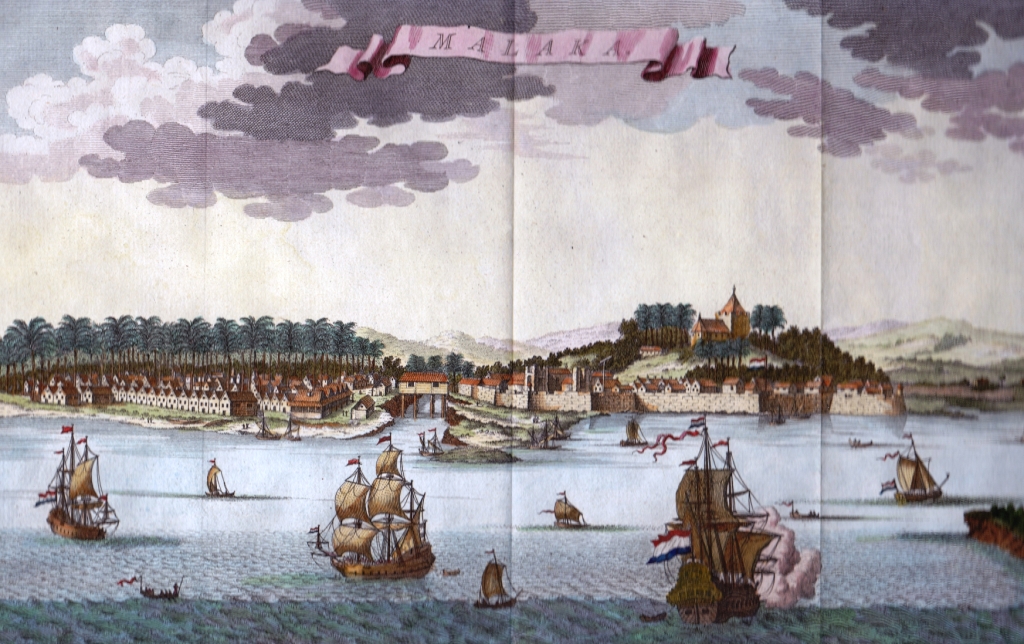
44_Painting of Malacca after its capture by the Dutch - Copy Copies of ‘East Indies’ have arrived and there is nothing more exciting than holding the final result of five years work in your hands. The books should be going out to the bookshops in the next few weeks and there are number of events lined up from mid-September for those who are in Sydney.

Sydney MSA, 280 Pitt Street, Ian Burnet: East Indies

Tuesday, 17 September, 6:00pm – 7:00pm

Ian Burnet reveals the 200 year struggle between the Portuguese Crown, the Dutch East India Company and the English East India Company for supremacy in the Eastern Seas.
In 1497 Vasco da Gama’s fleet rounded the Cape of Good Hope, and became the first Europeans to sail the Eastern Seas. Over the next 100 years the Portuguese spread their trading network in search of spices, sandalwood, silks, gold, silver, porcelains and other oriental goods from Goa in India as far east as the Moluccas and Timor in Indonesia, and as far north as China and Japan.
In 1595 and 1601 respectively, the first Dutch and English trading expeditions rounded the Cape of Good Hope and challenging the Portuguese the trading monopoly. The stakes were high.
For the next 200 years the struggle for trade supremacy between the Portuguese, the Dutch, and the English ranged across the Eastern Seas and in the settlements of Goa, Malacca, Ambon, Macao, Canton, Nagasaki, Batavia, Macassar, Johor and Singapore.
For the winners, the pay off was huge. By the end of the 19th century the Portuguese had almost vanished from the Eastern Seas, and the Dutch and the English East Indies Companies had been transformed from trading companies into colonial powers, ruling vast territories in Indonesia, India and Malaya.
FREE & OPEN TO THE PUBLIC

The State Library of New South Wales —— Ian Burnet on ‘East Indies’
Thursday 19 September Time: 12.30 pm to 1.30 pm
Metcalfe Auditorium, ground floor, Macquarie Wing Cost: Free, bookings essential

Author Ian Burnet talks about his latest book, East Indies. This book follows the trade winds and begins in the port city of Malacca, telling the story of the 200-year struggle between the Portuguese Crown, the Dutch East India Company and the English East India Company for trade supremacy in the Eastern Seas. It follows the rise of the world’s first joint stock and multinational trading companies and their conversion to huge colonial states ruling over millions of people in Indonesia, India and Malaya.

Gleebooks – East Indies Book Launch

Saturday 21 September Time: 3.30 pm for 4 pm , upstairs at 49 Glebe Point Road

Book Launch by Adrian Vickers, Professor of Southeast Asian Studies at Sydney University
Free, bookings essential

Australian National Maritime Museum
East Indies book launch and talk by Ian Burnet
Sunday 29 September 2 pm — 4 pm

A fascinating talk about the spice trade and its little known associated collateral. It documents the 200 year struggle between the Portuguese Crown, the Dutch East India Company and the English East India Company for trade supremacy in the Eastern Seas. It documents the rise of the world’s first joint stock and multinational trading companies and their conversion to huge colonial states ruling over millions of people in Indonesia, India and Malaya.

Cost: Members $20 Guests $25. A light sandwich lunch and wine will be served after.
Bookings essential: Book online
Enquiries: Phone +61 2 9298 3644

More details and a review of the book are available on the author website listed below.
http://www.ianburnetbooks.com

Posted in Uncategorized | Tagged , , , , , , , , , , , , , , , , , , , | Leave a comment

Want to get blogging? — The Power of the Internet — Worldwide views of the spiceislandsblog in 6 months

Image

Country

Views
Australia FlagAustralia 372
United States FlagUnited States 143
Netherlands FlagNetherlands 120
Indonesia FlagIndonesia 65
United Kingdom FlagUnited Kingdom 28
Malaysia FlagMalaysia 13
Canada FlagCanada 11
Spain FlagSpain 8
France FlagFrance 6
Germany FlagGermany 6
Jersey FlagJersey 5
Slovenia FlagSlovenia 3
Romania FlagRomania 3
Thailand FlagThailand 3
Pakistan FlagPakistan 2
Italy FlagItaly 2
New Zealand FlagNew Zealand 2
Taiwan, Province of China FlagTaiwan 2
India FlagIndia 2
Brazil FlagBrazil 1
Japan FlagJapan 1
Israel FlagIsrael 1
Iraq FlagIraq 1
Austria FlagAustria 1
Fiji FlagFiji 1
Viet Nam FlagViet Nam 1
11372372


Posted in Uncategorized | Tagged , , , , , , , , , | Leave a comment

UBUD WRITERS AND READERS FESTIVAL 2013 PROGRAM

2013 UWRF Program revealed

I am looking forward to the whole vibe of the Ubud Writers and Readers Festival, meeting interesting people, and attending some really interesting writer talks and events, including those below

ACROSS THE SPICE ISLANDS

Sunday October 13 — 9 to 10:15 am, The Neka Art Museum

Two men who have dedicated their lives to spices: Ian Hemphrill – a modern-day spice merchant & Ian Burnet – authority on Indonesia’s spice islands & trade. Join them in an exotic journey from India to Indonesia along the legendary spice route, discussing the romance of spices & their impact on the modern world.

THE ROMANCE OF RICE

Tuesday 15 October — 11:30 am to 2:30 pm, Kamandalu

Join our esteemed guests for a glorious Indonesian feast of food & mind, celebrating the most important ingredient in Indonesian cooking – rice. Anthropologist J. Stephen Lansing will discuss his lifelong passion for Bali’s majestic paddy fields & his part in creating the UNESCO world-heritage site of Jati Luwih. Ian Burnet will spice it up with swashbuckling stories of the ancient spice trade of the East Indies, while Ketut Yuliarsa will wax lyrical about his home. Janet DeNeefe will share tales from Fragrant Rice & celebrity chef Farah Quinn will add glamour with anecdotes about her favourite rice-based dishes. William Wongso – acclaimed authority on Indonesian food – will prepare traditional culinary dishes from Sumatra to Bali in a taste sensation you’ll never forget.

Posted in Uncategorized | Tagged , , , , , , , , , , , , | Leave a comment

East of India – Forgotten trade with Australia

caption:East of India - Forgotten trade of Australia

A reminder to those in or near Sydney that the current exhibition – East of India- Forgotten Trade with Australia, at the Australian National Maritime Museum will end early on August 18.

I had hoped that the book ‘East Indies’ would be published in time for the exhibition, but unfortunately events have conspired against me.

You should not miss the exhibition, as the Maritime Museum has done a great job in bringing together maps, paintings and photos from Britain and India to tell the history of the English East India Company and its forgotten trade with Australia. The early Australian colonies, at the ‘ends of the earth’ from Europe, turned to nearby Asia for survival and growth. This exhibition tracks its colonial links with India, the power and monopoly of the English East India Company, and its decline. It’s a tale of ships and shipwrecks, rice and rum, officers and officials, sailors, soldiers and servants – taking us from the old allure of Asia to modern-day ties between India and Australia.

                                   —————————————————-

In the 15th century Portugal embarked on an era of exploration which culminated in Vasco da Gama’s discovery of a seaway to India in 1498. His voyage opened a gateway to the wealth of Asia and for the next century, Portugal controlled Asian trade to Europe.

By the end of the 16th century Portugal’s monopoly was being challenged by merchant companies from England and the Netherlands. In time, the Dutch East India Company established its headquarters in Batavia [Jakarta] dominating control of the spice trade and forcing the English East India Company to concentrate its power in India. It proved a good business decision, for while the spice trade gradually declined in importance, the English East India Company’s activities flourished in India.

India and the changing role of the East India Company

By the end of the 17th century, the East India Company had established fortified factories and trading bases at Madras (now Chennai), Bombay (Mumbai) and Calcutta (Kolkata). These cities became the administrative centres for the British.

War helped to mould the Company. In 1757, rivals Britain and France clashed over trade – ‘Clive of India’ – defeated a combined Indian and French force at Plassey (Pelashi) and eliminated French influence in Bengal

The Battle of Plassey marked a radical shift away from the East India Company’s traditional trading operations towards control of territory and resources.

Decline and fall

As the company consolidated its military power in India, many in Britain called for greater scrutiny of its administration and an end to its monopoly on trade. From the beginning of the 19th century the company’s power was eroded with the loss of its Indian (1813) and China (1833) monopolies which allowed new traders to enter the market. When in 1857 a mutiny of troops in Bengal ignited bloody uprisings across India, the company forfeited its power to the British Government, ending over 200 years of control. Three years later the great London edifice of East India House was demolished.

 (from the Australian National Maritime Museum website)


Posted in Uncategorized | Tagged , , , , , , , , , , , , | Leave a comment

Ian Burnet Books

Image

The ianburnetbooks website has been up for a while, but I forgot to tell everybody how easy it is to create your own website with Squarespace.

If you can type and copy/past then you can add text, photos, video and create internal links within your website and also links to external websites. Simply by following the tutorials provided. Here is the proof — if I can do it, then anyone can do it.

Just go to http://www.ianburnetbooks.com to see the results
Posted in Uncategorized | Tagged , , , , , , , , | Leave a comment