Joseph Conrad in Singapore

A metal plaque dedicated to Joseph Conrad stands in front of the Fullerton Hotel in Singapore. The text on the memorial describes Conrad as a “British Master Mariner and great English writer who made Singapore and the whole of Southeast Asia better known to the world”.
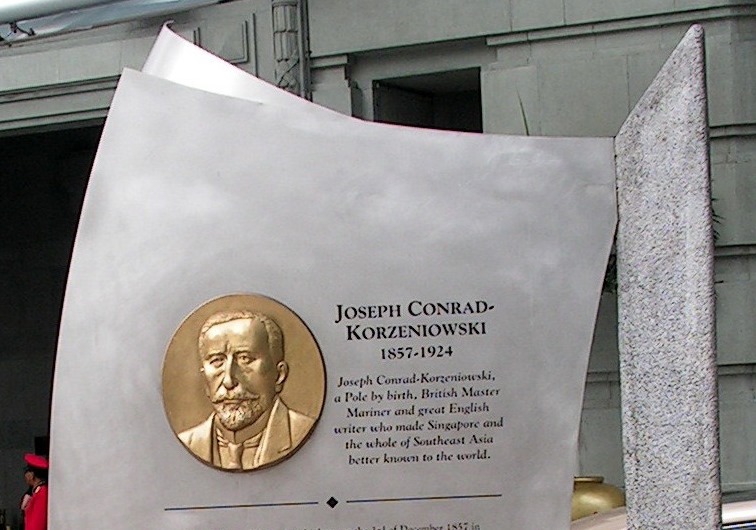
The memorial plaque in honour of Joseph Conrad, located in front of the Fullerton Hotel,

The plaque, which is well over 2 m high, can be found just across a small road from the hotel, close to Cavenagh Bridge. Flanked by shrubbery, the memorial’s placement is no coincidence. Conrad had been a seaman before turning to writing and Singapore had served as his homeport for five months in the late 1880s. Conrad would have been a regular visitor to the spot where the Fullerton Hotel is now because this was where the Master Attendant’s Office had been. (The Master Attendant, whom Conrad referred to as the Harbour Master, was responsible for the control of shipping in the roadstead.)
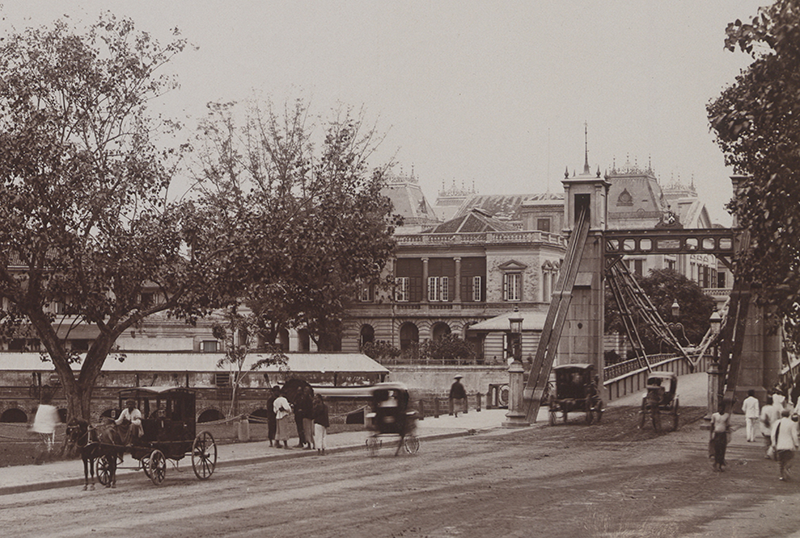
The Master Attendant’s Office next to Cavenagh Bridge, 1890. The distinctive roof of the post office can be seen in the background. Photo by G.R.Lambert. Lee Kip Lin Collection, National Library, Singapore.

Although Conrad did not spend much time in this region, it made a deep impression on him; about half of everything he wrote revolves around this part of the world. This includes five novels and more than a dozen short stories and novellas. Many of them were directly based on his experience as first mate on a ship that sailed regularly from Singapore to a small trading post about 48 km up the Berau River on the east coast of Borneo between 1887 and 1888. 

The people, places and events Conrad encountered in the region come alive in works like Almayer’s Folly (1895), The Outcast of the Islands (1896), Lord Jim (1900), Victory (1915) and The Rescue (1920). It is his excellent visual memory of people, landscape, estuaries, rivers, climate, jungle foliage, commerce, local politics, religion and dress that bring his fictional world to life.
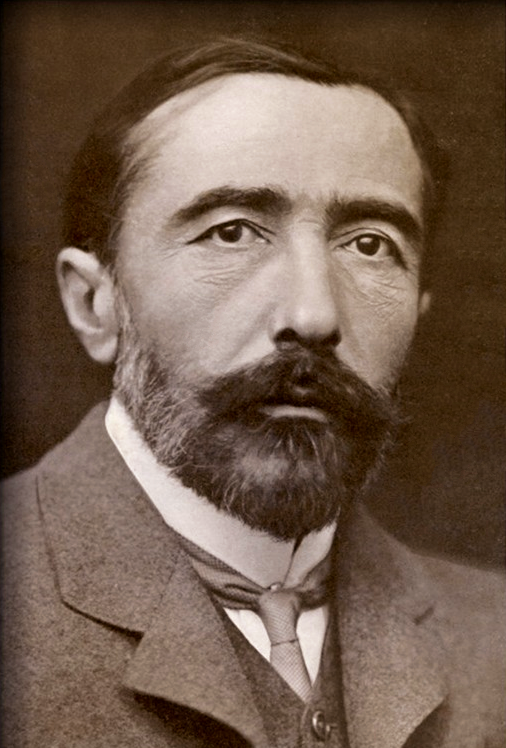
Portrait of Joseph Conrad by George Charles Beresford, 1904. © National Portrait Gallery, London.

Conrad first set foot on Singapore’s shores in 1883. At the time, he was the second mate on the Palestine, which was carrying coal from England to Bangkok. The ship set off from Newcastle in November 1881 but while crossing the English Channel, the Palestine met strong winds and started to leak. It limped back to Falmouth in Cornwall for repairs and finally left for Bangkok on 17 September 1882. Unfortunately, in March 1883, its cargo of coal caught fire and the ship sank near Sumatra. The officers and crew were rescued and taken to Singapore on the British steamship Sissie. Here, the Sissie joined the forest of masts anchored in New Harbour (renamed Keppel Harbour in 1900) while around them were hundreds of Chinese tongkangs (a small type of boat used to carry goods along rivers) and Malay prows unloading goods from trading vessels. 

This was Conrad’s first view of Singapore. Before him was Johnston’s Pier, the Master Attendant’s Office, the entrance to the Singapore River and warehouses filled with goods that were in transshipment to the Malay Peninsula, Borneo, the Dutch East Indies and Hong Kong. In the centre was Fort Canning Hill (the former Government Hill). Below that lay the European town, the mansions of prominent European merchants and St Andrew’s Cathedral.
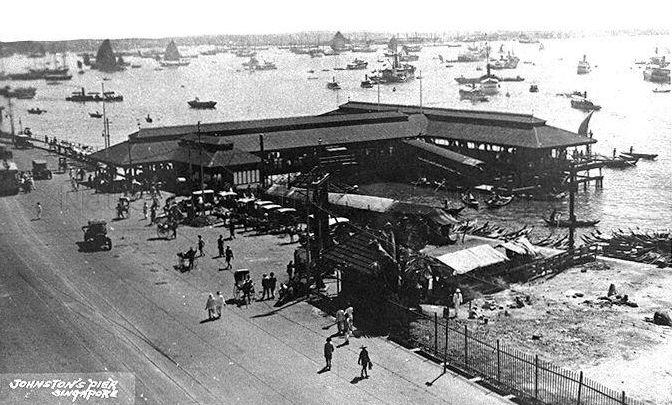
Johnston’s Pier was where passengers would disembark when they arrived in Singapore, c. 1910s. It was demolished and replaced by Clifford Pier in the mid-1930s. Courtesy of National Archives of Singapore.

Singapore is the “Eastern port” referred to in Lord JimThe End of the Tether (1902) and The Shadow-Line (1917), even though Conrad never names the port. In The End of the Tether, Captain Henry Whalley of the steamer Sofala describes the busy harbour with the ships and the Riau Islands in the background:

“Some of these avenues ended at the sea. It was a terraced shore, and beyond, upon the level expanse, profound and glistening like the gaze of a dark-blue eye, an oblique band of stippled purple lengthened itself indefinitely through the gap between a couple of verdant twin islets. The masts and spars of a few ships far away, hull down in the outer roads, sprang straight from the water in a fine maze of rosy lines pencilled on the clear shadow of the eastern board.”

Close to the Master Attendant’s Office was Emmerson’s Tiffin Rooms on Flint Street, which drew sailors, merchants and visitors to its daily lunch menu. It advertised a Tiffin à la carte that is best described as Mulligatawny soup and a Malay chicken curry and rice. These men liked the noisy camaraderie of the place, where patrons exchanged tales of ships, sailors, disasters at sea, piracy, and the latest rumours.

At the junction of Flint Street and Battery Road was the ship chandler McAlister and Company. A vast cavern-like space, the store contained every sundry item that a ship needed to put to sea.

In this 1890 map, the Master Attendant’s Office can be seen in the top left, next to the post office. McAlister and Company is located at no. 5, at the junction of Flint Street and Battery Road. Emmerson’s Tiffin Rooms is listed as occupying the upper floors of nos. 1 and 2. Image reproduced from B.E. D’Aranjo, The Stranger’s Guide to Singapore (Singapore: Sirangoon Press, 1890), 4f, 4g. (From National Library Online).

Records show that Conrad was discharged from the Palestine on 3 April 1883 and he remained in Singapore for the whole of April while waiting for a passage back to England. He would have stayed in the Officers’ Sailors Home on High Street, behind St Andrew’s Cathedral, until he embarked on his return passage in May that year. In The Shadow-Line, he describes the home, which he refers to as the Officers’ Home, as a “large bungalow with a wide verandah and a curiously suburban-looking little garden of bushes and a few trees between it and the street. That institution partook somewhat of the character of a residential club, but with a slightly Governmental flavour about it, because it was administered by the Harbour Office. Its manager was officially styled Chief Steward”.

Conrad also frequented the port area, including the various cafes and bars where seamen congregated to swap stories and compare voyages. It is likely that while waiting to return to England in 1883, he would have become acquainted with the scandal around the pilgrim ship Jeddah, whose events provided the inspiration for the setting of Lord Jim

While bringing close to 1,000 Muslim pilgrims from Singapore and Penang to Mecca in 1880, the Jeddah ran into trouble and began taking in water. The ship’s captain and some of the officers escaped in a lifeboat, leaving behind all the passengers on board. The captain and the officers were subsequently rescued and brought to Aden, in Yemen, where the captain claimed that the Jeddah had sunk with all lives lost. Fortunately for the passengers, but unfortunately for the captain, the Jeddah did not sink. Instead, it was rescued by a passing ship and towed to Aden, where it arrived a few days after the rescued captain and officers. The captain’s deception was thus exposed and the fact that the captain had abandoned his passengers and lied about the sinking caused an enormous scandal.

In Lord Jim, a pilgrim ship named the Patna undergoes a similar experience and the incident becomes the talk of the town. In the novel, Conrad writes: “The whole waterside talked of nothing else… you heard of it in the harbour office, at every shipbroker’s, at your agent’s, from whites, from natives, from half castes, from the very boatmen squatting half-naked on the stone steps as you went up.” The events around the Patna scandal sets the stage for introducing the main protagonist of the novel, the first mate named Jim, who escapes with the captain and subsequently lives with the guilt and shame of his actions. Jim, himself, has a real-life analogue in the first mate of the Jeddah, Augustine “Austin” Williams, who joined the captain in abandoning the ship. After the inquiry, Williams remained in Singapore and worked as a water clerk for McAlister and Company.

In February 1887, Conrad signed on as first mate of the Highland Forest, a three-masted barque of a little over 1,000 tons. It was berthed in Amsterdam while waiting to load general cargo for a voyage to the port of Semarang on the north coast of Java. It was a rough voyage and Conrad met with an accident when one of the minor spars (used in the rigging of a sailing vessel to support its sail) fell against his back and sent him sliding on his face along the main deck for a considerable distance. In Lord Jim, Jim suffers a similar accident, and as a result, Jim “spent many days stretched on his back, dazed, battered, hopeless, and tormented as if at the bottom of an abyss of unrest. He did not care what the end would be, and in his lucid moments overvalued his indifference”.

As Conrad’s injuries persisted even after the Highland Forest had unloaded its cargo in Semarang in June 1887, he reported to the Dutch doctor there that he was experiencing “inexplicable periods of powerlessness and sudden accesses of mysterious pain”. The doctor told him that the injury could remain with him for his entire life. He said: “You must leave your ship; you must be quite silent for three months – quite silent.”

Conrad was discharged from the Highland Forest on 1 July 1887 and sent on the next ship for hospitalisation in Singapore. Here, he was registered at the hospital as a “Distressed British Seaman” to recuperate. In The Mirror of the Sea, a collection of autobiographical essays, Conrad describes what it was like lying on his back in a Far Eastern hospital and having “plenty of leisure to remember the dreadful cold and snow of Amsterdam, while looking at the fronds of the palm-trees tossing and rustling at the height of the window”. Conrad’s experience is the likely inspiration for the scene in Lord Jim when the young seaman recuperates in a hospital in that unnamed Eastern port:

“The hospital stood on a hill, and a gentle breeze entering through the windows, always flung wide open, brought into the bare room the softness of the sky, the languor of the earth, the bewitching breath of the Eastern waters. There were perfumes in it, suggestions of infinite repose, the gift of endless dreams. Jim looked every day over the thickets of gardens, beyond the roofs of the town, over the fronds of palms growing on the shore, at that roadstead which is a thoroughfare to the East, – at the roadstead dotted by garlanded islets, lighted by festal sunshine, its ships like toys, its brilliant activity resembling a holiday pageant, with the eternal serenity of the Eastern sky overhead and the smiling peace of the Eastern seas possessing the space as far as the horizon.”9

As soon as he could walk unaided, Conrad checked out of the hospital for a further period of rehabilitation and to look for a berth back to England. While waiting, he stayed in the Officers’ Sailors Home again and spent time with the other seamen in the port. Once Conrad had fully recovered, he would walk daily from the Officers’ Sailors Home towards the Master Attendant’s Office to look for a passage home. Along the way, he would have passed the white spire of St Andrew’s Cathedral, the frontages of the new government buildings, the famous Hotel de l’Europe (site of the former Supreme Court building and part of the National Gallery Singapore today) and along the shaded Esplanade with its enormous trees towards the Singapore River. He would then cross Cavenagh Bridge to reach the Master Attendant’s Office at the other end of the bridge.
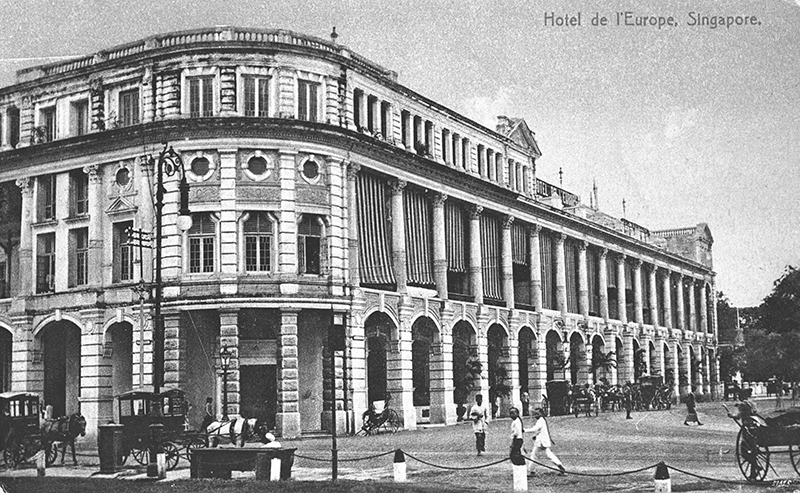
Hotel de l’Europe on the corner of High Street and Esplanade Road, c. 1906. Lim Kheng Chye Collection, courtesy of National Archives of Singapore.

Cavenagh Bridge, opened in 1869, straddled the entrance to the Singapore River and provided one of the most famous views of Singapore. In the late 19th century, Boat Quay would have been packed with a myriad of lighters, tongkangs and sampans bringing goods and people onto the river. The crescent of buildings and warehouses along the quay was taken up with the unloading and loading of these boats. Hundreds of coolies unloaded huge crates, casks, boxes and bales of British manufactured goods into the warehouses, followed by the loading of bales of gambier, bundles of rattans, and bags of tin, sago, tapioca, rice, pepper and spices for export to foreign markets. Conrad describes this scene in his book, The Rescue:

“One evening about six months before Lingard’s last trip, as they were crossing the short bridge over the canal where native craft lay moored in clusters… Jӧrgenson pointed at the mass of praus, coasting boats, and sampans that, jammed together in the canal, lay covered with mats and flooded by the cold moonlight, with here and there a dim lantern burning amongst the confusion of high sterns, spars, masts, and lowered sails.”
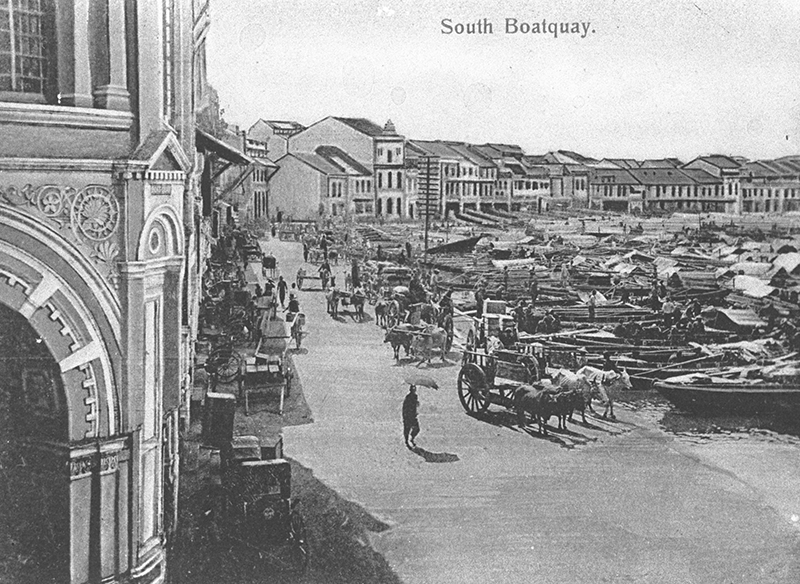
View of Boat Quay from Cavenagh Bridge, c. 1906. Arshak C. Galstaun Collection, courtesy of National Archives of Singapore.

In August 1887, Conrad was hired as first mate on the trading ship Vidar. He found the vessel berthed at the Tanjong Pagar docks, a squared-off compound of warehouses, coal sheds and workshops. According to the Singapore and Straits Directory, its owner, Syed Mohsin Bin Salleh Al Jooffree, also owned several other steamers. The Vidar was a picturesque old steamship with a colourful crew, and its captain, James Craig, had sailed the local waters for the last 10 or 12 years and knew them like the back of his hand. Not only did he have to navigate an often dangerous archipelago, filled with marauding pirates and treacherous rivers, he also had to deal with local traders – Dutch, English, Chinese, Arab, Malay and Bugis – in each of these unusual ports. Besides the captain and the first mate, there were two European engineers, a Chinese third engineer, a Malay mate, a crew of 11 Malays, as well as a group of Chinese coolies who worked as deckhands for the loading and unloading of cargo.

This was a microcosm of the people of the archipelago and they would all have communicated in bazaar Malay which was the commonly used trading language of the region. Already an accomplished linguist, Conrad would have quickly picked up a good knowledge of Malay and this would have brought him into direct contact with the people he later describes in his books.

On the Vidar, Conrad makes four voyages from Singapore to the Berau River in Borneo before signing off from the ship on 4 January 1888. He lowered himself and his seabag into a sampan in the harbour and was rowed ashore to Johnston’s Pier from where he took a horse-drawn cab to the Officers’ Sailors Home. 

He had just given up a good berth and a comfortable life in a fine little steamship with an excellent master. However, Conrad’s ambition was to command a sailing ship, a square rigger, not in the comfortable waters of the East Indies, but on the great oceans of the world. In The Shadow-Line, which is based on Conrad’s own experience of his first command, the protagonist, who was accompanied by his captain, describes a similar event, of signing off from a ship, as taking place in the Harbour Office, in a “lofty, big, cool white room” where everyone is in white.

“The official behind the desk we approached grinned amiably and kept it up till, in answer to his perfunctory question, “Sign off and on again?” my Captain answered, “No! Signing off for good.” And then his grin vanished in sudden solemnity. He did not look at me again till he handed me my papers with a sorrowful expression, as if they had been my passports for Hades. While I was putting them away he murmured some question to the Captain, and I heard the latter answer good-humouredly: “No. He leaves us to go home.” “Oh!” the other exclaimed, nodding mournfully over my sad condition.”

Conrad was ashore for two weeks when he received a message on 19 January 1888 that the Harbour Master would like to see him urgently. The Harbour Master explained that the master of a British ship, the Otago, had died in Bangkok and the Consul-General there had cabled him to request for a competent man to take command. Since Conrad already had his Master’s ticket, the Harbour Master gave him an agreement which read:

“This is to inform you that you are required to proceed in the S.S. Melita to Bangkok and you will report your arrival to the British Consul and produce this memorandum which will show that I have engaged you to be the Master of the Otago.”
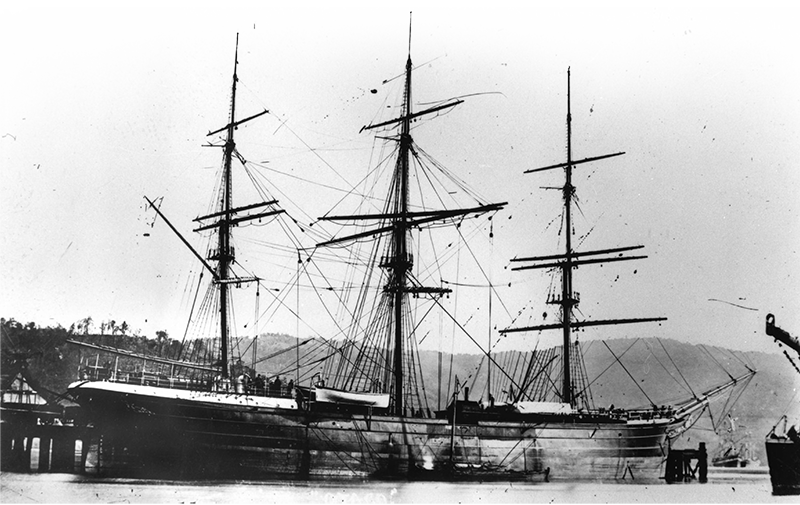
Joseph Conrad commanded the Otago between 1888 and 1889. Courtesy of State Library of Queensland.

Conrad would undoubtedly have been thrilled by this twist of fate. Perhaps he felt the same way the protagonist did in The Shadow-Line, who likewise had just been given his first command:

“And now here I had my command, absolutely in my pocket, in a way undeniable indeed, but most unexpected; beyond my imaginings, outside all reasonable expectations, and even notwithstanding the existence of some sort of obscure intrigue to keep it away from me. It is true that the intrigue was feeble, but it helped the feeling of wonder – as if I had been specially destined for that ship I did not know, by some power higher than the prosaic agencies of the commercial world.”

The Melita was leaving for Bangkok that evening and Conrad would be on it. He arrived in Bangkok on 24 January 1888 and as the coastal steamer came up the river, its captain was able to point out Conrad’s new ship. The lines of its fine body and well-proportioned spars pleased Conrad immensely as this was a high-class vessel, a vessel he would be proud to command. 

After almost two years away, Conrad returned to London in May 1889, idle and without a ship. His memory and imagination returned to Singapore and the Malay Archipelago, and he began writing a novel based on his voyages from Singapore on the Vidar. As he wrote in his autobiographical work, A Personal Record (1912), the characters from his time on the Berau River began to visit him while he was in-between work in London:

“It was in the front sitting-room of furnished apartments in a Pimlico square that they first began to live again with a vividness and poignancy quite foreign to our former real intercourse. I had been treating myself to a long stay on shore, and in the necessity of occupying my mornings, Almayer (that old acquaintance) came nobly to the rescue. Before long, as was only proper, his wife and daughter joined him round my table and then the rest of that Pantai band came full of words and gestures. Unknown to my respectable landlady, it was my practice directly after my breakfast to hold animated receptions of Malays, Arabs, and half-castes.”

These characters and places eventually end up populating Almayer’s Folly, Conrad’s first novel. Published in 1895, the work would launch Conrad’s career as a writer. He would go on to draw upon his experiences in the Malay world in subsequent novels and short stories. Along the way, he helped craft a particular image of Singapore, the Malay Archipelgo and the Dutch East Indies in the imagination of the reading public.

This article was published by the National Library Singapore in their magazine BiblioAsia with the text by Ian Burnet and the images supplied by the National Library Singapore.

Ian Burnet is the author of the book, Joseph Conrad’s Eastern Voyages – Tales of Singapore and an East Borneo River.
https://www.ianburnetbooks.com

Posted in Uncategorized | Tagged , , , , , , , , , , , , , | 4 Comments

2013 – 2023 The top ten posts of the decade

After 10 years of blogging there have been 152502 views by thousands of followers and here are the top blogs of all time. Please go to the search button to find the blogs you may have missed.

Thanks to all those followers for your interest in Indonesia

https://www.ianburnetbooks.com

Posted in Uncategorized | Tagged , | 4 Comments

The Makalamau Drum is shattered in Museum fire (Updated)

The largest Dong Son type drum found in Indonesia is the Makalamau Drum which was discovered on the island of Sangeang off the island of Sumbawa.

The Makalamau Drum is 122 centimetres in diameter and in the centre is a twelve-pointed star encircled by twelve concentric bands ornamented with geometric or figurative designs. The body of the drum is decorated with scenes of elephants and horses led by human figures, as well as fish, birds and boats, The outermost band is ornamented with four sculptured frogs paced equidistant around the rim. It is believed that in the cosmology of the drum makers, the star represents the sun and the frogs the rain. The sun and the rain, induced by the thunderous sound produced when beating the hollow brass drum, were necessary to yield crops and sustain life.

Photo: Ian Burnet

Central Jakarta Police Chief Komarudin told reporters that the National Museum’s Building A, which housed prehistoric artifacts, was engulfed by the fire on Saturday September 16, resulting in the destruction of at least four rooms. It is suspected that the fire was triggered by a short circuit that occurred in the museum renovation project area. He said the fire was brought under control within hours and no injuries were reported.  “Experts will provide us with an assessment of the losses, but the fire has destroyed display rooms, and the lobby, and even caused the roof to collapse. The museum contained many flammable materials,” he explained.

The National Museum Fire. Photo: Hidayat Azriel

At least 817 historical objects were impacted by a fire that broke out at the National Museum on Saturday (September 16), the National Museum’s Acting Head of Museum and Cultural Properties, Ahmad Mahendra, stated. “The affected collections and historical objects are either made of bronze, ceramics, terracotta, and wood or miniatures and replicas of prehistoric objects that were found intact or lightly to severely damaged,” Mahendra noted here on Tuesday.

Education and Culture Minister Nadiem Makarim at the National Museum on Saturday while speaking to reporters.

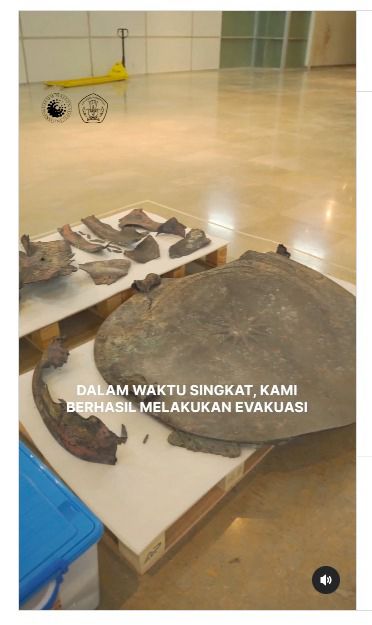
Unfortunately, the intensity of the fire caused the bronze base of the Makalamau Drum to seriously overheat and then shatter when the fire was flooded with water. Fortunately, the upper surface of the Makalamau Drum has remained mostly intact, and it is hoped that this historic Dong Son drum will be able to be restored.

.
The remains of the Makalamau Drum are now on display in the newly reopened and restored National Museum, after the fire.

https://www.ianburnetbooks.com

Posted in Uncategorized | Tagged , , , , | 1 Comment

The Glass Islands – Book Review

THE GLASS ISLANDS, by Mark Heyward

Published by Monsoon Books

Reviewed by Ian Burnet

Mark Heyward in his book ‘The Glass Islands’ tells the story of building a family home on the Indonesian island of Lombok. However, he has achieved much more than this, as through this story we learn of his Indonesian family, of his thirty years of living in Indonesia, of the people of the island of Lombok, of their different religions, of their daily life and of the seasons which affect this tropical paradise. He has structured his book around these seasons and the chapters include – The Burning Season, The Season of the Wind, The Rainy Season, The Season of the Sea and The Season of the Sun.

The island of Lombok lies immediately east and only twenty-five kilometres from the island of Bali. As Heyward explains, it was originally populated by the Malay Sasak people who follow the form of Islam first brought to Indonesia by early Arab traders in the 15th century, however, the west coast of the island where Mark lives was occupied in later centuries by the Hindu Balinese. Overlain on these two people, are communities of Chinese and Arab traders and a later layer of Western expatriates who for various reasons have decided to live on the island.

The people of Lombok live their lives like people on any other island. Babies are born, children are raised, young folk flirt and marry, old folk grow old and die. Each day the sun rises and falls. The rains come and go. The tides pull back and forth, The rice is planted, bright and green. Four months later it is harvested, fat and golden. The village folk go about their business, sweeping their yards, scolding their children and arguing with their husbands. Each day is punctuated with simple meals, temple offerings and the call to prayer. And in this way the business of life is negotiated. There is comfort in the sameness of this life, in its slowness, in its routines and familiarity. And life for me is measured in the changing of the seasons, the falling of the leaves, the coming of the rains – another Christmas and another Ramadan.
Heyward and his Indonesian wife live in a rented home, but fall in love with some land, high on a ridge, cut by a seasonal stream and surrounded by tangled banyan fig trees, that looks west across the Lombok Strait towards Bali and the peak of the Gunung Agung volcano.  Heyward lovingly describes the nature of this terrain, its trees and plants, the animal and bird life it supports, its sunset views and their dream of building a family home in this magical location.  

The site consists of two blocks, one on each side of a seasonal stream … Halfway across our block, the stream cuts through a rocky shelf and curls around the base of a huge, tangled banyan fig tree. Beneath a screen of dangling aerial roots, an ancient-looking well is cradled in the tree’s gnarled ground roots. A flat rock has been positioned above the well, a place for washing and perhaps prayer. The place smells of tradition, of mystery and hidden meanings: a little dank in the perpetual shade of the banyan tree, dim beneath the remnant forest giants that line the stream with their buttressed roots and attendant ferns.

As you would expect, land titles are not always well documented in Indonesia and negotiations are often difficult, but this allows us to meet the different landowners, of different ethnicities, and observe the skill of his Indonesian wife in navigating through these potential hazards, at the same time as her expat husband has to remain hidden from view.    

The process of house construction begins with the ‘breaking of the soil’ at the end of September and at the end of the dry season with a communal Muslim ceremony held with their new neighbours. Weeks later, the arrival of the rainy season means the reinvigoration of the land and allows for the planting of grasses and various plants to stabilise the terrain after the building of an access road and the levelling of the building site. The house itself is to be constructed from recycled teak originally used to build a traditional Javanese Joglo house, which the Heywards had acquired years earlier in Central Java. The construction takes more than a year and allows us to follow the seasons from dry to wet, and wet to dry as the winds change from east to west and then to the east again until the Heyward family can move into their dream home just before Christmas the following year.

In this book, Mark Heyward eloquently describes his love of family and his love of Indonesia, through this heart-warming story of how he and his wife build a new life and a new house on the island of Lombok. During this process he allows us to better understand the people of his adopted community, the influences of different religions on these peoples, and the seasons that govern their lives and the planting of their fields.

Some things never change. The love of a man for his wife, for his children; his need to leave a mark on this earth; to build; to plant a garden, to make a home; his urge to write, to sing songs, to tell stories; his fear of death, his love of life.

Don’t miss the opportunity to immerse yourself in this enthralling description of one family’s life on the Indonesian island of Lombok!

Ian Burnet has lived, worked, and travelled in Indonesia for over fifty years and is the author of five books about maritime history and the Indonesian archipelago, including Spice Islands, East Indies, Archipelago, Where Australia Collides with Asia and Joseph Conrad’s Eastern Voyages.

12 November, 2023

https://www.ianburnetbooks.com

Posted in Uncategorized | Tagged , , , , | 1 Comment

Joseph Conrad at the Ubud Writers Festival

https://www.ianburnetbooks.com

Posted in Uncategorized | Tagged , , , , , | 2 Comments

Max Havelaar and the Path to Indonesian Independence

From the 19th Century, coffee grown in Java was traded across the world and was so popular that in the United States that a ‘cup of Java’ was America’s favourite beverage. In its original state, Java coffee is 100 percent arabica, which has a higher quality, a stronger flavor, and noticeable acidity. This is mostly in contrast to robusta coffee, which is milder and utilized in instant coffee blends.

By the mid-nineteenth century, the colonial control of the Dutch East Indies (present-day Indonesia ) had passed from the Dutch East India Company (VOC) to the Dutch government, due to the economic failure of the VOC. In order to increase revenue, the Dutch colonial government implemented a series of policies termed the  Cultivation System (Dutch: cultuurstelsel), which mandated Indonesian farmers to grow a quota of commercial crops such as  sugar and coffee, instead of growing staple foods such as rice.

At the same time, the colonial government also implemented a tax collection system in which the collecting agents were paid by commission. The combination of these two strategies caused widespread abuse of colonial power, especially on the islands of Java and Sumatra, resulting in abject poverty and widespread starvation of the farmers. 

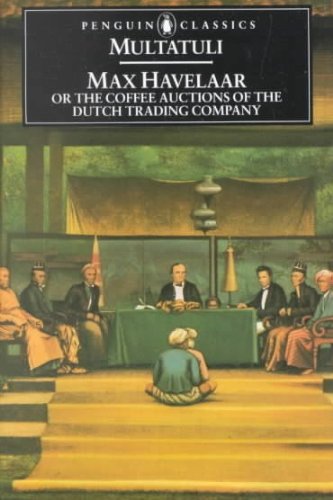
For more than twenty years Eduard Douwes Dekker held a series of posts in the colonial government of the Dutch East Indies. In 1857, he was appointed Assistant Resident of Lebak, in the Banten province of Java. By this time, however, he had begun to openly protest the abuses of the Dutch colonial system and was threatened with dismissal. Instead, he resigned his appointment and returned to the Netherlands. Determined to expose the scandals he had witnessed during his years in the Dutch East Indies, he began to write newspaper articles and pamphlets. Little notice was taken of these early publications until, in 1860, when he published his satirical anti-colonialist novel Max Havelaar: The Coffee Auctions of the Dutch Trading Company under the pseudonym Multatuli.

Eduard Dowe Dekker (Multatuli)

In the novel, the story of Max Havelaar, a Dutch colonial administrator, is told by two diametrically opposed characters: the hypocritical coffee merchant Batavus Droogstoppel, who intends to use Havelaar’s manuscripts to write about the coffee trade, and the romantic German apprentice Stern, who takes over when Droogstoppel loses interest in the story. The opening chapter of the book nicely sets the tone of the satirical nature of what is to follow, with Droogstoppel articulating his pompous and mercenary world-view at length. At the very end of the novel Multatuli himself takes the pen and the book culminates in a denunciation of Dutch colonial policies and a plea to king William III of the Netherlands to intervene on behalf of his Indonesian subjects.

There is no mention of the Dutch Trading Company or its auctions anywhere in the book. Multatuli intentionally chose the misleading subtitle, so as to deceive anyone interested in the coffee trade into buying and reading the book. Multatuli’s intent was, after all, for his message to be heard, so he wanted the book to be read by as many people as possible. One reader fell for this and then wrote an open letter in which he complained that the book wasn’t actually about coffee auctions.

The original French translation of Max Havelaar

The book caused enormous controversy in the Netherlands. Apologists for colonialism accused Multatuli of exaggeration, he was unsuccessfully pressured to withdraw the inflammatory book and then forced to leave Holland and live in exile in Germany. Critics claimed it lacked literary merit; nonetheless, Max Havelaar was read all over Europe. The book raised the awareness of the Dutch public that the wealth they enjoyed was the result of the suffering of their colonial subjects. Multatuli’s main goal, in writing Max Havelaar, was to put the suffering of the common man in the Dutch East Indies on the agenda in the Netherlands. Although at first few people paid attention to this aspect of the book, he certainly succeeded in the long run as by 1900, the Dutch government had adopted the Ethical Policy which stated that it was the responsibility of the colonial government to educate their subjects rather than simply exploit them. By which the Dutch colonial government attempted to ‘repay’ their debt to their colonial subjects by providing education to some classes of Indonesians, generally those members of the elite loyal to the colonial government.

In 1908 those educated Indonesian students in the Netherlands founded the Perhimpoenan Indonesia (The Indonesian Association). This was important because it was one of the first organisation to campaign for full independence for Indonesia from the Netherlands (and to use the term Indonesia). Many of the Perhimpoenan Indonesia students, such as Mohammed Hatta, would later acquire prominent political positions in the independent Indonesia.

The founders of Perhimpoenan Indonesia – G.Mangoenkoewoermo, Mohammed Hatta, Koesuma Soemantri, Sastro Moeijono and R.M.Sartono

The Indonesian novelist Pramoedya Ananta Toer has argued that by triggering these educational reforms, Max Havelaar was responsible for the nationalist movement that ended Dutch colonialism in Indonesia. Thus, according to Pramoedya, Max Havelaar is ‘the book that killed colonialism’. In June 2002, the Society of Dutch Literature proclaimed Multatuli (Eduard Douwes Dekker) the most important Dutch writer of all time.

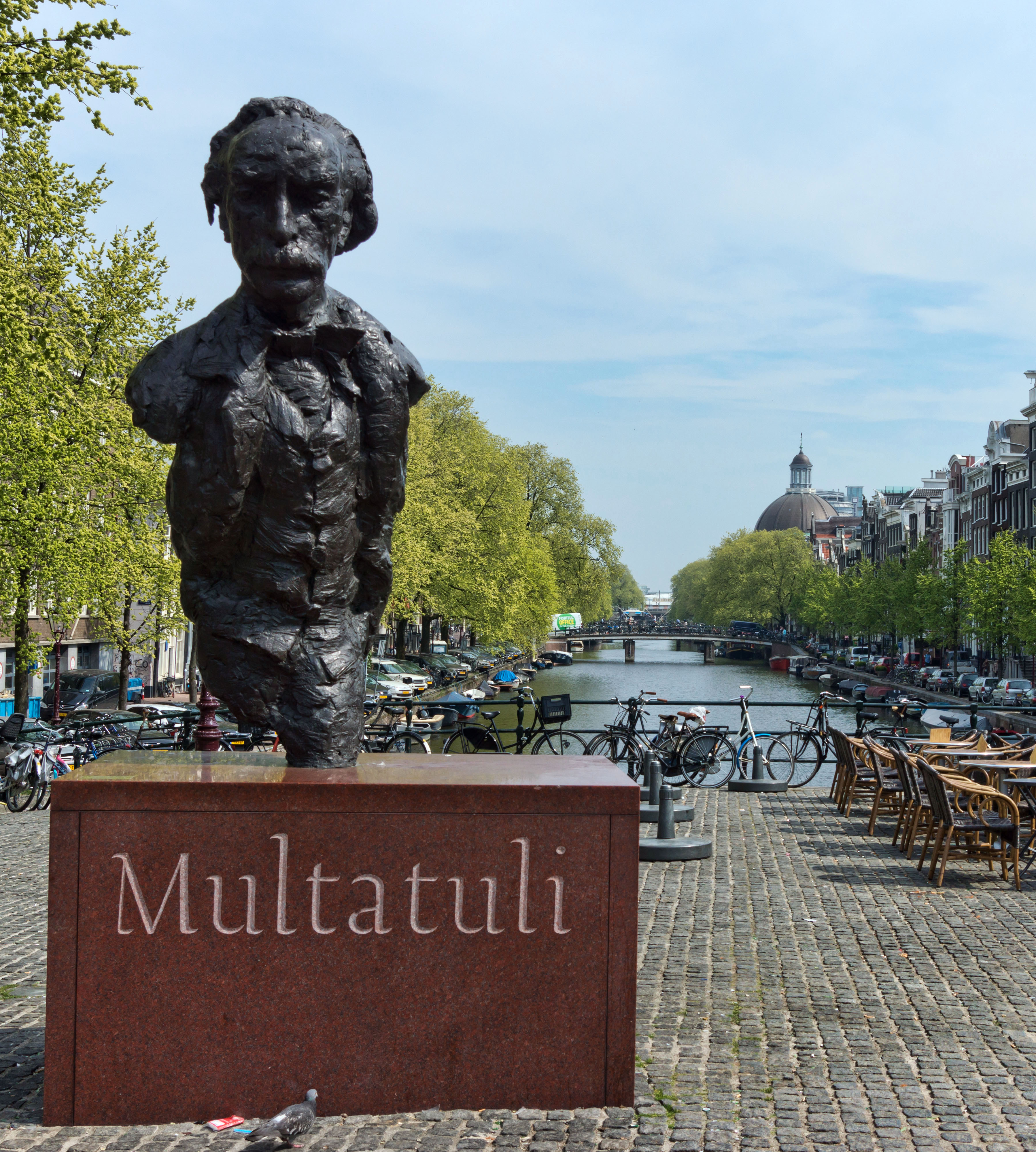
The Multatuli Museum is located in Amsterdam at Korsjespoortsteeg 20 where Eduard Douwes Dekker was born.

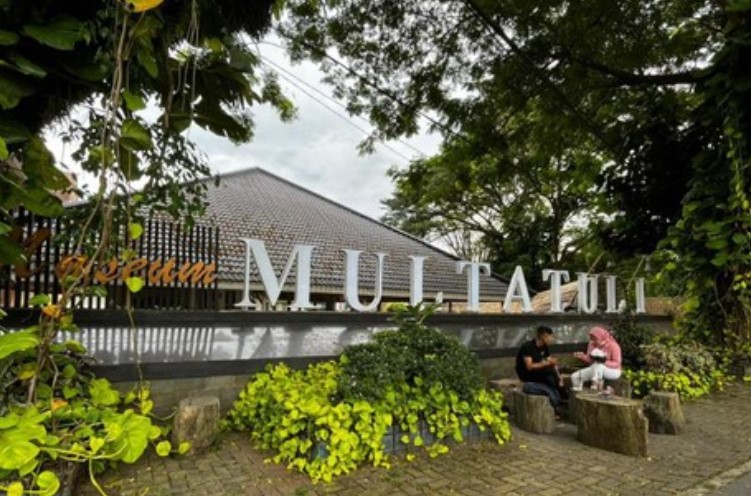
Another Multatuli Museum was opened on 11 February 2018 in  Rangkasbitung, Lebak Regency, where Eduard Dowes Dekker was formerly the Assistant Resident.

https://www.ianburnetbooks.com

Posted in Uncategorized | 8 Comments

The Makalamau Drum of Sangeang Island

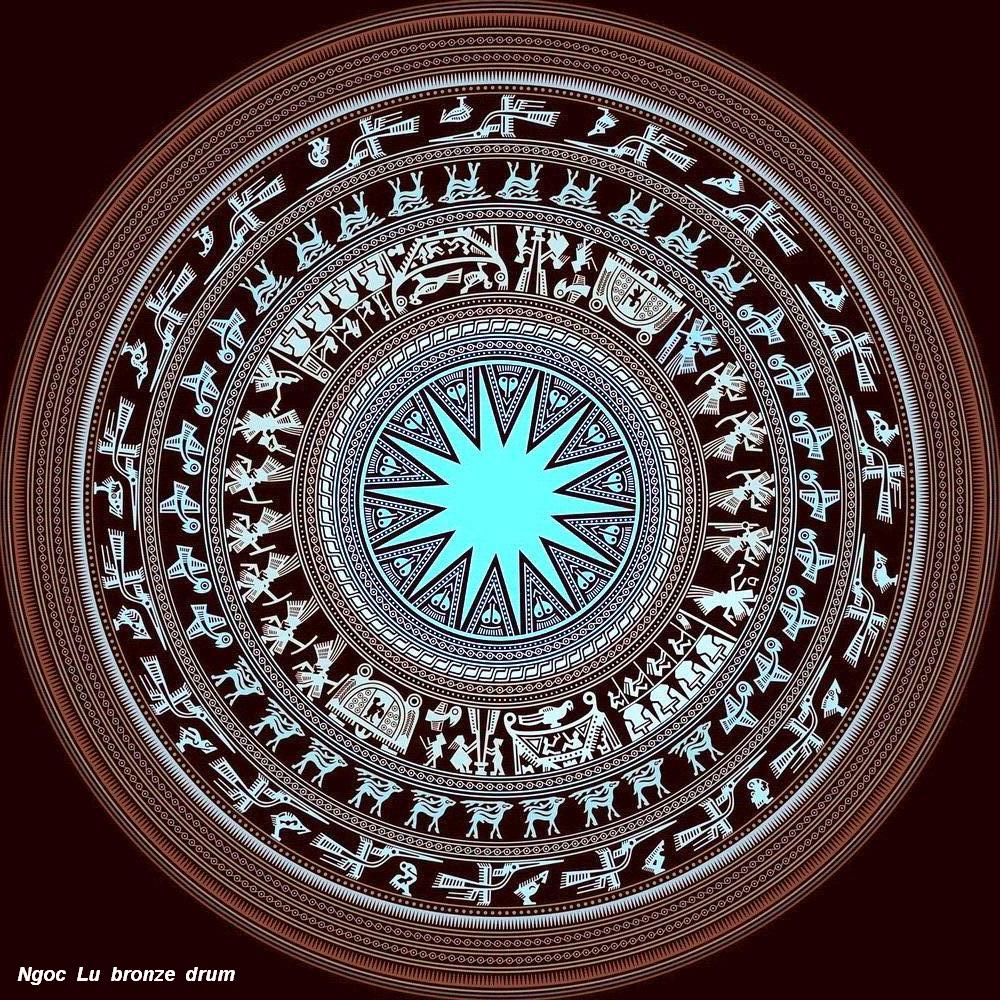
The Đông Sơn drum is a type of ancient  bronze drum created by the Đông Sơn culture that existed in north Vietnam. The drums were produced from about 600 BCE or earlier until the third century; they are one of the culture’s most astounding examples of ancient metalworking. The drums, cast in bronze using the lost-wax method are up to a meter in height and weigh up to 100 kilograms (220 lbs). Đông Sơn drums were apparently both musical instruments and objects of worship.

Dongson drum from Vietnam

They are decorated with geometric patterns, scenes of daily life, agriculture, war, animals and birds, and boats. The latter alludes to the importance of trade to the culture in which they were made, and the drums themselves became objects of trade and heirloom items

Surface design of a Ngoc Lu bronze drum from Vietnam

The Dongson drums are characterised by the starburst in the middle which is then surrounded by birds, animals and people in a characteristic style. More than 200 have been found, across an area from Malaysia to Indonesia to Southern China. The discovery of Đông Sơn drums in New Guinea, is seen as proof of trade connections – spanning at least the past thousand years – between this region and the societies of Java, Vietnam and China.

Distribution of the Dongson Drums

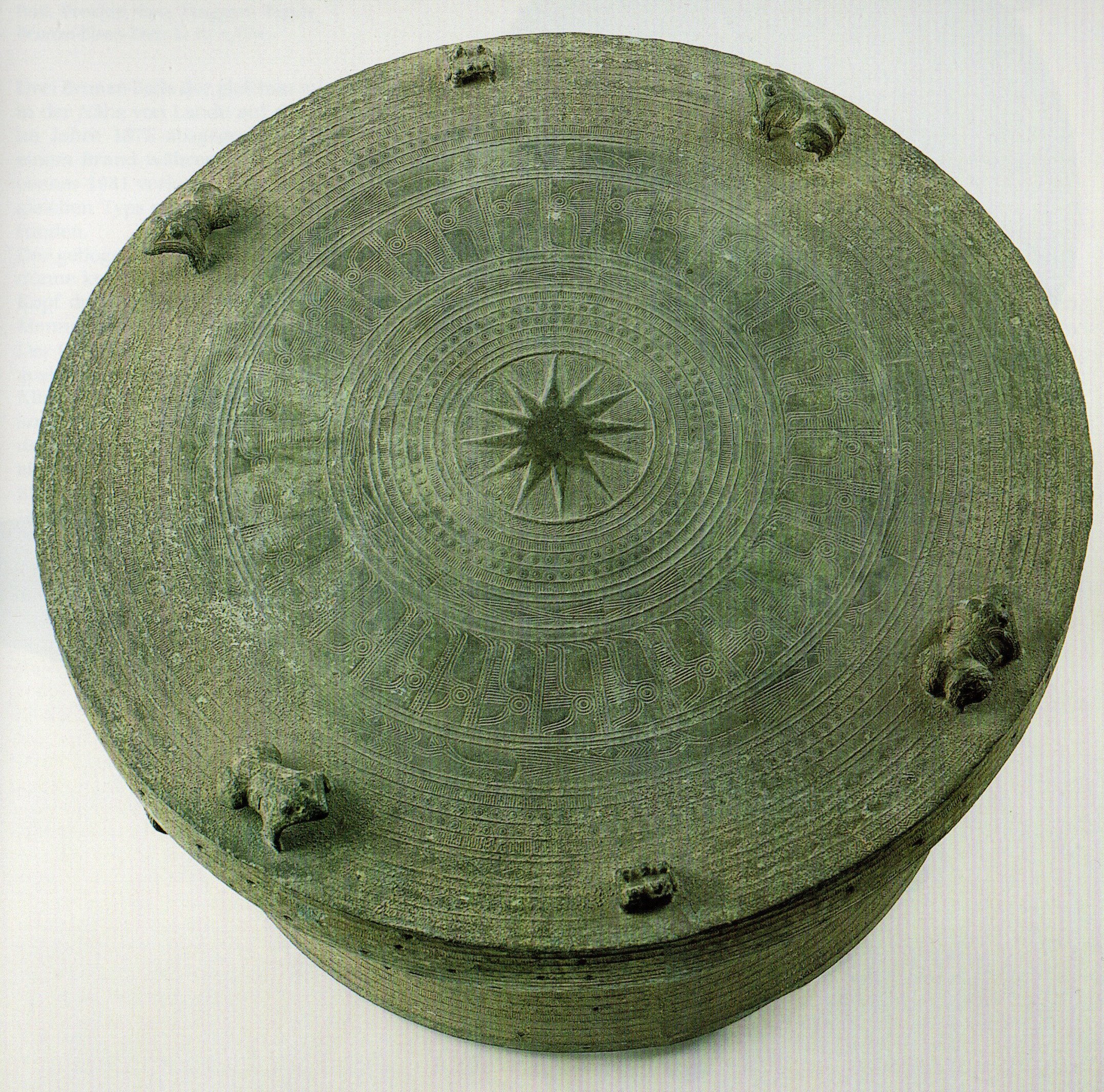
The largest Dong Son type drum found in Indonesia is the Makalamau Drum which was discovered on the island of Sangeang off the island of Sumbawa.

The island of Sangeang
The Makalamau Drum in the Jakarta Museum

The Makalamau Drum is 122 centimetres in diameter and in the centre is a twelve-pointed star encircled by twelve concentric bands ornamented with geometric or figurative designs. The body of the drum is decorated with scenes of elephants and horses led by human figures, as well as fish, birds and boats, The outermost band is ornamented with four sculptured frogs paced equidistant around the rim. It is believed that in the cosmology of the drum makers, the star represents the sun and the frogs the rain. The sun and the rain, induced by the thunderous sound produced when beating the hollow brass drum, were necessary to yield crops and sustain life.

Surface decoration from the Dongson drum in the Museum Volkenkunde, Leiden

https://www.ianburnetbooks.com

Posted in Uncategorized | Tagged , , , , , | 1 Comment

Minyak Kayu Putih, Cajuput Oil, Tea-Tree Oil

Minyak Kayu Putih is found in every household in Indonesia in the form of ointments and liniments for all sorts of aches and pains. It is also used as a fragrance and freshening agent in soaps, cosmetics, detergents and perfumes.

Minyak Kayu Putih


It is produced by steaming and distilling the oil from the leaves of Melaleuca cajuputi. Here is a view of a traditional ‘factory’ distilling minyak kayu putih that I visited on Manipa Island in Maluku. The crushed leaves are boiled in a huge vat over an open fire and the vapour is distilled into the oil, which is used all over Indonesia as a cure for bodily aches and pains.

Image

Melaleuca is almost entirely Australian in its distribution yet the first of its species to be formally described, was based on material from Ambon in Indonesia. Georgius Everhardus Rumphius, a merchant with the Dutch East Indies Company, compiled a detailed account of many of the plants growing in the Malesian (Wallacea) biogeographical region including what he named Arbor Alba which was published in 1741 in his Herbarium Amboinense. This important work has recently been translated into English and published with annotations (Rumphius 2011). His publication predated the accepted starting point for the scientific botanical nomenclature of flowering plants and the formal description of the species occurred in 1767 when the Swedish botanist Carolus Linnaeus gave it the name Melaleuca leucadendra, after taking his descriptive data from Rumphius’ work. Called cajuputi oil by the Dutch it was exported to Europe from the Maluku islands in the first part of the eighteenth century because of its reputation as a panacea in the treatment of all kinds of diseases.

Tea tree oil, also known as melaleuca oil, is an essential oil that comes from steaming the leaves of the Australian tea tree. When used topically, tea tree oil is believed to be antibacterial. Tea tree oil is commonly used to treat acne, athlete’s foot, lice, nail fungus and insect bites.

In Australia Melaleuca is the third most diverse plant genus with up to 300 species as shown on this map of its distribution.

Thanks to the collision of Australia with Asia, the Melaleuca plants were rafted into the Indonesian archipelago on pieces of continent Australia that were sliced off. Along with cloves these are another product of Australia that Indonesia has been able to call their own.

https://www.ianburnetbooks.com

Posted in Uncategorized | Tagged , , , , , , , , | 1 Comment

The Mystery of Pulau Cendana, Sandal Bosch Eyland, Sandalwood Island or Pulau Sumba.

Sandalwood is heavy, yellow, and fine-grained, and, unlike many other aromatic woods retains its fragrance for decades. Both the wood and the oil produce a distinctive fragrance that has been highly valued for centuries and it is often cited as one of the most expensive woods in the world.

Lord Ganesha carved from sandalwood

Sandalwood is indigenous to the tropical belt of peninsular India, the Malay Archipelago and northern Australia. In Indonesian the main distribution was on the islands of Solor, Sumba and Timor. Sandalwood is mentioned in one the oldest pieces of Indian literature, the epic Ramayana story, dating from the fourth century BC. However, Indian foresters question whether sandalwood is native to India and suggest that because of its distribution it was probably introduced from Indonesia many centuries ago.

Santalum album (Sandalwood)

Many Indian Hindu families will keep a block of sandalwood in their home which when rubbed produces a white paste and is then applied as a dot to the forehead to promote concentration during prayer and meditation. The Chinese ritually burn ‘Joss Sticks’ made of sandalwood to venerate their ancestors, which they value as being the finest incense.

Because the oil is in the heartwood including the roots, then the complete tree is harvested and in the past was not replanted as it takes more than thirty years for a sandalwood tree to reach maturity under natural conditions. Which has resulted in what appears to be almost the complete deforestation of the island of Sumba. All sandalwood trees in India are government-owned and their harvest is controlled, however many trees are illegally cut down. Most of the world’s sandalwood now comes from North West Australia where it is commercially grown and harvested.

Sumba Landscape

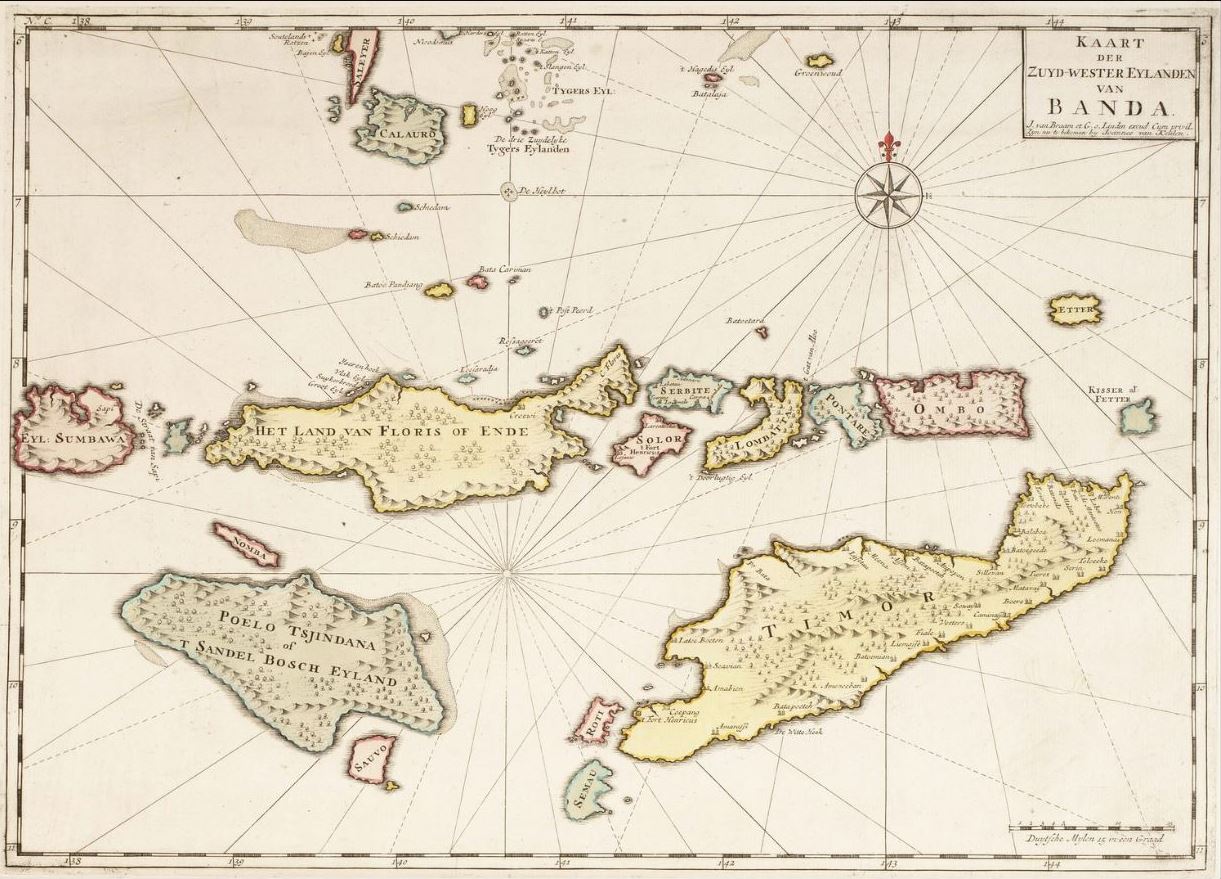
On this early Dutch map of the eastern archipelago, the island of Sumba is named as Poelo Tjsindana or Sandal Bosch Eyland. There are no records that the Portuguese or the Dutch ever harvested sandalwood trees on Sumba and the island has been almost totally deforested, with some sandalwood trees only recently being replanted.

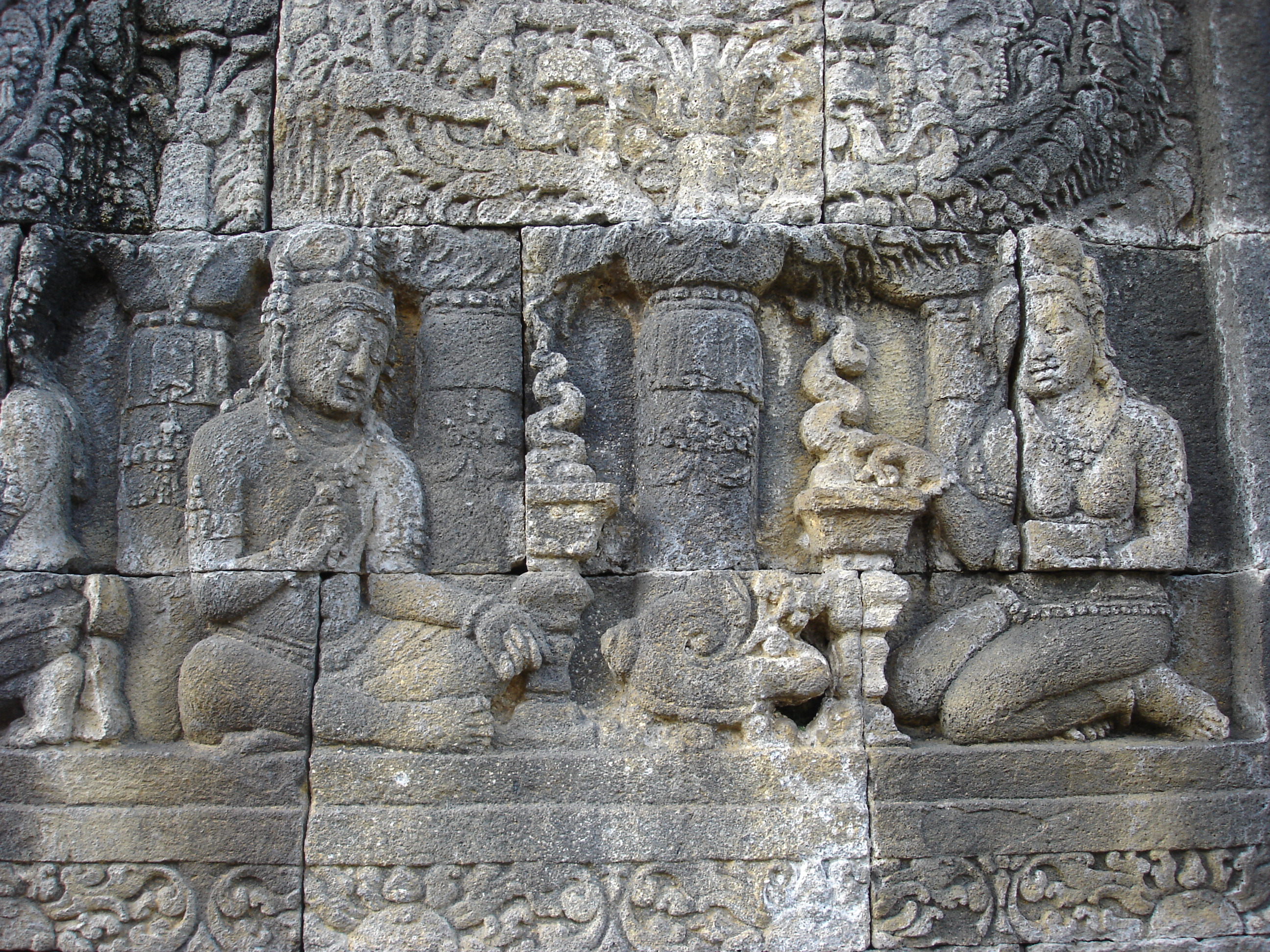
So where did these sandalwood trees from Sandalwood Island go? The burning of incense to honour the Gods and honour the ancestors go back centuries as is depicted in this image from the Borobodur Temple, a Buddhist monument that was built in the 8th century. It can only be assumed that all the sandalwood from Sandalwood Island was collected and sent to Java and then possibly to India and China, centuries before the Portuguese or the Dutch even arrived in the Indonesian archipelago.

An Image of burning incense carved into the walls of the Borobodur Monument

https://www.ianburnetbooks.com

Posted in Uncategorized | Tagged , , , , , | 9 Comments

Searching for Sultan Sayfoedin of Tidore

When I was researching the book Spice Islands I came across an arresting image used in a pamphlet to advertise an exhibition at the Rijksmuseum. After more research I found it was from a painting of Sultan Sayfoedin of Tidore who ruled from 1657 to 1687.

A painting which was probably by a Dutch artist and so I expected it would be in the Rijksmuseum. However I could not find it there and eventually I found it was in the Czartoryski Museum in Kracow. I have no idea who was the artist or how the painting got to Kracow but it is lucky that it survived all the revolutions and invasions of Poland.

After the November 1830 uprising and the confiscation of the Czartoryski properties the collection was moved to a safe place in Paris and then moved back to Kracow in 1876. In 1914 and the First World War the collection was moved to Dresden in Germany before moving back to the family museum in 1920. In 1939 after the German invasion of Poland the collection was looted and many objects were taken to Germany. In 1945 the Polish representative at the Allies Commission for the Retrieval of Works of Art claimed the stolen artifacts on behalf of the Czartoryski Museum. However, 843 artifacts were missing from the collection whose whereabouts remain unknown to this day.

I absolutely had to have a high resolution image of the painting for the title page of Spice Islands. But the rights were held by the Bridgeman Art Library and it was going to cost a fortune to have the image included in the book. However I had to have it and there was no other choice but to pay up.

I also included in Spice Islands this photo of the late sister of the Sultan Ternate with her son. taken at the Sultan’s Palace in Ternate.

Although separated by 350 years I can see an uncanny similarity between these two men.

https://www.ianburnetbooks.com

Posted in Uncategorized | Tagged , , , , , , | 5 Comments