The Makalamau Drum of Sangeang Island

The Đông Sơn drum is a type of ancient  bronze drum created by the Đông Sơn culture that existed in north Vietnam. The drums were produced from about 600 BCE or earlier until the third century; they are one of the culture’s most astounding examples of ancient metalworking. The drums, cast in bronze using the lost-wax method are up to a meter in height and weigh up to 100 kilograms (220 lbs). Đông Sơn drums were apparently both musical instruments and objects of worship.

Dongson drum from Vietnam

They are decorated with geometric patterns, scenes of daily life, agriculture, war, animals and birds, and boats. The latter alludes to the importance of trade to the culture in which they were made, and the drums themselves became objects of trade and heirloom items
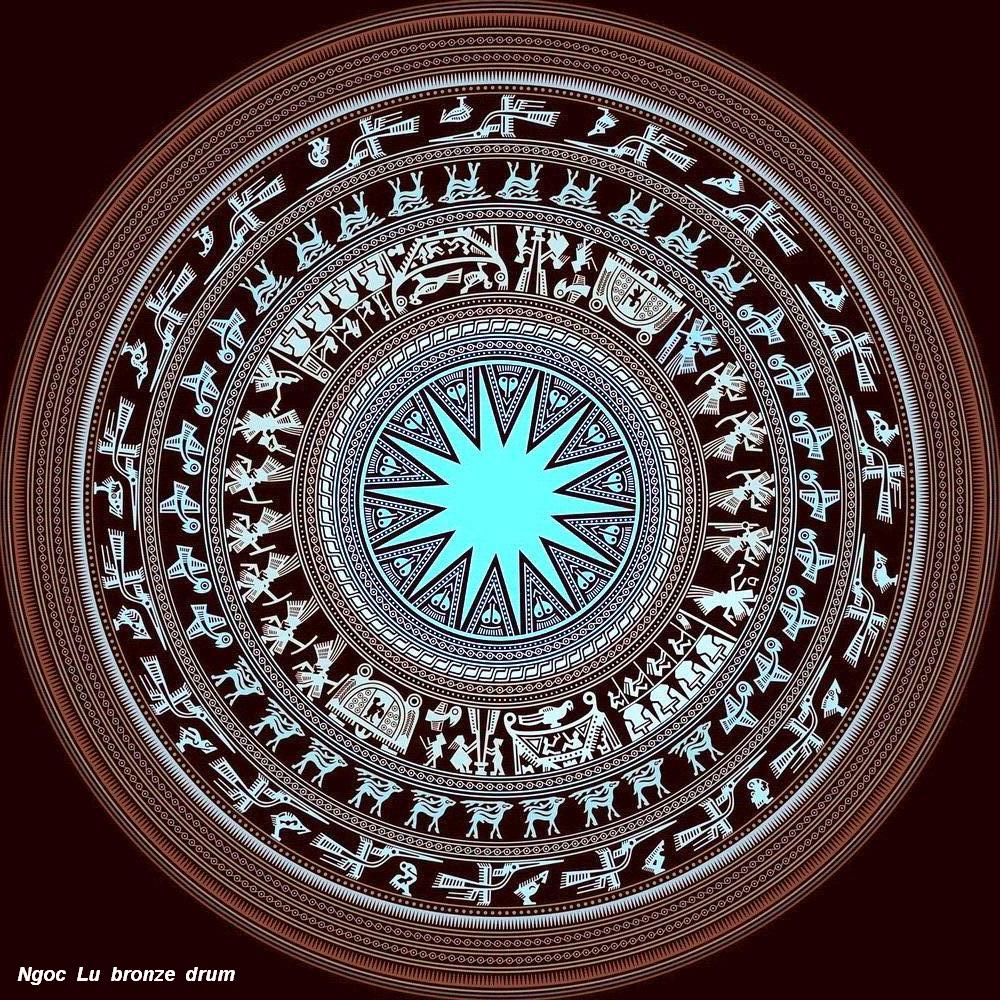
Surface design of a Ngoc Lu bronze drum from Vietnam

The Dongson drums are characterised by the starburst in the middle which is then surrounded by birds, animals and people in a characteristic style. More than 200 have been found, across an area from Malaysia to Indonesia to Southern China. The discovery of Đông Sơn drums in New Guinea, is seen as proof of trade connections – spanning at least the past thousand years – between this region and the societies of Java, Vietnam and China.

Distribution of the Dongson Drums

The largest Dong Son type drum found in Indonesia is the Makalamau Drum which was discovered on the island of Sangeang off the island of Sumbawa.

The island of Sangeang
The Makalamau Drum in the Jakarta Museum

The Makalamau Drum is 122 centimetres in diameter and in the centre is a twelve-pointed star encircled by twelve concentric bands ornamented with geometric or figurative designs. The body of the drum is decorated with scenes of elephants and horses led by human figures, as well as fish, birds and boats, The outermost band is ornamented with four sculptured frogs paced equidistant around the rim. It is believed that in the cosmology of the drum makers, the star represents the sun and the frogs the rain. The sun and the rain, induced by the thunderous sound produced when beating the hollow brass drum, were necessary to yield crops and sustain life.
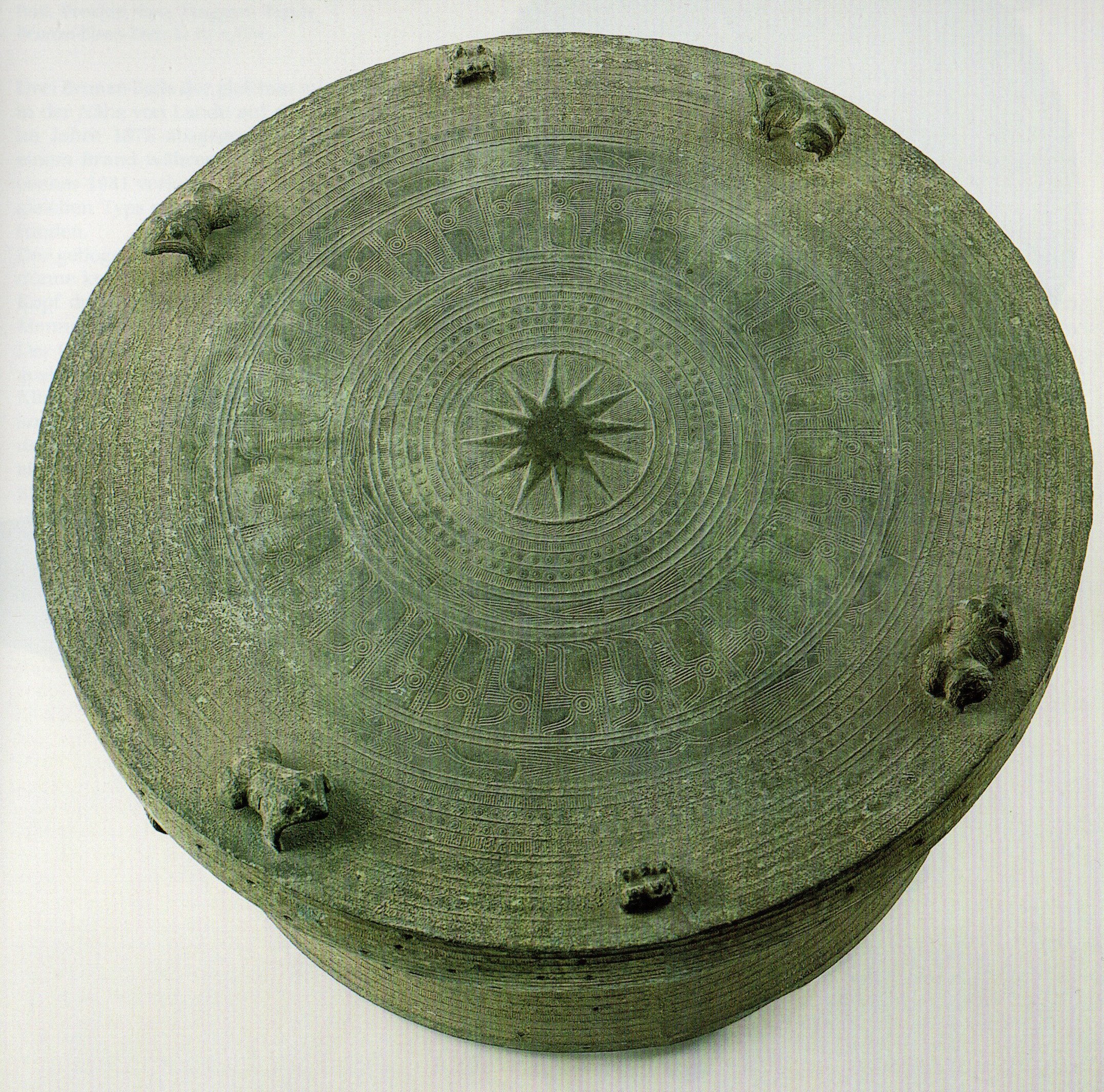
Surface decoration from the Dongson drum in the Museum Volkenkunde, Leiden

https://www.ianburnetbooks.com

Posted in Uncategorized | Tagged , , , , , | 1 Comment

Minyak Kayu Putih, Cajuput Oil, Tea-Tree Oil

Minyak Kayu Putih is found in every household in Indonesia in the form of ointments and liniments for all sorts of aches and pains. It is also used as a fragrance and freshening agent in soaps, cosmetics, detergents and perfumes.

Minyak Kayu Putih


It is produced by steaming and distilling the oil from the leaves of Melaleuca cajuputi. Here is a view of a traditional ‘factory’ distilling minyak kayu putih that I visited on Manipa Island in Maluku. The crushed leaves are boiled in a huge vat over an open fire and the vapour is distilled into the oil, which is used all over Indonesia as a cure for bodily aches and pains.

Image

Melaleuca is almost entirely Australian in its distribution yet the first of its species to be formally described, was based on material from Ambon in Indonesia. Georgius Everhardus Rumphius, a merchant with the Dutch East Indies Company, compiled a detailed account of many of the plants growing in the Malesian (Wallacea) biogeographical region including what he named Arbor Alba which was published in 1741 in his Herbarium Amboinense. This important work has recently been translated into English and published with annotations (Rumphius 2011). His publication predated the accepted starting point for the scientific botanical nomenclature of flowering plants and the formal description of the species occurred in 1767 when the Swedish botanist Carolus Linnaeus gave it the name Melaleuca leucadendra, after taking his descriptive data from Rumphius’ work. Called cajuputi oil by the Dutch it was exported to Europe from the Maluku islands in the first part of the eighteenth century because of its reputation as a panacea in the treatment of all kinds of diseases.
Tea tree oil, also known as melaleuca oil, is an essential oil that comes from steaming the leaves of the Australian tea tree. When used topically, tea tree oil is believed to be antibacterial. Tea tree oil is commonly used to treat acne, athlete’s foot, lice, nail fungus and insect bites.

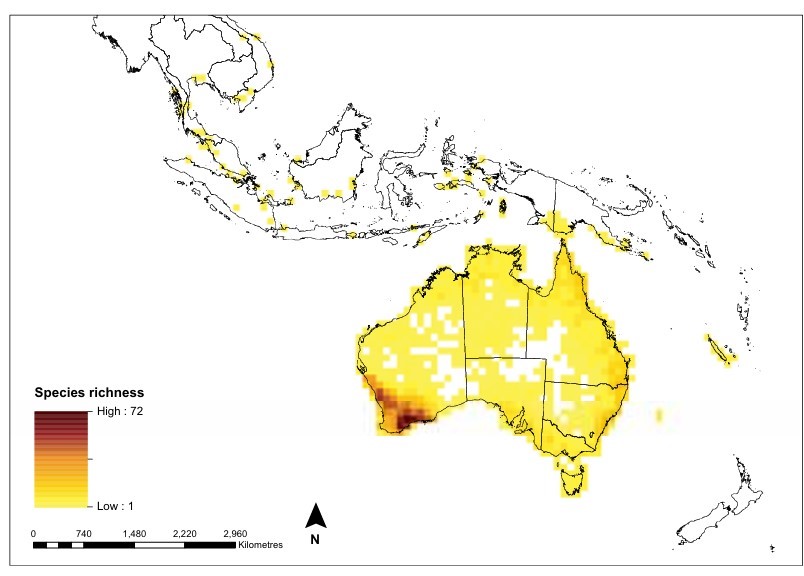
In Australia Melaleuca is the third most diverse plant genus with up to 300 species as shown on this map of its distribution.

Thanks to the collision of Australia with Asia, the Melaleuca plants were rafted into the Indonesian archipelago on pieces of continent Australia that were sliced off. Along with cloves these are another product of Australia that Indonesia has been able to call their own.

https://www.ianburnetbooks.com

Posted in Uncategorized | Tagged , , , , , , , , | 1 Comment

The Mystery of Pulau Cendana, Sandal Bosch Eyland, Sandalwood Island or Pulau Sumba.

Sandalwood is heavy, yellow, and fine-grained, and, unlike many other aromatic woods retains its fragrance for decades. Both the wood and the oil produce a distinctive fragrance that has been highly valued for centuries and it is often cited as one of the most expensive woods in the world.

Lord Ganesha carved from sandalwood

Sandalwood is indigenous to the tropical belt of peninsular India, the Malay Archipelago and northern Australia. In Indonesian the main distribution was on the islands of Solor, Sumba and Timor. Sandalwood is mentioned in one the oldest pieces of Indian literature, the epic Ramayana story, dating from the fourth century BC. However, Indian foresters question whether sandalwood is native to India and suggest that because of its distribution it was probably introduced from Indonesia many centuries ago.

Santalum album (Sandalwood)

Many Indian Hindu families will keep a block of sandalwood in their home which when rubbed produces a white paste and is then applied as a dot to the forehead to promote concentration during prayer and meditation. The Chinese ritually burn ‘Joss Sticks’ made of sandalwood to venerate their ancestors, which they value as being the finest incense.

Because the oil is in the heartwood including the roots, then the complete tree is harvested and in the past was not replanted as it takes more than thirty years for a sandalwood tree to reach maturity under natural conditions. Which has resulted in what appears to be almost the complete deforestation of the island of Sumba. All sandalwood trees in India are government-owned and their harvest is controlled, however many trees are illegally cut down. Most of the world’s sandalwood now comes from North West Australia where it is commercially grown and harvested.

Sumba Landscape

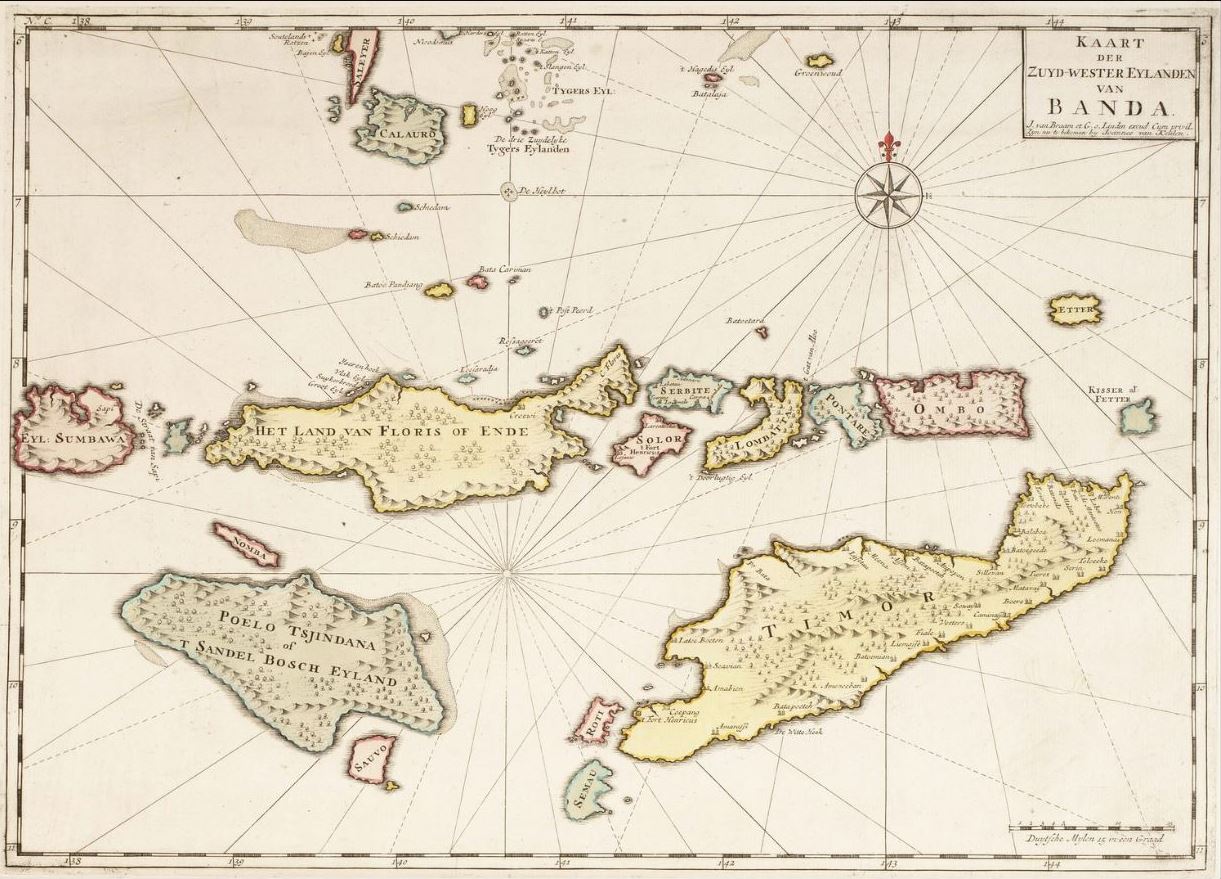
On this early Dutch map of the eastern archipelago, the island of Sumba is named as Poelo Tjsindana or Sandal Bosch Eyland. There are no records that the Portuguese or the Dutch ever harvested sandalwood trees on Sumba and the island has been almost totally deforested, with some sandalwood trees only recently being replanted.

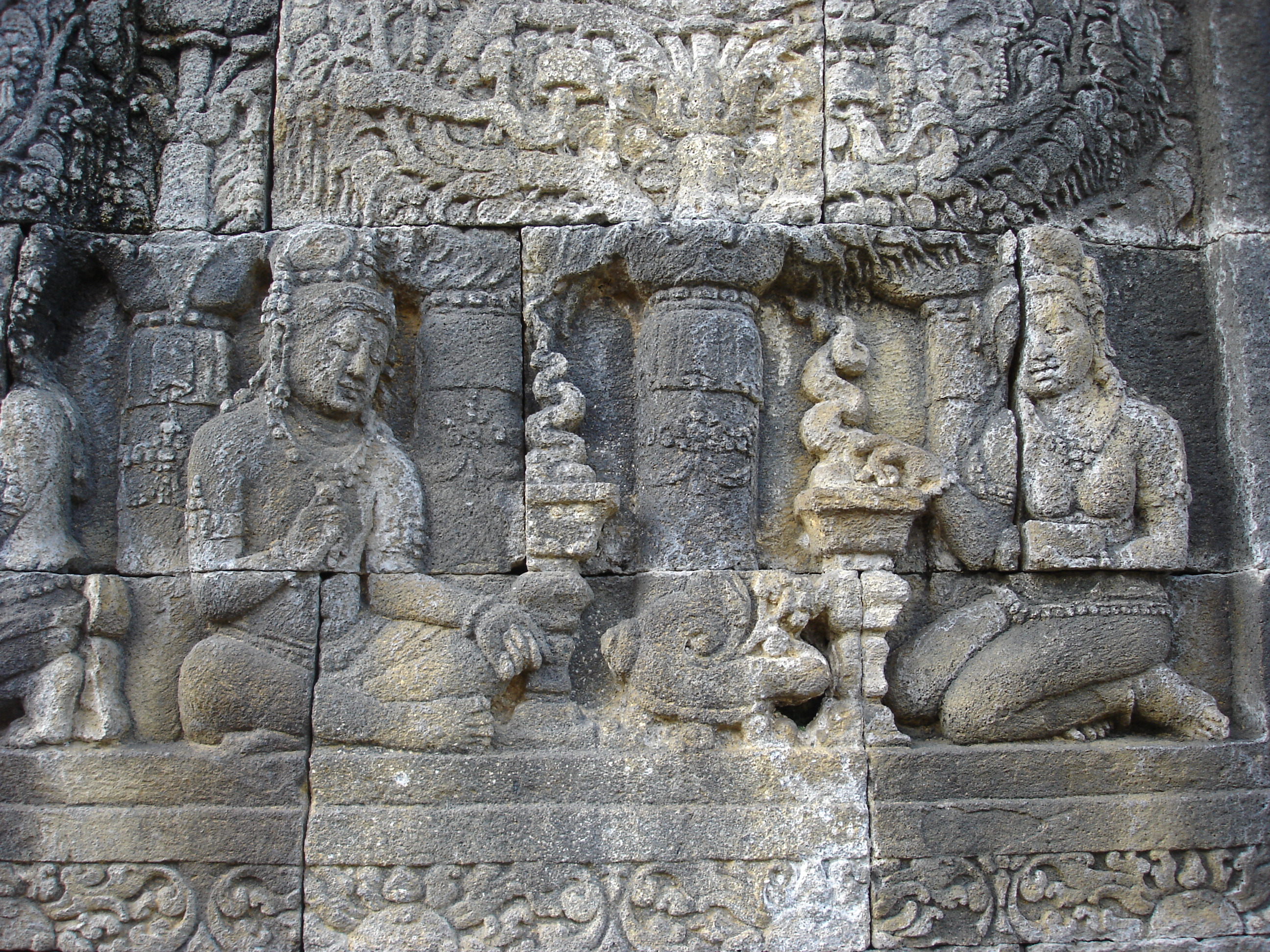
So where did these sandalwood trees from Sandalwood Island go? The burning of incense to honour the Gods and honour the ancestors go back centuries as is depicted in this image from the Borobodur Temple, a Buddhist monument that was built in the 8th century. It can only be assumed that all the sandalwood from Sandalwood Island was collected and sent to Java and then possibly to India and China, centuries before the Portuguese or the Dutch even arrived in the Indonesian archipelago.

An Image of burning incense carved into the walls of the Borobodur Monument

https://www.ianburnetbooks.com

Posted in Uncategorized | Tagged , , , , , | 9 Comments

Searching for Sultan Sayfoedin of Tidore

When I was researching the book Spice Islands I came across an arresting image used in a pamphlet to advertise an exhibition at the Rijksmuseum. After more research I found it was from a painting of Sultan Sayfoedin of Tidore who ruled from 1657 to 1687.

A painting which was probably by a Dutch artist and so I expected it would be in the Rijksmuseum. However I could not find it there and eventually I found it was in the Czartoryski Museum in Kracow. I have no idea who was the artist or how the painting got to Kracow but it is lucky that it survived all the revolutions and invasions of Poland.

After the November 1830 uprising and the confiscation of the Czartoryski properties the collection was moved to a safe place in Paris and then moved back to Kracow in 1876. In 1914 and the First World War the collection was moved to Dresden in Germany before moving back to the family museum in 1920. In 1939 after the German invasion of Poland the collection was looted and many objects were taken to Germany. In 1945 the Polish representative at the Allies Commission for the Retrieval of Works of Art claimed the stolen artifacts on behalf of the Czartoryski Museum. However, 843 artifacts were missing from the collection whose whereabouts remain unknown to this day.

I absolutely had to have a high resolution image of the painting for the title page of Spice Islands. But the rights were held by the Bridgeman Art Library and it was going to cost a fortune to have the image included in the book. However I had to have it and there was no other choice but to pay up.

I also included in Spice Islands this photo of the late sister of the Sultan Ternate with her son. taken at the Sultan’s Palace in Ternate.

Although separated by 350 years I can see an uncanny similarity between these two men.

https://www.ianburnetbooks.com

Posted in Uncategorized | Tagged , , , , , , | 5 Comments

King Willem III of the Netherlands – Abandoned and Forgotten in Pulau Banda

Willem was the son of King Willem II and Anna Paylovna of Russia and on the death of his father in 1849, he succeeded as king of the Netherlands where ruled until his death in 1890.

William III was a man of immense stature with a boisterous voice, standing at 6’5″ (196 cm) he was an exceptionally large and strong man. Known to be a philanderer he had several dozen illegitimate children from various mistresses. He could be gentle and kind, then suddenly he could become intimidating and even violent. He was inclined to terrorize and humiliate his courtiers and servants. His ministers were afraid of him and most people around him agreed that he was, to some degree, insane.

He married his first cousin, Sophie, daughter of King William I of Württemberg and Grand Duchess Catherine Pavlovna of Russia on 18 June 1839. This marriage was unhappy and was characterized by struggles about their children. Sophie was a liberal intellectual, hating everything leaning toward dictatorship, such as the army. Whereas William was simpler, more conservative, and loved the military. His extramarital enthusiasms, however, led the  New York Times to call him “the greatest debaucher of the age”. Another cause of marital tension (and later political tension) was his capriciousness as he could rage against someone one day and be extremely polite the next.

Queen Sophie

After years of turmoil, Sophie and Willem mutually wished to have a divorce, but a divorce was seen as an impossible scandal because of their position. By the mediation of Prince Frederick of the Netherlands, a formal separation without divorce was finalized in 1855, and it was decided that the couple was to remain formally married in public, but allowed to live separate lives in practice. Willem was to be given full right to decide about the upbringing of their eldest son, who would become King, while Sophie was given full custody of their youngest. Sophie was to fulfill her representational duties as Queen in public, but allowed to live her private life as she wished.

Sophie was an unusual queen with her left leaning political opinions and scientific interests, and her non-dogmatic views on religion, her support for progressive development and her disdain for etiquette gave her the soubriquet “la reine rouge” (‘The Red Queen’). Sophie died at Huis ten Bosch Palace in the Hague in 1877 and she was buried in her wedding dress, because, in her own view, her life had ended on the day she married.

 During his reign, the king became more and more unpopular with his bourgeois-liberal subjects, his whims provoking their resistance and mockery, but he remained quite popular with the common people.

Willem III had two sons by his marriage with Sophia, Willem (1841–1879), and Alexander (1843–1884). Both of them died unmarried and the death of Prince Alexander left the house of Orange without a direct male heir. After the death of Queen Sophia in 1877 the prospect of a disputed succession was averted by the marriage of the king in 1879 with the twenty year old princess Emma of Waldeck-Pyrmont, who managed to produce an heir.

King Willem, Queen Emma and Princess Wilhelmina

From this union a daughter, Wilhelmina, was born in 1880. In 1888 and 1889, the ailing king became increasingly demented and died in 1890. On her father’s death Wilhelmina succeeded him as Queen of the Netherlands and ruled for 57 years until her abdication in 1948.

Abandoned and forgotten, a magnificent bronze bust of King Willem III lies in a side garden and usually behind a locked door, in the rear of the former Dutch Colonial headquarters on the island of Pulau Banda in Eastern Indonesia. Perhaps he should be rescued and brought back to the Netherlands,

King Willem III (Ian Burnet)
The former Dutch Colonial Headquarters on Pulau Banda (Ian Burnet)

https://www.ianburnetbooks.com

Posted in Uncategorized | Tagged , , , , , , | 3 Comments

Joseph Conrad’s Singapore

In Conrad’s time the Post Office, the Harbour office, the offices of the ships chandlers and various shipping agents were situated along the harbourside with a view of the ships lined up in the Straits of Singapore. A rambling two-story building with a colonnaded façade and shuttered windows stood on the point near the Cavanagh Bridge where Flint Street meets Battery Road. It contained the premises of McAlister and Company who were Ships Chandlers, Sailmakers, Ship Brokers and General Merchants. A vast cavern-like space which contained every sundry item that a ship needed to put to sea. In the same building were Emmerson’s Tiffin, Billiard and Reading Rooms which drew sailors, merchants and those from the Harbour Office to its daily lunch menu which was advertised as Tiffin a La Carte and is best described as Mulligatawny soup and a Malay chicken curry and rice. These men liked the noisy camaraderie of Emmerson’s rooms which were filled with tales of ships, sailors, piracy, disasters at sea and the latest rumours circulating the port.

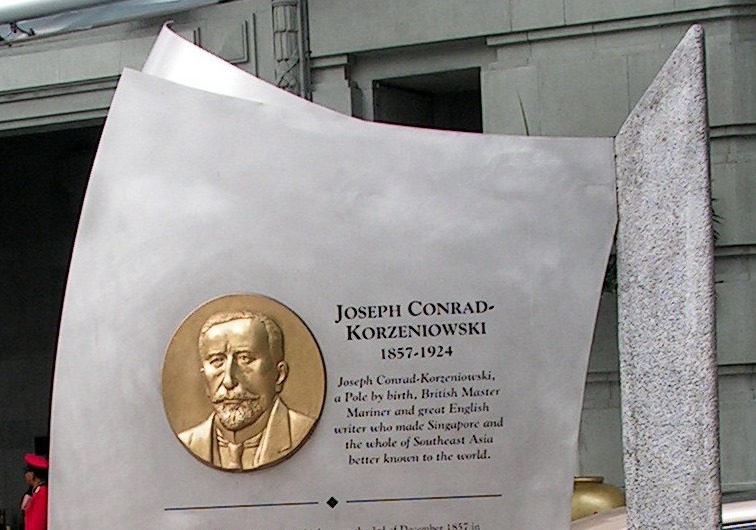
Plaque in honor of Joseph Conrad Koreniowski on the harbourside near the Fullerton Hotel in Singapore.

The location of the current Fullerton Hotel was once the site of the former Post Office and Harbour Office in Conrad’s time. A memorial to Joseph Conrad stands on the seafront of the hotel and dedicated to him as a ‘British Master Mariner and great English writer who made Singapore and the whole of South East Asia better known to the world’.

Keppel Harbour in Singapore

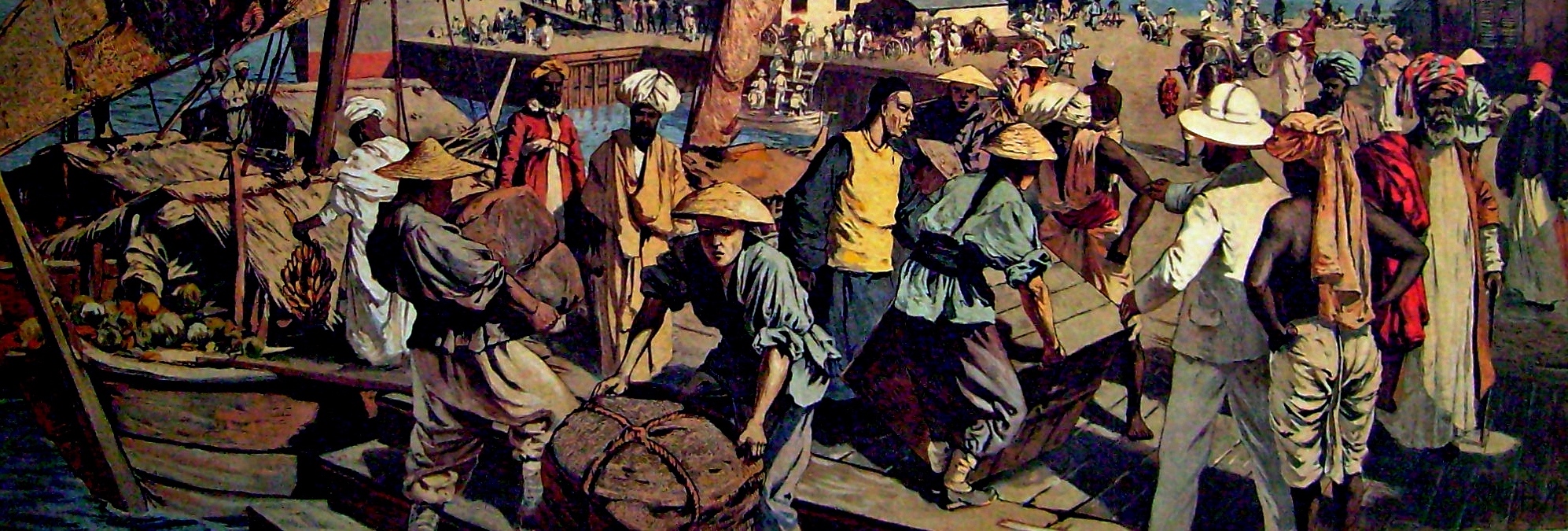
Between 1870 and 1890 the value of exports and imports passing through Singapore nearly tripled and Singapore boomed as a regional entrepot where half of everything that arrived in the city was off-loaded onto different vessels for delivery to ports on the Malay Peninsula, Borneo and the Dutch East Indies. The painting shows this is the beginning of age of steamships as in the background are the masts of the three masted barques as sailed by Joseph Conrad and the smoke from the steamships in the harbour. According to Conrad ‘the sea was now a used-up drudge, wrinkled and defaced by the churned-up wakes of brutal propellers, robbed of the enslaving charm of its vastness, stripped of its beauty, of its mystery and its promise’.

Keppel Harbour showing the pilgrim ship Jeddah

On the left is what I believe to be the 993-ton steamship Jeddah with its Muslim passengers streaming aboard. The Jeddah left Singapore in July 1880 for Penang to pick up additional pilgrims bound for the Holy Land. The ship was owned by Syed Mohsin bin Salleh Al Joffree who was listed in the Singapore Register as a merchant and ship owner of 36 Raffles Place and his son Seyyid Omar was on board. There were seven European officers including Captain Clark and the first mate Austin Williams, who became the Lord Jim of Conrad’s famous story.

Unloading archipelago goods from the Riau Archipelago.

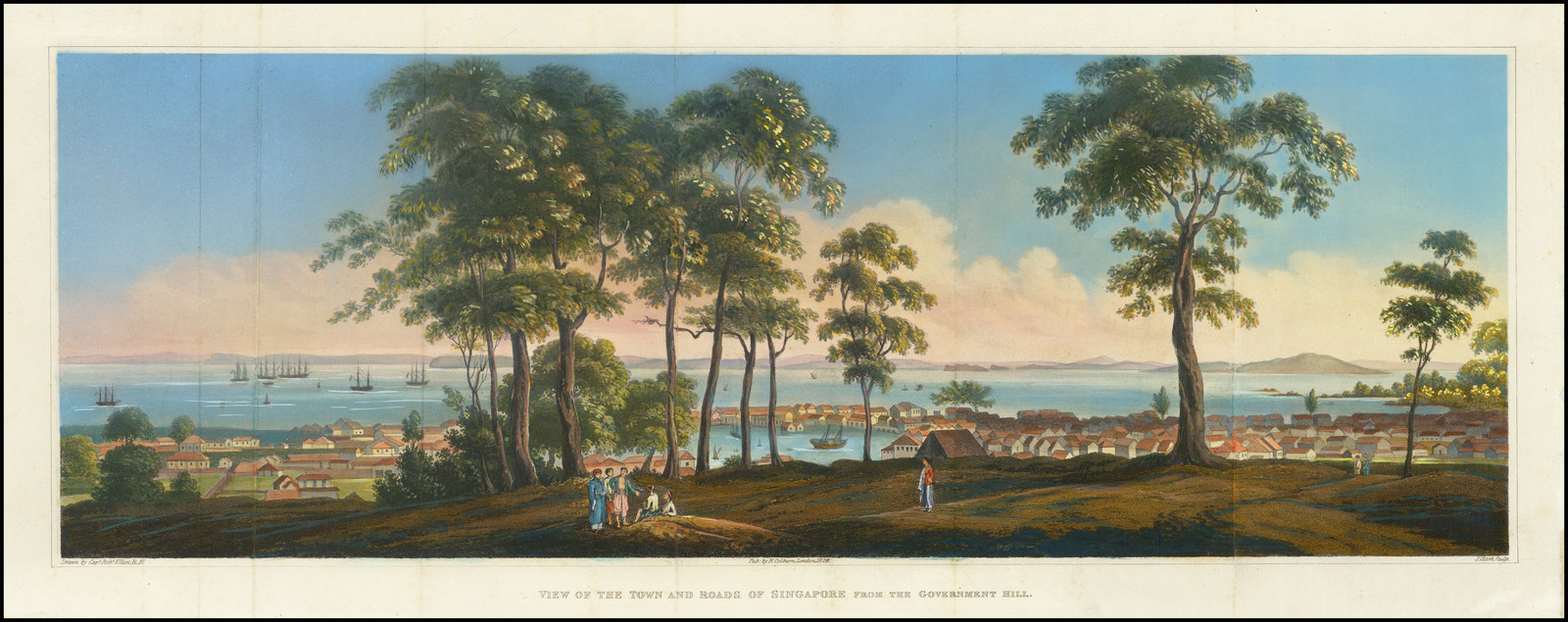
The painting also shows Malay praus at the dock with archipelago traders and Chinese coolies unloading their goods such as fruit, vegetables and native rubber (gutta- percha) from the Riau Archipelago which lies just south of Singapore as can be seen on this painting of Singapore. The beginning of Conrad’s book ‘The End of the Tether’ is set in Singapore where his Captain Whalley is ending his days and Conrad best describes the shipping in the Singapore Strait with these lines:

Some of these avenues ended at the sea. It was a terraced shore; and beyond, upon the level expanse, profound and glistening like the gaze of a dark-blue eye, an oblique band of stippled purple lengthened itself indefinitely through the gap between a couple of verdant twin islets. The masts and spars of a few ships far away, hull down in the outer roads, sprang straight from the water in a fine maze of rosy lines penciled on the clear shadow of the eastern board. Captain Whalley gave them a long glance. The ship, once his own, was anchored out there. It was staggering to think that it was open to him no longer to take a boat at the jetty and get himself pulled off to her when the evening came. To no ship. Perhaps never more’.

View of Singapore and the Singapore Strait with the Riau Islands in the distance.

https://www.ianburnetbooks.com

Posted in Uncategorized | Tagged , , , , , , | 7 Comments

The Portuguese Church in Oecussi, Timor Leste

Many people will not know where is Timor Leste – and where is Oecussi?

Oecussi is an enclave of Timor Leste (East Timor) located within the territory of West Timor, which is part of Indonesia as shown on this map. And the only access without crossing Indonesian territory is by ferry or small plane from Dili.

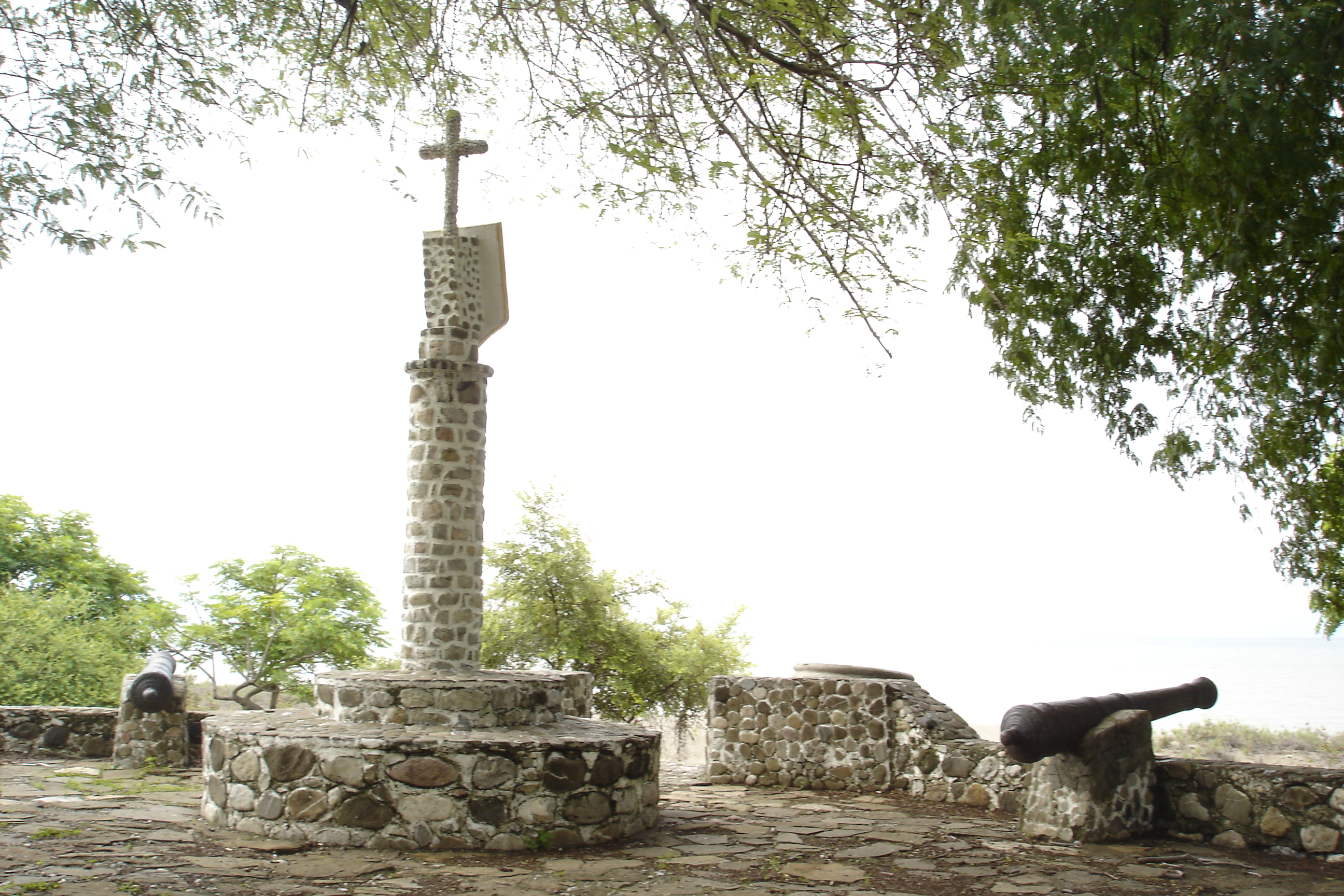
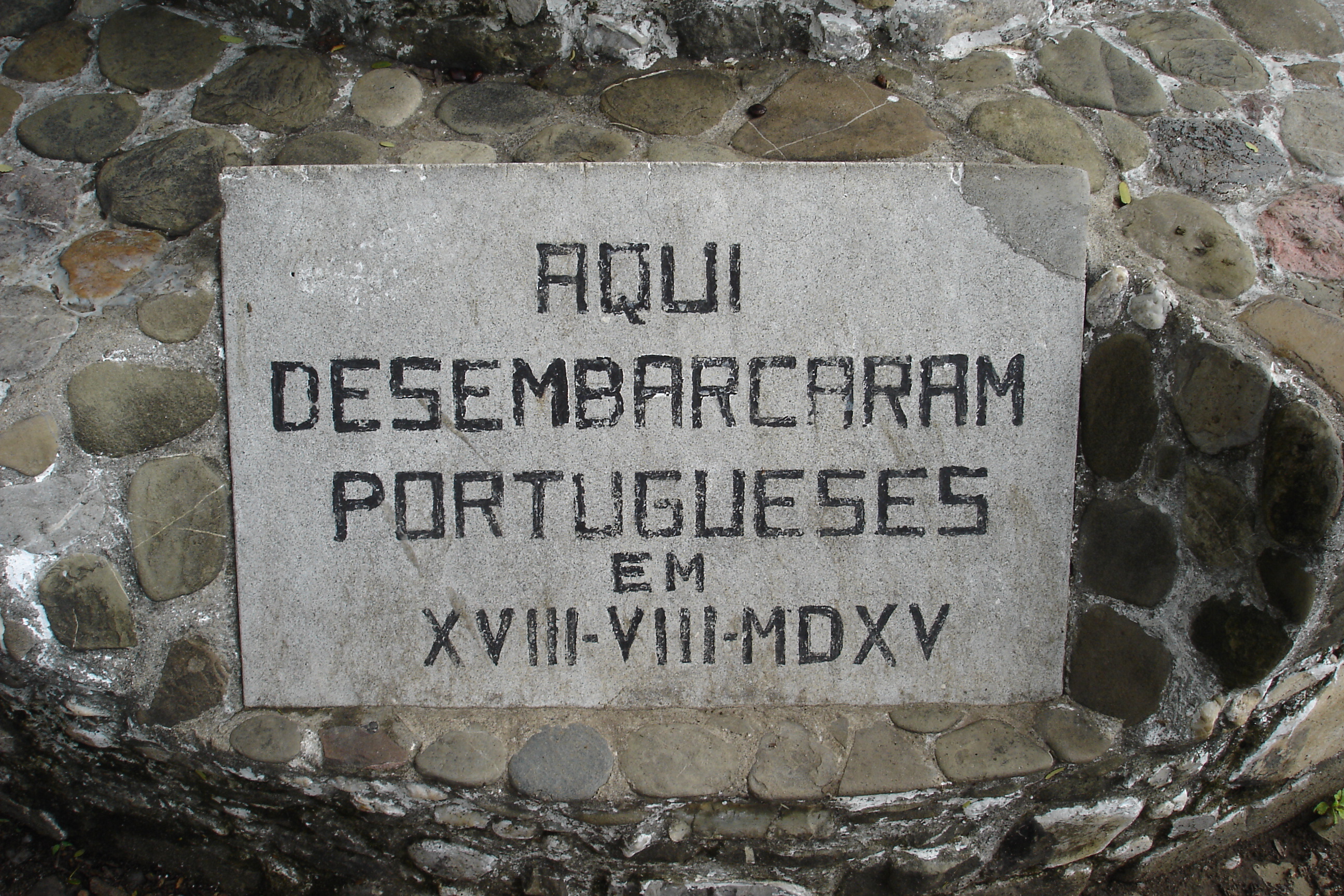
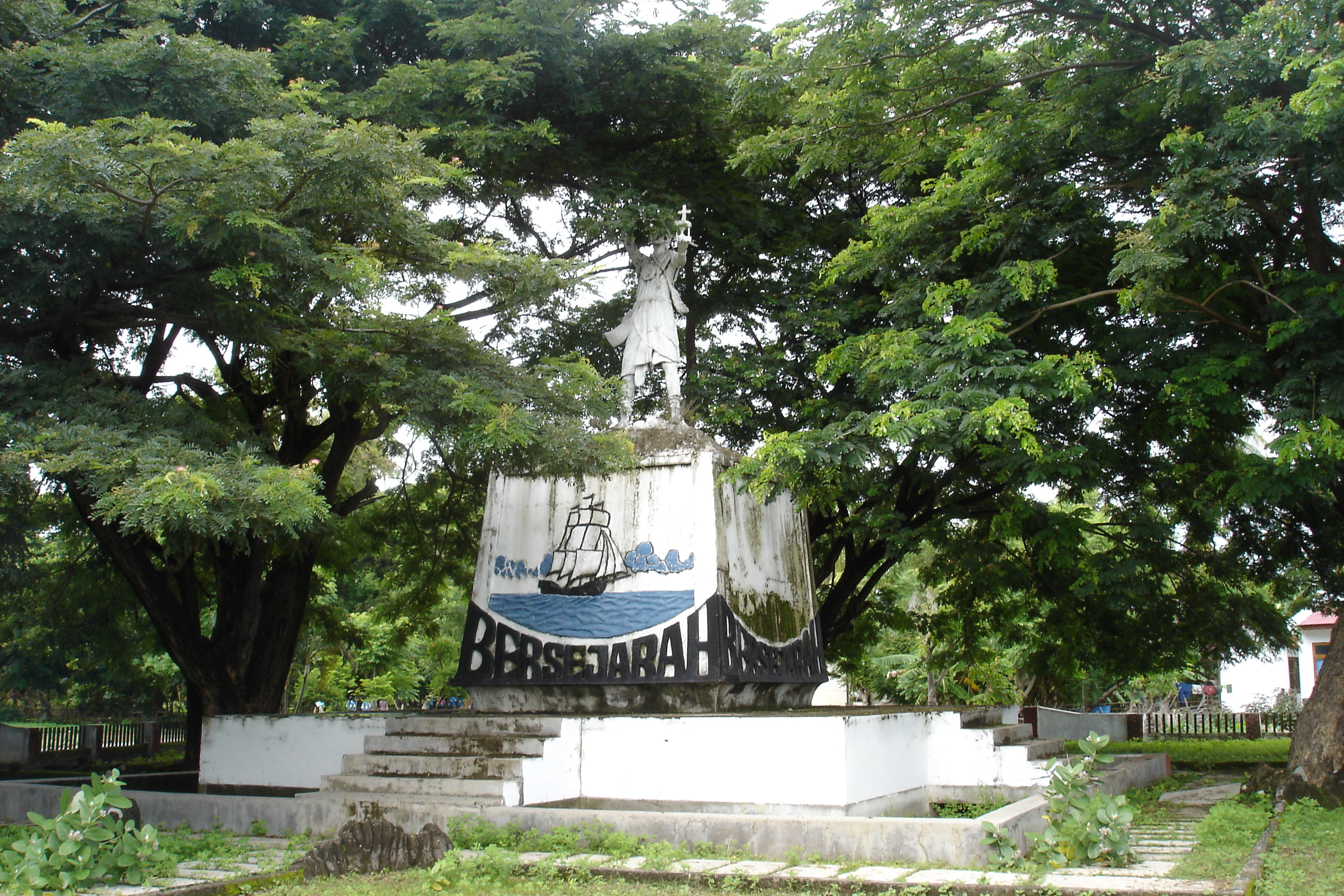
There is a statue on the beach near the mouth of the Tono River which commemorates the first arrival of Portuguese explorers at this site in 1515. After which a settlement was established to trade machetes and iron goods, including firearms, for the valuable sandalwood found growing in the interior.

The Portuguese disembarked here in 1515
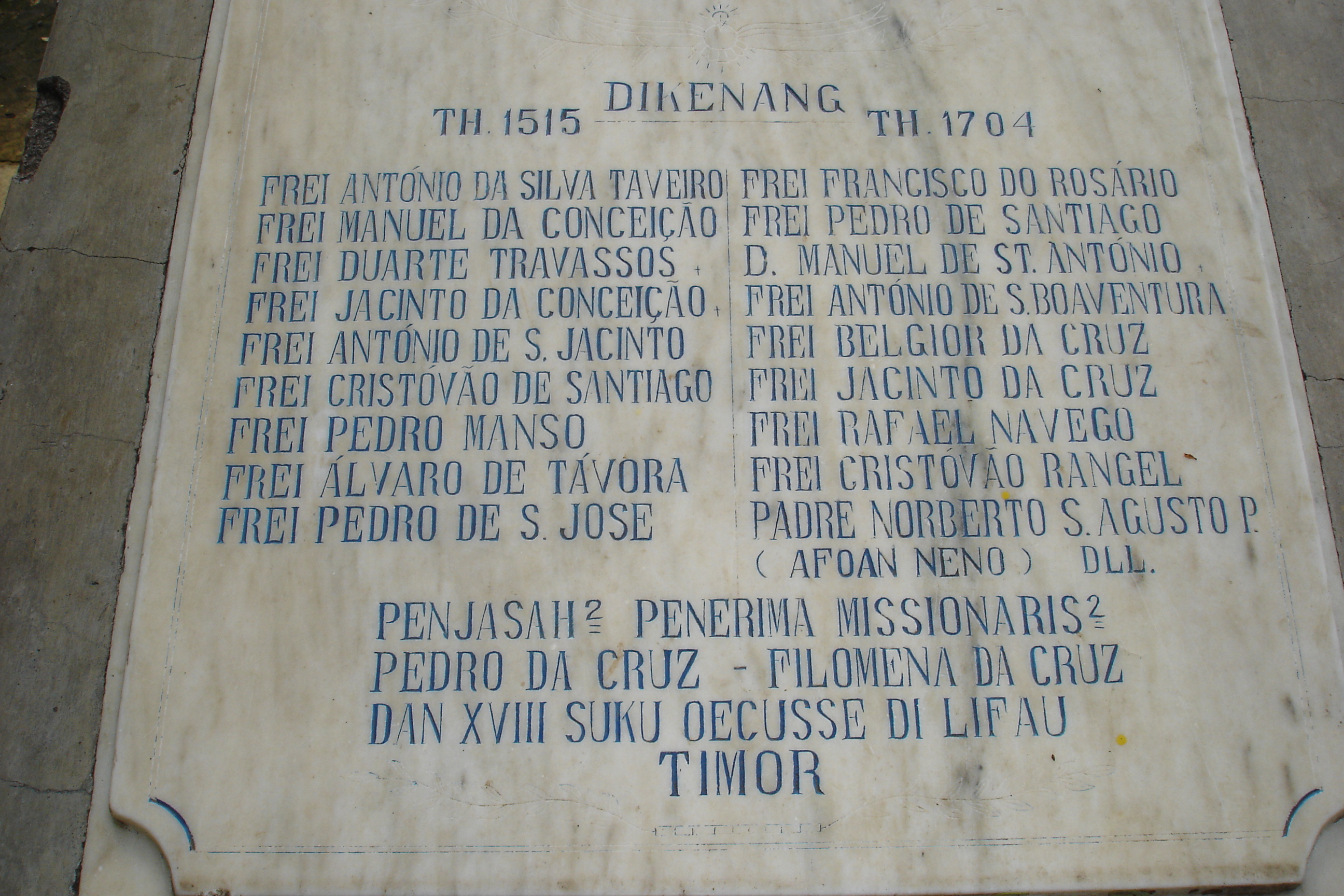
The Portuguese Priests in Oecusse from 1515 – 1704

A statue in the town of Pante Macassar celebrates the Portuguese arrival in Timor. The first permanent Catholic presence in Timor occurred in 1641 when the Dominican priest Father Jacinto sailed from Larantuka and converted the Queen of Mena and the nearby Kings of Ambeno and Amanuban to Christianity.

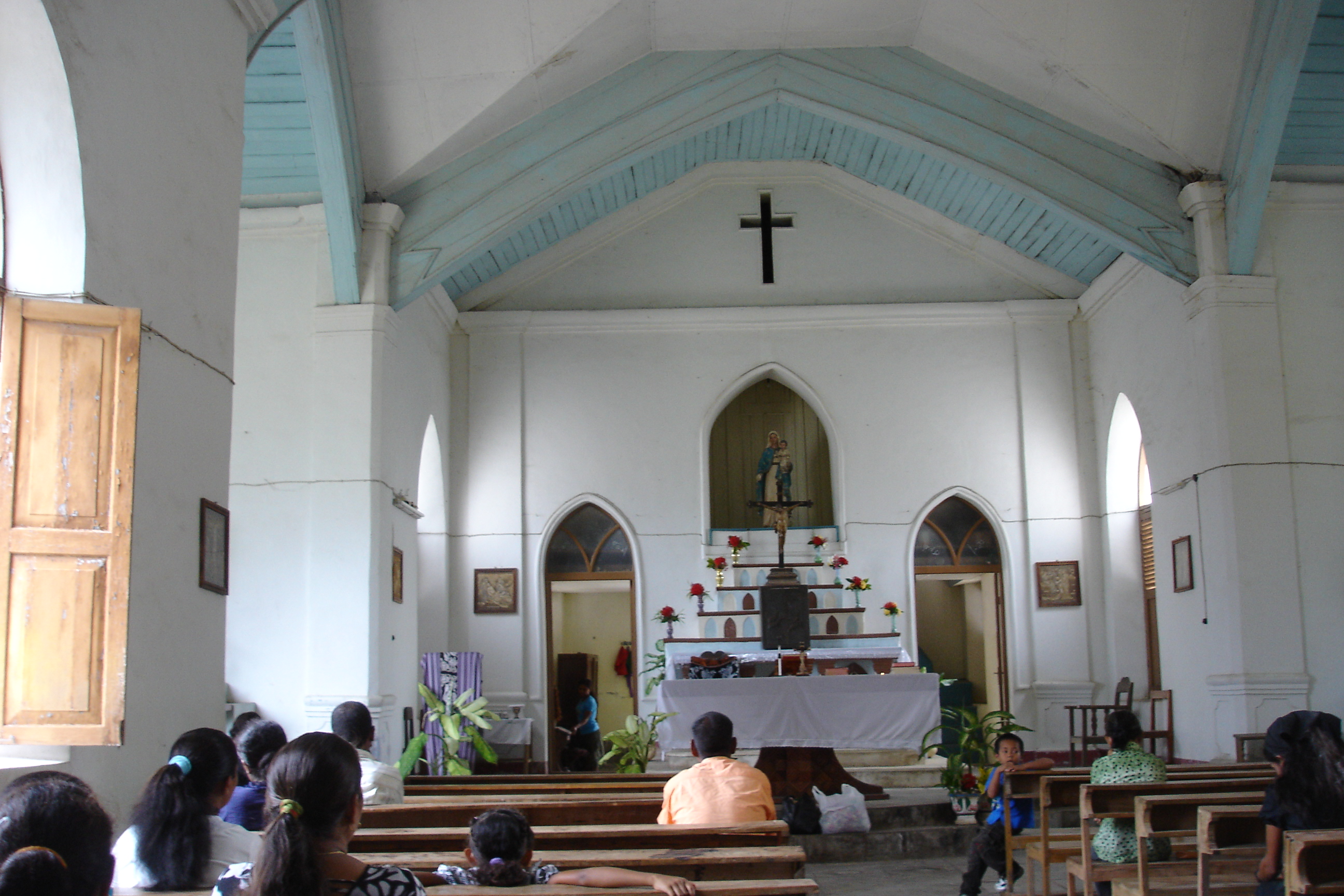
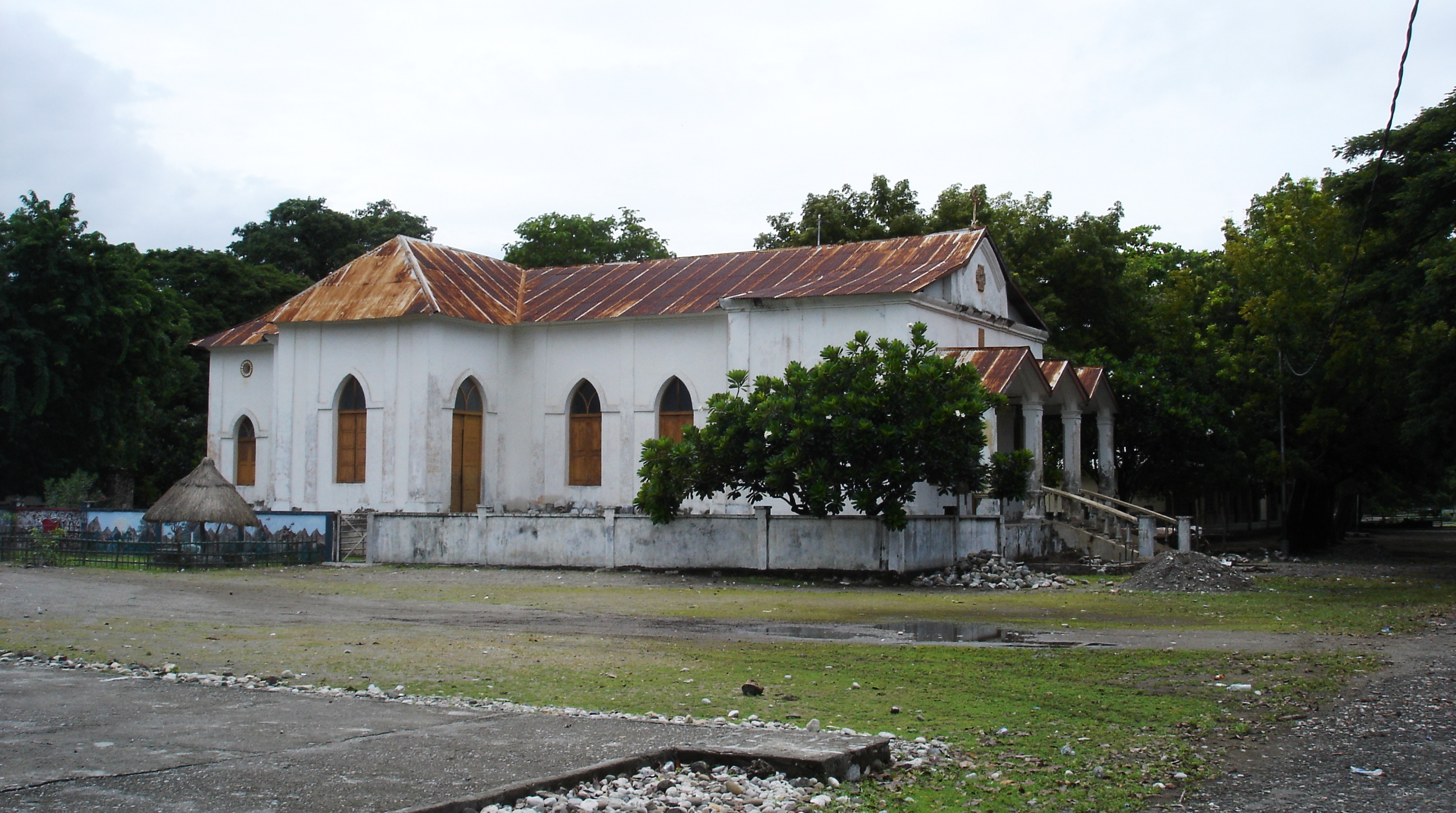
The Portuguese Church in Pante Macassar is solidly built, needs some maintenance on the outside, but is clean and tidy inside.

The Sunday service was conducted by a young Dominican priest who the next day officiated at the blessing of some sandalwood plants that were part of a re-forestation program.

https://www.ianburnetbooks.com

Posted in Uncategorized | Tagged , , , , , , | 5 Comments

When the Australian Lillipilly Collides with Asia

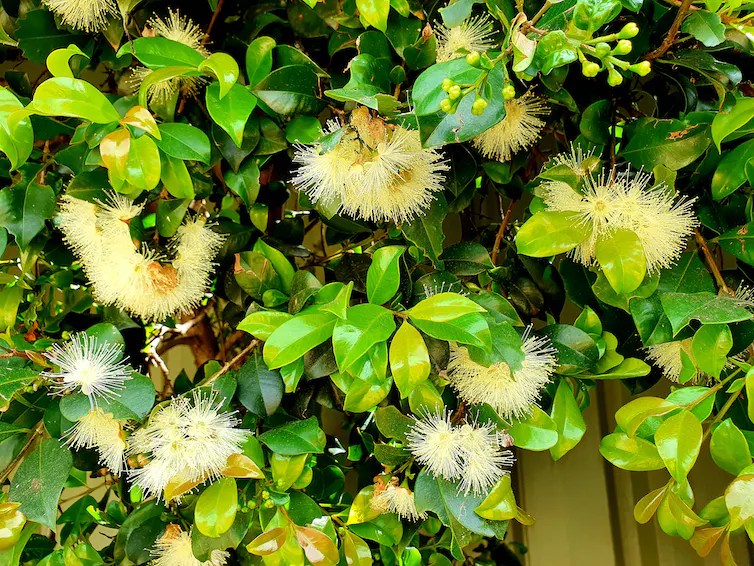
You’re probably familiar with the sight of a lillipilly bush. This hardy Australian staple – a glossy evergreen bearing powder-puff flowers and clusters of bright berries – features in many a garden hedge.

The powder-puff flowers of lillipilly’s light up our lives when they flower

But you may not know this humble native has spread across the globe in waves of emigration, adaptation and evolution. Almost 1,200 species of lillipilly are now found in rainforests across the tropics and subtropics of Africa, Asia and the Pacific. Research has helped reconstruct the evolutionary history of lillipilly’s in unprecedented detail and we can show how lillipilly’s evolved in Australia and now form the largest genus of trees in the world.

Twenty-one million years ago – When the Australian continent is about to collide with Asia.

Lillipilly’s began their international adventures about 17 million years ago. At that time, the Australian continent (which together with New Guinea is known as the Sahul Shelf) was colliding with Southeast Asia (known as the Sunda Shelf) following its breakup with Antarctica. This breakup was the final dramatic act of the fragmentation of Gondwana. The collision provided opportunity for biotic exchange between the northern and southern hemispheres. Many plants and animals moved south to the Sahul Shelf and prospered in the new lands. Lillipilly’s are one of the few lineages that moved in the other direction. Along with our songbirds, lillipilly’s stand as a rare example of an Australian group that set out from these shores and achieved major evolutionary success abroad.

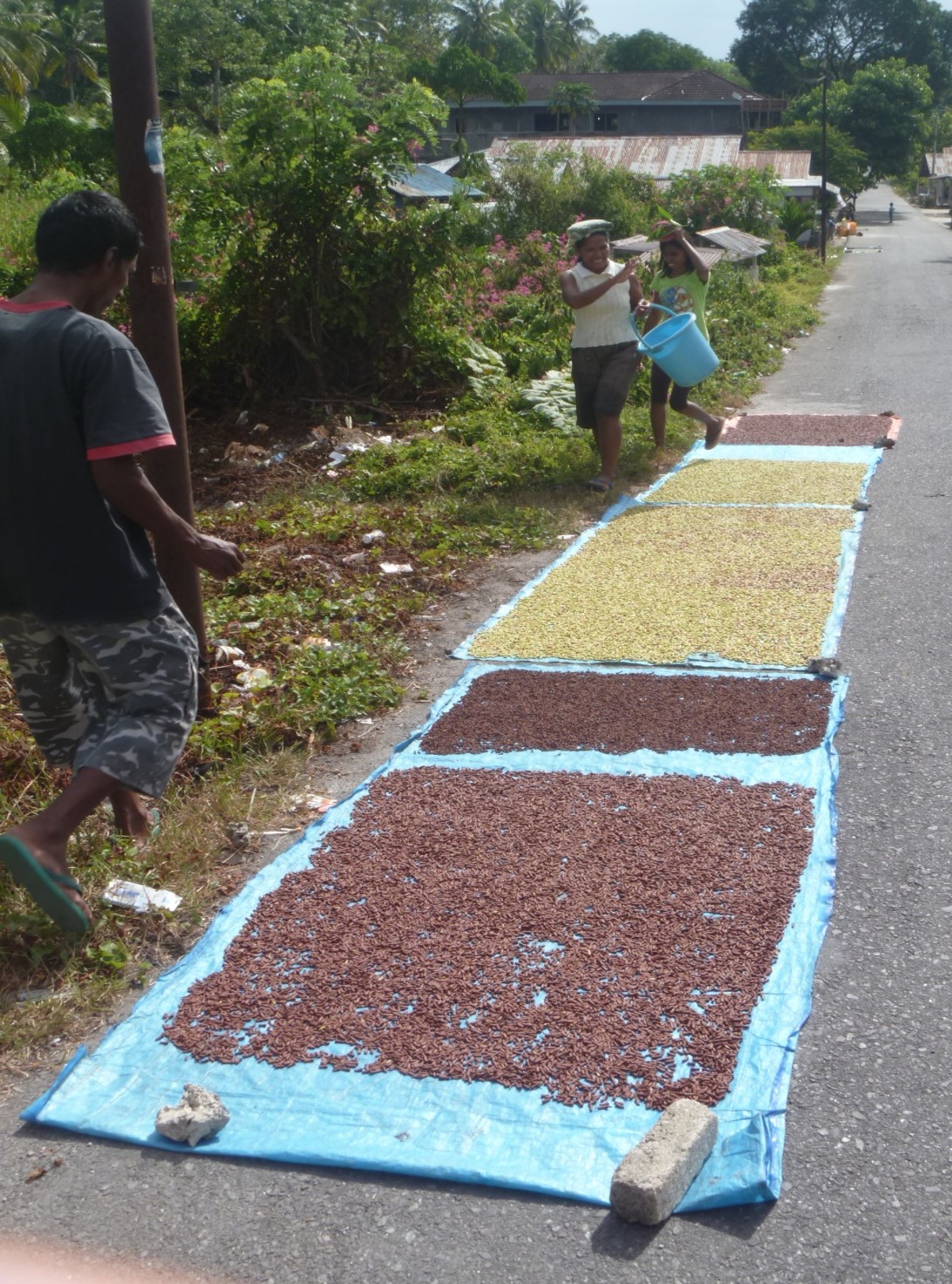
Plump clove buds from the annual clove harvest. Photo Ian Burnet

Many species in the genus are used as food and medicine by indigenous people, and cloves have potent antibacterial and analgesic properties which made them very valuable in a world without modern medicine. A favourite spice of home bakers, cloves are the dried flower buds of an Indonesian lillipilly – the aptly named Syzygium aromaticum.

Credit to an article by Darren Crayn, Professor and Director of the Tropical Herbarium at James Cook University and published in The Conversation.

To achieve the maximum amount of clove oil the buds are picked before they break into flower. Photo Ian Burnet

Commercial quality cloves were originally only found in seven ‘Spice Islands’ off the west coast of the island of Halmahera in Eastern Indonesia. In the 17th and 18th centuries the Portuguese, Spanish, Dutch and English all built forts and fought wars over control of the valuable spice trade.

Ternate is the northernmost of the seven volcanic Clove Islands off the west coast of Halmahera. This image shows the Dutch fort on the island as well as the clove trees it was built to protect.
As the cloves are laid out to dry in the sun their colour changes from green to red to black. Photo Ian Burnet

The clove tree has a characteristic triangular shape and can be recognised from a distance. As seen here covering a hillside of the island of Obilatu, south of Halmahera, in Eastern Indonesia.

The two spicy Ian’s. Ian (Herbie) Hemphill and Ian (Spice Islands) Burnet.
Ian (Herbie) Hemphill of ‘Herbies Spices’ admiring a mountain of cloves at a warehouse in Ternate. Photo Ian Burnet

https://www.ianburnetbooks.com

Posted in Uncategorized | Tagged , , , , , , , | 2 Comments

Flores – The Portuguese Church in Sikka

Like the Portuguese Church in Batavia this is actually a Dutch Church built in the grounds of a former Portuguese Church. This becomes evident when you look at all the Portuguese names on the gravestones in the adjacent cemetery, such as DaSilva, DaCosta, Minggo, Couterius, DaLopez, Fernandez etc etc.

The Portugese Church in Sikka. Photo Ian Burnet

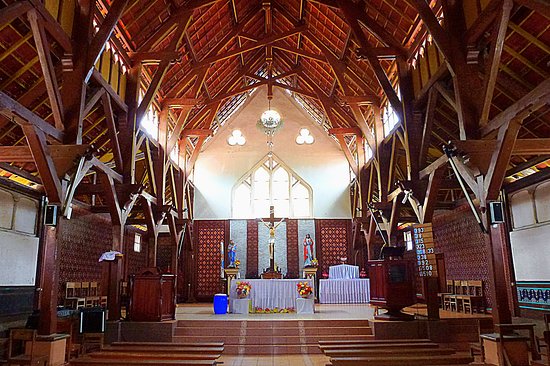
The interior of the Church is magnificent. I am amazed at its size and the construction of the interior beams that form its huge vaulted ceiling. Solid teak columns rise from the tiled floor and support two more levels of columns, beams and crossbeams before slanting inwards to form the vaulted ceiling.

I expect that pre-cut Javanese teakwood was imported in kit-form for its construction in the 1890’s, as the columns and beams formed a self-supporting structure that was built before the brick-and-mortar walls of the church were added.

The columns and beams that form the interior of the Church. Photo Ian Burnet
The construction of the vaulted ceiling. Photo Ian Burnet

At the far end of the church the nave is simple in its design and three stained glass windows transmit a soft light into the interior. Surprising to me is that the stained glass is in a geometric floral design without any religious symbolism. I gaze in awe at this magnificent construction and think of the master craftsmen who put it together, over 100 years ago, in this small village on the island of Flores in eastern Indonesia.

Inside the church is a memorial stone dedicated to the memory of Father J.F. LeCocq D’Armandville. He was born in Delft in 1845 and trained to be a Jesuit priest before leaving for the Dutch East Indies in 1879. After serving in Semarang and Maumere he arrived in the village of Sikka in 1885 to revive the Catholic faith there. His determination led to the building of the new church. The first mass was conducted in 1887 within the teak frame of the new church which already had an iron roof but no walls. For the walls LeCocq showed his parishioners how to bake bricks with a local clay and it was not until 1889 that the church, with its white plastered walls and an interior adorned with a band of traditional ikat design, was officially completed.

Ian Burnet combines his love of adventure and travel with his knowledge of history to take us on a personal journey through geographic space and historical time, which will delight all armchair travellers.

Travelling by bus, plane, train, ferry, boat, car and motorcycle from Java to Timor, he hops from island to island across the Indonesian archipelago, following the smoking volcanoes that form its spine.

https://www.ianburnetbooks.com

Posted in Uncategorized | Tagged , , , , , | 8 Comments

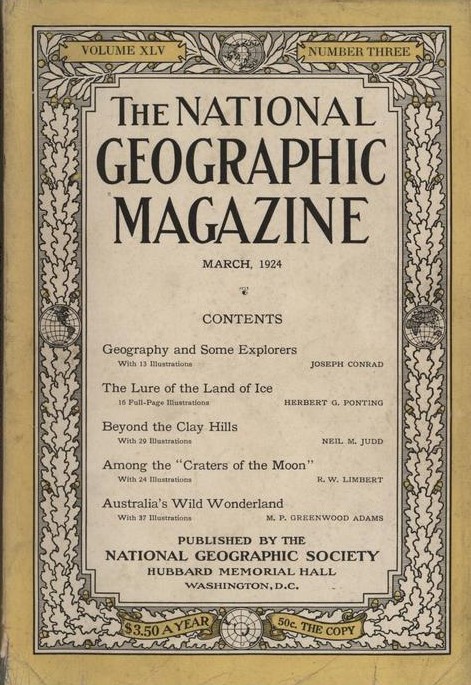
Joseph Conrad’s Eastern World – National Geographic, March 1924

The Earth is a stage, and though it may be an advantage, even to the right comprehension of the play, to know its exact configuration, it is always the drama of human endeavour that will be the thing, with a ruling passion expressed by outward action, marching perhaps blindly to success or failure, which themselves are often undistinguishable from each other at first.

Of all the sciences, geography finds its origin in action, and, what is more, in adventurous action of the kind that appeals to sedentary people, who like to dream of arduous adventure in the manner of prisoners dreaming behind their bars of all the hardships and hazards of liberty, dear to the heart of man.

Joseph Conrad, National Geographic, March 1924

No region on his voyages across the world inspired Joseph Conrad more than the lush, green archipelago’s of South East Asia, the ancient city of Bangkok; the busy port of Singapore, awhisper with sea intrigue; the resource- rich forests of Borneo; the steamy, storm-crossed seas of South China, Celebes and Java; and the pirate-pillaged straits of Macassar and Malacca; these are the settings for the stories and novels of Conrad’s early work.

Keppel Harbour, Singapore, 1850’s

As shown in this painting of a Singapore harbour, Conrad’s time in the East coincided with the last days of sail, the rise of steam and the high water mark of colonial trade. His stories of Dutch traders, English adventurer’s, Brunei rovers and Malay, Bugis and Arab rulers unfold against a backdrop of exotic island landscapes, reef-sharpened shallows, and deadly straits. Conrad’s characters develop within a climate heavy with the threat of monsoon, typhoon or tsunami.

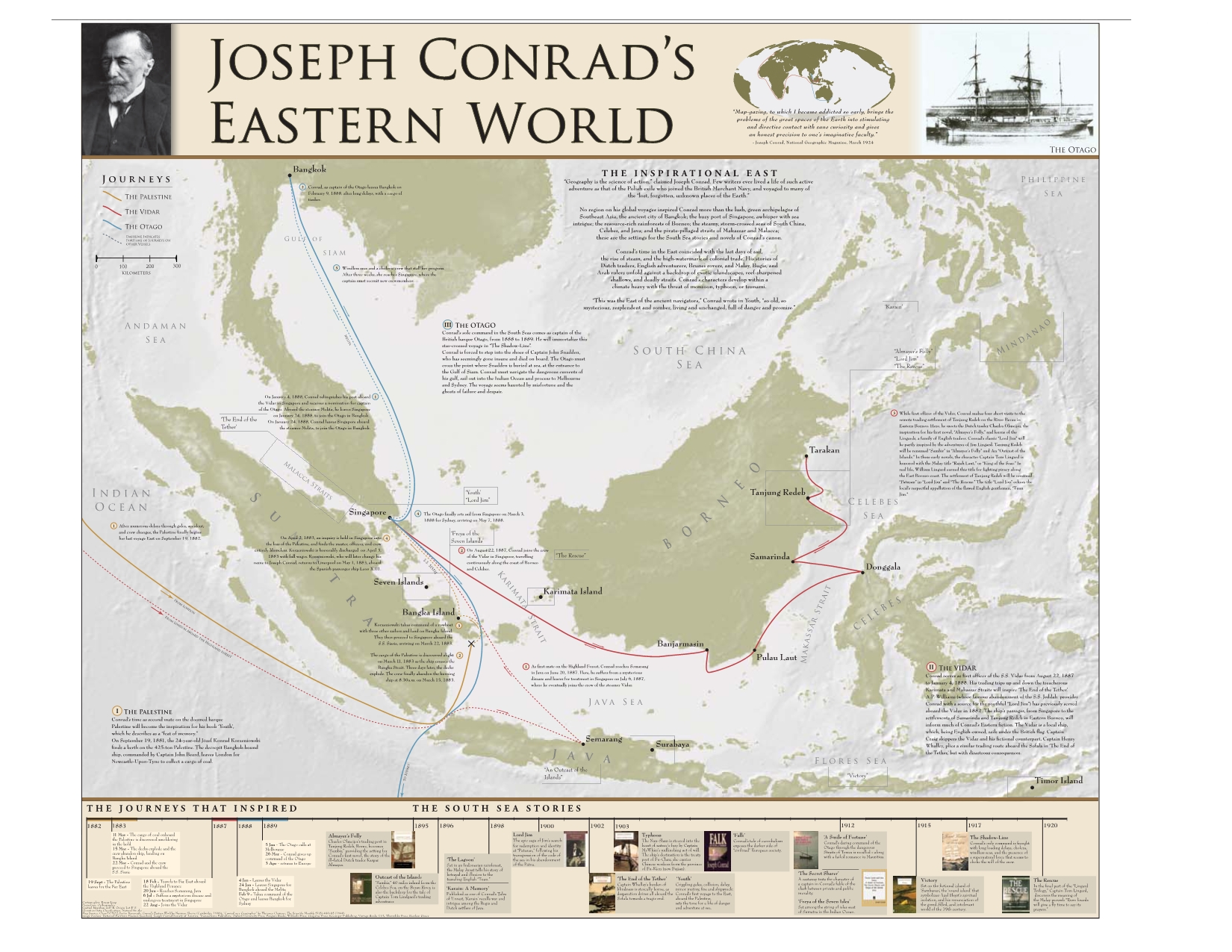
The Journeys that inspired the South Seas stories, National Geographic Magazine, 1924.
Please click and enlarge to see the details of his voyages and his books.

Joseph Conrad serves as first officer on the trading vessel Vidar from August 22, 1887 to January 4, 1888. His voyages along the treacherous Karimata and Macassar Strait to Tanjung Redeb in East Borneo inspired his books – Almayers Folly, An Outcast of the Islands, Lord Jim, Victory and The Rescue.

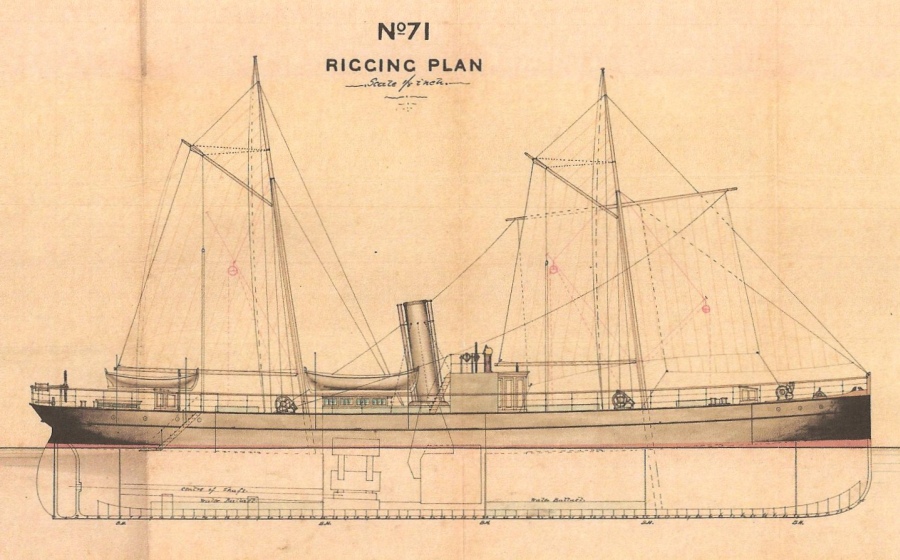
Plan of the trading ship Vidar

The Vidar was a Singapore ship captained by James Craig, with Joseph Conrad as the Chief Officer, two British engineers and a crew of Malays, Chinese and Indians from Singapore. Most of their cargo of English and Dutch goods would be unloaded in Macassar before they sailed on to collect rubber, rattan and other archipelago goods in the remote trading post of Tanjung Redeb on the northeast coast of Borneo, which became Sambir or Patusan in his books.

The Vidar in Macassar, 1883, J.C.Rappard

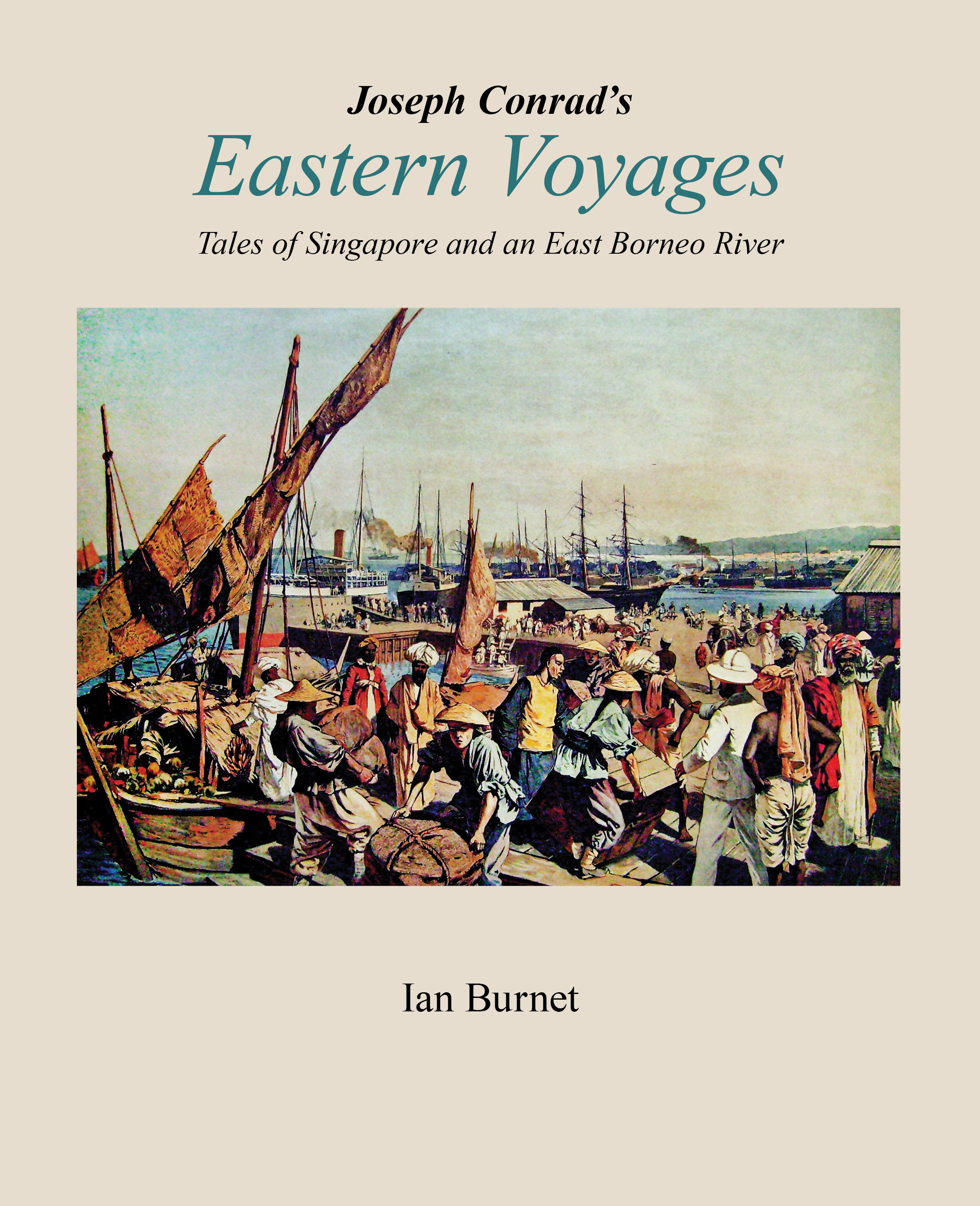
Joseph Conrad’s Eastern Voyages – Tales of Singapore and an East Borneo River

Ian Burnet’s book, published this year, is a very welcome addition to a complex area of Conrad’s life and writing. It is a curious feature of Conrad studies that few Conrad scholars have been to many of the places in the region that feature in his Malay fiction, and it is refreshing to read a book that contains Burnet’s knowledge of Indonesia and of Singapore. This, and his sensitive response to Conrad himself, make themselves felt throughout the short book, a book that would be justifiably classed as suggested reading for any reader or student of Conrad’s works set in this part of the world’.

Andrew Francis – Joseph Conrad Society of America

https://www.ianburnetbooks.com

Posted in Uncategorized | Tagged , , , , , , | Leave a comment