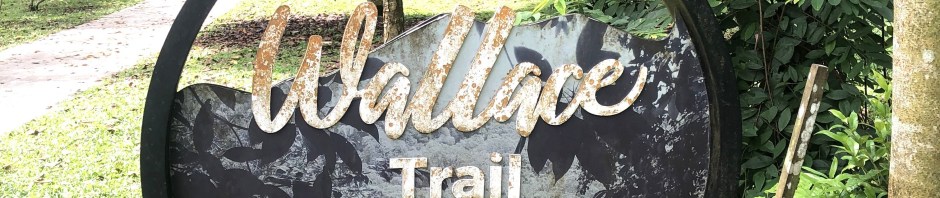
In March 1854, Alfred Russel Wallace sailed to Singapore to begin his Asian collecting expeditions. Singapore was the regional entrepot for all the trade coming from China and across the archipelago, and in its streets and around its harbour, he found the Chinese, Malays, Indians, Arabs, Javanese and Sumatrans who traded in the islands’ products, as well as the English and Dutch colonialists who ruled these lands. The energetic Chinese were busy cutting down the jungle in the central part of the island for timber to build the expanding colony and to clear space for plantations of pepper, nutmeg and gambir for export. He found accommodation on the outskirts of the settlement in a Jesuit mission near Bukit Timah (Tin Hill) and began collecting all the insects and beetles that were thriving in the piles of bark and sawdust left by the woodcutters. Today, there is a Wallace Trail in this area, which includes some of the last remaining jungle preserved in Singapore.

Wallace describes the daily routine of himself and his assistant, Charles Allen:
Get up at half-past five, bath, and coffee. Sit down to arrange my insects of the day before, and set them in a safe place to dry. Charles mends our insect nets, fills our pin-cushions, and gets ready for the day. Breakfast at eight; out to the jungle at nine. We have to walk up a steep hill to reach it, and arrive dripping with perspiration. Then we wander about in the delightful shade along paths made by the Chinese woodcutters till two or three in the afternoon, generally returning with fifty or sixty beetles, some very rare or beautiful, and perhaps a few butterflies. Change clothes to sit down to kill and pin insects, Charles doing the flies, wasps and bugs; I do not trust him yet with the beetles. Dinner at four, then at work again until six. Then read or talk, or, if insects are very numerous, work again till eight or nine. Then to bed.

I had a unique experience when I could smell the pervasive and pungent odour of durian long before I saw this sign on the side of the trail. Looking around, there was no sign of durian on the ground or in the trees, but the smell was unmistakable.

Wallace and his assistant collected as many as 700 species of beetles, but as many collectors had been here before him, few were rarities. It is hard for anyone visiting modern-day Singapore to comprehend that just 150 years ago, man-eating tigers roamed the jungles of this City State. Wallace mentions that tigers killed an average of one person every day, principally those working in the plantations, and from their residence at the Jesuit mission they would hear tigers roar once or twice in the evenings.
Fortunately, I did not encounter any tigers, but I did reach the Wallace Education Centre, which is there to inform Singaporeans of the work he did in the Malay Archipelago and his contribution to the understanding of the Origin of Species.


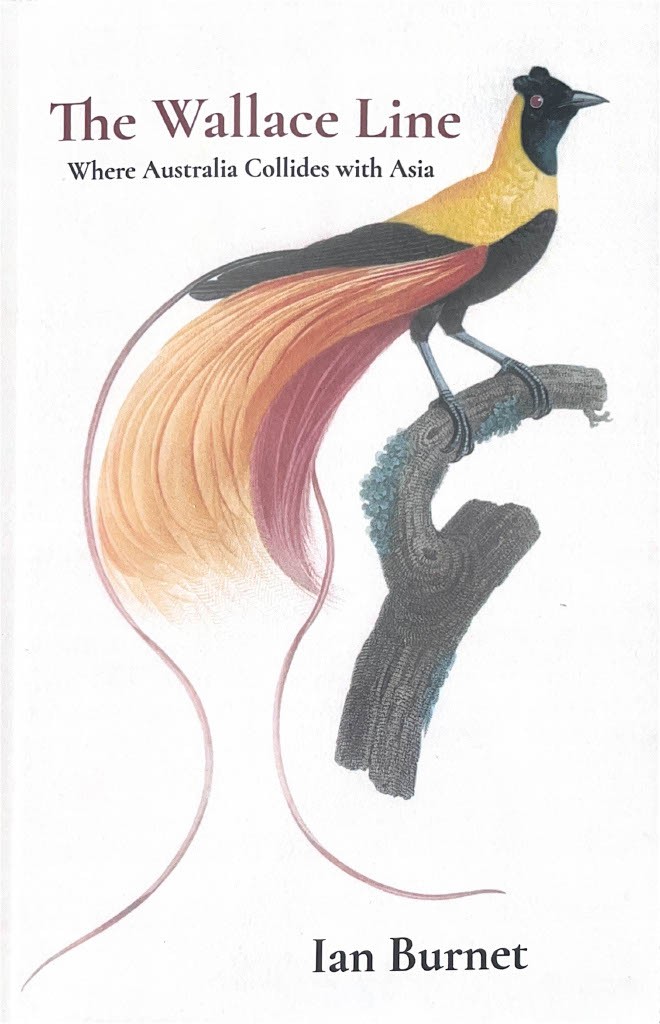
You can read all about Alfred Russel Wallace, his adventures collecting natural history specimens in the Malay Archipelago, his discovery of the Wallace Line, and his famous paper on the Origin of Species, in my book ‘The Wallace Line’.