Buku Indonesia karya Penulis Australia Laris di Canberra

Spice Islands, East Indies and Archipelago

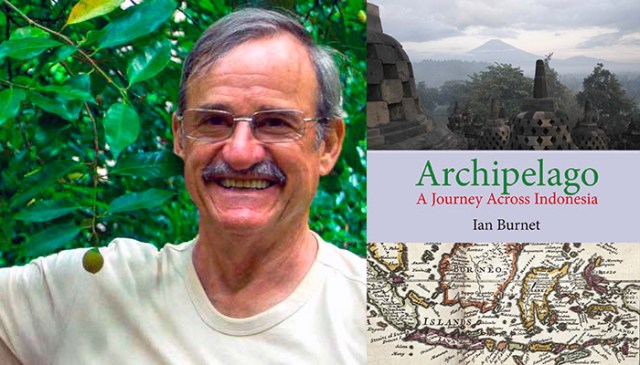
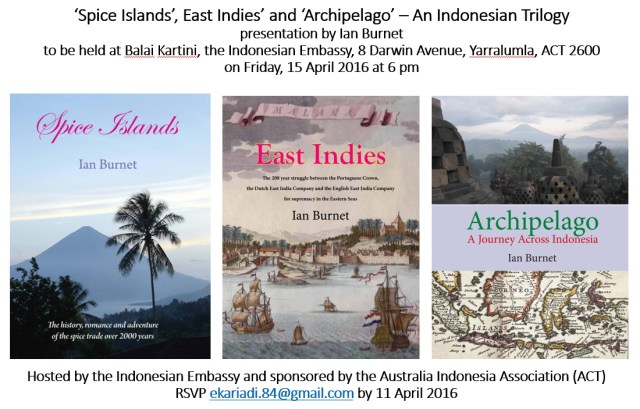
TEMPO.CO, Canberra – Tiga puluh tahun tinggal di Indonesia, membuat Ian Burnet tidak saja mencintai Indonesia, tetapi menuangkannya dalam tiga buku apik tentang Indonesia. Ketiga karyanya tersebut, pertama Spice Islands, yang terbit pada 2011, East Indies terbit pada 2013 dan yang terbaru Archipelago: A Journey Across Indonesia, dikupas tuntas dalam acara bedah buku di Kedutaan Besar Republik Indonesia, Canberra, pekan lalu.

Duta Besar RI untuk Australia, Nadjib Riphat Kesoema menyatakan buku-buku tersebut memberikan wawasan baru tentang Indonesia dari berbagai sudut, termasuk perspektif historis kepada publik Australia.

“Buku  dapat menjadi pembawa pesan komunikasi yang efektif dan alat  belajar antar masyarakat Indonesia dan Australia,” kata Nadjib.

Menurut Nadjib, penulis seperti Burnet berperan penting  dalam upaya mempertahankan dan menyebarluaskan sejarah Indonesia serta warisan budaya nasional.

“Melalui pemahaman mendalam, akan tercipta saling pengertian dan menghormati antar masyarakat kedua negara yang nantinya akan membantu memperkuat hubungan dan kerjasama di sektor lain, seperti di bidang politik, ekonomi hingga sosial budaya,” kata Nadjib.

Acara yang dimoderatori oleh Atase Pendidikan dan Kebudayaan KBRI Canberra, Prof. Ronny Rachman Noor tersebut dihadiri  Allaster Cox, pejabat senior dari Departemen Luar Negeri dan Perdagangan Australia, para diplomat dari negara sahabat, pejabat Departemen Pendidikan Australia, akademisi, sejarawan, seniman serta mahasiswa dan pelajar.

Nadjib menyampaikan bahwa momen ditemukannya Indonesia yang kaya rempah-rempah seperti dikisahkan dalam buku, Spice Islands. Serta  terjadinya arus perdagangan rempah-rempah dari Indonesia berabad-abad lalu merupakan titik awal interaksi budaya dan peradaban antar suku bangsa di Indonesia dengan bangsa Eropa.

“Pengaruhnya bisa kita lihat hasil pengaruhnya pada bahasa, budaya dan gastronomi antar bangsa tersebut,” kata Nadjib. “Seyogyanya pembaca dapat mengambil makna dari interaksi tersebut terutama bila dikaitkan dengan  hubungan antar kedua negara saat ini,” tambah dia.

Sang pengarang, Ian Burnet yang telah menghabiskan waktu selama 30 tahun tinggal, bekerja dan berkeliling Indonesia. Burnet juga fasih berbahasa Indonesia. Istrinya pun warga negara Indonesia. Dia adalah salah satu  warga negara Australia yang jatuh cinta terhadap Indonesia, termasuk terhadap sejarah perjuangan Indonesia melawan kolonialisme. Kecintaannya terhadap sejarah Indonesia tampak dalam dua bukunya, Spice Islands dan East Indies.

Buku Spice Islands, mengulas ratusan tahun sejarah perdagangan rempah-rempah dari Maluku ke India, Timur Tengah, Eropa dan Cina.

Adapun bukunya yang berjudul ‘Archipelago atau Nusantara’ berisi kisah ekspedisi panjangnya mengelilingi berbagai wilayah di Indonesia selama berbulan-bulan baik menggunakan jalur darat, yakni dengan mobil, kereta api hingga sepeda motor dan kapal laut, yakni perahu pinisi Bugis.

Menurut Burnet, Indonesia merupakan negara yang sangat indah untuk dilihat, dijelajahi, dan ditinggali serta sangat aman, selain menjadi sumber inspirasi yang sangat luar biasa bagi karya-karyanya selama ini. Dia saat ini sedang menulis buku keempatnya mengenai Indonesia.

Les Boag, Ketua Australia-Indonesia Association (AIA) menyatakan buku-buku Burnet menunjukkan kepada masyarakat Australia bahwa destinasi pariwisata Indonesia yang menarik bukanlah Pulau Bali semata.

“Masih sangat banyak tempat wisata lain di Indonesia yang sangat atraktif, seperti Maluku, Sulawesi, Jawa, Flores, Sumatera dan sebagainya,” kata Boag.

Dalam acara itu tampak animo masyarakat Australia terhadap buku-buku mengenai Indonesia sangat tinggi. Semua buku Burnet yang dibawa dalam acara bedah buku tersebut ludes terjual. Bahkan sebagian tamu yang hadir terpaksa harus memesan untuk mendapatkan buku tersebut.

NATALIA SANTI

More details on these books can be found on http://www.ianburnetbooks.com
http://www.ianburnetbooks.com
Posted in Uncategorized | Tagged , , , , | Leave a comment

East Indies (update)

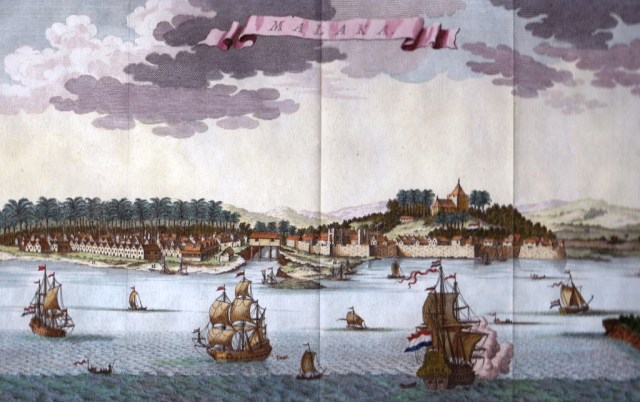
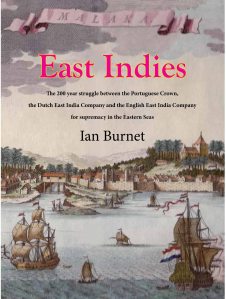
The book East Indies tells of the struggle of the East India Companies for trade supremacy in the Eastern Seas over two centuries. It follows the trade winds and the trade routes to the port cities across Asia and the Orient. Beginning with the trading ports of Malacca in the 16th century, Batavia in the 17th century and concluding with the founding of Singapore and Hong Kong , which became some of the world’s largest trading ports in the 19th century.

When you read ‘East Indies’ by Ian Burnet you can almost smell exotic spices over salt spray and wet wood of the ships that transported the goods back to Europe. Following from his previous book, ‘Spice Islands’ in which Ian documented the history of the spice trade in the Maluku and Banda islands of Indonesia, where two very important and highly sought spices – cloves and nutmeg – originated, ‘East Indies’ looks at the impact of the European explorers and traders.

Ian has once again researched his topic thoroughly, and ‘East Indies’ is beautifully illustrated, filled with georgeous maps and pictures evoking the age of sail.

Highly recommended.                                         Melanie Ryan  — Limelight Book Reviews


Rosenberg_EastIndiesFrontCover31May-1


01_MapEastIndies_Moll_Annotated

44_Painting of Malacca after its capture by the Dutch - Copy

There has been a recent spike in sales of East Indies from the Amazon website, so I did a Google search to find out why. The good news is that East Indies has been ranked at number 6 out of 33 books listed as suggested reading on Pacific History by the History Club, as on the link below.

http://www.historyoftheunitedstates.net/bibliography/pacific-history-suggested-reading.php


ianburnetbooks.com


Posted in Uncategorized | Tagged , , , , , | 2 Comments

Terra Australis 1606 ( podcast with maps)

Please follow the link to see a talk given recently at the Royal Australian Historical Society on the first European discovery or sighting of Australia in 1606 by the Dutch voyage led by Willem Janzoon and the Spanish voyage led by Luis Vaz de Torres.

The 28 minute podcast shows the key maps and images that go with this first discovery of Australia and also the first world map on which part of Australia appears in 1622.

http://www.ianburnetbooks.com

Posted in Uncategorized | Tagged , , , , , , | Leave a comment

The Book of Spice

The Book of Spice – from Anise to Zedoary     by John O’Connell

The Book of Spice 7284526-3x4-340x453

Listen to this 12 minute interview with John O’Connell on his introduction to spices and his interest in the history of spices and their uses.

https://radio.abc.net.au/programitem/pgkeGQ9k1G?play=true

Of course for the full history, romance and adventure of the spice trade over more than 2000 years, then you can find the book ‘Spice Islands’ by Ian Burnet.

http://www.ianburnetbooks.com


Posted in Uncategorized | Leave a comment

A Journey Across Flores

Beyond Bali, much of Indonesia is unknown to many Australians. But in many respects, Indonesia is Australia’s most important overall relationship.  Yet the historical and cultural differences of our nearest neighbour are vast, possibly among the widest of any pair of adjoining countries.

Heritage_Indonesia_HiRes  Map ex Ingo

Strong relationships are based on mutual knowledge and understanding – and travel plays an important role. So it is a good time to visit one of the most interesting societies in the world, accompanied by an authoritive and highly qualified leader.

ian-burnet-archipelago

A Journey Across Indonesia


For the traveller, opportunity knocks, and here is a frequently overlooked destination that begs exploration. At the end of our Journey Across Java tour you may join Heritage Destinations on a 7 day tour across Flores from August 31 – September 8, 2016, with Ian Burnet, the author of the recent book Archipelago – A Journey Across Indonesia, as your leader.

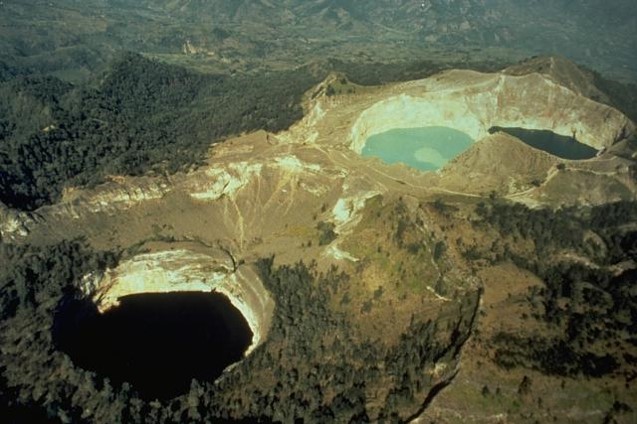
kelimutu1

The Kelimutu Crater Lakes


We will fly from Bali to the town of Ende in South Central Flores and then wind our way up the Wolowona River Gorge to the mountain  village of Moni. Then an early morning start to view the sunrise from the top of the Kelimutu National Park and see its uniquely coloured crater lakes.

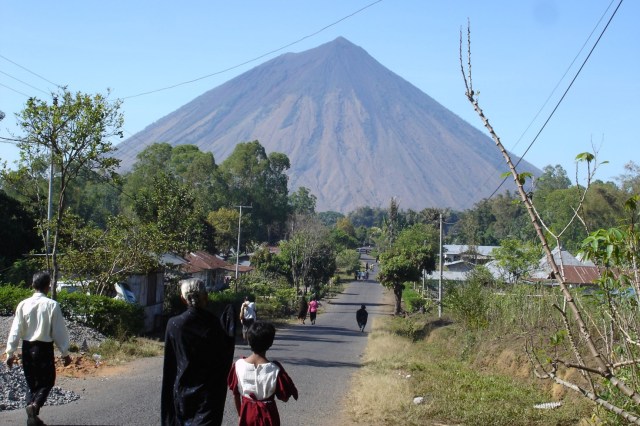
Mount Inerie

Mount Inerie from Bajawa

We then make our way westwards as far as the mountain towns of Bajawa and Ruteng for overnight stays. Along the way we will pass photogenic volcanoes, visit traditional villages, see megalithic tomblike structures and admire traditional woven textiles.

0053  Bena

The traditional village of Bena

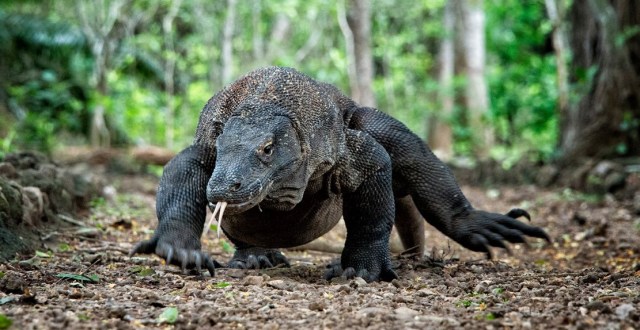
From the port town of Labuan Bajo we travel by boat to the islands of the Komodo Archipelago, where we will trek with our guides in search of the Komodo ‘dragons’, the largest reptiles on the planet, which can reach up to twelve feet long.

Komodo Dragon

The Komodo Dragon

For all the tour details please go to the Heritage Destinations website:

http://www.heritagedestinations.com.au/tour/a-journey-across-java/


http://www.ianburnetbooks.com


Posted in Uncategorized | Tagged , , , , , , , , , | Leave a comment

Durian – The King of Fruits

The durian is known as the ‘King of the Fruits’ a label that can be attributed to its huge size (up to 7kg for some varieties), formidable look, and (for some)  an overpowering odour. With this size and this crazy armor, the idea of sovereignty over the kingdom of fruits makes sense.

Durian-market-Philippines-720x479

With a fruit this size, sitting or standing under a Durian tree when it is the season is hazardous, as a blow to the skull from a falling durian can be fatal.

The best description of Durian comes from the naturalist and greatest of all archipelago travellers, Alfred Russel Wallace – ‘The five cells are silky-white within, and are filled with a mass of firm, cream-coloured pulp, containing about three seeds each. This pulp is the edible part, and its consistence and flavour are indescribable. A rich custard highly flavoured with almonds gives the best general idea of it, but there are occasional wafts of flavour that call to mind cream-cheese, onion-sauce, sherry-wine, and other incongruous dishes. Then there is a rich glutinous smoothness in the pulp which nothing else possesses, but which adds to its delicacy. It is neither acidic nor sweet nor juicy; yet it wants neither of these qualities, for it is in itself perfect. It produces no nausea or other bad effect, and the more you eat of it the less you feel inclined to stop. In fact, to eat Durians is a new sensation worth a voyage to the East to experience. … as producing a food of the most exquisite flavour it is unsurpassed’.

Durian-Step-5Bullet3

The Indonesians believe durian to have aphrodisiac qualities. A saying in Indonesian, ‘durian jatuh, sarung naik’, meaning when the durians fall the sarongs comes up, refers to this belief.

Also, eating durian along with alcohol can be dangerous (I can confirm this from personal experience). Now intrepid researchers have confirmed there may be some truth in this supposition.  It is the first time combining a fruit with booze has been scientifically linked to an adverse reaction.

Durian_on_sale_near_Cirebon

Also, being a seasonal fruit, it is eagerly awaited and makes durian lovers go nuts when it finally shows up in the markets. It is weird, which is probably one of its strongest qualities. It tastes and smells like nothing else. It is singular and strange, with a hint of danger. So eating a simple fruit becomes a real adventure.

Forget what people tell you about the smell – try it and you will never forget the unique taste and texture of this creamy fruit – as producing a food of the most exquisite flavour it is unsurpassed!


ianburnetbooks.com
Posted in Uncategorized | Tagged , , , , | 3 Comments

A Journey Across Java

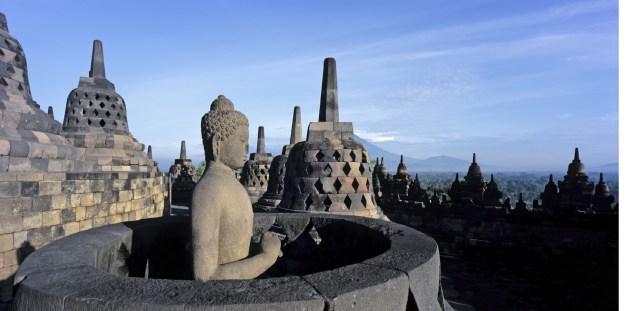
150921 Borobudor iStock 1920pxl x 1080pxl hero

Borobodur

Beyond Bali, much of Indonesia is unknown to many Australians. But in many respects, Indonesia is Australia’s most important overall relationship.  Yet the historical and cultural differences of our nearest neighbour are vast, possibly among the widest of any pair of adjoining countries.

Strong relationships are based on mutual knowledge and understanding – and travel plays an important role. So it is a good time to visit one of the most interesting societies in the world, accompanied by an authoritive and highly qualified leader.

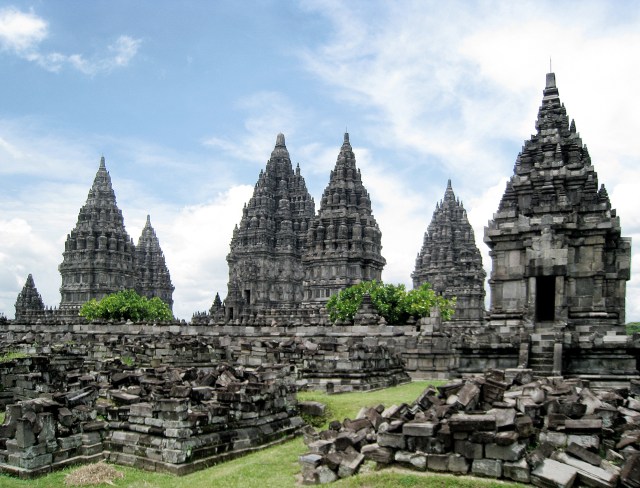
0018 Prambanan_Gunawan Kartapranata

Prambanan

For the traveller, opportunity knocks, and here is a frequently overlooked destination that begs exploration. Join Heritage Destinations on a 14 day tour across Java from August 17 – 30, 2016, with Ian Burnet, the author of the recent book Archipelago – A Journey Across Indonesia, as your leader.

rosenberg_archipelago_coverimage2

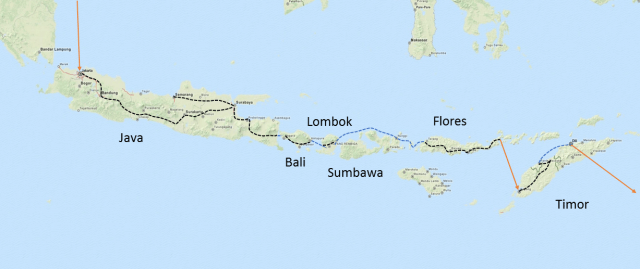
Our starting point is the capital Jakarta, centre for government, politics and business – the brain of Indonesia. West, Central and East Java follow including travelling by train to Bandung and Yogjakarta, the World Heritage listed sites of Buddhist Borobodur and Hindu Prambanan and other interesting centres such Solo and Malang before we depart Java at Surabaja. The program concludes in Bali with an optional extension to the rugged Nusa Tenggara island of Flores and the dragons of Komodo National Park another World Heritage listed site. The 8 day Flores extension is from August 31 – September 8.

Heritage_Indonesia_HiRes  Map ex Ingo

For all the tour details please go to the Heritage Destinations website:

http://www.heritagedestinations.com.au/tour/a-journey-across-java/


ianburnetbooks.com


Posted in Uncategorized | 2 Comments

A Little Flight Reading

Archipelago: A Journey Across Indonesia

Ian Burnet, Rosenberg Press, $39.95

An article from ‘The Australian’ – January 16, Travel Section – Graham Erbacher

Is your body back at work but head and heart still on holidays? Time for a good travel book and none more engaging than Ian Burnet’s new title. He hops from island to island (Java to Timor), folowing the volcanoes that form Indonesia’s spine. Join him for his favorite Balinese meal, rice field duck “fried so crispy you can crunch on the bones”. Or feel the fear of facing a Komodo dragon. Baron Rudolf Von Reding Biberegg had the most unfortunate of encounters in 1974 after he fell behind a walking party. All they found on return was the baron’s hat, camera and a bloody shoe. On his memorial : “He loved nature throughout his life.” Burnet recounts a rule: “Nature lovers should always stick to the group, otherwise nature may love them back.”

Archipelago Map

Archipelago – A Journey Across Indonesia

rosenberg_archipelago_coverimage2

ianburnetbooks.com
Posted in Uncategorized | Tagged , , , , , , | Leave a comment

Spicing things Up! – with Spice Art


Laurent Mareschal

Jameel Prize 3
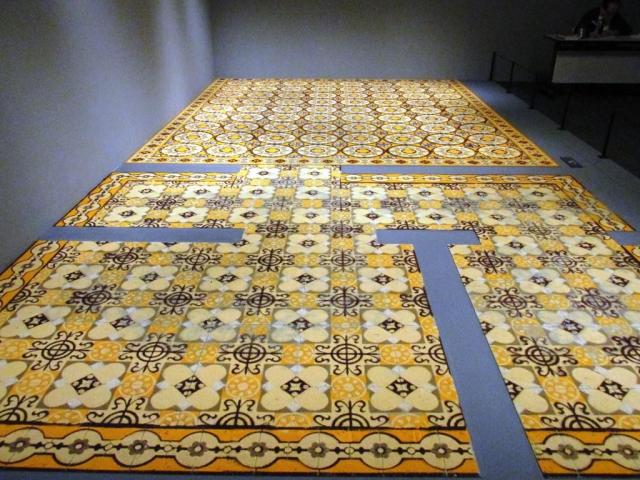
Laurent Mareschal was born Paris, where he is still based. Much of his work is underpinned by a preoccupation with incommunicability, and therefore invites audience involvement. Mareschal lived in Israel for several years, and his work displays Hebrew and Arabic influences. In his studio, Mareschal explains why he uses ephemeral materials such as spices, soap and food in order to evoke memories and highlight our own fragility. The works are heavily influenced by decorative elements of Middle-Eastern art and design.
Transcription:
Most of my work is quite ephemeral. There is something about the smell that you can’t really refuse. It gets inside of you and makes you remember something. You can play with the colour and the smell and what it makes you remember and I am playing with that. You’ve just got a very thin layer of spices and it affects your effected memory in a way.

My work is often site specific. When I will install the piece Beiti at the V&A I will use ten different stencils. There will be five different spices and of course it deals with time since the work is fading away, so I love to work with time and that the work in fact is not a sculpture made out of marble but is fading away after some time.

Laurent Mareschal 2

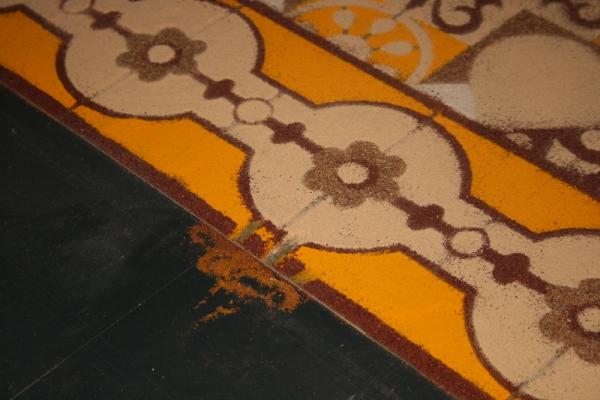
The patterns are influenced by Arabic geometry. The first time that I made it we didn’t put a rope around it so people just walked on it and ruined it completely as they thought they were real tiles. So I want people to look and think OK, they are real tiles and suddenly if they look another time they will realise it is made out of spices and it will surprise them and they will think wow, this guy is completely nuts, he has been working for a week and it will just vanish in a second. So I think it is quite a funny way to look at the work and most of the people are looking at it like that I think.

IMG_2513 - Copy

Photo from the Jameel Exhibition at the National Library Singapore (Ian Burnet)

Watch Laurent Mareschal create his spice art on V & A video

ianburnetbooks.com
Posted in Uncategorized | Tagged , , , , | Leave a comment

The (almost) Forgotten Founder of Singapore

I posted the following blog about William Farquhar and Singapore a year ago.

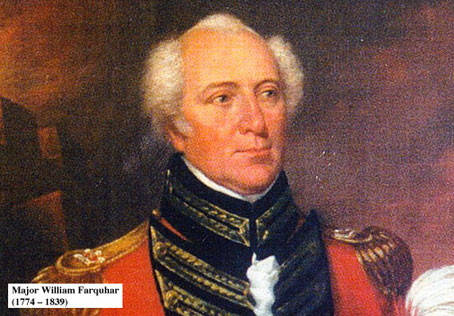
I have always been surprised by the lack of recognition in Singapore for its co-founder William Farquhar. Please correct me if I am wrong but I cannot find a street or place named after him anywhere in the city.

William Farquhar Image 3

In 1818 the Governor-General of India authorized Stamford Raffles to establish a post at the southern end of the Strait of Malacca provided it did not cause a conflict with the Dutch and his orders stated:

The long experience and peculiar qualifications of Major Farquhar, the late resident of Malacca, and his late employment at Riau and Lingga, eminently fit him for the command of the post which it is desirable to establish, and the local superintendence of our interest and affairs.

While the British Resident in Malacca from 1803 to 1818, William Farquhar had established friendly relations with the Temenggong Abdu’r-Rahman of Johor. Knowing that the Dutch would soon be returning to the Strait of Malacca after the hand-over of Java and its dependencies by the British in 1816, he concluded an agreement with the Temenggong (A Malay Chief) allowing the British to establish a settlement in the Riau Islands. Subsequently the Dutch had installed their Resident in the Riau Islands and forced the Temenggong to annul the agreement with Farqhuar.
It was Raffles and Farquhar who landed together at the Singapore River on 29 January 1819. The Temenggong who lived nearby came out to welcome his old friend William Farquhar. Introduced to Raffles, he told them of the current dispute within the Johor-Riau Sultanate. In 1810 the Sultan of Johor had died, his eldest son Tengku Long was his successor; however, the powerful Bugis faction in the Johor-Riau court exploited Tengku Long’s absence at his own wedding to declare his more compliant younger brother as Sultan.

Raffles took advantage of this dispute to sign an agreement on 6 February 1819 with ‘the legitimate successor to the empire of Johor’ for the British to set up a trading settlement on part of Singapore Island and his official Proclamation reads:

The Honourable Sir T.S.Raffles, Lieutenant-Governor of Bencoolen and its dependencies, Agent to the Governor-General is pleased to to certify the appointment by the Supreme Government of Major William Farqhuar of the Madras Engineers to be Resident and to command the troops of Singapore and its dependencies and all persons are hereby directed to obey Major Farquhar accordingly.

Farquhar with his long experience in Malacca was an effective Resident of Singapore for the next four years until churlishly dismissed by Raffles on 1 May 1823, just before his term was about to end.

In that blog post, I challenged anyone in Singapore to find a street or place named after its co-founder. There was no response, so this year I decided to check with Mr. Google – a search found 77 business and place names with the prefix Raffles and nothing for Farqhuar.

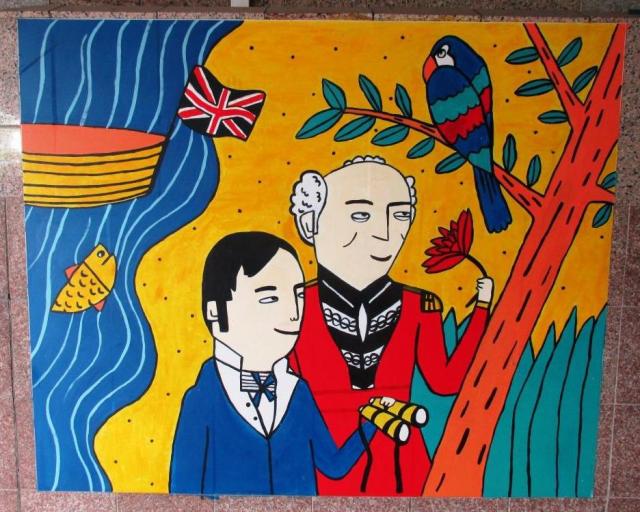
Imagine my surprise when this year I found some ‘official graffiti’ under one of the bridges across the Singapore River showing Major William Farquhar and the Temenggong witnessing Stamford Raffles signing the lease agreement with Tengku Long, on behalf of the British East India Company.

IMG_2392 - Copy

During his twenty years in Malacca and Singapore, William Farquhar amassed a unique collection of 477 paintings of native flora and fauna especially commissioned from local artists. The William Farquhar Collection of Natural History Drawings was presented to the Royal Asiatic Society London in 1827 where it remained until put up for auction in the 1990’s. Thanks to the generosity of Goh Geok Khim, founder of the brokerage firm GK Goh, the collection was purchased for S$3 million in 1995 and donated to the Singapore History Museum in honor of his father. The William Farquhar Natural History Collection is now listed as one of the National Treasures of Singapore.

William Farquhar Book

It is therefore appropriate that the other ‘graffiti image’ under the bridge shows William Farquhar observing the flora and fauna of Malaya and Singapore

IMG_2393 - Copy

I hope that next year I can report on the offical naming of a Farquhar Place somewhere in Singapore or perhaps the addition of his name to the plaque at the landing site on the Singapore River.

The history of the founding of Singapore and its regional context can be found in the book ‘East Indies’ by Ian Burnet.

Go to http://www.ianburnetbooks.com/east-indies

Posted in Uncategorized | Tagged , , , , , | 8 Comments