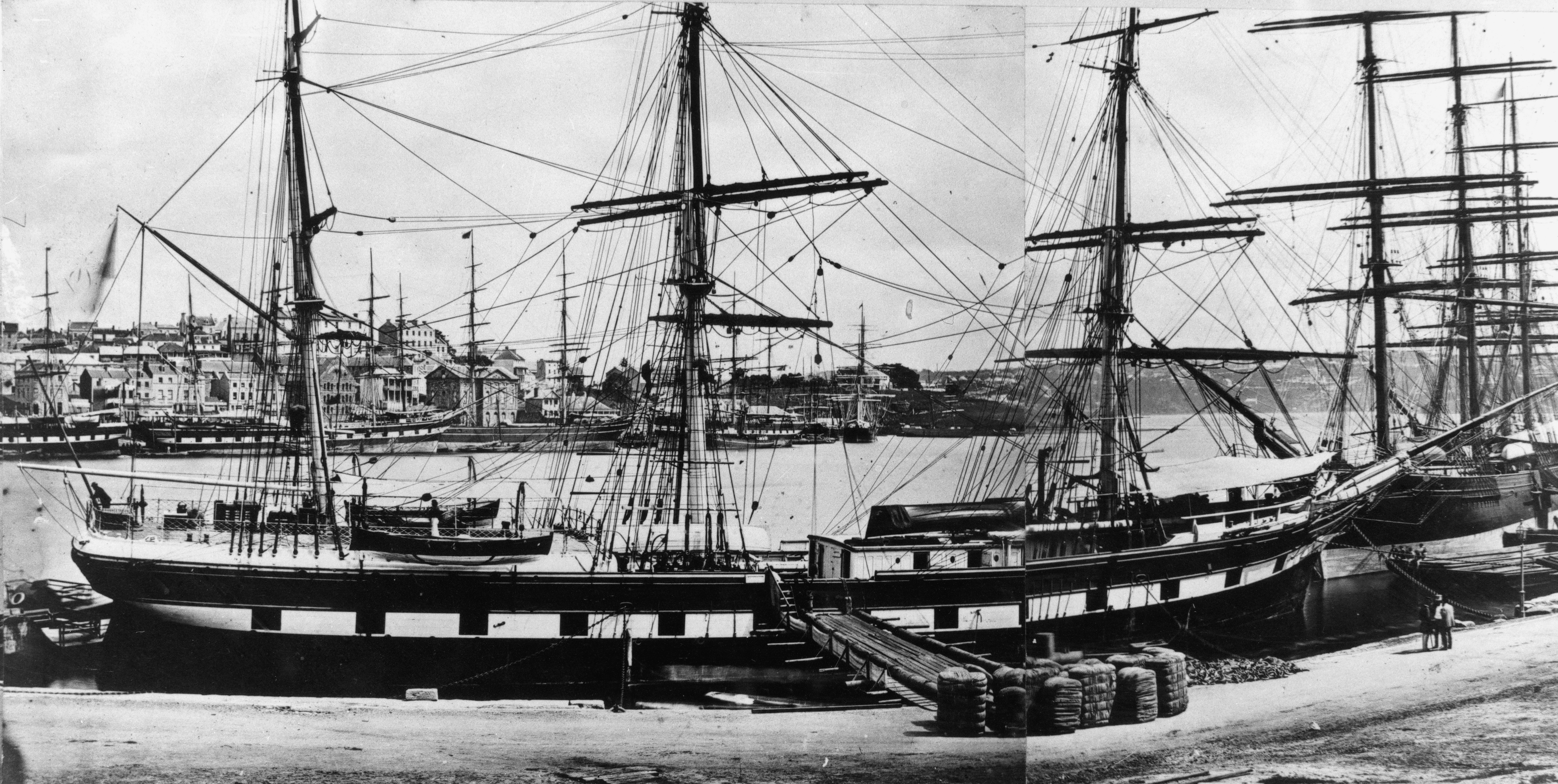
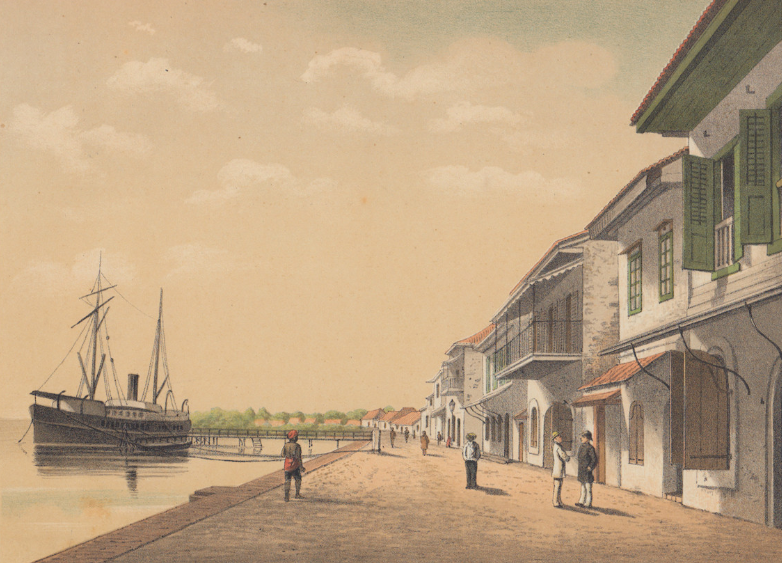
About half of everything Joseph Conrad ever wrote takes place in South-East Asia, six novels, plus more than a dozen short stories and novellas, which are all evocative of the exotic east. Although his love was for sailing ships and the world’s great oceans, his voyages on the tramp ship Vidar to the Java Sea, the Macassar Strait and the east coast of Borneo, inspired more of Conrad’s fiction than any other period in his life.
His Borneo books – Almayer’s Folly, An Outcast of the Islands, Lord Jim and The Rescue were all based on the places he had visited, the stories he had heard, and the people he had met during his voyages in the Indonesian archipelago. It is his excellent visual memory of people, landscape, estuaries, rivers, climate, jungle foliage, commerce, local politics, religion and dress that bring his fictional world to life.
In his novel Almayer’s Folly, Joseph Conrad describes the location of the village and trading post he calls Sambir as –
Forty miles up a river on the east coast of Borneo. A river and a settlement which he described as ‘One of the last, forgotten unknown places on earth’.
In his novel Lord Jim, Joseph Conrad describes the location of the village and trading post as –
Patusan is a remote district of a native-ruled State and the chief settlement bears the same name. At a point on the river about forty miles from the sea, where the first houses come into view, there can be seen rising above the level of the forest the summits of two steep hills.
For whatever reason, Joseph Conrad avoided directly naming the real location of this village and trading post so it took some time for determined literary detectives to track down the actual location of the fictional villages of ‘Sambir’ and ‘Patusan’ in remote East Borneo.
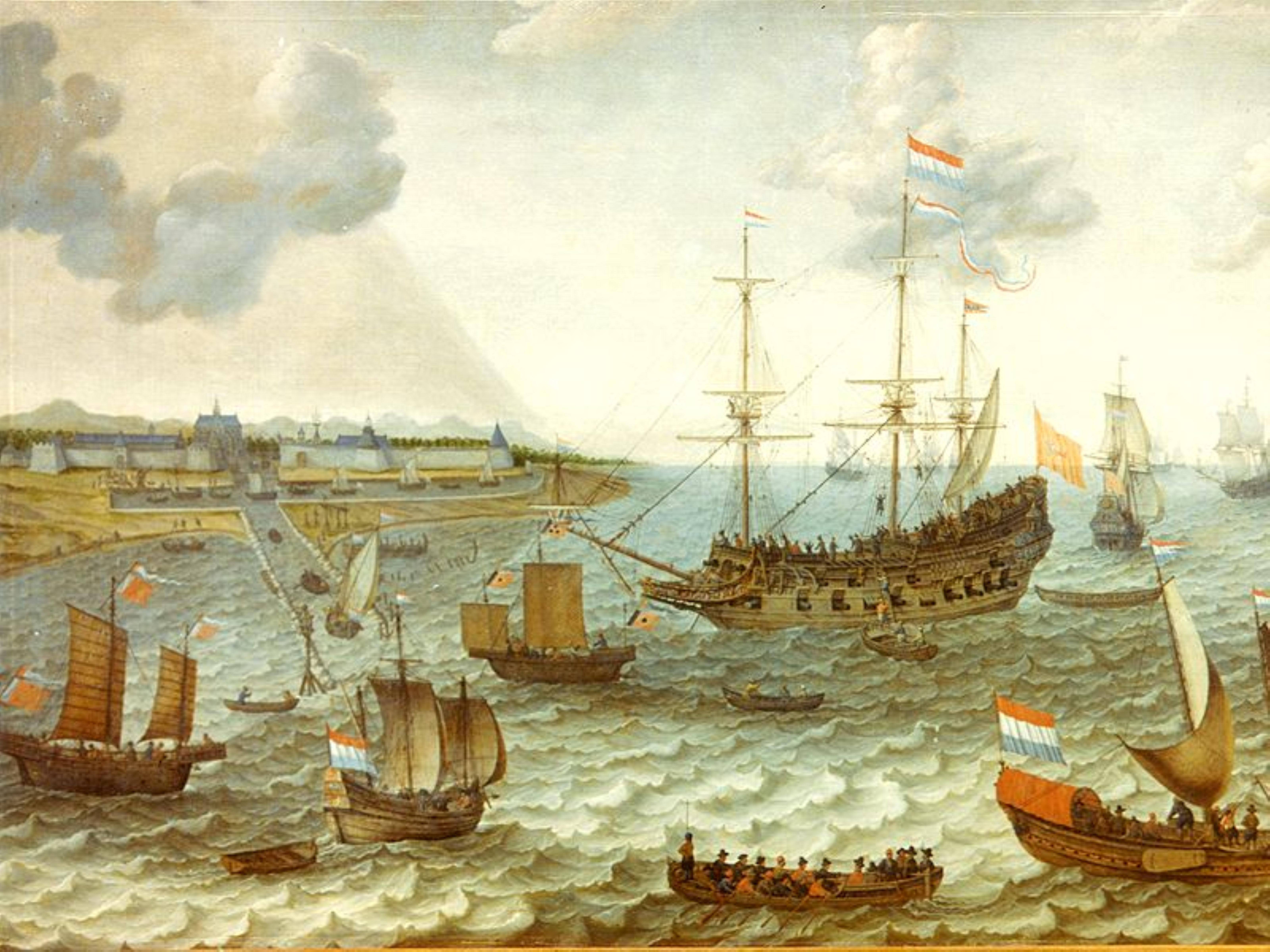
The first clue is the Vidar, the trading ship on which Joseph Conrad served as first mate, which he describes as being based in Singapore and having an Arab owner.
She was an Eastern ship, inasmuch as then she belonged to those seas. She traded among dark islands on a blue reef-scarred sea, with the Red Ensign over the taffrail and at her masthead a house-flag, also red, but with a green border and with a white crescent in it. For an Arab owned her, and a Syed at that. Hence the green border on the flag.
Joseph Conrad, The Shadow-Line
A search of the of the records reveals the following:

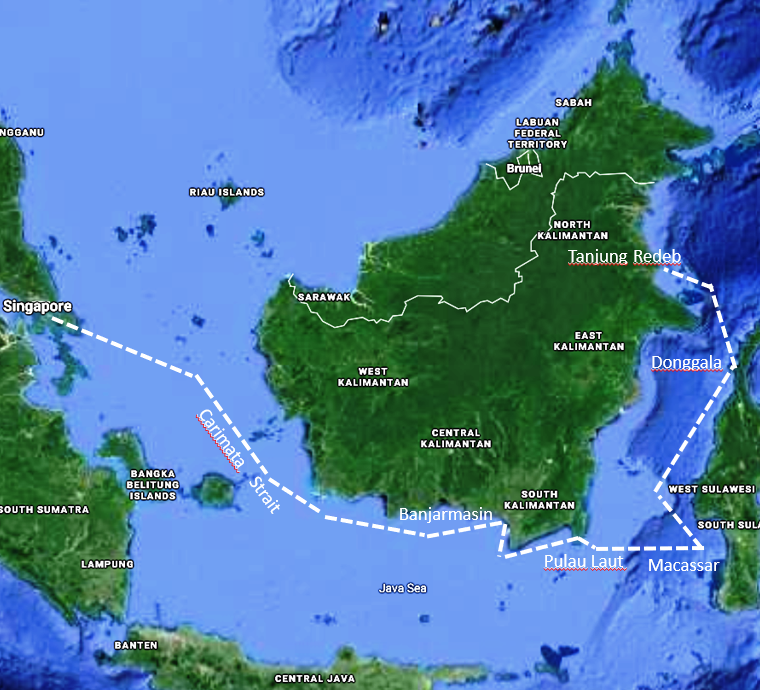
Joseph Conrad made four trading voyages to East Borneo on the Vidar from 1887 to 1889. The Singapore shipping records would have shown the destinations of the Vidar, including Tanjung Redeb on the Berau River and its trading voyage would be as shown on the map below:
‘The coast of Patusan is straight and somber, and faces a misty ocean. Red trails are seen like cataracts of rust streaming under the dark-green foliage of bushes and creepers clothing the low cliffs. Swampy plains open out at the mouth of rivers, with a view of jagged blue peaks beyond the vast forests. In the offing a chain of islands, dark, crumbling shapes, stand out in the everlasting sunlit haze like the remains of a wall breached by the sea.‘
Joseph Conrad, Lord Jim
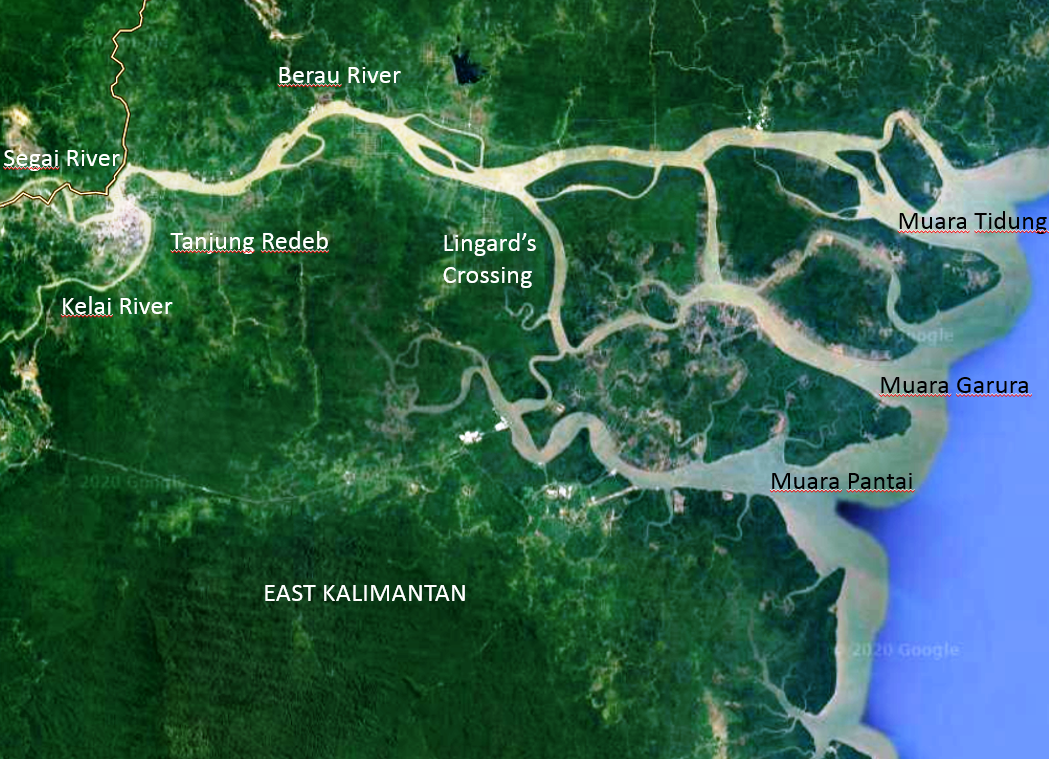
The Berau is the main river up from the coast which Joseph Conrad named the ‘Pantai’ in Almayer’s Folly and An Outcast of the Islands, and the ‘Patusan’ in Lord Jim. The settlement of Tanjung Redeb, forty miles up the river, lies on a promontory at the confluence where the Segai River to the north and the Kelai River to the south join to form the Berau. Opposite on the north bank of the Segai is the settlement of Gunung Tabor and the old Rajah’s palace. Opposite on the east bank of the Kelai is the settlement of Sambaliung, where according to Conrad, the Bugis potentate Lakamba had built his stockade and where Syed Abdulla established his wharf and trading post. Joseph Conrad provides us a description of the settlement through the eyes of Kapar Almayer:
From the low point of land where Almayer stood he could see both branches of the river. The main stream of the Pantai was lost completely in darkness for the fire at the Rajah’s had gone out altogether, but up the Sambir Reach his eye could follow the long line of Malay houses crowding the bank, with here and there a dim light twinkling through bamboo walls, or a smoky torch burning on the platforms built out over the river. Further away, where the island ended in a low cliff, rose a dark mass of buildings towering above the Malay structures. Founded solidly on a firm ground with plenty of space, starred by many lights burning strong and white, with a suggestion of paraffin and lamp-glasses, stood the house and the godowns of Abdulla bin Selim.
Joseph Conrad, Almayer’s Folly