
-
Recent Posts
Recent Comments
Archives
- March 2026
- February 2026
- January 2026
- December 2025
- November 2025
- June 2025
- May 2025
- February 2025
- January 2025
- December 2024
- November 2024
- October 2024
- September 2024
- August 2024
- May 2024
- January 2024
- December 2023
- November 2023
- October 2023
- August 2023
- July 2023
- June 2023
- May 2023
- April 2023
- March 2023
- December 2022
- November 2022
- October 2022
- September 2022
- August 2022
- July 2022
- June 2022
- May 2022
- April 2022
- February 2022
- January 2022
- December 2021
- November 2021
- October 2021
- September 2021
- August 2021
- July 2021
- June 2021
- May 2021
- April 2021
- March 2021
- February 2021
- January 2021
- December 2020
- November 2020
- October 2020
- September 2020
- August 2020
- July 2020
- June 2020
- May 2020
- April 2020
- March 2020
- February 2020
- January 2020
- December 2019
- November 2019
- October 2019
- September 2019
- August 2019
- July 2019
- June 2019
- May 2019
- April 2019
- March 2019
- February 2019
- January 2019
- November 2018
- October 2018
- September 2018
- August 2018
- July 2018
- June 2018
- May 2018
- April 2018
- March 2018
- February 2018
- January 2018
- December 2017
- November 2017
- October 2017
- September 2017
- August 2017
- July 2017
- June 2017
- May 2017
- April 2017
- March 2017
- February 2017
- January 2017
- December 2016
- November 2016
- October 2016
- September 2016
- August 2016
- July 2016
- June 2016
- May 2016
- April 2016
- March 2016
- February 2016
- January 2016
- December 2015
- November 2015
- October 2015
- September 2015
- August 2015
- July 2015
- June 2015
- May 2015
- April 2015
- March 2015
- February 2015
- January 2015
- December 2014
- November 2014
- October 2014
- September 2014
- August 2014
- July 2014
- June 2014
- May 2014
- April 2014
- March 2014
- February 2014
- January 2014
- December 2013
- November 2013
- October 2013
- September 2013
- August 2013
- July 2013
- June 2013
- May 2013
- April 2013
- March 2013
- January 2013
Categories
Meta
-
Join 587 other subscribers
- Follow spiceislandsblog on WordPress.com
Insinyur Geologi Australia, Ian Burnet Sudah Menulis Lima Buku Sejarah Terkait Indonesia

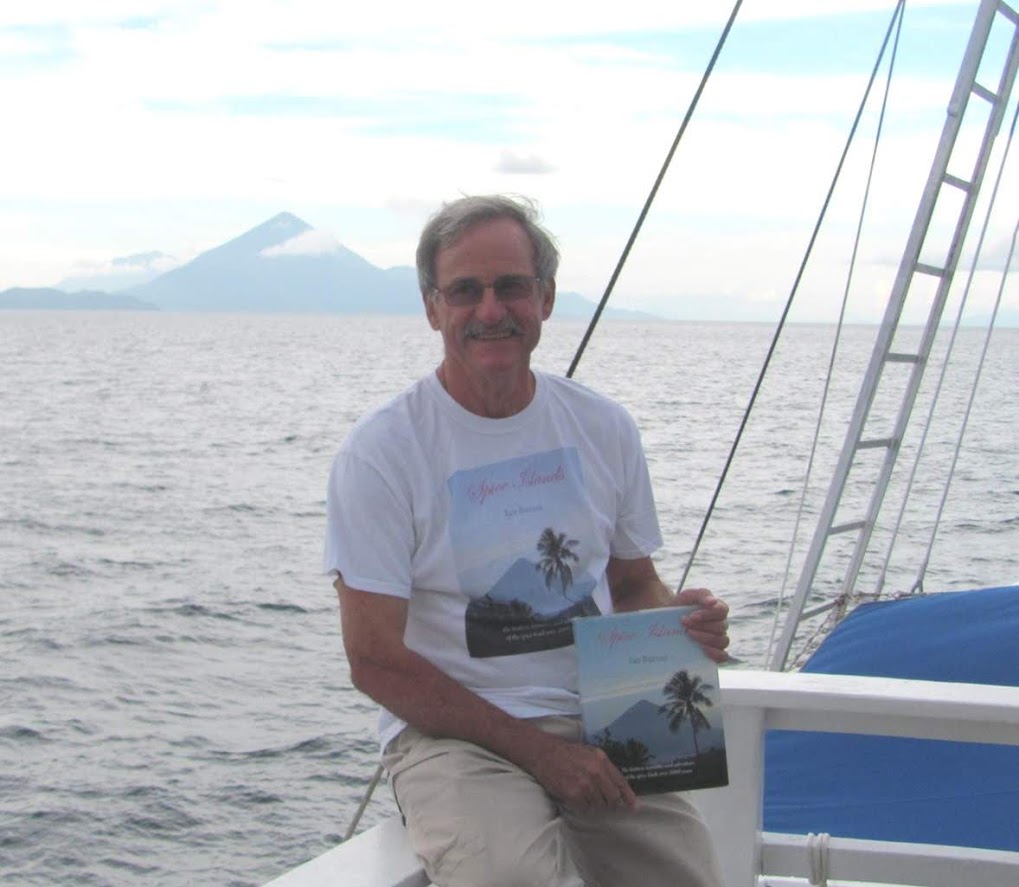
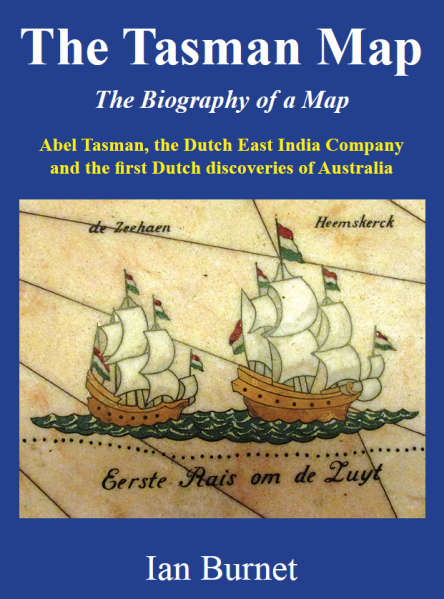
The Man, The Book and The Mountain
Ian Burnet, seorang warga Australia, pernah lama bekerja di Indonesia di bidang geologi. Setelah pensiun, dia sudah menulis lima buku terkait Indonesia dalam sepuluh tahun terakhir.
Ian sekarang sudah berusia 75 tahun dengan istri asal Indonesia yang kini tinggal di negara bagian New South Wales.
Namun usia tidak membuatnya mengendurkan kegiatannya untuk menulis.
Dengan pengalaman bekerja dan mengunjungi Indonesia selama lebih dari 30 tahun, Ian melihat banyak hal yang kemudian memberikannya inspirasi untuk menulis buku.
“Saya pertama kali ke Indonesia di tahun 1968 dan anda bisa bayangkan itu tahun setelah ‘The Years of Living Dangerously’ [sebuah film Australia yang menggambarkan masa pergolakan di Indonesia tahun 1965],” kata Ian Burnet kepada wartawan ABC Indonesia Sastra Wijaya. Silakan ikuti tautan di bawah ini untuk membaca laporan lengkapnya.
Garden of the East – Photography in Indonesia 1850’s – 1940’s

Young Javanese Woman – Kassian Cephas c 1885
Garden of the East: Photography in Indonesia 1850s–1940s is the first major survey in the southern hemisphere of the photographic art from the period spanning the last century of colonial rule until just prior to the establishment of the Republic of Indonesia in 1945. The 2014 exhibition provided the opportunity to view over two hundred and fifty photographs, albums and illustrated books of the photography of this era and provides a unique insight into the people, life and culture of Indonesia.

Balinese Child 1938 – Gotthard Schuh
The exhibition is comprised of images created by more than one hundred photographers and the majority have never been exhibited publicly before. The works were captured by photographers of all races, making images of the beauty, bounty, antiquities and elaborate cultures of the diverse lands and peoples of the former Dutch East Indies. Among these photographers is the Javanese artist Kassian Céphas, whose genius as a photographer is not widely known at this time, a situation which the National Gallery of Australia hopes to address by growing the collection of holdings from this period and by continuing to stage focused exhibitions such as Garden of the East.
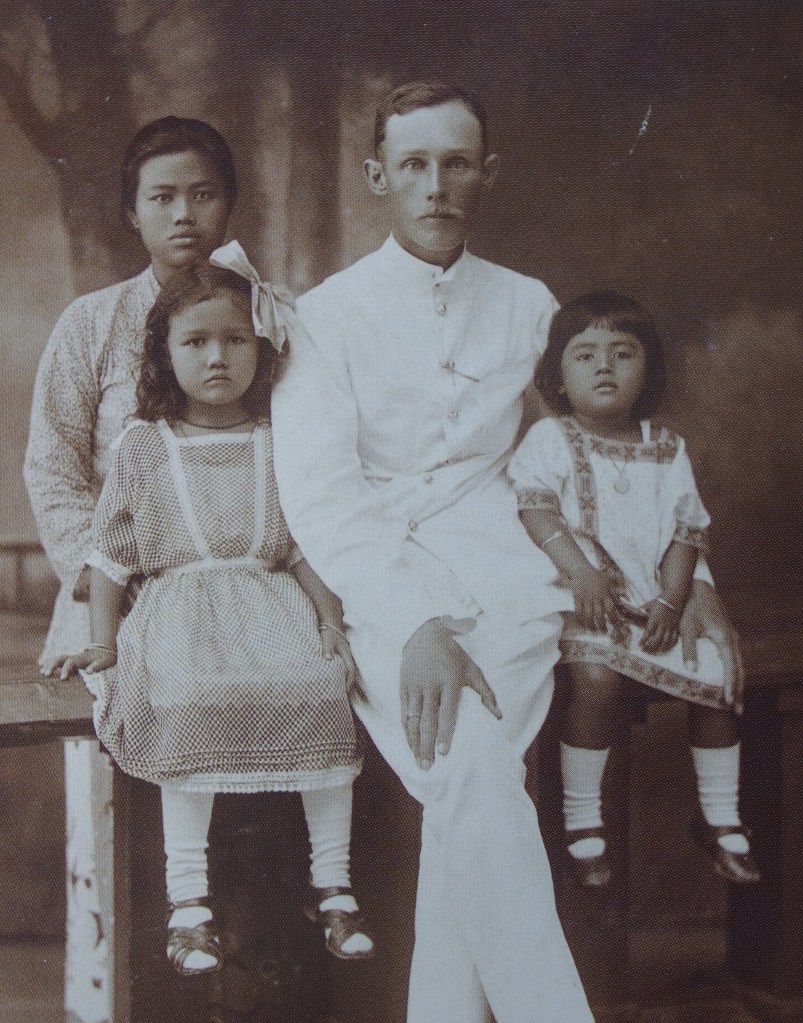
A Dutch-Indonesian Family
Leo Haks of Amsterdam started collecting photographs from Indonesia after a chance purchase in the Hague in 1977. From that start Haks became fascinated with early photography in Indonesia between the 1860s and 1940s. In 1984, he returned to Amsterdam and became a dealer in rare books and Indonesian paintings. He co-authored a number of books on Indonesian art and continued building what became the only museum standard holding of Indonesian photography in private hands.
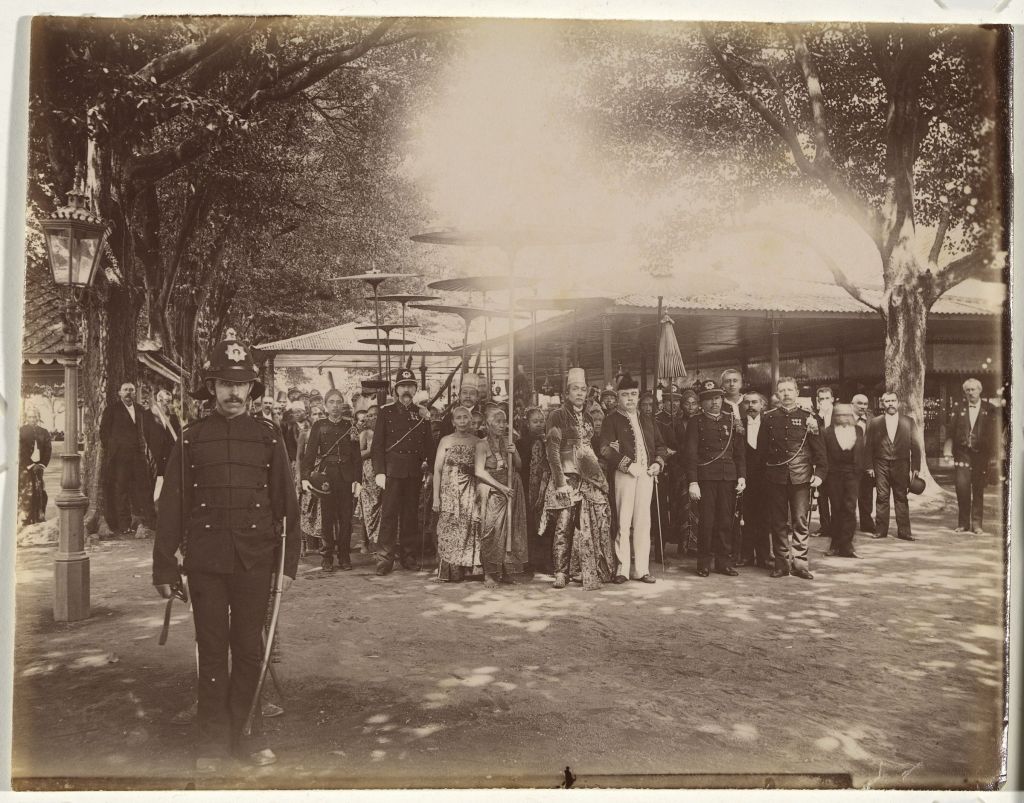
Sultan Hamengkoe Boewono VII with C.M.Ketting Olivier, Dutch Resident of Jogjakarta
Leo Haks built a collection of 5000 prints, as well as thousands more in albums both grand and humble. These albums, prints and his library of over 140 mostly rare books on the subject — all lugged up the narrow staircases of his four storey Amsterdam home — were expertly catalogued and rehoused in archival sleeves, new bindings or specially made cases. It was in 2006 that the National Gallery of Australia acquired this world class collection.

Javanese Court Dancers – Kassian Cephas
Gael Newton, Senior Curator of Photography, National Gallery of Australia and the Curator of the 2014 exhibition ‘Garden of the East‘ said that the exhibition presents images, both historic and homely and is a ‘time travel’ opportunity to visit the Indies through more than two hundred and fifty works on show, made by both professional and amateur family photographers. Images as diverse as the Indonesian archipelago itself, which was once described by nineteenth century travel writers as the ‘Garden of the East’.
The book Garden of the East -photography in Indonesia 1850s -1940s has been published by the National Gallery of Australia and the Indonesian visual heritage collection is available online by clicking Gallery on the link below.
Please click on the link below to watch a short documentary on the Garden of the East photographic exhibition.
Talking about the Spice Islands – with Janet de Neefe and Ian Burnet
For those who missed the talk on Instagram Live last week, then here is a link to the conversation between Janet de Neefe and Ian Burnet about Spices, the Spice Islands and Indonesia’s extraordinary maritime history.
Indo Lit Conversation Series – Ian Burnet
Posted in Uncategorized
Tagged ian burnet, indolit, indolit club, kersty pringgoharjono, tasman map, toni pollard
5 Comments
The Indonesian Declaration of Independence, 17 August 1945
17 August will be the Anniversary of the Indonesian Declaration of Independence.
Timing is everything. After the Japanese surrender on August 15, 1945 and the resulting power vacuam, now is the time to declare Indonesian independence. However Soekarno and Hatta as the leaders of the independence movement were hesitant and needed confirmation of the Japanese surrender. On August 16, Soekarno and Hatta are kidnapped? by the younger revolutionaries and taken to the village of Rengasdengklok, where they are pressured to declare independence in Jakarta on the following day. After reaching an agreement, Soekarno and Hatta return to Jakarta that evening to finalise the text.

The Indonesian Independence leaders discussing the draft of the Declaration of Independence at Rengasdengklok, 16 August 1945
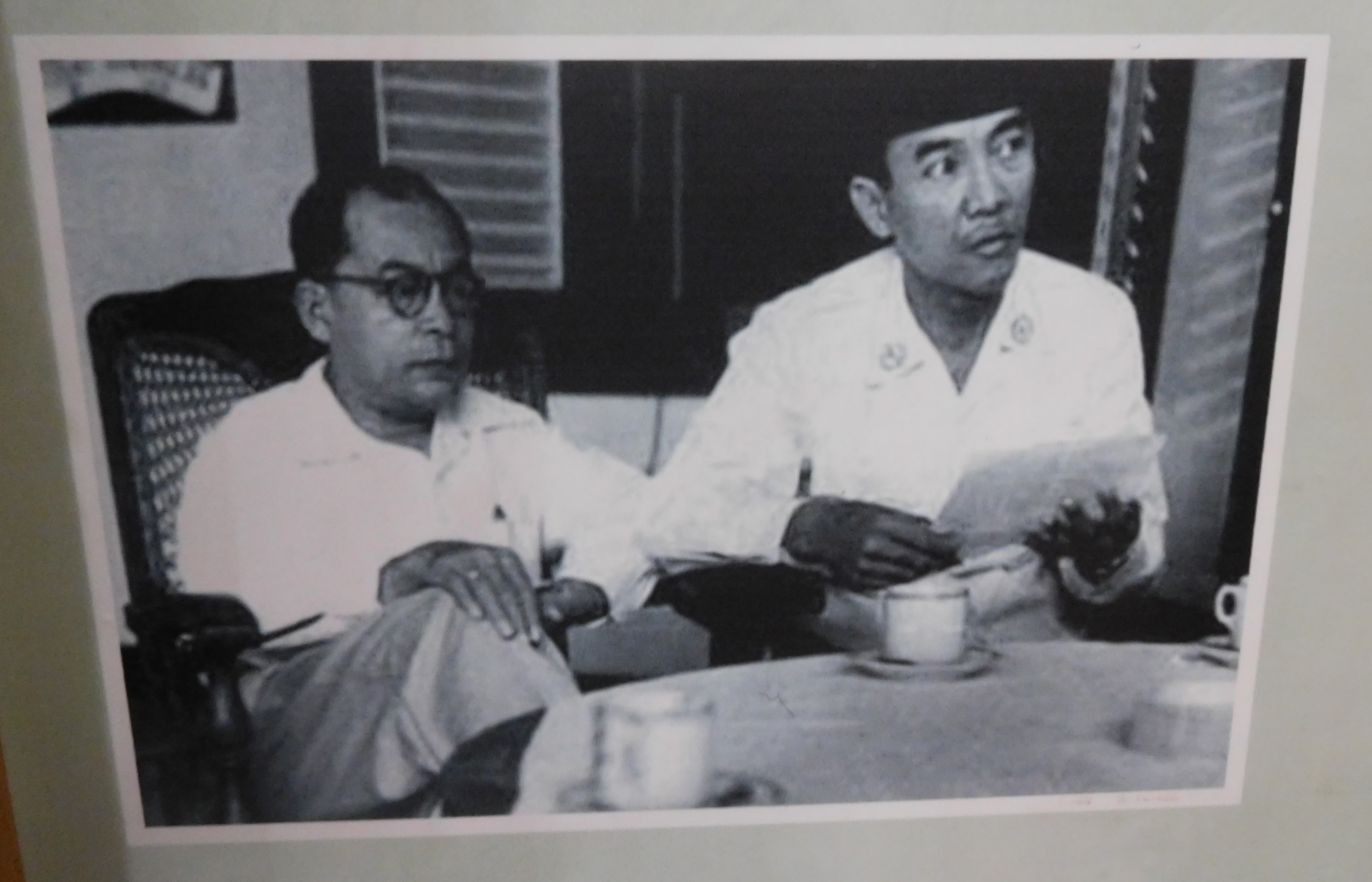
Hatta and Soekarno at Rengasdengklok with the draft Declaration. 16 August 1945
It was difficult to balance the interests of the Japanese military, the interests of Soekarno and Hatta, and those of the younger revolutionaries. For this reason the finally agreed declaration was kept as simple as possible
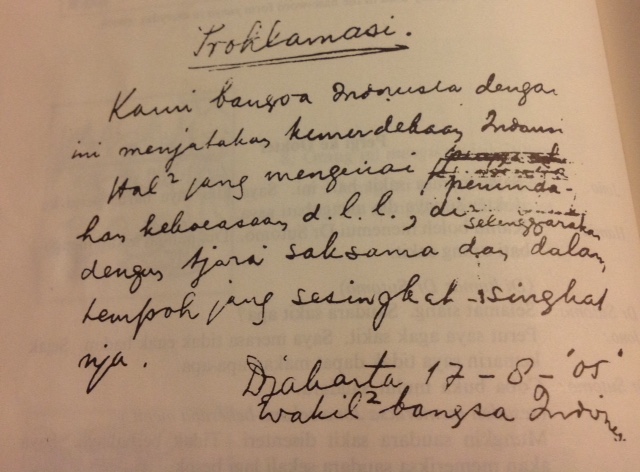
The handwritten draft of the Declaration of Independence, 17 August 1945
The Declaration of Independence is formally announced by Soekarno and Hatta at 10am on the morning of 17 August 1945. Soekarno stated in his opening speech:
Saudara- suadara sekalian
Saya telah minta saudara-saudara hadir disini, untuk menyaksikan satu peristiwa mahapenting dalam sejarah kita.
Berpuluh- puluhan tahun kita bangsa Indonesia telah berjoang untuk kemerdekaan tanah air kita – bahkan telah berates- ratus tahun!
Gelombang aksi kita untuk mencapai kemerdekaan kita itu ada naiknya, dan ada turunnya, tetapi jiwa kita tetap menuju ke arah cita-cita.
Juga didalam zaman Jepang, usaha kita untuk mencapai kemerdekaan nasional tidak berhenti-berhentinya . Didalam zaman Jepang ini tampaknya, bahwa kita menyandarkan diri kepada mereka. Tetapi hak ekatnya, tetapi kita menyusun tenaga sendiri, tetapi kita percaya pada kekuatan kami sendiri.
Sekarang tibalah saatnya kita benar-benar mengambil sikap nasib bangsa, dan nasib tanah air kita, didalam tangan kita sendiri. Hanya bangsa yang berani untuk mengambil nasib dalam tangan sendiri akan dapat berdiri dengan kuatnya.
Maka kami tadi malam telah mengadakan musyawarat dengan pemuka-pemuka rakyat Indonesia dari seluruh Indonesia. Permusyawaratan itu seIa sekata berpendapat bahwa sekaranglah datang saatnya untuk MENYATAKAN KEMERDEKAAN KITA!
Brothers and Sister All! I have asked you to be in attendance here in order to witness an event in our history of the utmost importance. For decades we, the people of Indonesia, have struggled for the freedom of our country – even for hundreds of years! There have been waves in our actions to achieve independence which rose, and there have been those that fell, but our spirit still was set in the direction of our ideals. Also during the Japanese period our efforts to achieve national independence never ceased. In this Japanese period it merely appeared that we lent on them. But fundamentally, we still continued to build up our own powers, we still believed in our own strengths. Now has come the moment when we truly take the fate of our actions and the fate of our country into our own hands. Only a nation bold enough to take its fate into its own hands will be able to stand in strength. Therefore last night we had deliberations with prominent Indonesians from all over Indonesia. That deliberative gathering was unanimously of the opinion that NOW has come the time to declare our independence. Brother and Sisters, we hearby declare the solidarity of that determination. Listen to our Proclamation.
PROKLAMASI
Kami, bangsa Indonesia, dengan ini menyatakan kemerdekaan Indonesia.
Hal-hal jang menenai pemindahan kekoeasaan d.l.l., diselenggarakan dengan tjara saksama dan dalam tempo jang sesingkat-singkatnja.
Djakarta, hari 17 boelan 8, tahoen 45
Atas nama bangsa Indonesia
Soekarno/Hatta
WE THE PEOPLE OF INDONESIA HEREBY DECLARE THE INDEPENDENCE OF INDONESIA. MATTERS WHICH CONCERN THE TRANSFER OF POWER AND OTHER THINGS WILL BE EXECUTED BY CAREFUL MEANS AND IN THE SHORTEST POSSIBLE TIME. DJAKARTA 17 AUGUST 1945. IN THE NAME OF THE INDONESIAN PEOPLE. SOEKARNO – HATTA
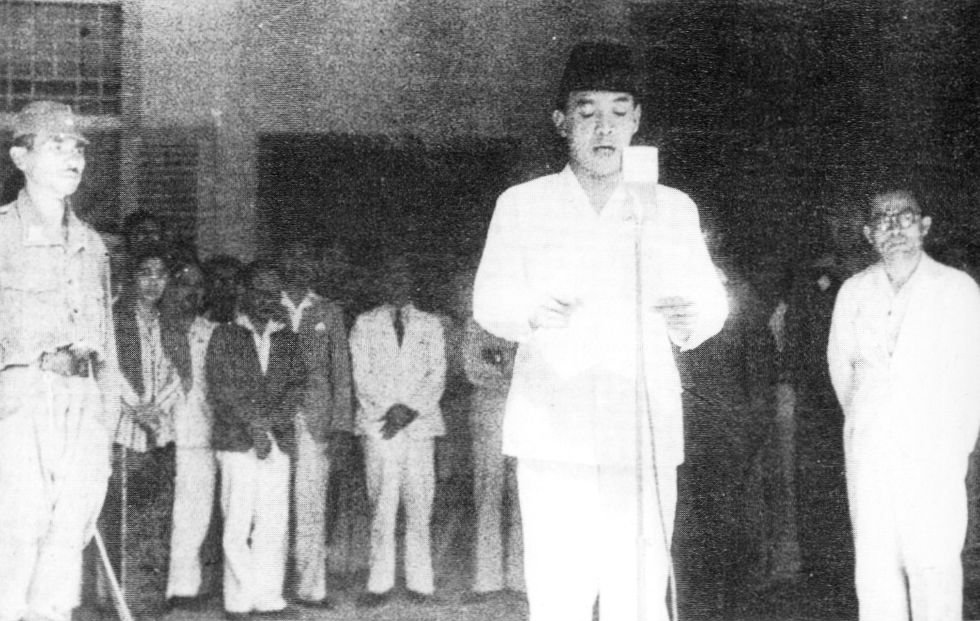
Soekarno together with Rear-Admiral Maeda and Hatta reads out the Declaration of Independence on the front steps of his house
Following which he announced:
Demikianlah saudara-saudara kita sekarang telah merdeka! Tidak ada suatu ikatan lagi yang mengikuti tanah air kita dan bangsa kita! Mulai saat ini kita menyusun negara kita! Negara merdeka! Negara Republik Indonesia! Merdeka kekal abadi! Insya Allah Tuhan memberkati kemerdekaan kita ini.
So it is, Brothers and Sisters! We are now already free! There is not another single tie binding our country and our people! As from this moment we build our state. A free state, the State of the Republic of Indonesia – ever more and eternally independent. Allah willing, God blesses and makes safe this independence of ours!
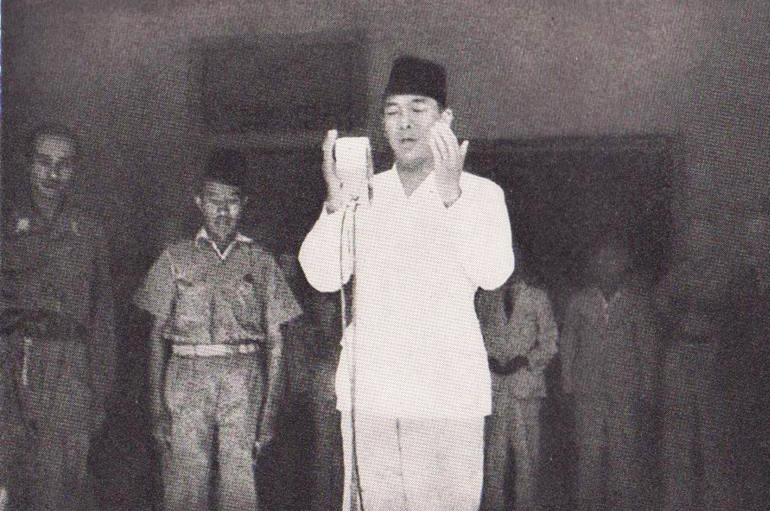
Soekarno prays for the future of the newly declared Republic of Indonesia. 17 August 1945


Ceremony of raising the Indonesian flag after the Declaration of Independence, 17 August 1945
The flag was hand sewn by Soekarno’s wife Fatmawati. After the raising of the Indonesian flag the group sing the Indonesian National Anthem ‘Indonesia Raya’.
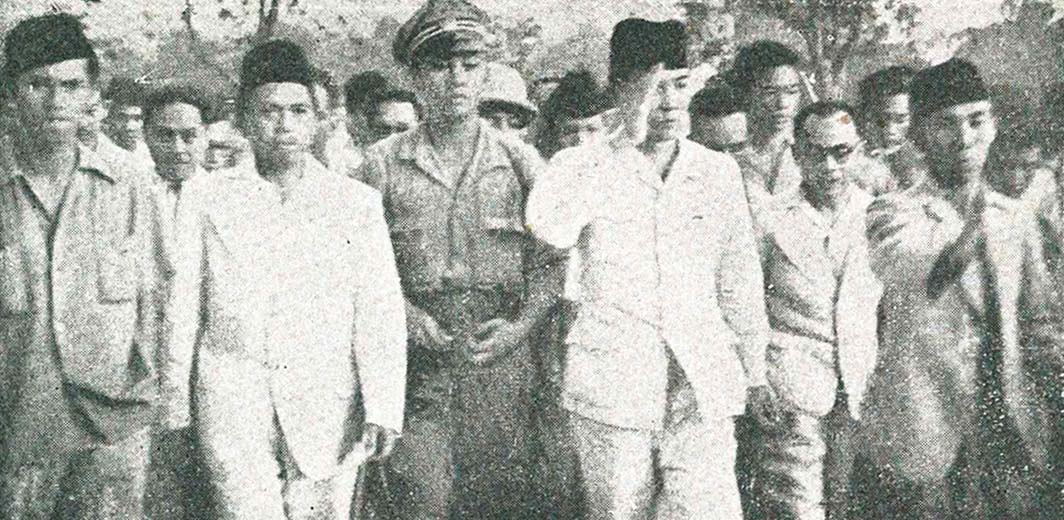
Soekarno arriving at Merdeka Square to speak to the Indonesian people. 19 September 1945
The Pemuda Youth Group had organised a mass rally in Merdeka Square to celebrate independence on 19 September 1945. The Japanese military banned the gathering because of their fear that it would lead to a mass riot and to confrontation between the Indonesians and the Japanese military, who had their guns trained on the Square.
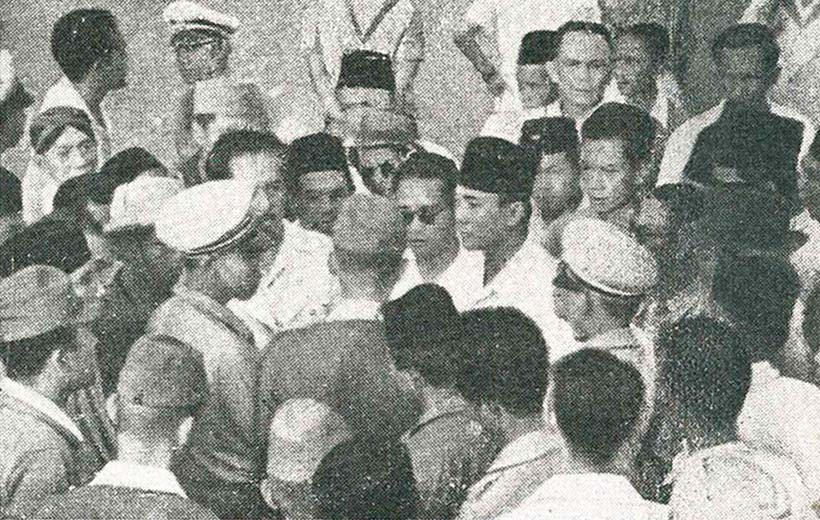
Soekarno blocked by Japanese military from speaking at Merdeka Square. 19 September 1945
Soekarno is stopped by the Japanese military from attending the mass rally. Until a compromise is reached whereby he agrees to give a short speech, which he later describes as his ‘State of the Union Adress’ and then tells the enthusiastic crowd to peacefully disperse.
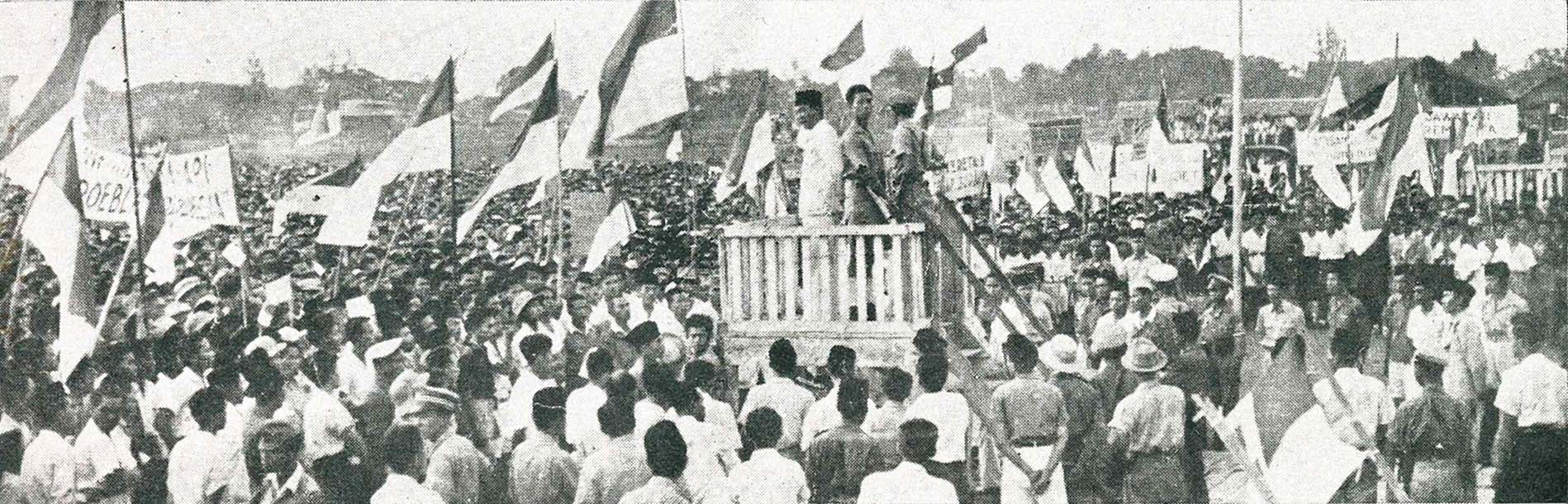
Soekarno speaking to the Indonesian people at Merdeka Square. 19 September, 1945
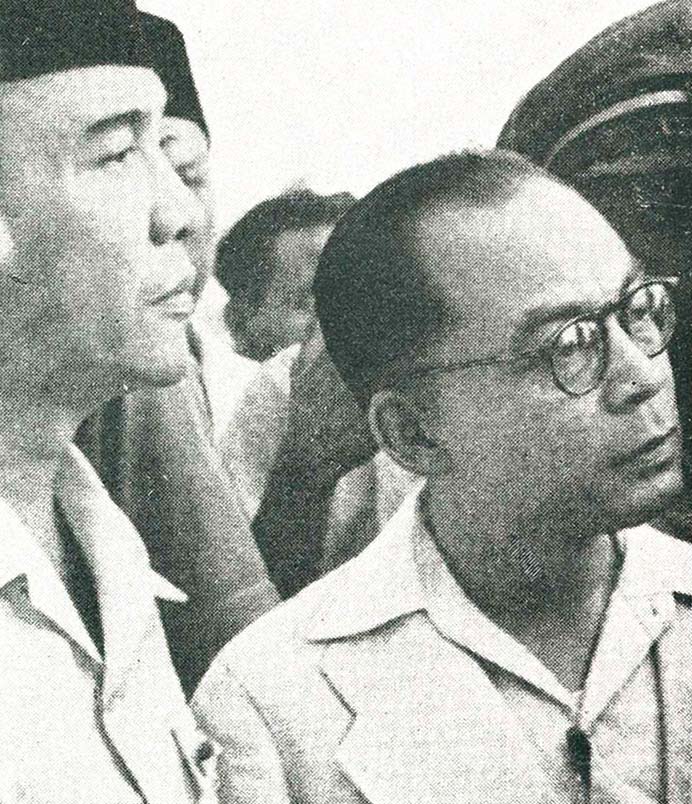
Soeharto and Hatta together at Merdeka Square. 19 September, 1945
The Preparatory Committee for Indonesian Independence (PPKI) had met in June and July to prepare a constitution for the proposed Independent Republic of Indonesia. This was announced on the 18 August 1945 and is better known as the 1945 Constitution.
On August 29 the Central Indonesian National Committee (KNIP) was established with 137 members and its first plenary session was held on 16 October 1945
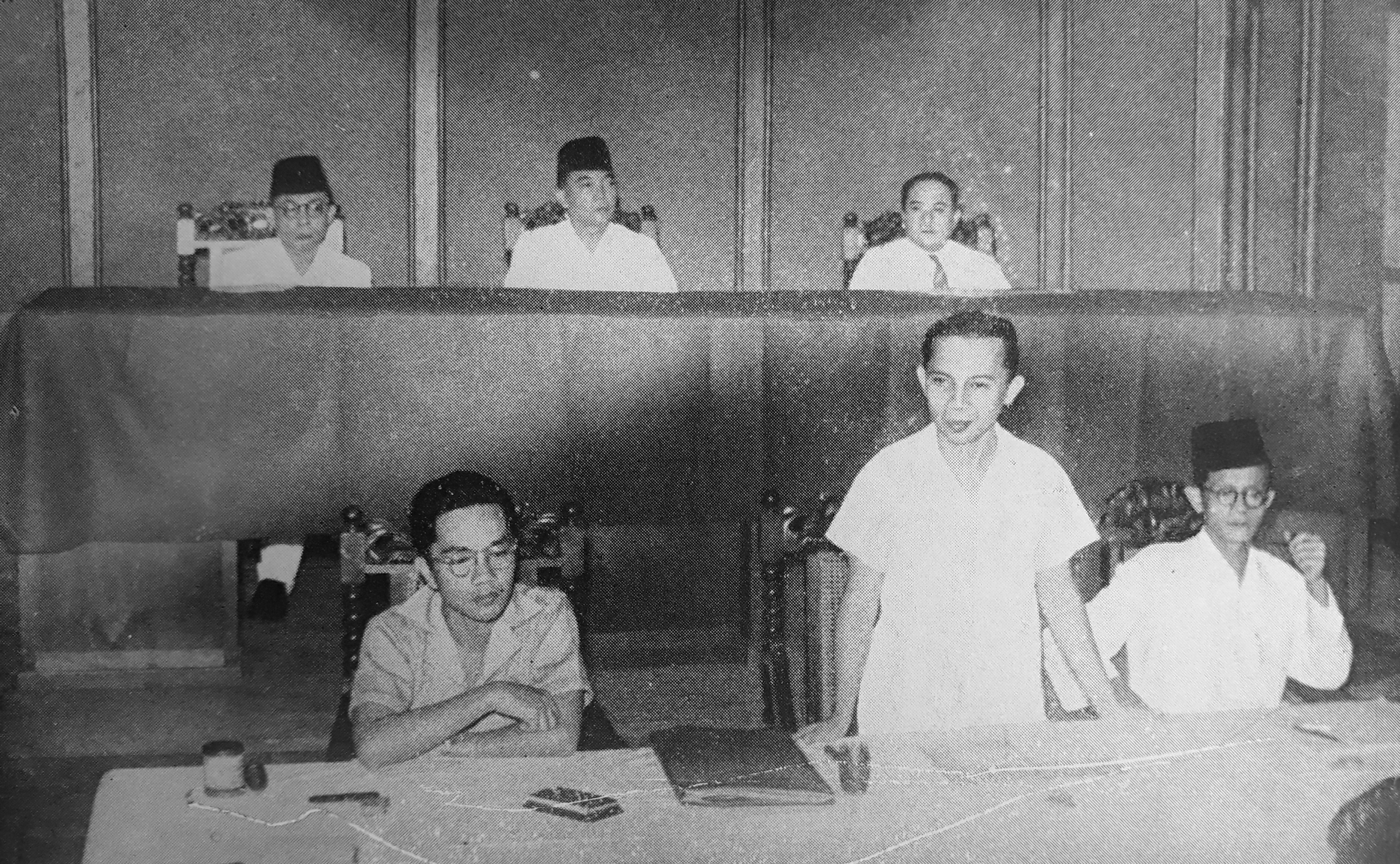
Prime Minister Sutan Sjahir opening the first plenary session of the Indonesian National Committee (KNIP) on 16 October 1945 with Soekarno and Hatta presiding. Does anyone know who is the other leader seated with Soekarno and Hatta?
Photographs sourced from various Indonesian national archives.
Thanks to Anthony Liem for providing the text of Soekarno’s speech.
Thanks to Toni Pollard for providing the image of the handwritten draft document
Posted in Uncategorized
Tagged hatta, ian burnet, indonesian independence, republic of indonesia, soekarno, sukarno
10 Comments
24 November 1642, Van Diemens Land
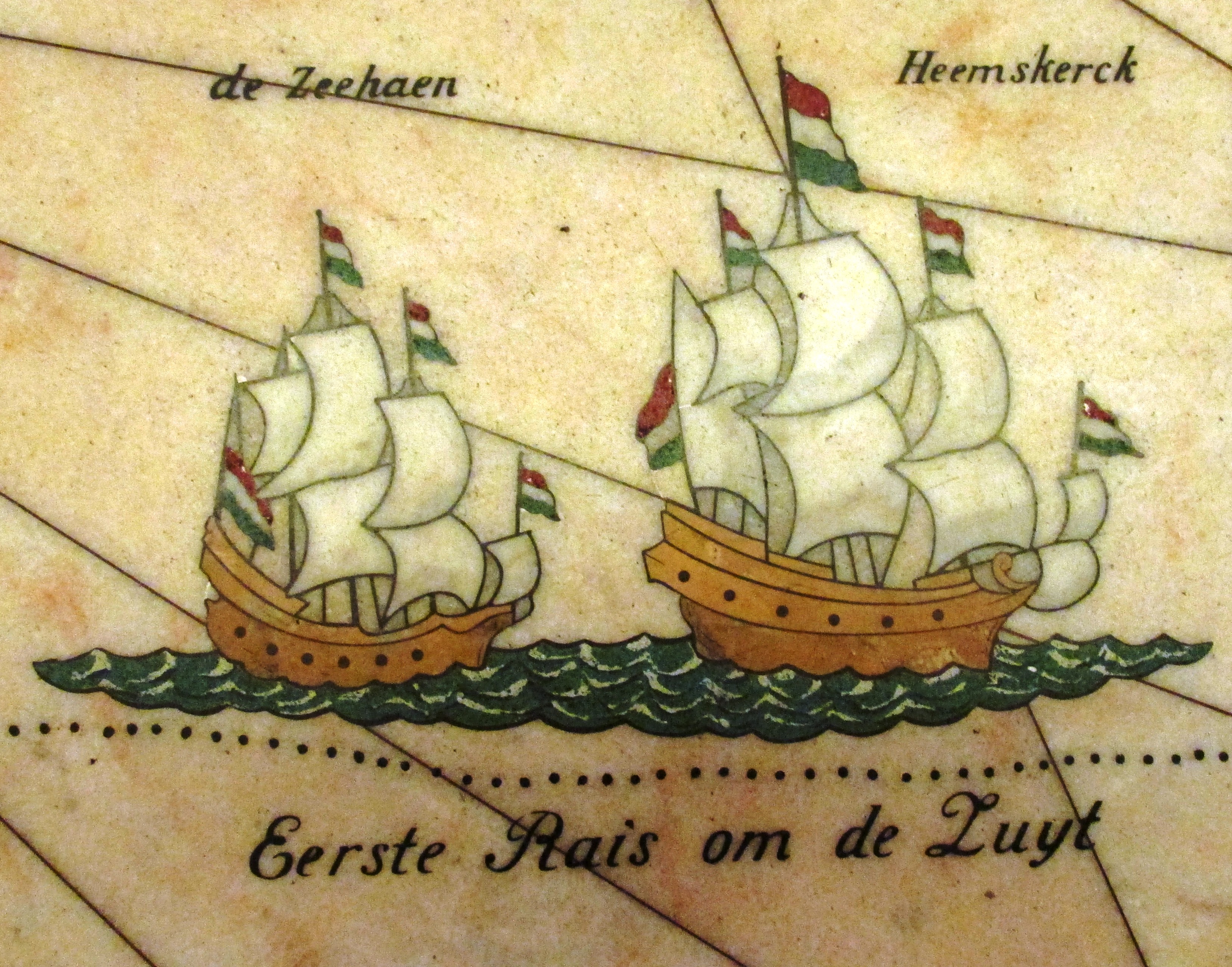
First in the South
In the late afternoon of 24 November 1642, and thankfully still in daylight, the Dutch East India Company ships Heemskerk and the Zeehan sighted distant mountains. An overnight storm could dash them onto this unknown coast and they prudently decided to run out to sea until the next day:
We were on a latitude of 42 degree 25 minutes and a longitude of 163 degrees 31 minutes, the course was held northeast and we sailed thirty miles; the wind from the south-west, later from the south with a gentle topsail breeze; in the afternoon about 4 o’clock we saw land to the north-east of us some 10 miles away; it was very high-lying land; towards the evening we saw again three high mountains in the east-south-east and in the north-east also two mountains which were not as high as those in the south.
The land Abel Tasman sighted was the west coast of Tasmania near Macquarie Harbour. Before them were mountains clothed with dark forest which were subsequently named Mount Heemskerck and Mount Zeehaen in their honour by the British explorer Mathew Flinders.
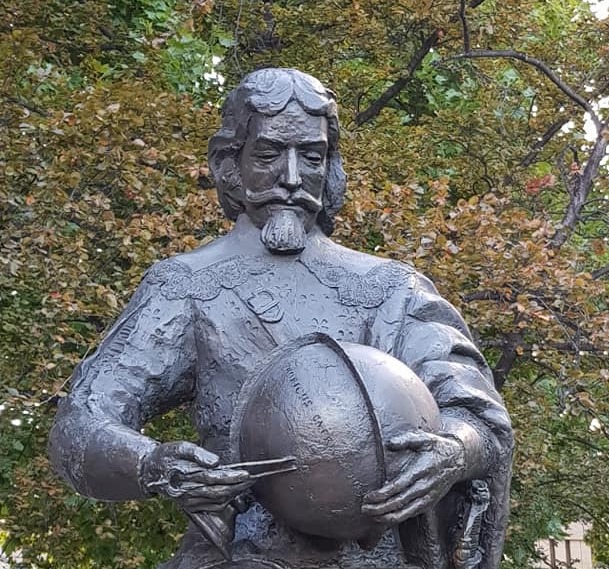
Abel Tasman statue in Hobart (Cathy Morrison)
On 25 November Tasman’s journal records:
This land being the first land we have met with in the South Sea and as it has not yet been known to any European we called it Anthony van Diemens Land, in honour of the Governor-General, our illustrious master, who sent us out to make this discovery. The islands round about, as many as were known to us, we have named after the Honourable Councillors of India.

Tasman’s journal entry for November 24 and 25, 1642 (The Tasman Journal)
These islands on the south coast of Tasmania still have the names of De Wit, Sweers and Maatsuyker, the members of the Council of the Indies, who had signed their sailing orders. The fleet rounded the most southern part of Van Diemens Land and on 29 November the expedition approached what looked like a likely anchorage. The journal records:
In the evening about 5 o’clock we came before a bay which seemed likely to afford a good anchorage, upon which we resolved with our ship’s council to run into it, as may be seen from today’s resolution; we had nearly got into the bay when there arose so strong a gale that we were obliged to take in sail and to run out to sea again under reduced sail, seeing that it was impossible to come to anchor in such a storm; in the evening we resolved to stand out to sea during the night under reduced sail to avoid being thrown on a lee-shore by the violence of the wind.
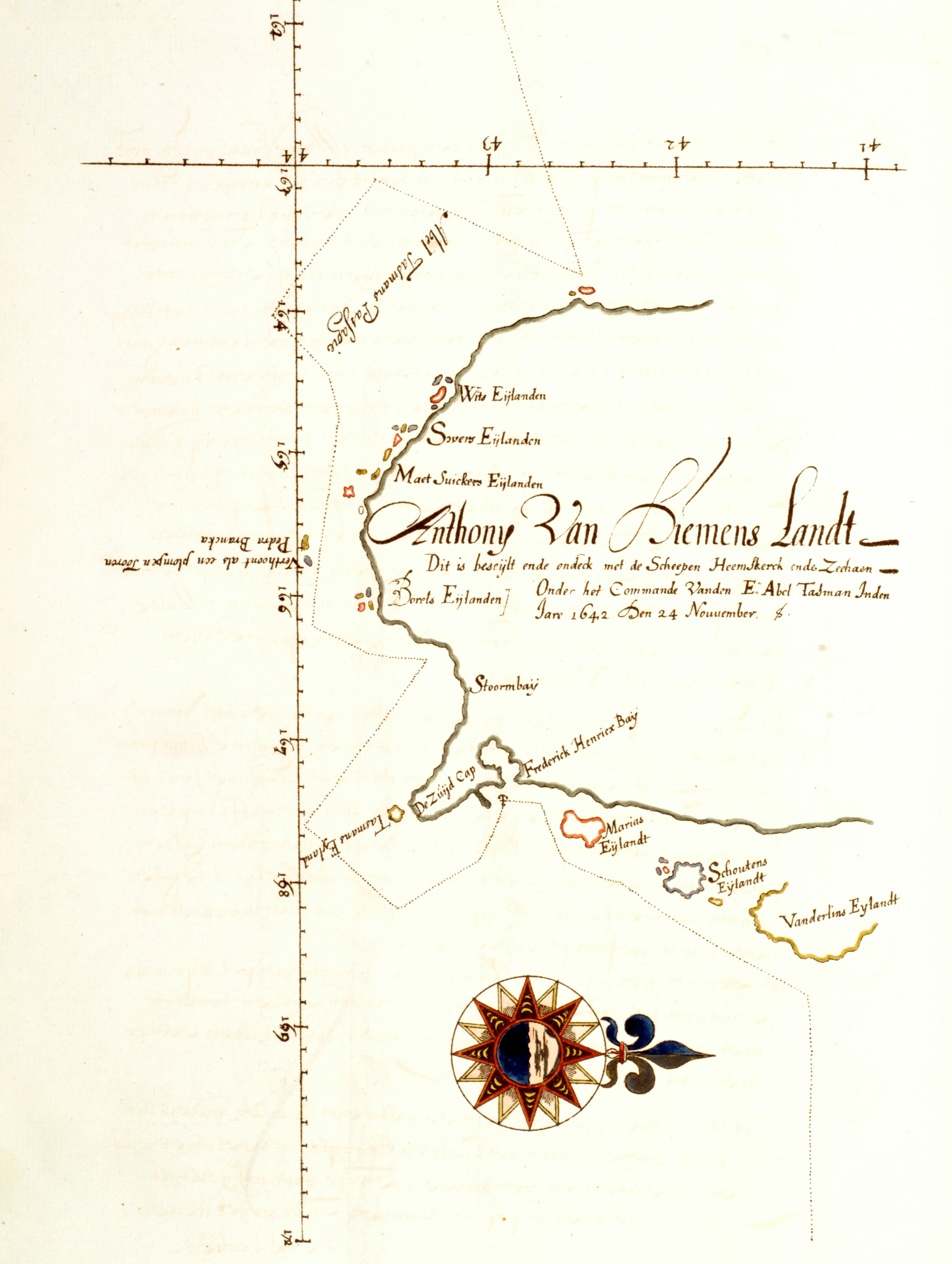
Map of Tasman’s voyage around Van Diemens Land, Francois Visscher (Algemeen Rijksarchief)
Storm Bay has retained the name given by Abel Tasman and by daybreak they found they were far offshore. After rounding South Cape (Cape Pillar) and Tasman Island they sailed northwest and on 1 December entered a wide sheltered bay they named Frederick Hendrik Bay after Prince Frederick of Nassau, the head of the Dutch Republic:
In the afternoon we hoisted the white flag upon which our friends of the Zeehaen came on board of us, with whom we resolved that it would be best and most expedient, wind and weather permitting, to touch at the land the sooner the better, both to get better acquainted with its condition and to attempt to procure refreshments for our own behalf … about one hour after sunset we dropped anchor in a good harbour, in 22 fathom, white and grey fine sand, a naturally drying bottom; for all which it behoves us to thank God Almighty with grateful hearts.
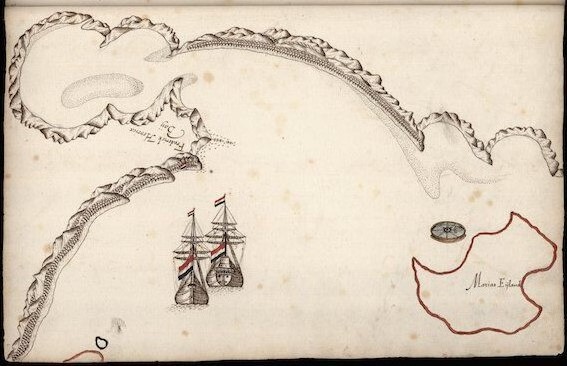
The ships at Frederick Hendrik Bay (Blackmans Bay)
The expedition had been at sea for 55 days since they left Mauritius and in the morning of December 2 two boats went ashore to search for water, firewood and what else may be available there. Francois Visscher was in charge of the pinnace from the Heemskerck, and was accompanied by the cock-boat from the Zeehaen. Both boats had musketeers on board, and the rowers were armed with pikes and side arms. They were gone the whole day and in the evening they delivered an account of their exploration to the ships Council:
The land was high, level and covered with vegetation (not cultivated, but growing naturally by the will of God). There was good timber but the water they found wasn’t deep enough to fill barrels, because the watercourse was so shallow that the water could be dipped with bowls only. This was impracticable in view of the amount of water they needed to bring aboard.
They did not see any native people during their visit but they heard sounds resembling a trumpet or a little gong, which they thought came from humans but which could equally have been bird sounds. They did however note physical evidence of the presence of people:
They saw two trees about 2 to 2 ½ fathoms thick and measuring 60 to 65 feet to the lowest branches and the bark of those trees was peeled off and they were notched with flint stones (to climb up and rob the nests of birds above) to form steps five feet apart, so that our men presumed that the people here must be very big or that they avail themselves of some practical means to climb the trees. In one of these trees these carved steps were very fresh and green as if they had been cut less than four days before.
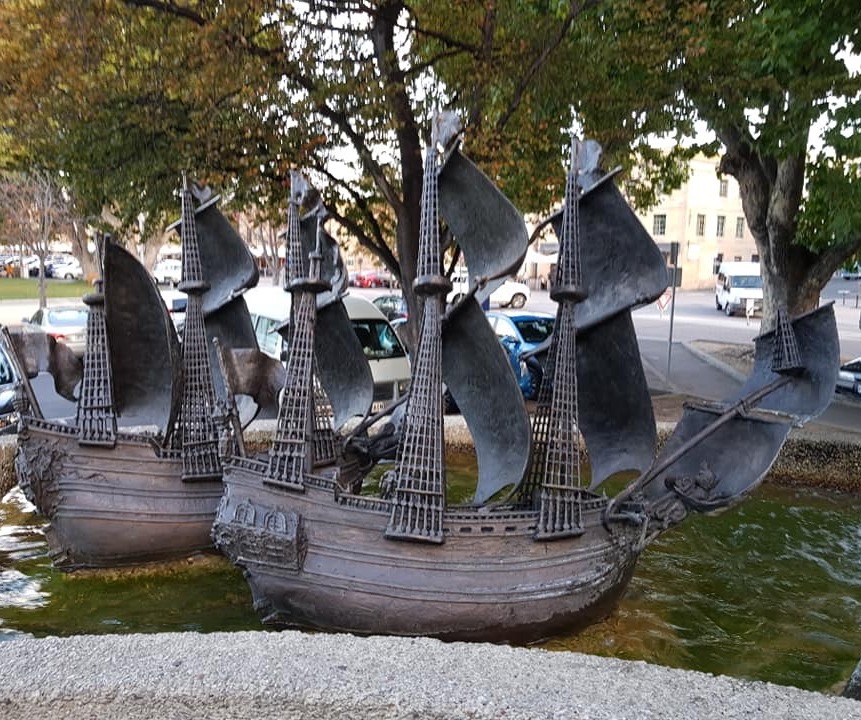
A monument in Hobart showing the Heemskerk and the Zeehan (Cathy Morrison)
Abel Tasman left Van Diemans Land without having personally stepped ashore, without having met its people, or knowing if it was an island. It is interesting to speculate that if he had decided to explore the east coast of Australia, then the whole continent would have become known as Hollandia Nova and history would have been very different.
Posted in Uncategorized
Tagged abel tasman, dutch east india company, hobart, ian burnet, tasmania, van diemens land
5 Comments
An Indonesian Market
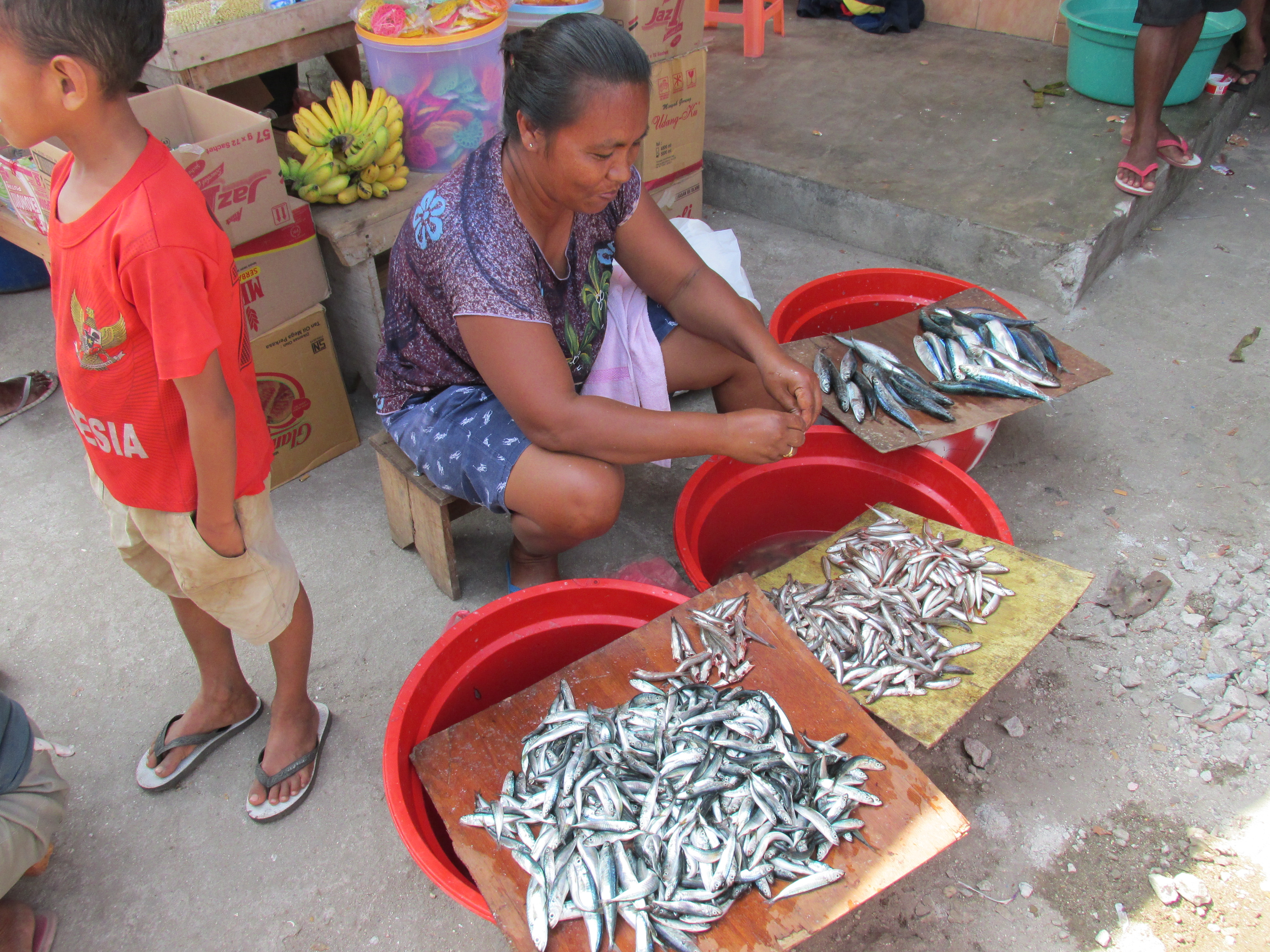
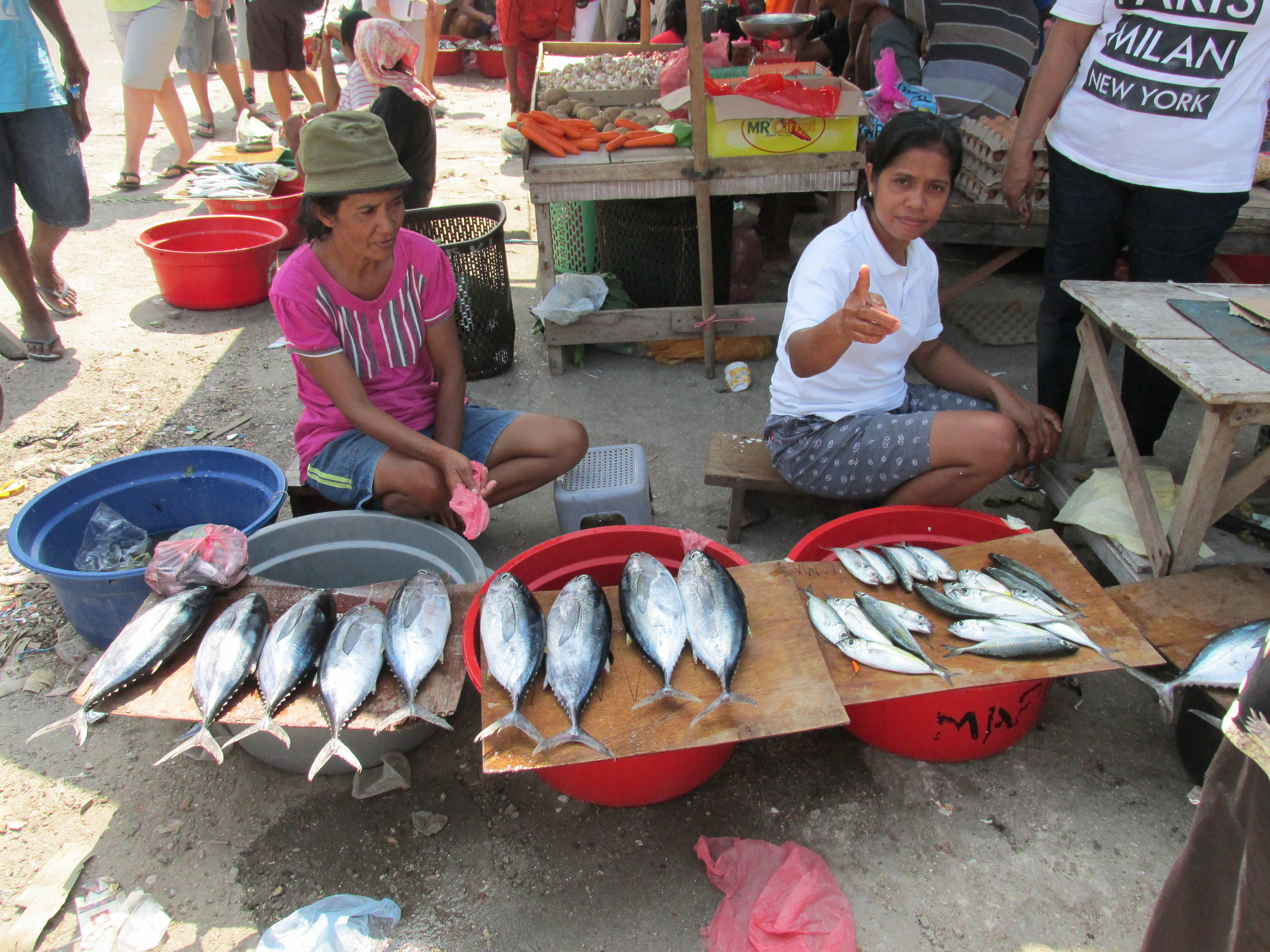
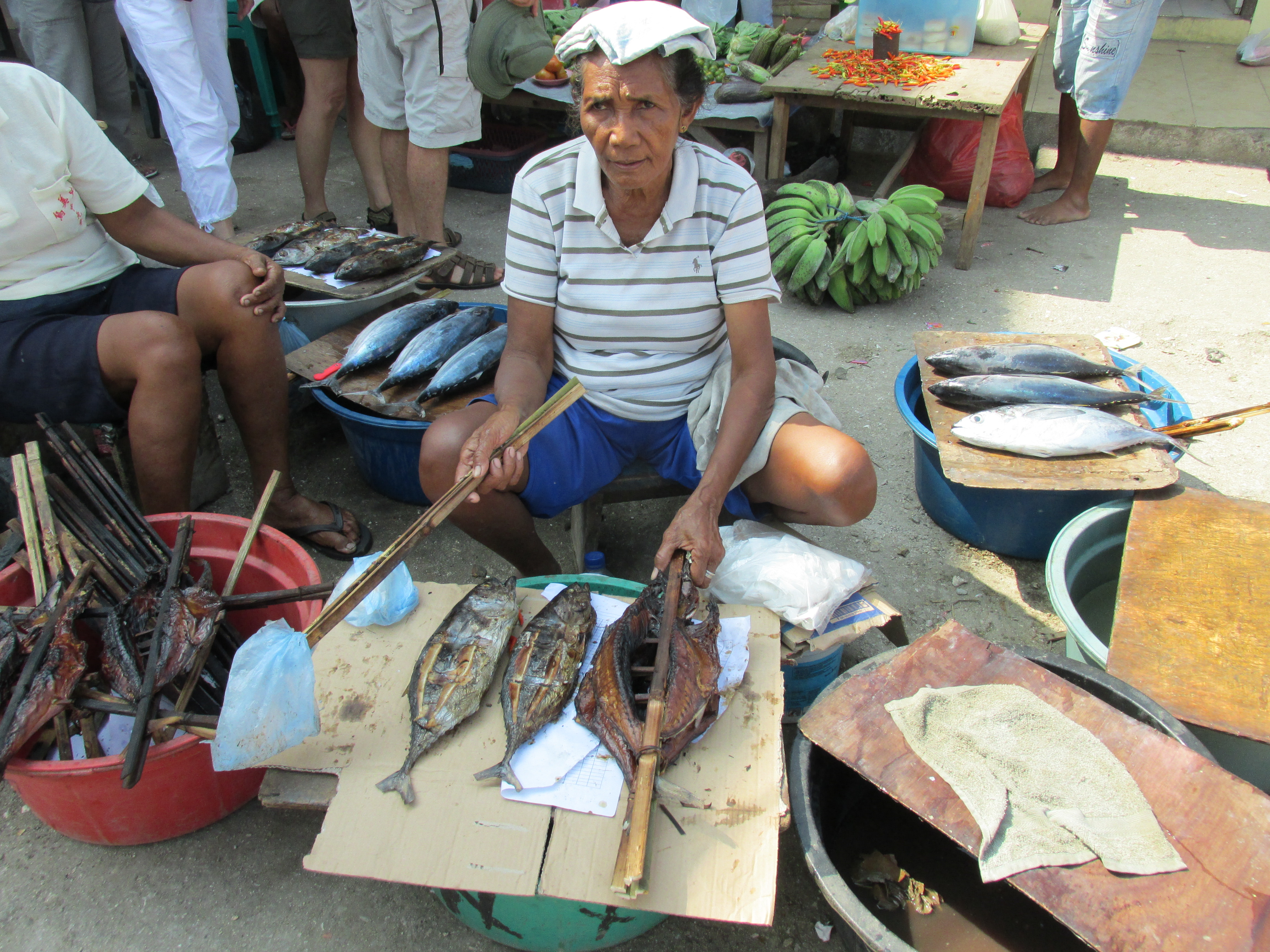
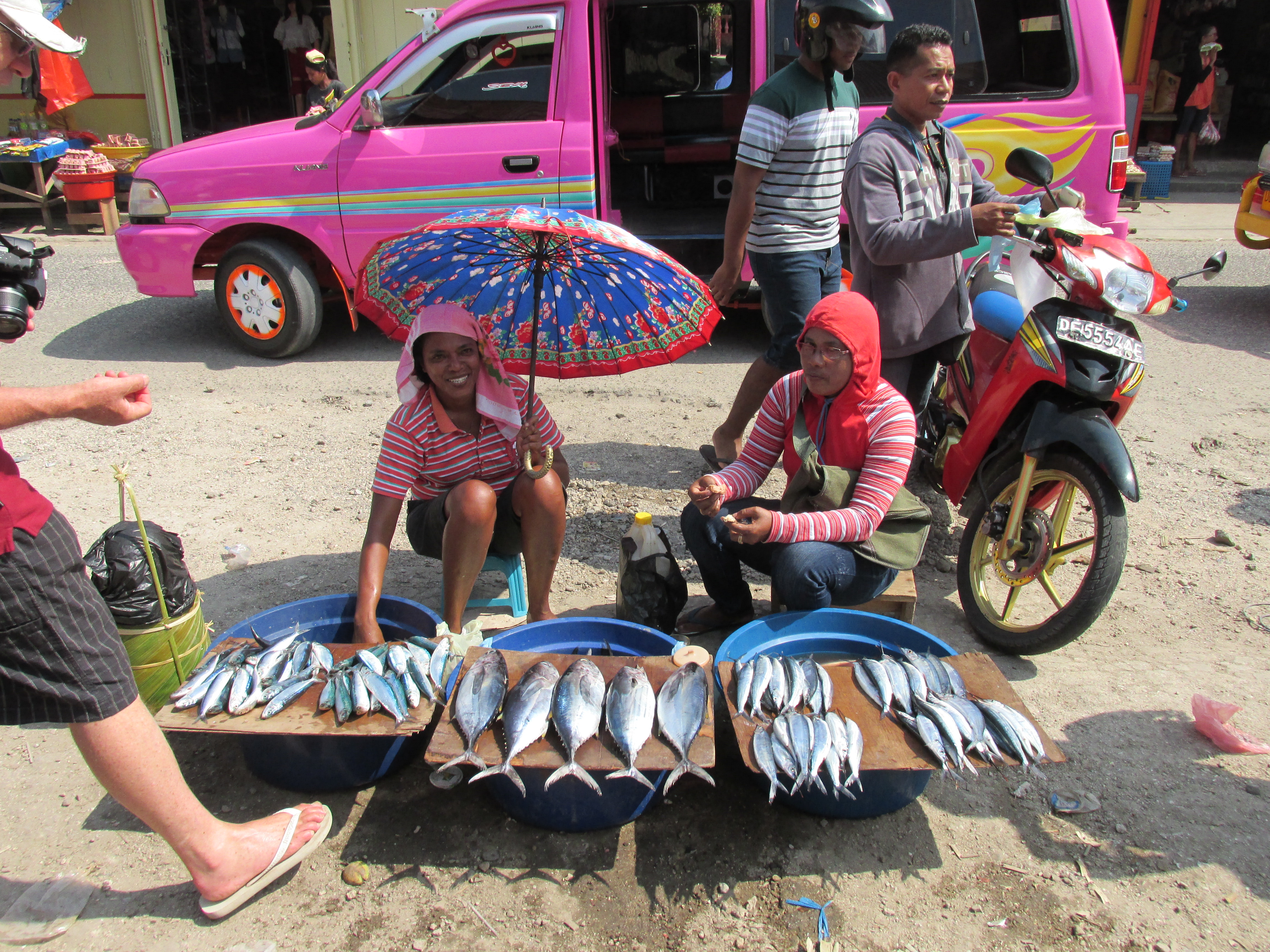
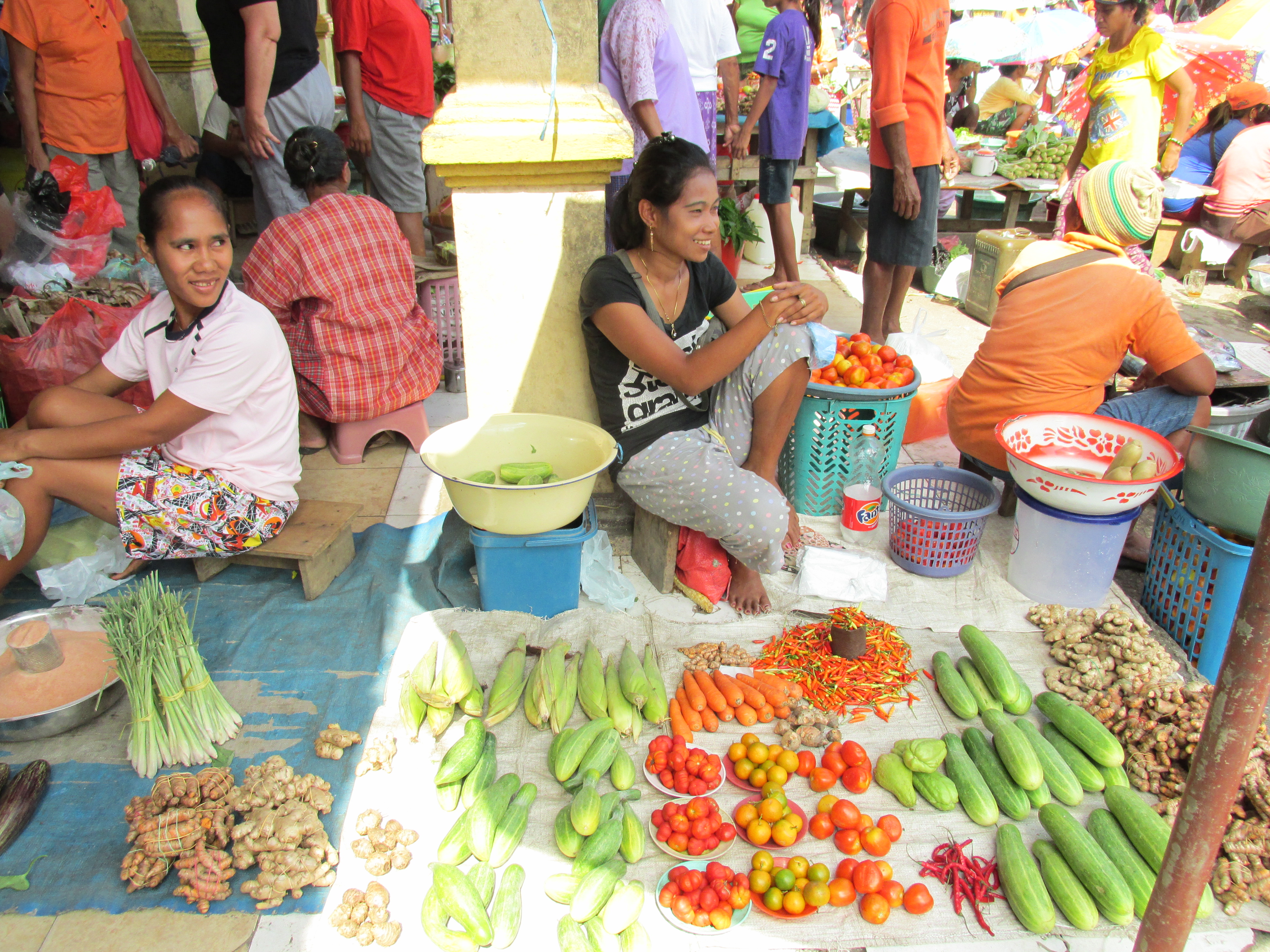
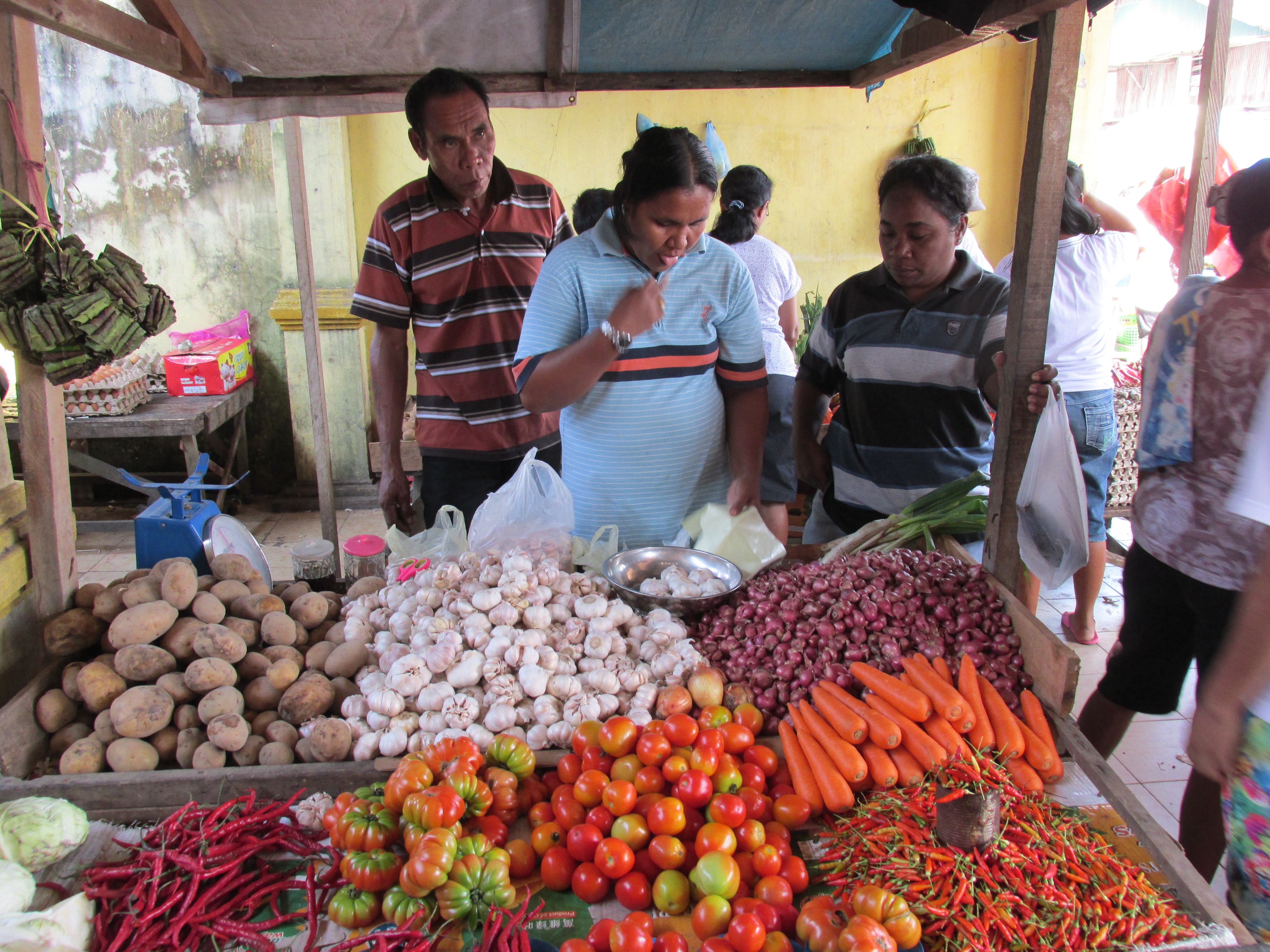
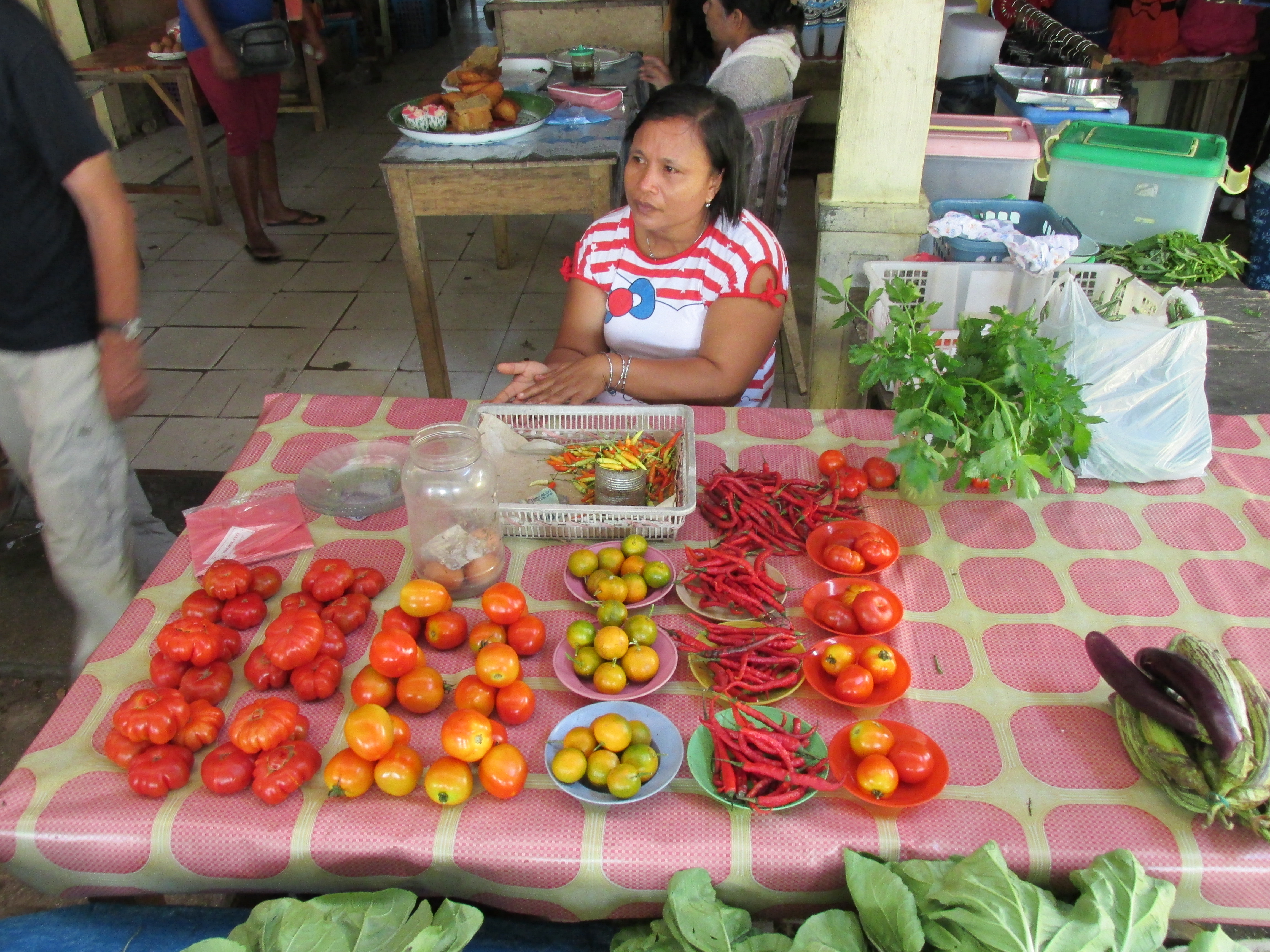
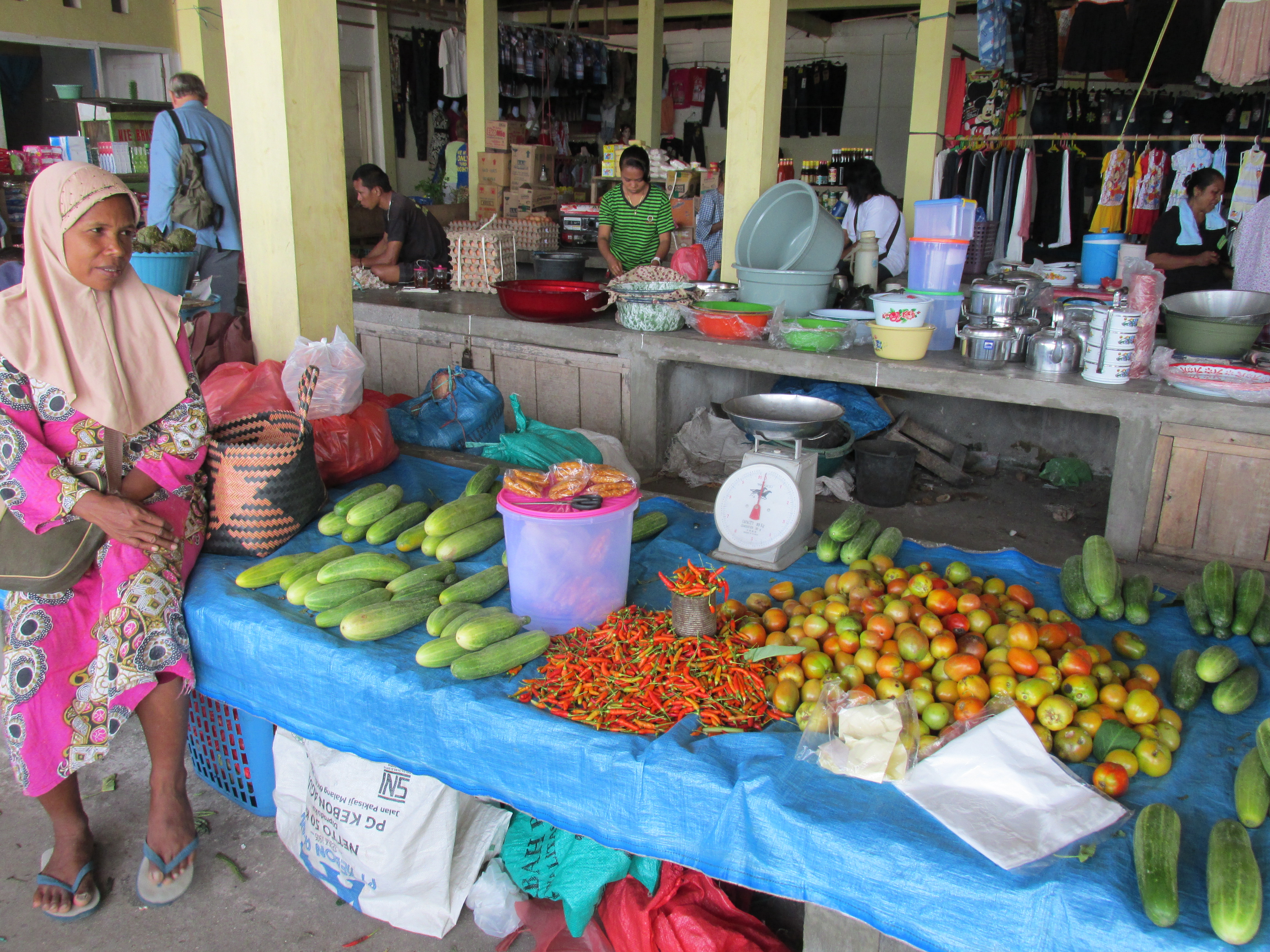
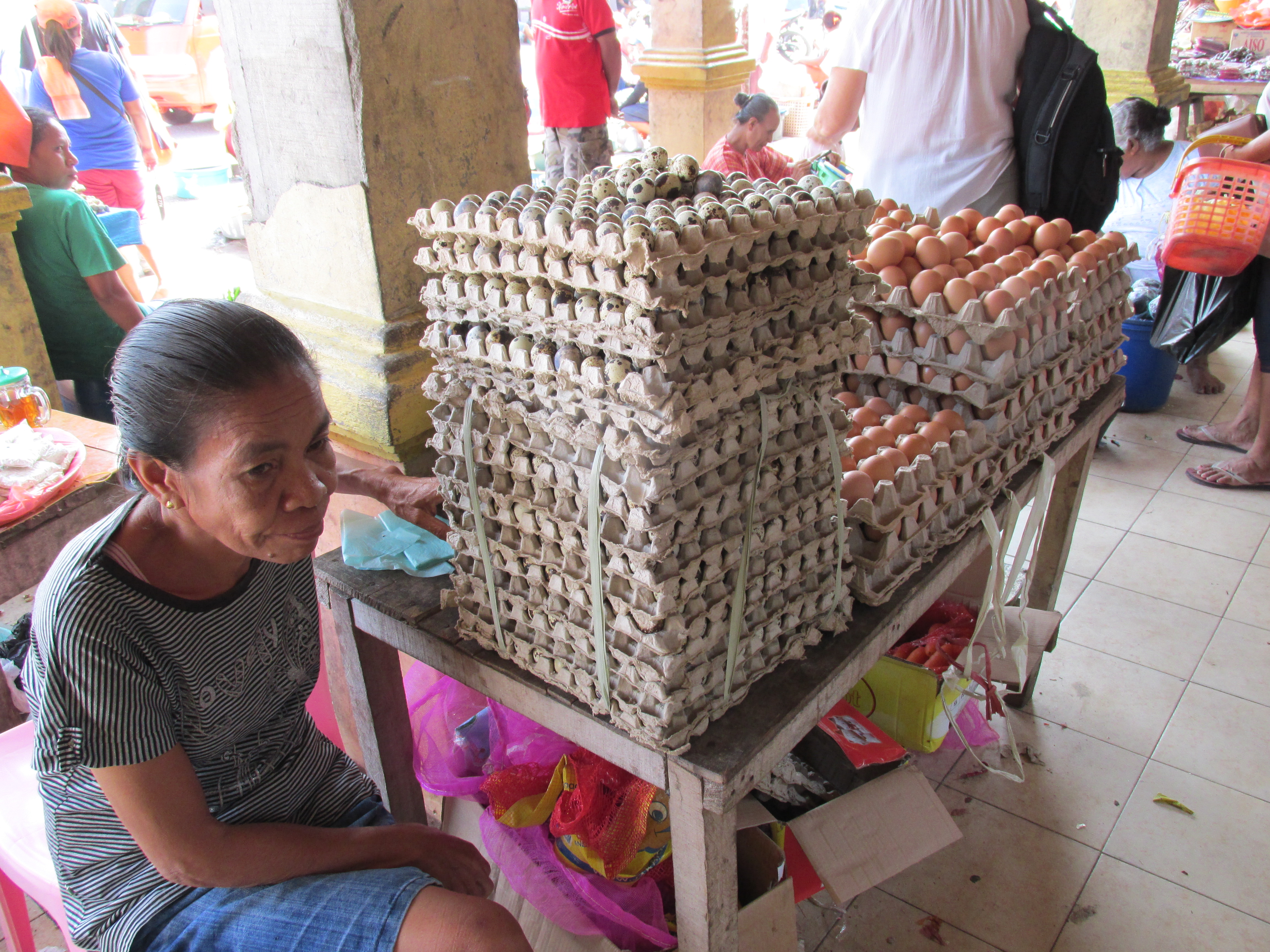
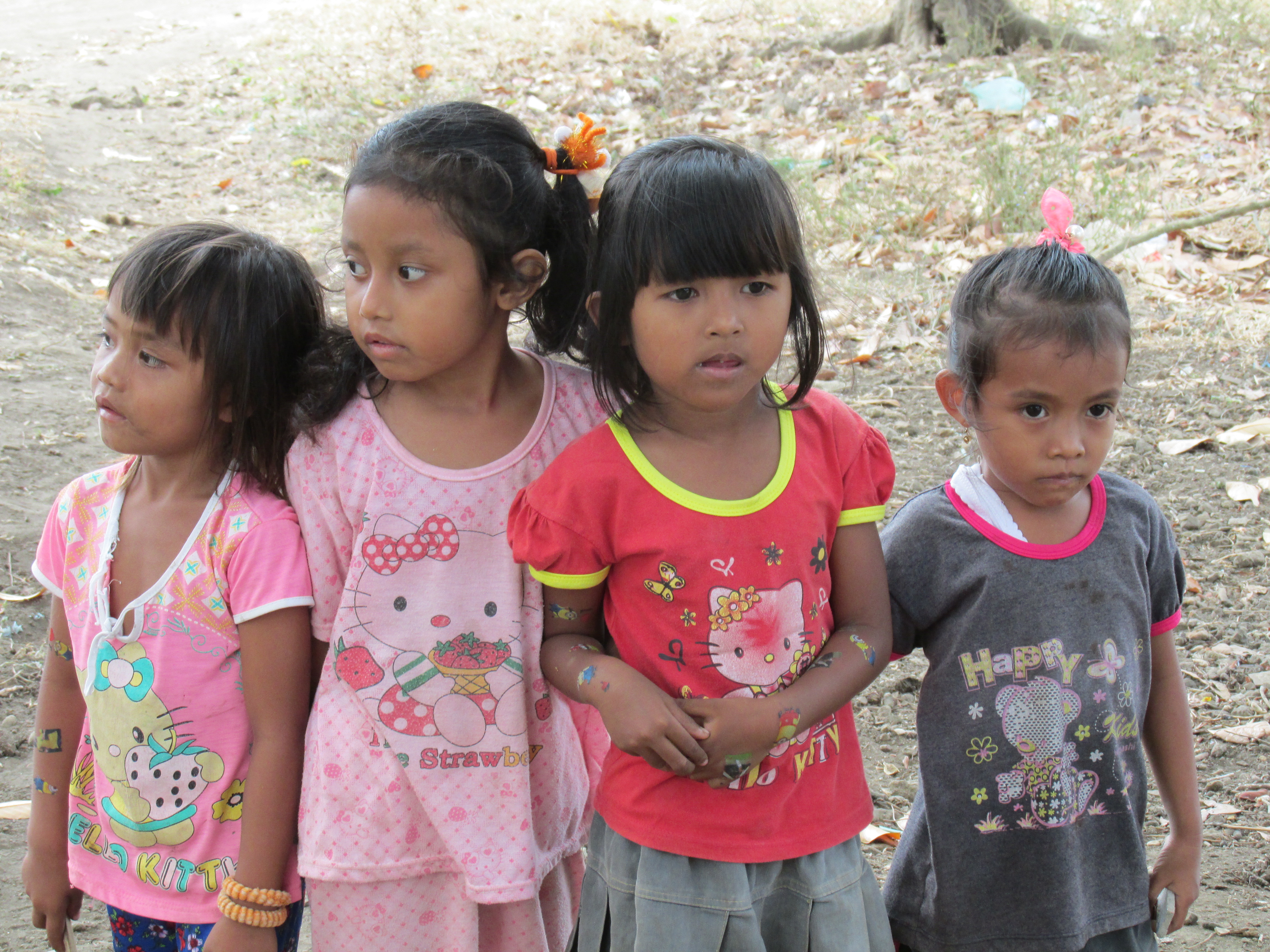
How much fun is an Indonesian market? Lively, full of fun and friendly banter as the vendors (mainly women) sell their fish, fruit, and vegetables from their kitchen gardens.
This market is on the island of Saparua in Maluku, Eastern Indonesia. See the women, their produce, and their children
Clear skies over Jakarta!
As you can see from this painting by Hendrik Jacobsz, it was possible in 1650 to see the mountains behind Jakarta from the harbour. Mountains which are about 60 km inland, are not far past the town of Bogor, and stand up to 3000 metres above sea level.
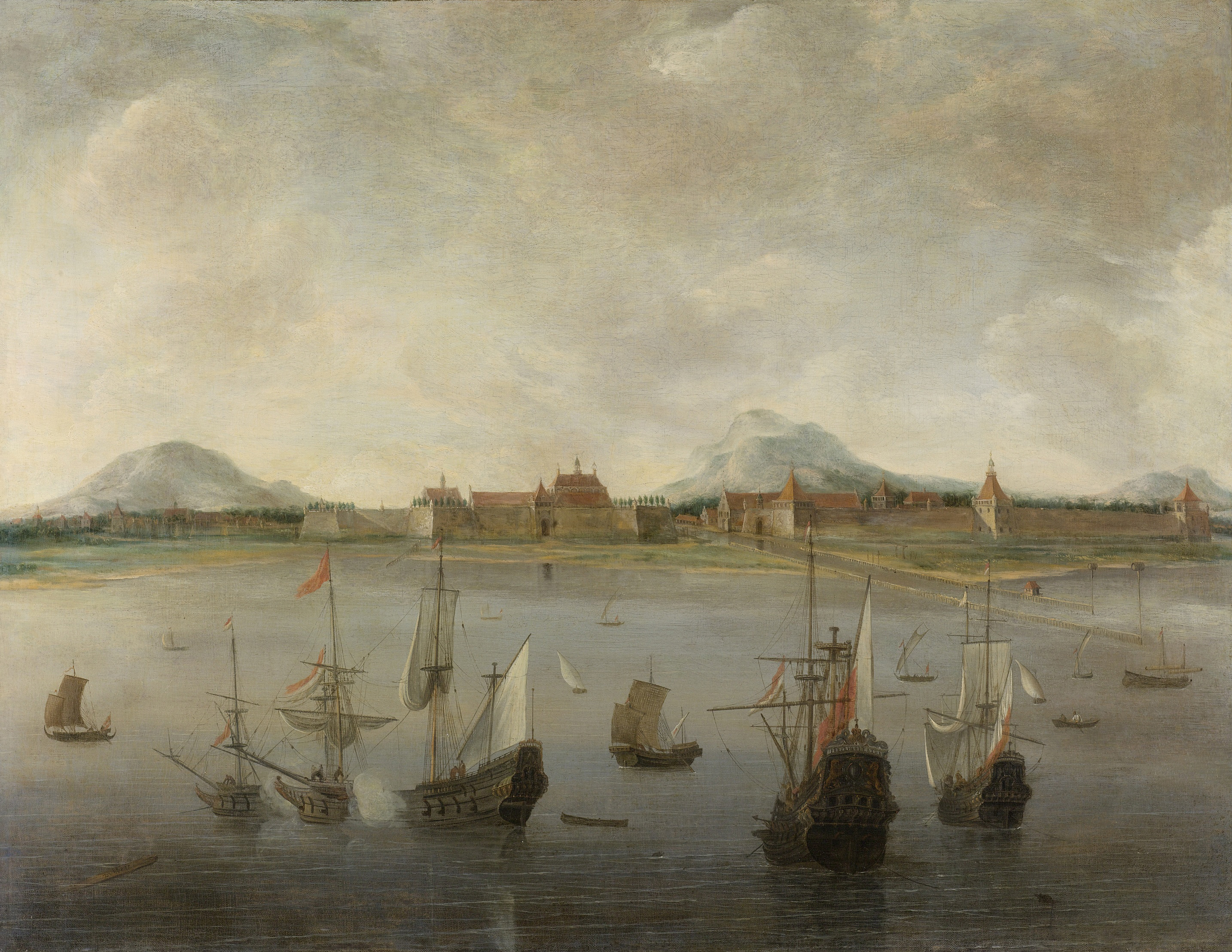
View of Batavia from the harbour. Hendrik Jacobz, 1650, Rijksmuseum
With the millions that now live in Jakarta and the the air pollution produced by its cars and adjacent factories, these mountains are never seen, except for once a year during or just after Ramadan. The factories are closed for weeks over the Ramadan holiday. Many people and their cars have left for their home villages in Java and this Covid year many people have just stayed at home, leaving the streets deserted. With one good rain there are suddenly clear skies over Jakarta!
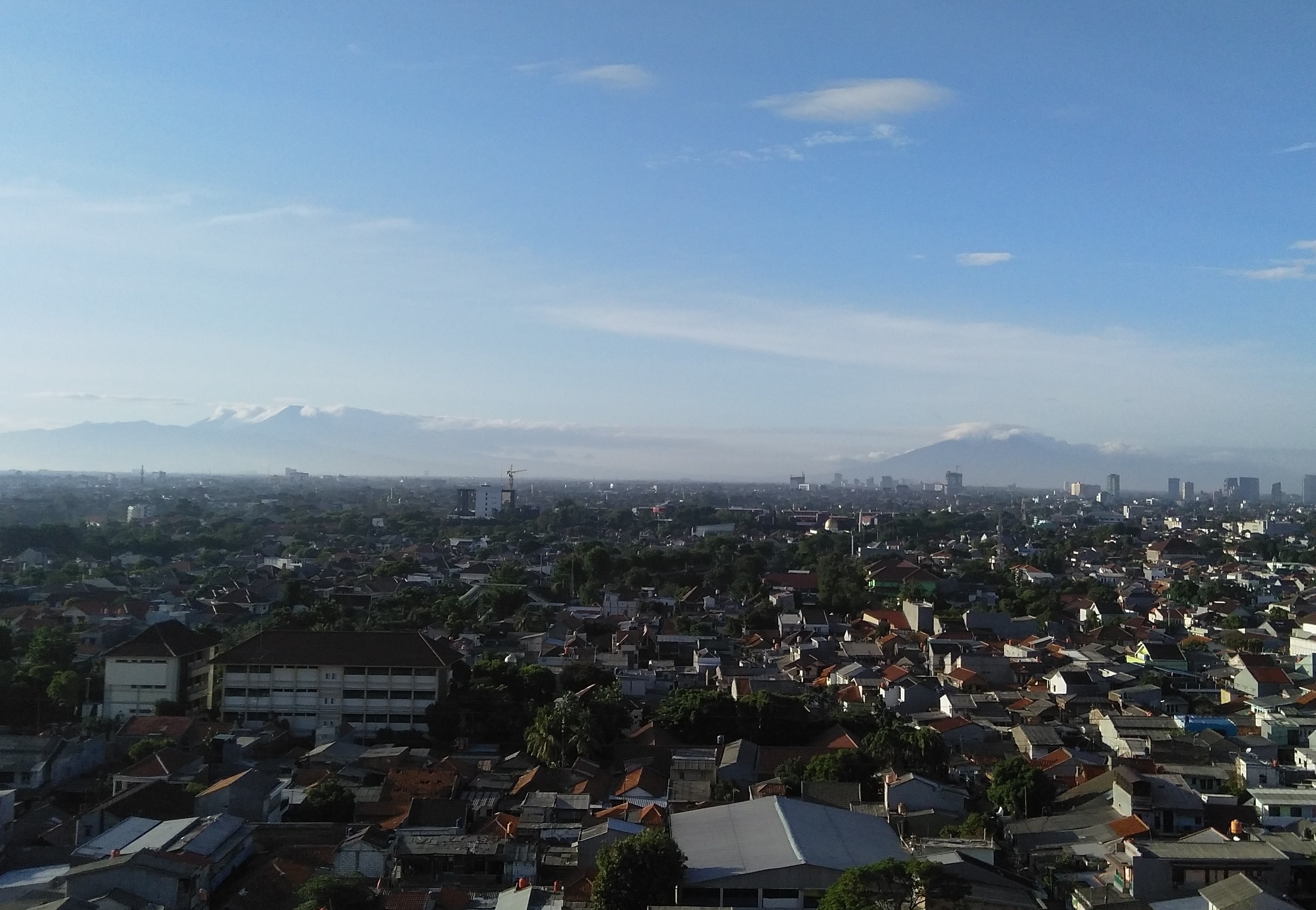
View south towards the mountains from Jakarta with Gunung Gede and Gunung Pangrango on the left and Gunung Salak on the right. Photo by Cun Cun
The highest point on Gunung Salak is 2211 metres and it creates a micro-climate around Bogor as rain clouds build up over the mountain during the day and then at mid-afternoon torrential rain falls on Bogor. Salak is the name of a tropical fruit with scaly skin, however according to Sundanese tradition, the name was derived from the Sanskrit word Salaka which means silver. Gunung Salak can then be translated to Silver Mountain. I have climbed the mountain from the south and camped near the crater rim. It was a beautiful trek up through terraced rice fields, vegetable gardens, fruit trees, and then jungle on the way to the summit.
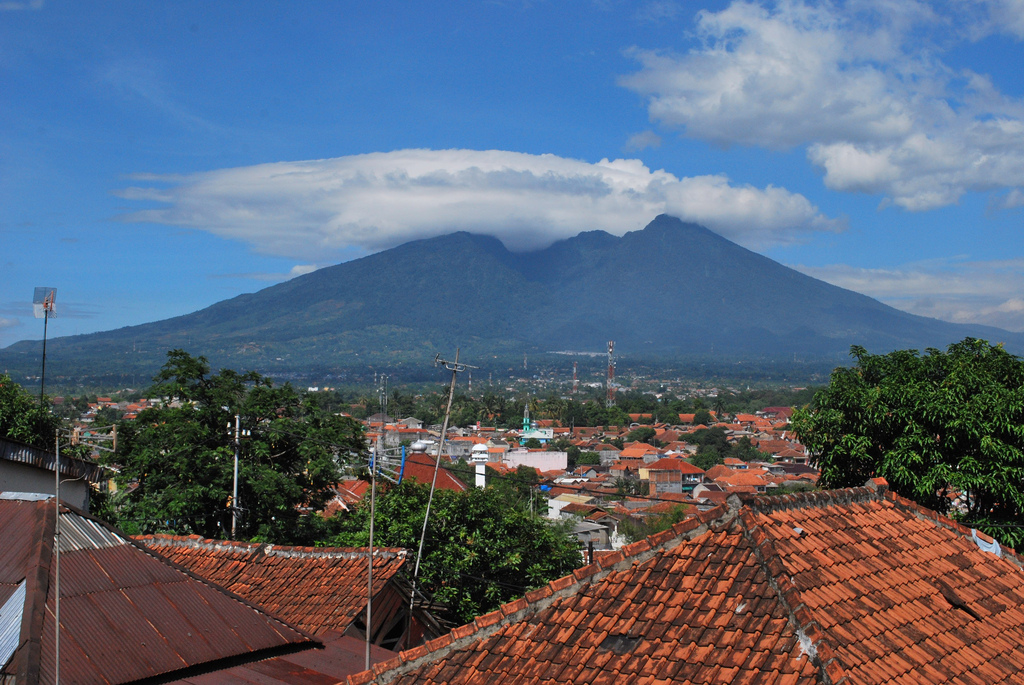
The breached volcano of Gunung Salak seen from Bogor. Photo by Ehamburg
Gunung Pangrango is the highest of the three volcanoes at 3019 metres. The name Pangrango is thought to be originated from two ancient Sundanese words Pang and Rango which means “That which huffs and puffs” referring to the past volcanic activity of this mountain. I have camped and slept on the very top of the peak — and at this height it was very, very, cold.
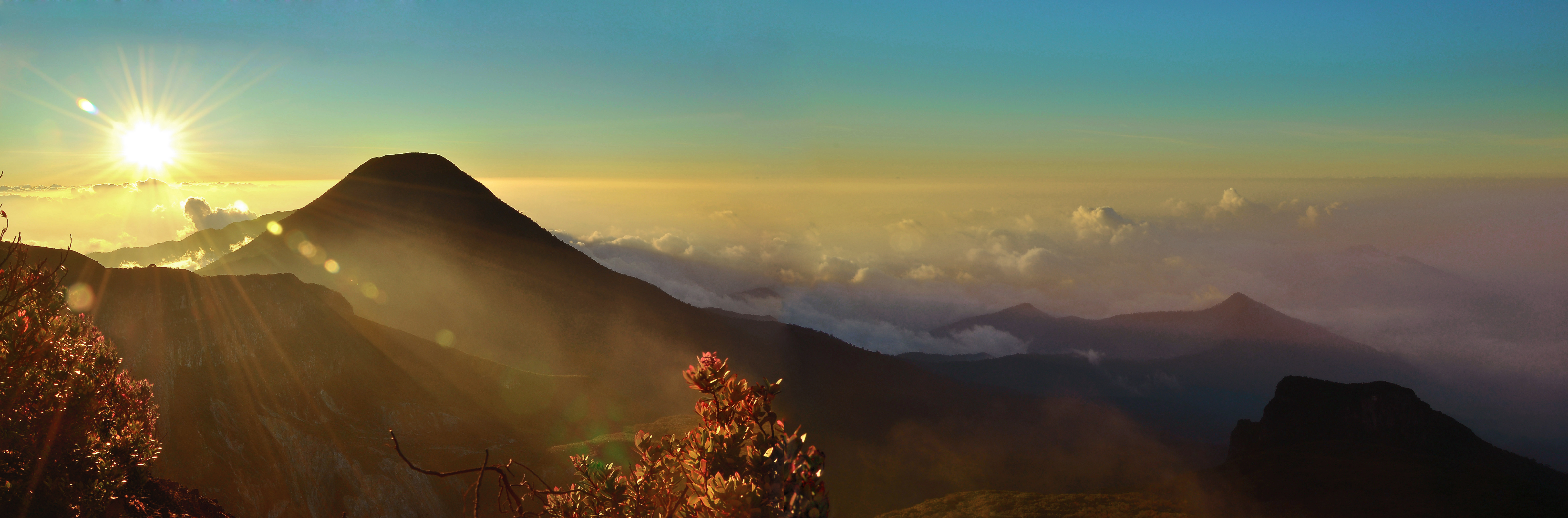
A view of Gunung Pangrango taken from Gunung Gede at sunset. Photo by Delima Putri
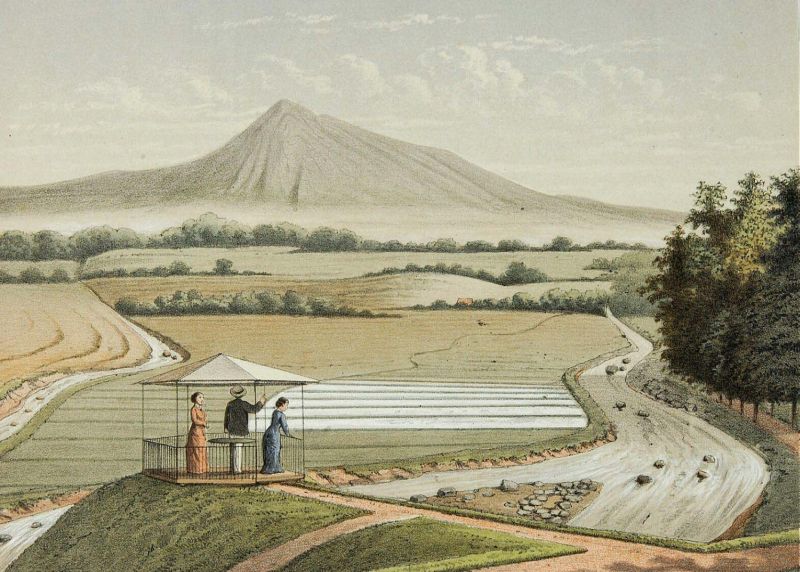
Gunung Pangrango seen from near the Bogor Botanic Gardens, J.C.Rappard, 1880, Tropenmuseum
Here is Gunung Gede seen from the south side near Sukabumi with Gunung Pangrango on the left. Gede means big so this is clearly the big mountain. I have climbed to the rim of the volcanic crater and it is still active as it puffs steam and sulphur fumes.
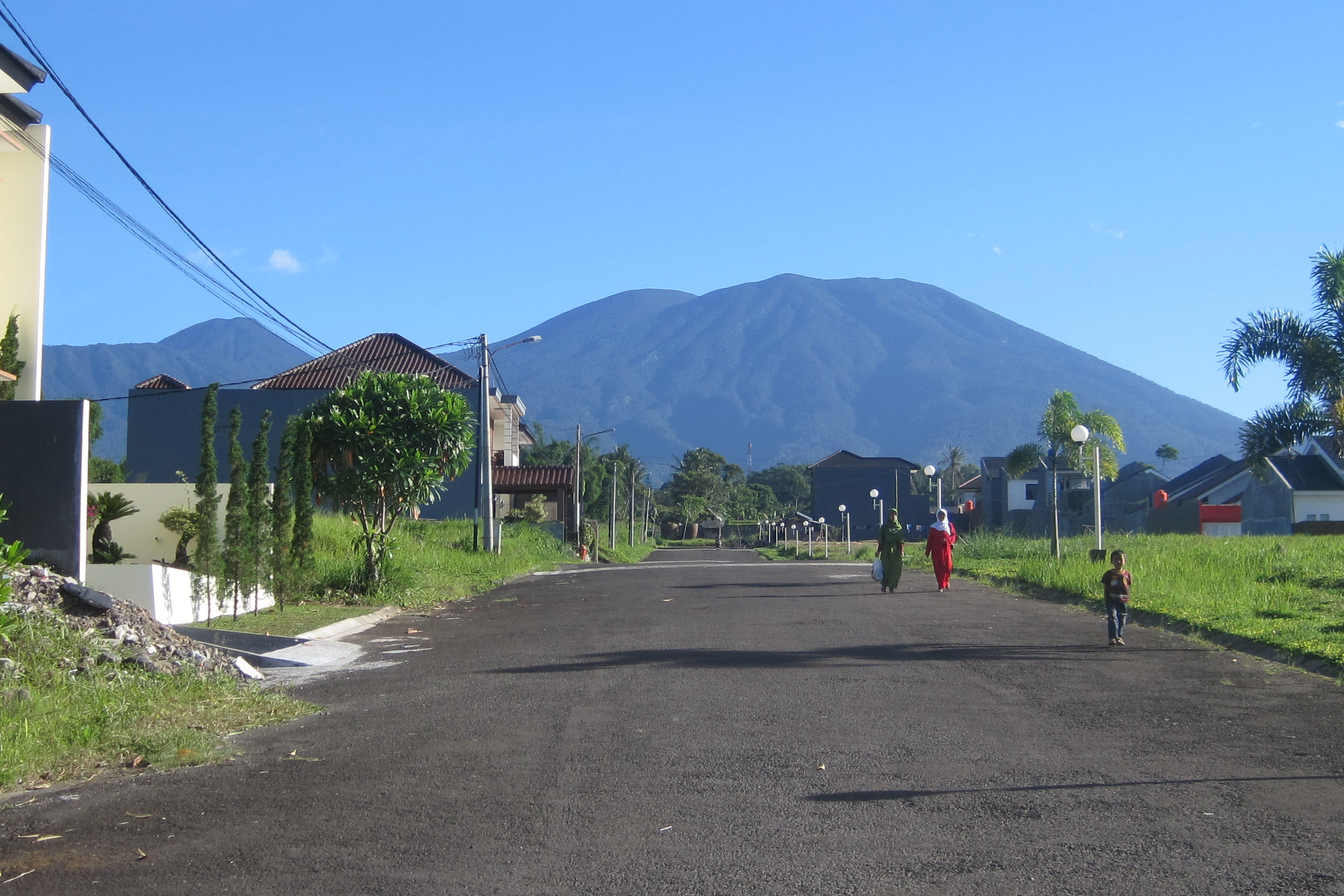
Gunung Gede seen from the south near Sukabumi. Photo from Wikipedia
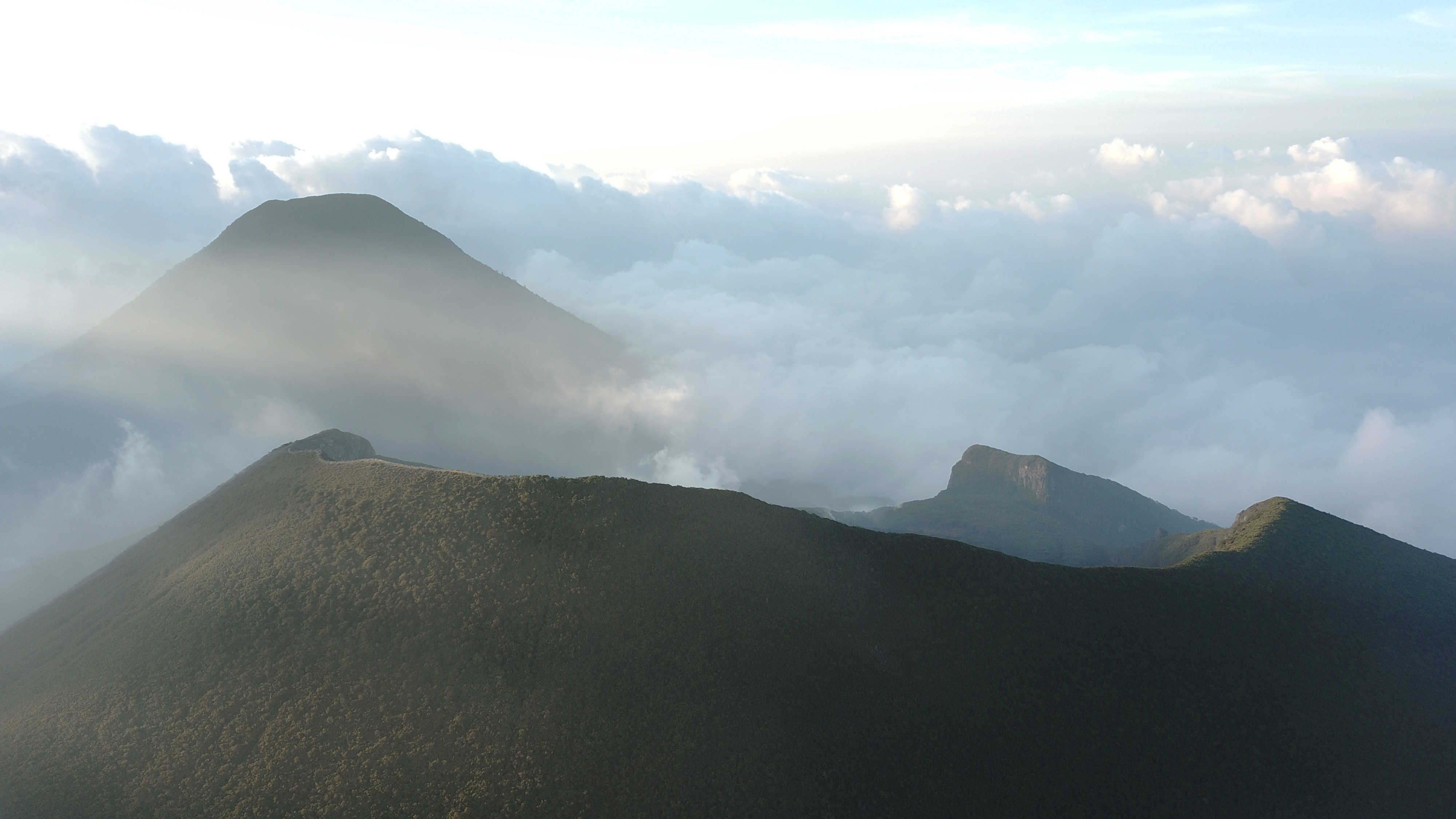
Gunung Pangarango and the crater rim on Gunung Gede. Photo by Fahri Riski Hamdani
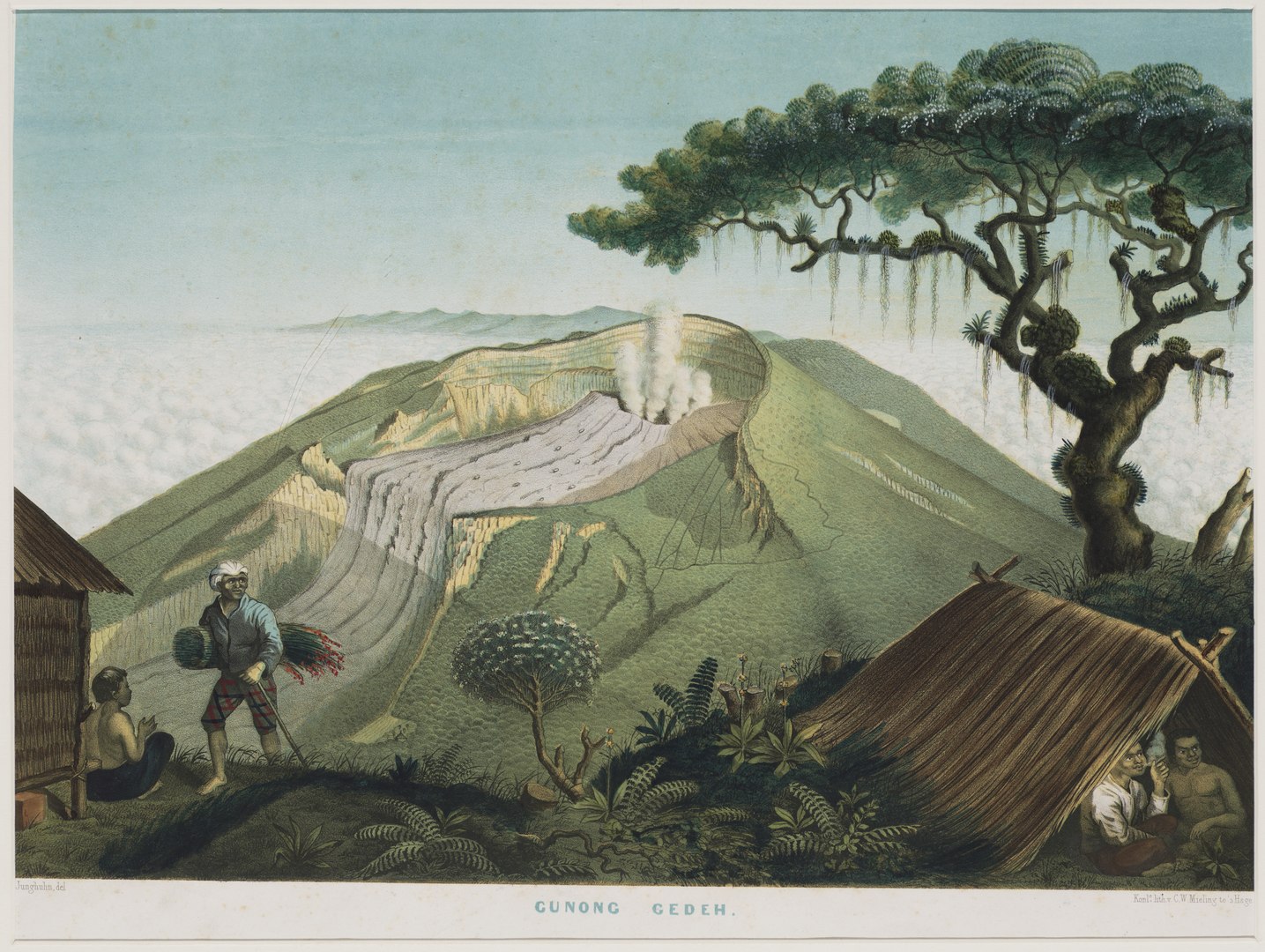
Gunung Gede flowing lava. Franz Wilhelm Junghung, 1853, KITLV
Posted in Uncategorized
Tagged bogor, gunung gede, gunung pangrango, gunung salak, ian burnet, indonesia volcanoes, jakarta
8 Comments
Historic Maps in Marble
The new Amsterdam City Hall was completed in 1655. This remarkable building which was built on 13,659 wooden piles at a cost 8.5 million guilders, is now the Royal Palace and still dominates the Dam Square today. The relatively simple exterior of the city hall is stikingly different to the exuberant Baroque style of the interior, with its huge allegorical paintings and marble reliefs derived from the Bible and classical mythology.
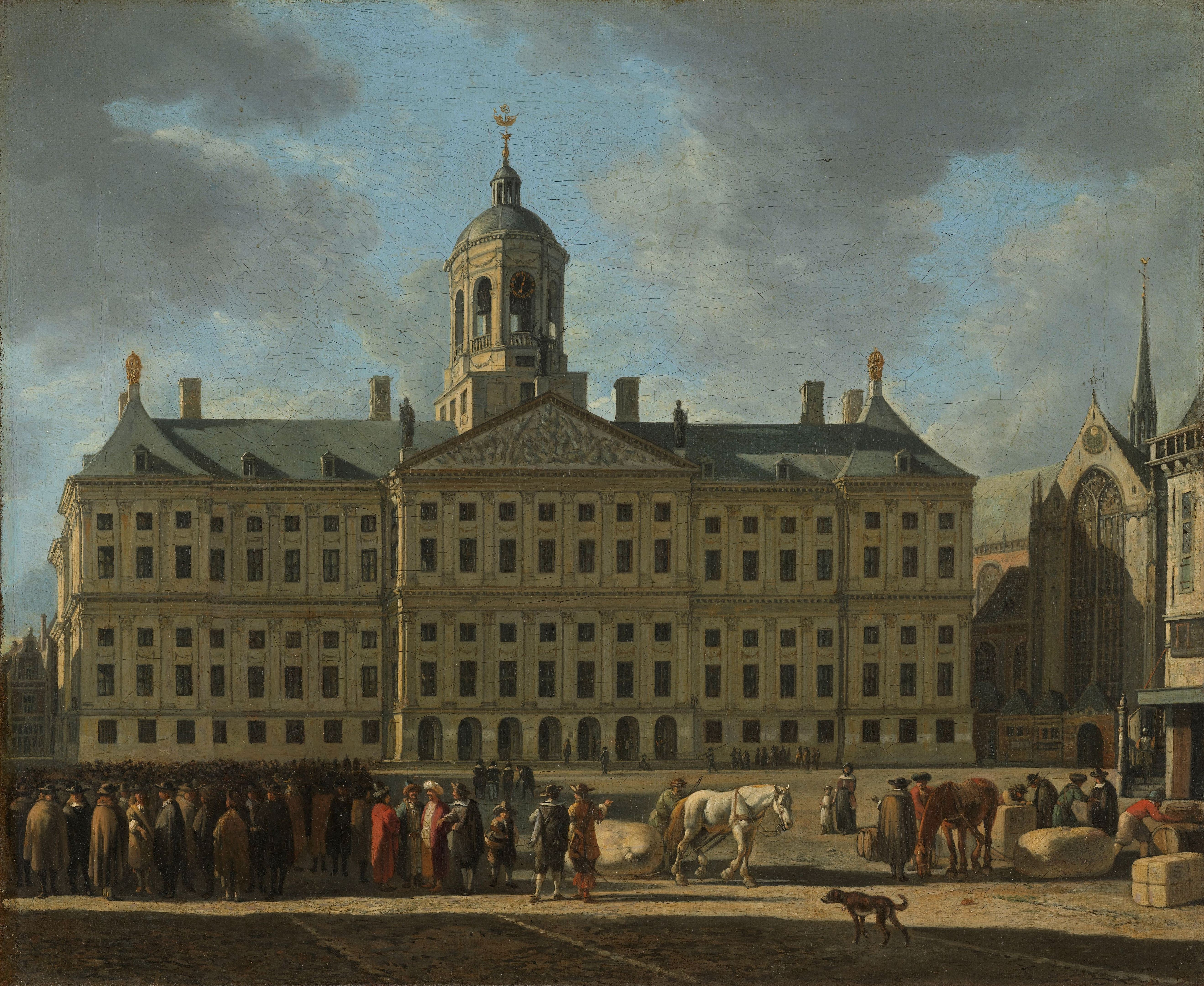
Dam Stadhuis, Gerrit Berkhheyde, 1672, Rijksmuseum
At the centre of the building is the high-ceilinged Burgerzaal, which is a rare example for this period of a large non-religious architectural space. When the new city hall was completed, a large world map in two hemispheres composed of marble and copper was laid on the floor of the Groote Burgerzaal to celebrate the trade supremacy of the Dutch East India Company and the Dutch West India Company.

The Groote Burgerzaal in the Dam Stadhuis, 1661
Intended to impress visitors, the floor was a symbol in marble of the extension of Dutch seapower across the world. The Eastern hemisphere details the regions explored by the ships of the Dutch East India Company including the exploration of Hollandia Nova and the results of Tasman’s voyages.
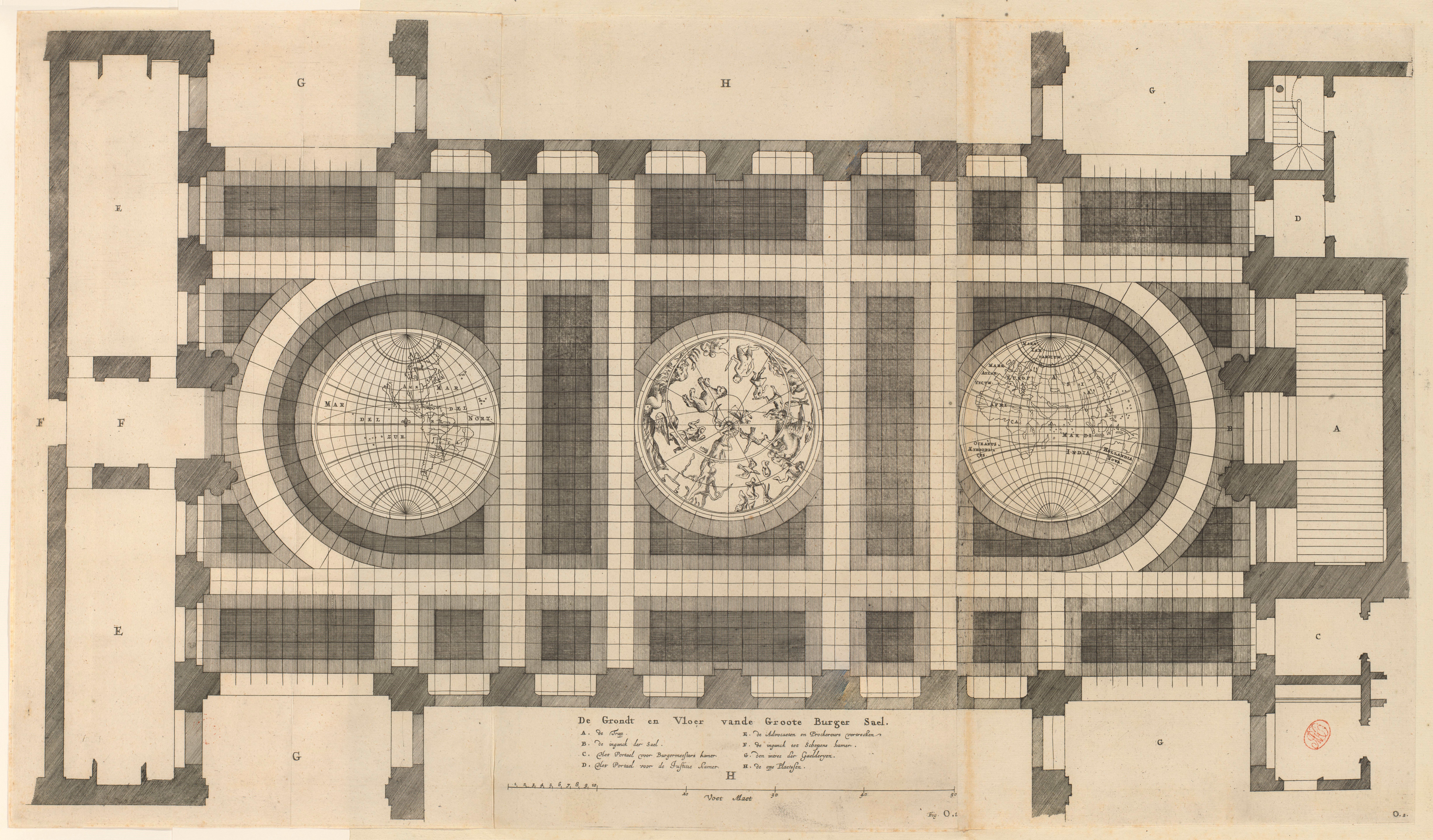
Plan of the marble floor of the Groote Burgerzaal, 1661
Over a century this cartographical work of art was badly damaged by people walking over the floor and the two hemispheres were later filled in with plain marble slabs without any pictorial representation. This important cartographical monument was lost to posterity, however we have an image and a description from 1661:
One sees here in the centre, on the floor of the Groote Burgerzaal, two half spheres, bisected at the axis and a celestial hemisphere, of which each at the centre line or diameter is a length of approximately two-and-twenty and in its circumference approximately six-and-sixty feet. On the one terrestrial hemisphere, towards the east in the Burgerzaal, the contours of the outermost limits of the three parts of the world, to wit Europe, Asia and Africa, as also even the islands, promontories, rivers and oceans, and parts of Hollandia Nova are shown very ingeniously by red and other coloured inlaid stone.

Detail of the Eastern Henisphere showing Hollandia Nova and Van Diemens Land
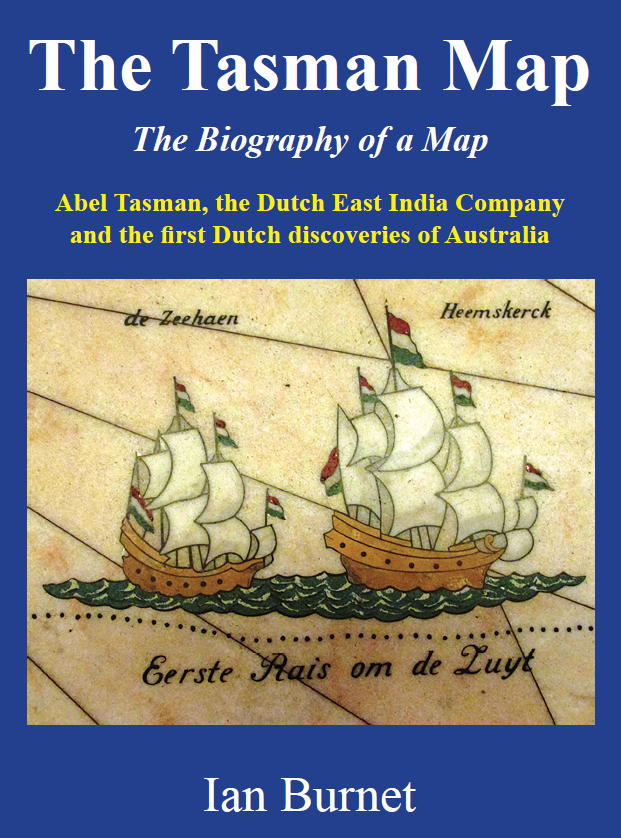
In 1746 the Amsterdam Government commissioned Jacob Martenesz to execute a new world map of two hemispheres in marble to replace those of 1655. For reasons unknown the work was not used as intended and remained forgotten in a store-room of the City Hall. It was not until 1953 that the forgotten marble maps were finally installed in their intended place in the Groote Burgerzaal. The eastern hemisphere shows Nova Hollandia, including Terra Concordia (Eendrachslandt) and Terra Diemensis (Van Diemens Landt) all based on the 1644 Tasman Map.
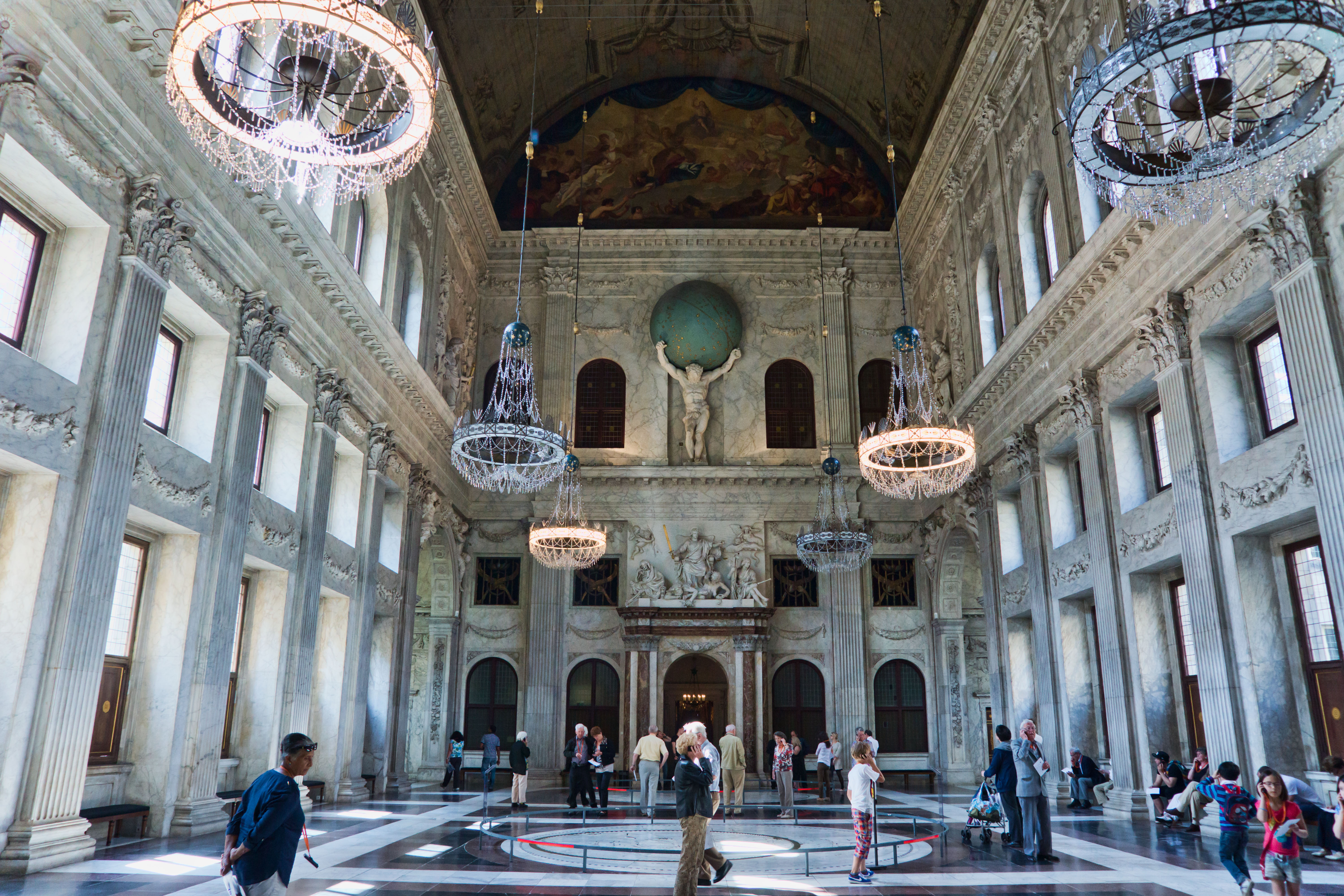
The Groote Burgerzaal and its marble maps
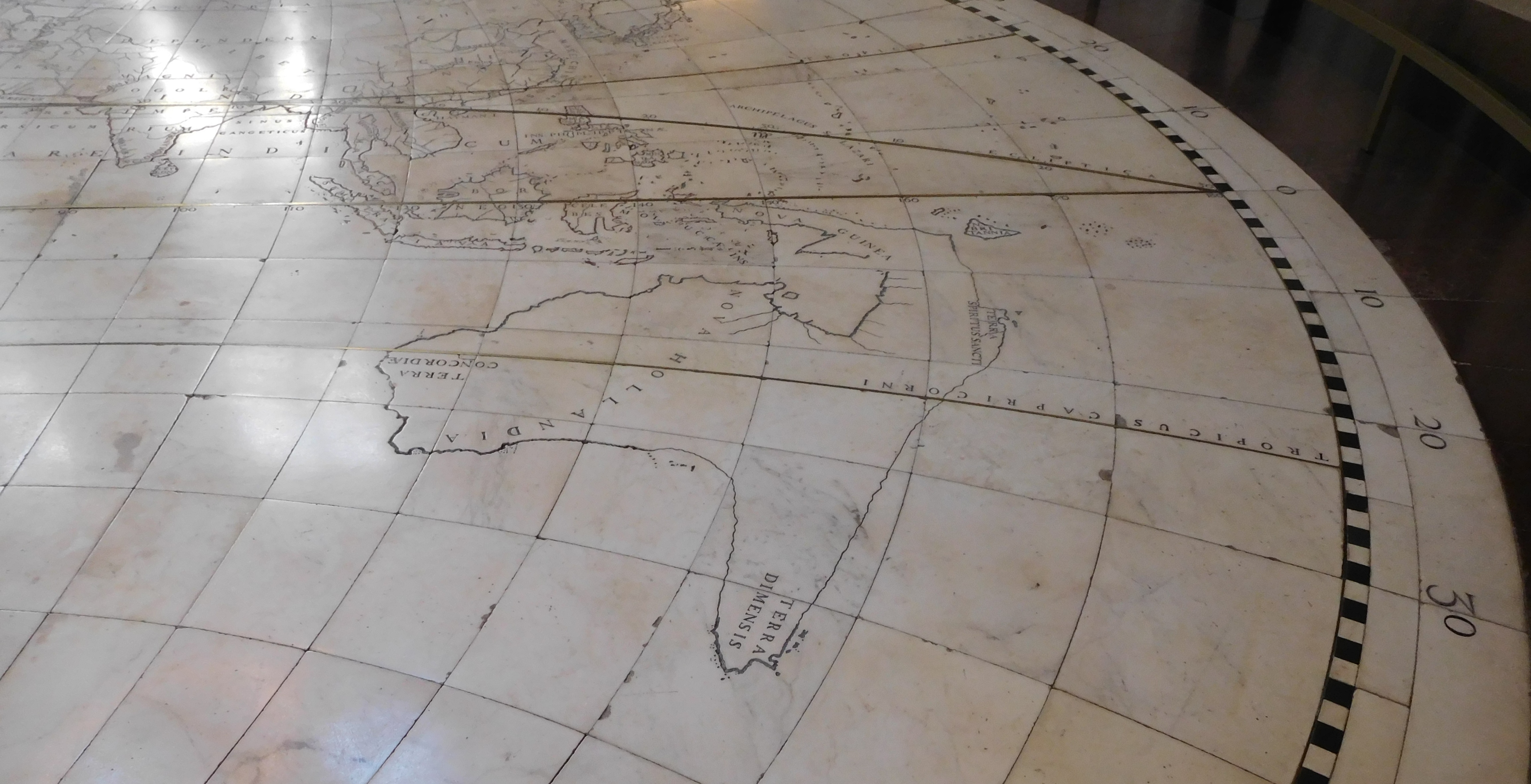
Detail of the 1746 marble map of Nova Hollandia in the Groote Burgerzaal. Photo Ian Burnet
Commissioned by the Principal Librarian William Ifould, the marble mosaic map in the vestibule of Mitchell Library was intended to celebrate Abel Tasman, the early Dutch discoveries of Australia and the Tasman Map of 1644, just as these voyages were celebrated in marble on the floor of the Groote Burgerzaal in Amsterdam.
Work commenced in 1939 by the Melocco Brothers of Annandale who as master craftsmen took eighteen months and an incalculable degree of skill, knowledge and patience to create one of the most immpressive mosaic floors in the world. A ‘must see’ on your next visit to the State Library of NSW
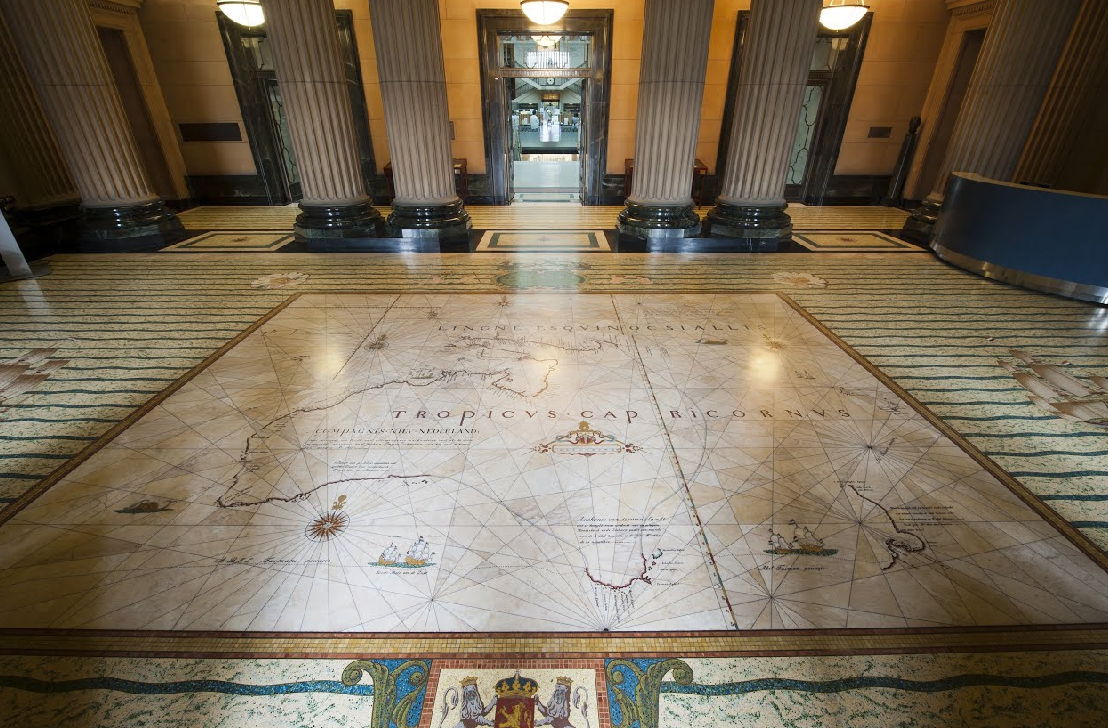
The marble mosaic Tasman Map in the vestibule of the Mitchell Library. State Library NSW


 spiceislandsblog