Alfred Russel Wallace’s publication of ‘The Malay Archipelago’

This week we celebrate the 150 year anniversary of the publication of Alfred Russel Wallace’s book, The Malay Archipelago. This wonderful book is an account of the eight years he spent in British Malaya and the Dutch East Indies collecting natural history specimens, including his discovery of the biogeographic boundary between Asia and Australia which came to be called ‘The Wallace Line’, his descriptions of the region between Asia and Australia which came to be known as ‘Wallacea’, and the recognition from his studies of the fauna that Australia had collided with Asia.

The Malay Archipelago is undoubtedly the classic work on the flora, fauna and peoples of the area which is now called Malaysia and Indonesia. Based largely on four field journals which Wallace kept during the eight years he spent there between 1854 and 1862, it ranks as the greatest travel book on the region and for its analysis of the geographic distribution of animals, it is one of the most important natural history books of the nineteenth century.

Where Australia Collides with Asia - IHS poster 2

The main purpose of Wallace’s travels, as he states in the preface to his book, was to obtain natural history specimens for his private collection and to sell duplicates to museums and amateur naturalists through his agent in London. Altogether he collected an astonishing 125,660 specimens of natural history, mainly beetles, butterflies and birds from across the archipelago.

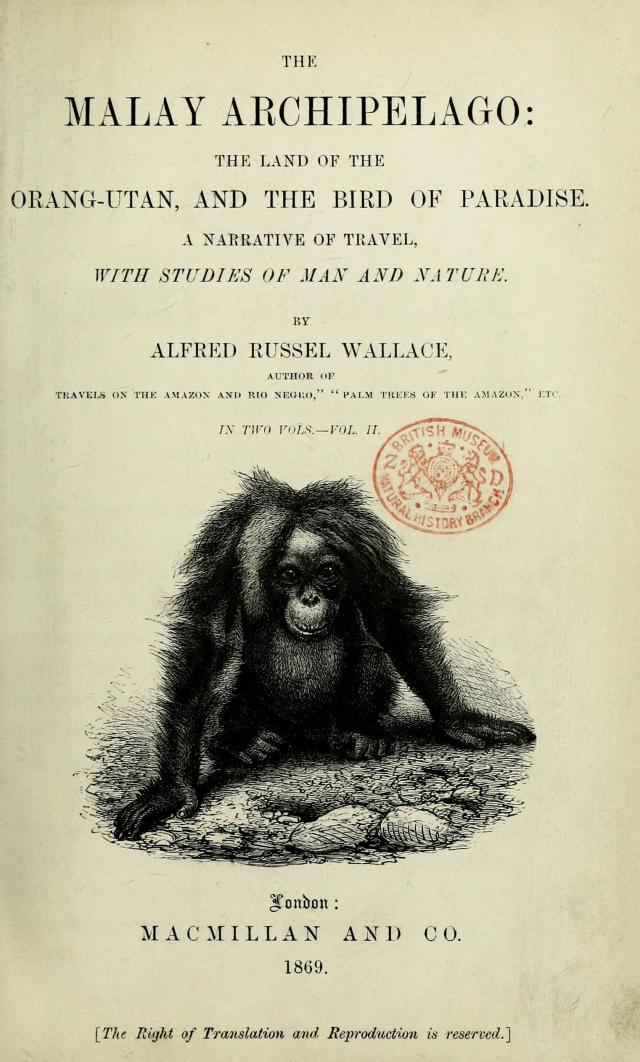
The Malay Archipelago was published in London on 9 March 1869 in two volumes of 1500 copies and it quickly sold out. A second edition of 750 copies came out in October that year and edition after edition followed.  A German translation came out in 1869 and a Dutch translation in 1870 and it is believed that the book has never been out of print.

062 The_Malay_Archipelago_Darwins copy

This is Charles Darwin’s original copy which was donated to the British Museum after his death

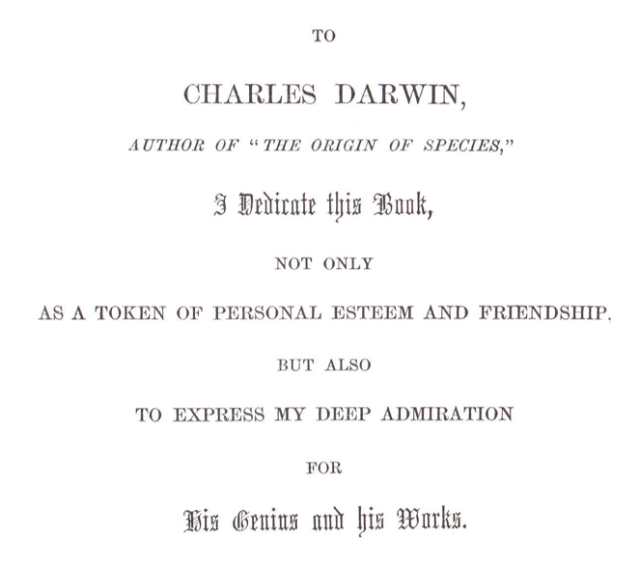
The Malay Archipelago was dedicated to Charles Darwin and he must have received an advance copy because he wrote to Wallace on 5 March 1869. ‘ I was delighted at receiving your book this morning. The whole appearance and the illustrations with which it is so profusely ornamented are quite beautiful … As for the dedication, putting quite aside how far I deserve what you say, it seems to me decidedly the best expressed which I have ever met.

Darwin dedication

The dedication to Charles Darwin from the frontispiece of The Malay Archipelago

Wallace begins The Malay Archipelago with this evocative description of the region:

If we look at a globe or a map of the eastern hemisphere we shall percieve between Asia and Australia a number of large and small islands, forming a connected group distinct from those great masses of land, and having little connection with either of them. Situated upon the equator, and bathed with the tepid water of the great tropical oceans, this region enjoys a climate more uniformly hot and moist than almost any other part of the globe, and teems with natural productions which are elsewhere unknown. The richest of fruits and the most precious of spices are here indigenous. It produces the the giant flowers of the Rafflesia, the great green-winged Ornithoptera (princes among the butterfly tribes), the man-like orang-utan, and the gorgeous birds of paradise. It is inhabited by a peculiar and interesting race of mankind – the Malay, found nowhere beyond the limits of this insular tract, which has hence been named the Malay Archipelago.

What is interesting is that nowhere in The Malay Archipelago does Wallace mention his famous ‘Letter from Ternate’ or his essay ‘On the Tendency of Species to Depart Indefinitely from the Original Type’ which he wrote in three days and sent to Charles Darwin from Ternate in March 1858. Stating that he “hoped the idea was as new to Darwin as it was to himself and that he believed it would supply the missing factor to explain the origin of species”. Of course the idea was not new to Darwin, although he had never published his theory,  and it was Wallace’s letter which precipitated the joint presentation to the Linnean Society in July 1858, while Wallace was still in the Dutch East Indies, of his and Darwin’s common theory on the Origin of Species.

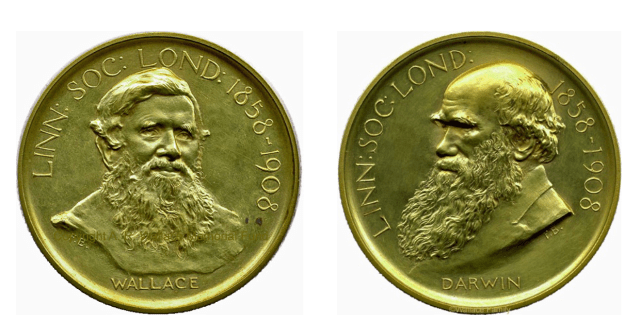
Wallace Darwin Medal

The two sides of the Darwin-Wallace Gold Medal

The 50th Anniversary of this momentous event was celebrated in 1908 when Alfred Russel Wallace was presented the Darwin-Wallace Gold Medal. The President of the Linnean Society, in welcoming the delegates and guests on this occasion, said:—

“We are met together today to celebrate what is without doubt the greatest event in the history of our Society since its foundation. Nor is it easy to conceive the possibility in the future of any second revolution of Biological thought so momentous as that which was started 50 years ago by the reading of the joint papers of Mr. Darwin and Dr. Wallace, ‘On the Tendency of Species to form Varieties’ and on the ‘Perpetuation of Varieties and Species by Natural Means of Selection’ …

Darwin and Wallace not only freed us from the dogma of Special Creation, a dogma which we now find it difficult to conceive of as once seriously held —they afforded a natural explanation of the marvellous indications of Design which had been the great strength of the old doctrine…

Dr. Alfred Russel Wallace, We rejoice that we are so happy as to have with us today the survivor of the two great naturalists whose crowning work we are here to commemorate. Your brilliant work, in Natural History and Geography, and as one of the founders of the Theory of Evolution by Natural Selection, is universally honoured and has often received public recognition, as in the awards of the Darwin and Royal Medals of the Royal Society, and our own medal in 1892. Today in asking you to accept the first Darwin-Wallace medal, we are offering you of your own, for it is you, equally with your great colleague, who created the occasion which we celebrate today.”


http://www.ianburnetbooks.com


Posted in Uncategorized | Tagged , , , , , | Leave a comment

Swimming with Whale Sharks in Papua

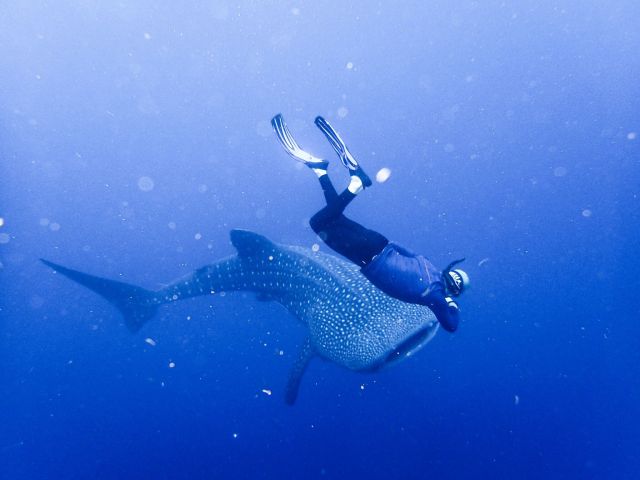
The map below shows our October 2018 voyage with Coral Expeditions from Biak to Darwin. There is no doubt that the highlight  of the voyage was swimming with whale sharks in Cenderawasih Bay in Papua.

October 2018 facebook


The whale shark is the largest non-cetacean animal in the world with an average length of 10 metres and weighing 9 tonnes. They are actually sharks although they have tiny teeth because they are filter feeders like whales, living on plankton and small squid or fish. The whale shark inhabits warm tropical or temperate waters, is pelagic and lives in the open sea, but seasonal feeding aggregations occur at many sites around the world including Cenderawasih Bay shown in the centre of this map of Indonesian Papua.

Cendrawasih Bay

We fly from Darwin to Biak where we join the Coral Discoverer and sail south into Cenderawashih Bay (Bird of Paradise Bay) looking for the Bagans (floating fish traps) to which the whale sharks are attracted by an expansive seafood menu.

DSCN2448


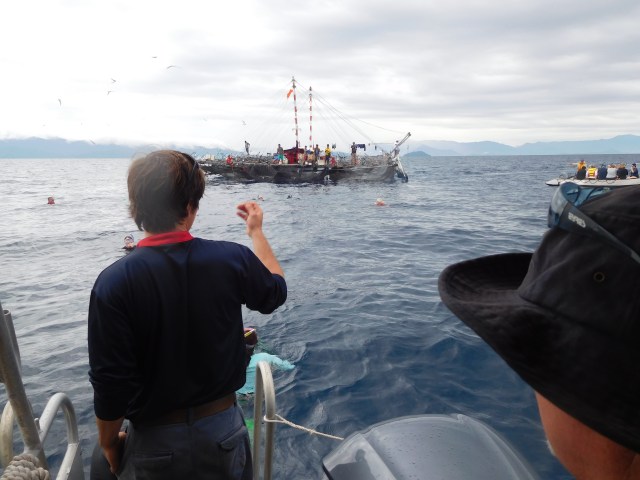
We leave the Coral Discoverer on the smaller Xplorer vessel and approach the Bagan with some of our group already in the water.

DSCN2393

A whaleshark feeding next to the Bagan net. It feeds by sucking in large volumes of water and then expelling it through its gills

WS1

WS2

Is that me on the right? Look for another whaleshark in the background left. It was a fantastic morning and we had nine whalesharks around us including an infant.

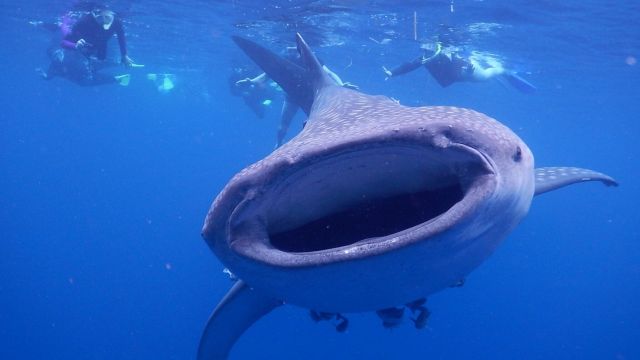
WS3Oh My!  What a big mouth you have. Think of Jonah and the whale. The small fish attached to the bottom of the whale sharks live off whatever they clean off their skin.
WS5

Thank you to my fellow Coral Expedition explorers for their underwater photographs

WS6

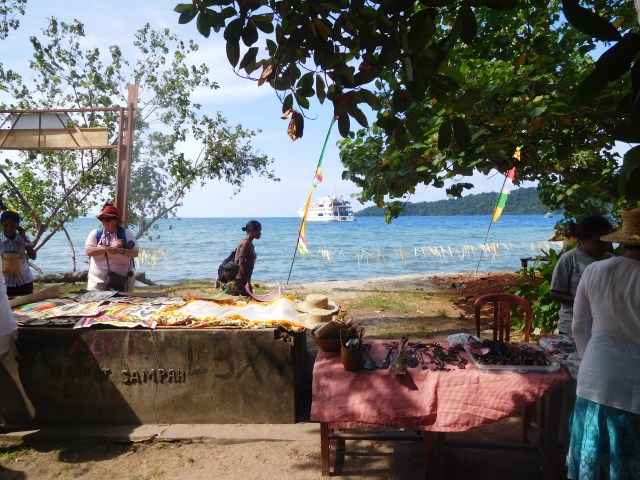
To complete a wonderful day we went ashore at Kwatisore to meet the villagers, to be entertained with some traditional singing and dancing, and to browse their market

DSCN2408

DSCN2417 - Copy

DSCN2426

http://www.ianburnetbooks.com

The next voyage to Papua, Cenderawasih Bay  and the Spice Islands with Coral Expeditions will be in December 2019 and January 2020 aboard the Coral Adventurer. Please go to their website for more details.

http://www.coralexpeditions.com


Posted in Uncategorized | Tagged , , , , , | 3 Comments

Ian Burnet talking at ‘Better Read than Dead’


Posted in Uncategorized | Tagged , , , , | 1 Comment

Where Australia Collides with Asia – the latest book review

Where Australia Collides with Asia - IHS poster 2

Ian Burnet, with his thirty years’ personal experience in the culture and history of the area, gives competent, intelligent and entertaining accounts of the voyages of the three main protagonists whose discoveries transformed our understanding of the processes of evolution and species formation. Specifically, he discusses Joseph Banks, Charles Darwin and Alfred Russel Wallace, after whom the Wallace Line is named. The book is superbly illustrated with eighteenth and nineteenth century paintings, etchings, drawings and maps, some of which hail from the diaries of the explorers. It also features modern photographs of animals, birds and locations. Extracts from Banks’, Darwin’s and Wallace’s diaries and books also form a substantial part of the narrative and are used to great effect by Burnet to enhance and illustrate his story.

The books style is somewhat journalistic, giving us ‘just the facts’. Considering his knowledge of this part of the world, it is a shame that the author did not enlist his own experiences to influence the narrative, by allowing the reader to see the area through an explorer’s or scientist’s eyes. While he does a very good job of telling the reader what happened, showing us a little more would, perhaps, have enhanced the tale.

However, this remains a very good book. It has been thoroughly researched and contains a useful bibliography enticing readers to pursue the subject further. It is well written, informative and engaging, all of which are essential in a work aimed at a general audience. I found much to admire and to keep reading without effort. The quotations have been well chosen and enhance the narrative. The characters of Darwin, Wallace and Banks are fleshed out nicely and their stories are presented in a sensible chronological order. I can see how Burnet’s account could encourage anyone interested in evolution, exploration or natural history to read Darwin’s Voyage of the Beagle and the two volumes of Wallace’s Malay Archipelago for themselves. In this sense, Burnet has done a very good job indeed.

CSIRO PUBLISHING, Book Reviews.

Susan Double, Paleontology Department, Flinders University, South Australia.


http://www.ianburnetbooks.com


Posted in Uncategorized | Tagged , , , , , , , , , | 4 Comments

‘Friends in Australia’ – a message from Sutan Sjahir, the Prime Minister of the newly declared Republic of Indonesia, November 1945.

On 17 August 1945 and two days after the Japanese surrender, Soekarno and Hatta unilaterally declared Indonesia’s Independence and became the first President and Vice President of the Republic of Indonesia.

DSCN0662

Hatta and Soekarno preparing the declaration of Independence


Soekarno Proclamation

Soekarno reading the Declaration of Independence on 17 August 1945

Brothers and Sisters All!

I have asked you to be in attendance here in order to witness, an event in our history, of the utmost importance.

For decades we, the People of Indonesia, have struggled for the freedom of our country- even for hundreds of years!

There have been waves in our actions to win independence, which rose, and there has been those that fell, but our spirit still was set in the directions of our ideals.

Also during the Japanese period, our efforts to achieve national independence never ceased. In this Japanese period it merely appeared, that we leant upon them. But fundamentally, we still continued to build up our own powers, we still believed in our own strengths.

Now has come the moment, when truly, we take the fate of our own actions and the fate of our own country into our own hands. Only a nation bold enough to take its fate into its own hands, will be able to stand in strength.

Therefore last night, we had deliberations with prominent Indonesians from all over Indonesia. That deliberative gathering was unanimously of the opinion that NOW has come the time to declare our independence.

Brothers and Sisters:

Herewith we declare the solidarity of that determination.

The Dutch East Indies government in exile was based in Brisbane, Australia and the Dutch prepared ships to carry arms, munitions and troops to re-occupy Indonesia and re-establish their colonial state.  Indonesian seamen living in voluntary exile in Australia during the war,  together with other Asian seamen, and Australian Waterside Workers,  imposed a ‘black ban’ on loading Dutch ships bound for Indonesia in Australian ports. The efforts of the Indonesian seamen, the support of ordinary Australians for Indonesian Independence and the actions of the waterside workers who, maintained the  ‘black ban’, caused Dutch efforts to quickly re-occupy Indonesia to falter.

The Australian government  did not support the Dutch in their efforts to re-establish their colonial state and instead took the side of the new Indonesian nation. The Australian Government under Prime Minister Chifley refused to break the ‘black ban’ on the grounds that it was a dispute involving a foreign nation and their own subjects.

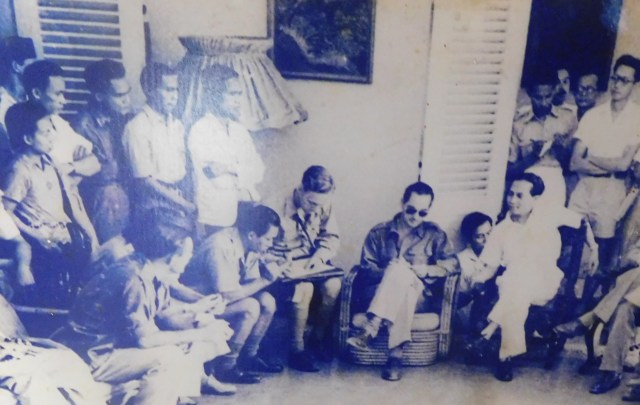
In November 1945, Sutan Sjahir, the Prime Minister of the newly declared Republic of Indonesia sent this message of thanks to the Australian people, who by their actions, helped support Indonesia’s independence at the most crucial point in its history.

SUTAN SYAHRIR’S RADIO BROADCAST TO AUSTRALIA IN NOVEMBER 1945 AND SPOKEN IN PERFECT ENGLISH, AS BELOW.

‘Friends in Australia, I am unknown to most of you and yet I call you my friends. Most of you, who really are the workers, who refused to load the Dutch ships with arms and munition, which would be used against our Republic. The thousands, who are holding demonstrations, to protest against the onslaught against our independence, the thousands of you, who sympathise with our struggle for our freedom. You are all my friends.

When the war broke out, I was still a Dutch exile on the island of Banda. I heard of Australians being landed on the island of Ambon and the island of Timor. They came there to fight the Japanese, to defend their home country. Australians fought in Malacca, and  in Sumatra, Australians fought in Java. Australians fought all the way back from North Africa to Papua to defend their homeland. An invasion of Australia by the Japanese was threatening. Then things took a turn. Australians and the Americans fought the Japanese back through the jungles and over the seas to their homeland. Australia had a narrow escape. I think Australians are tough fighters. But, I admire most of all, that, you did not fight for territorial or political nor economical gains. You, Australians fought so bravely, because you wanted to defend your freedom. You are fighters for freedom, all the way long from North Africa to Australia up to Japan.

I think, that is why you ought to understand our position now, we are fighting for our freedom!

 With you, we want a world where freedom of the people and freedom of men are really safeguarded. With you, we want to stand to together against all enemies of freedom. If we have achieved our aims, become strong and independent country, we assure you, you need not fight anymore in Sumatra, in Java, in Borneo, Ambon, Timor, for freedom. We ourselves, we will withstand all onslaught on freedom of our country. And so defend, your freedom too, you will be able to keep your sons at home, working for the welfare of your people and for the welfare of humanity.

We know, that your country has come out of the war as an important industrial country. We are still an agricultural country. We need your engines and other industrial products.  I suppose, you can use our agricultural products. Therefore, we can and we will certainly, establish close relations as good neighbours, exchanging the goods of our countries.’

DSCN0486 - Copy

Sutan Sjahir speaking to foreign journalists

My thanks to Anthony Liem for his research on this subject and his enthusiasm in making sure that this story is as widely known as possible.

http://www.ianburnetbooks.com

Posted in Uncategorized | Tagged , , , , , , | 2 Comments

The Dukono Volcano on Halmahera

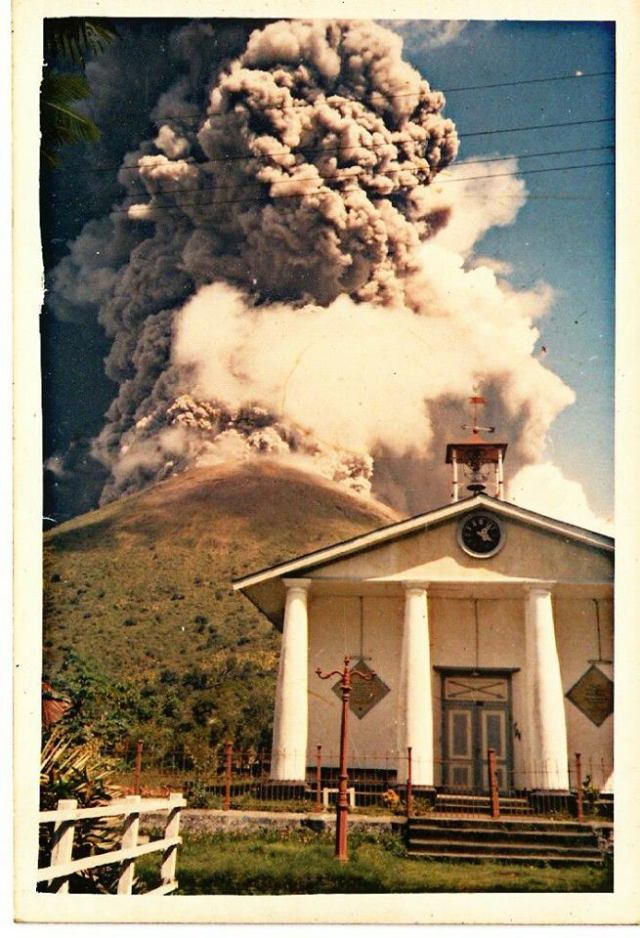
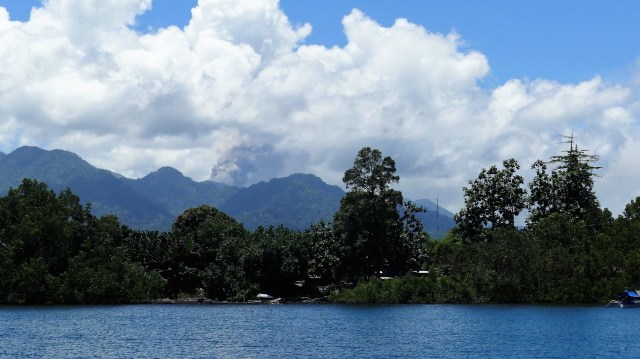
When our Coral Expeditions cruise arrived in the town of Tobelo on the northwestern arm of the island of Halmahera in October 2018, the Dukono volcano was erupting ash. This should not have been a surprise since research shows that the volcano has been erupting almost continuously  since 1978.

Dukono2

The Dukono volcano as seen from the Coral Discoverer

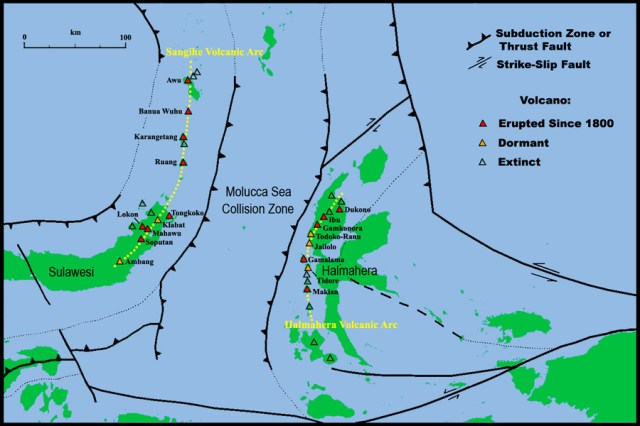
A rift in the earth’s mantle has caused a sea floor spreading zone between the islands of Sulawesi and Halmahere, causing subduction and related volcanic activity along the edge of both islands. There are sixteen volcanoes on the Halmahera volcanic arc, many of which are still active, and an equal number along the Sangihe volcanic arc.

MoluccaSeaGeologys

This seafloor map shows the central ridge, like the larger mid-Atlantic ridge, formed by the intrusion of oceanic magma. This intrusion causes spreading of the sea floor and the related subduction zones are shown by the seafloor trenches developed on each side of the central ridge . The water filled sediments that are subducted into the earths interior then become superheated, melt the surrounding rocks, and cause the volcanic activity.

Google Map

The related volcanoes can be best seen on this topographical map of Halmahera which shows a line of volcanoes formed along the western side of the island, including the clove islands of Ternate, Tidore, Moti and Makian which are offshore.

800px-Halmahera_Topography

The Dukono volcano is only 10 km from the town of Tobelo. While we were there it was continuously erupting ash, but fortunately the wind was blowing to the northeast and away from the town.

Ash cloud

The Dukono volcano as seen from the town of Tobelo

dukono

A closer view of the erupting Dukono volcano


http://www.ianburnetbooks.com


Posted in Uncategorized | Tagged , , , , | 5 Comments

Lest We Forget – The Balibo Five

This is the forty third anniversary of the death of the Balibo Five in Portuguese East Timor – can it have been that long ago?

Here is an excerpt from my book ‘Archipelago – A Journey Across Indonesia’.

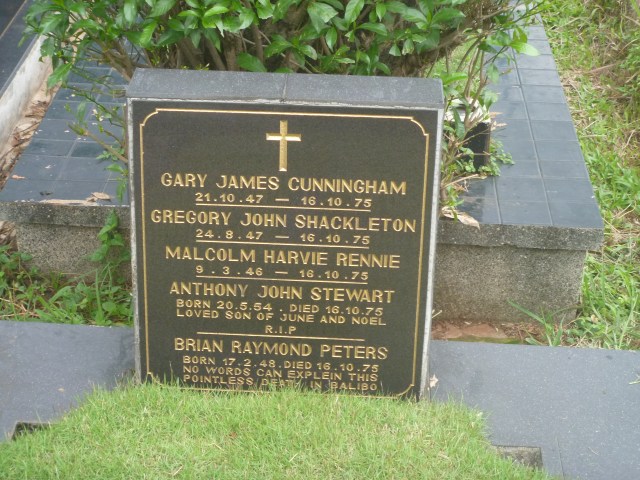
On October 16 1975, APODETI and UDT militias backed by Indonesian Special Forces crossed the border from Indonesian West Timor for an attack on the town of Maliana. The Fretilin forces were able to hold their ground where the terrain was an advantage but Maliana quickly fell to the invading forces. A tragic outcome of this invasion was the killing by Indonesia Special Forces of five Australian-based television newsmen, Malcolm Rennie and Brian Peters of Channel 9, Greg Shackleton, Gary Cunningham and Tony Stewart of Channel 7, who had filmed the Indonesian advance from the ramparts of the historic Portuguese fort in the town of Balibo. Their bodies together with the film of Indonesian participation in the invasion were burnt.

Nearly a month later in Jakarta the remains of the newsmen were buried in a common grave in a ceremony attended by the Australian Ambassador, Embassy staff and Jakarta based journalists. At the funeral service Ambassador Woolcott stated “These five Australian newsmen were regrettably and tragically killed. No one could have expected it. We do not even now have legal proof or complete evidence of their deaths but all available evidence points to their being killed on October 15 or 16. Journalists are like soldiers. They take risks in the pursuit of their profession, in the pursuit of truth”. A wreath laid on behalf of the bereaved relatives read ‘They stayed because they saw the search for truth and the need to report at first hand as a necessary task’. I visited the gravesite in Kebayoran Lama to pay homage to these men before I left Jakarta. I thought it would be difficult to find the gravesite but as soon as I mentioned ‘Australian journalists’ the caretaker knew exactly what I was looking for and took me directly to their grave. The gravestone tells its own story as it reads – ‘No words can explain this pointless death in Balibo’.

P1020967

Posted in Uncategorized | Tagged , , , | Leave a comment

Oost-Indisch Huis (East India House)

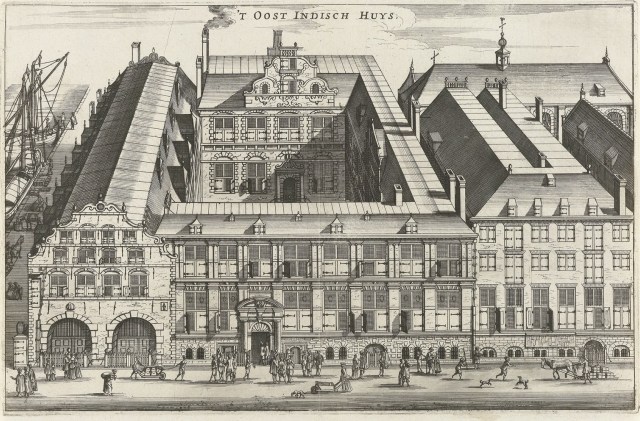
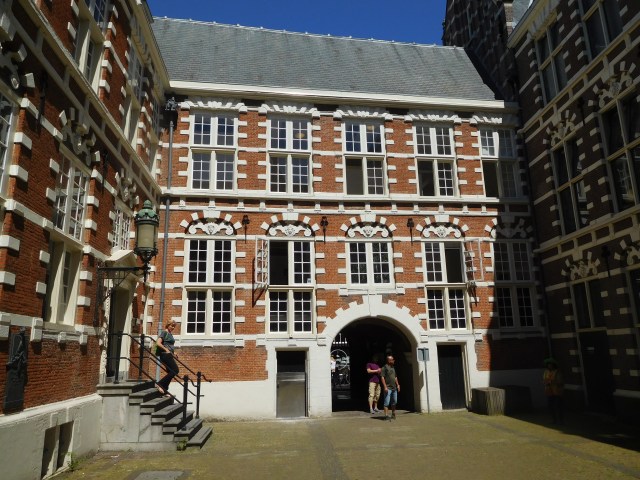
East India House in Amsterdam, built in 1606, was the first building especially built for the United East India Company (VOC) and was the centre of all its business activities. The buildings have been preserved and are now part of the University of Amsterdam.

East Indies House Outside

Dutch East India House in Amsterdam, Rijksmuseum

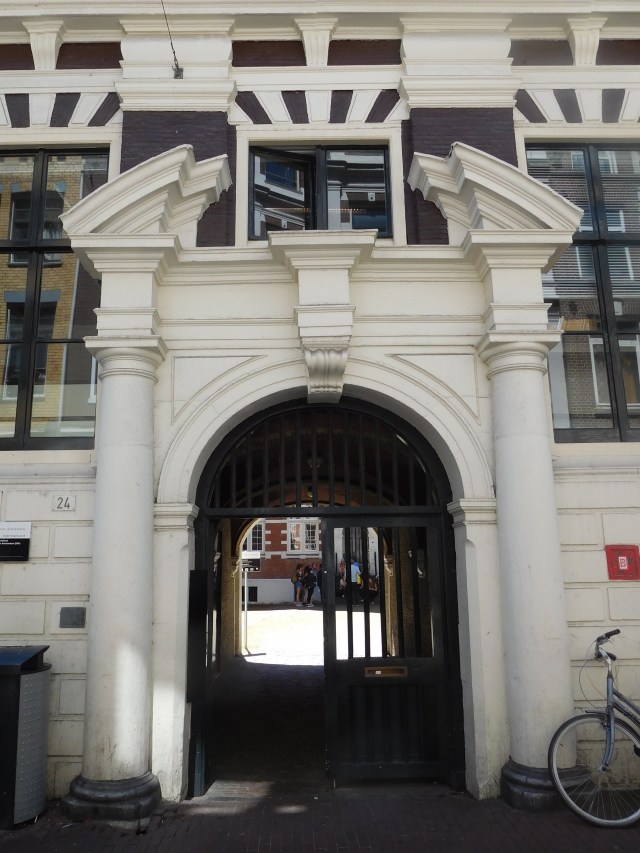
The entrance into the inner courtyard from the Oude Hoogstraat street, as shown above, has been slightly modified to allow some light into a new window.

DSCN1889

The entrance into the inner courtyard from Oude Hoogstraat

DSCN1885

Looking back towards the entrance from the inner courtyard

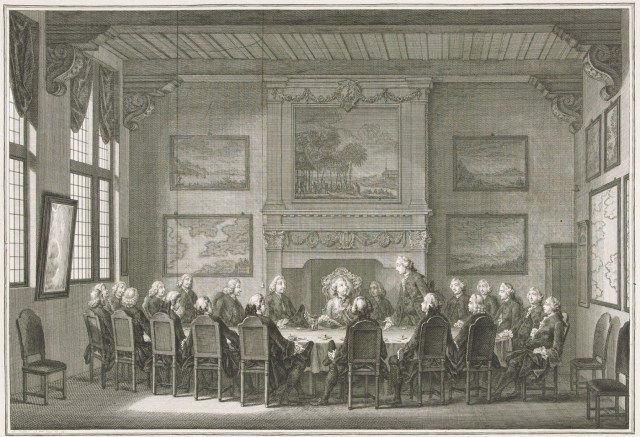
It was at East India House where the ‘Gentlemen Seventeen’ (Heeren Seventien ), the directors of the joint company, gathered for their twice yearly meetings which rotated in turn, six successive years in Amsterdam and then two years in Middelburg. In 1663 Olfert Dapper described the great hall of East India House:

Hanging in the hall is the great city of Batavia, with its terrifying and invincible castle … hanging all around are the islands of the Moluccas, fortresses, orchards filled with spice trees, cities, harbours, capes that we occupy at the other end of the world.

East India House Directors room Willem V 1768

The Directors Room at East India House. Willem V taking his position as a director of the VOC. Simon Fokke, 1768, Rijksmuseum

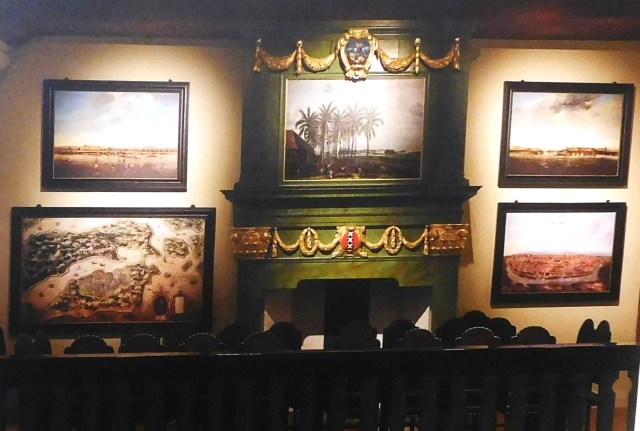
In 1997 the room was restored to its original glory including reproductions of the paintings as they were originally hung. The VOC ports at Ambon, Canton (China), Cochin (India), Judea (Thailand) and that of Kasteel Batavia (Indonesia) hanging in its central position over the gilded decorative woodwork of the fireplace.

DSCN1896 - Copy

The Directors Room at East India House

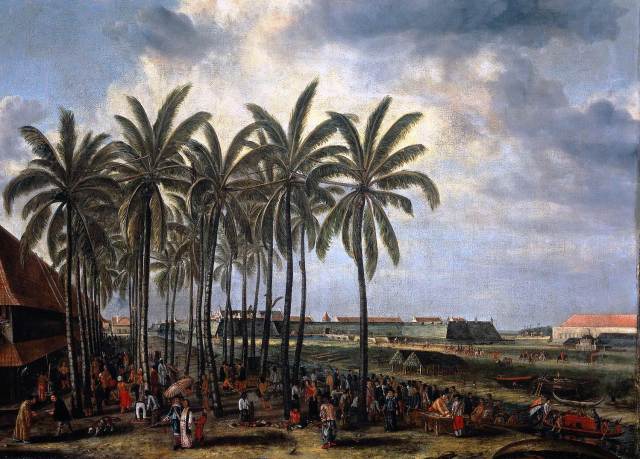
In the central position is the painting of Kasteel Batavia as seen from Kali Besar West by Andries Beekman, who had actually lived in Batavia at the time. The size of the Kasteel was probably exaggerated to demonstrate Dutch power, but it is a most important visual document of seventeenth century Jakarta and its citizens.

17_Andries_Beeckman_-_The_Castle_of_Batavia - Copy - Copy

Kasteel Batavia, Andries Beekman, 1661, Rijksmuseum

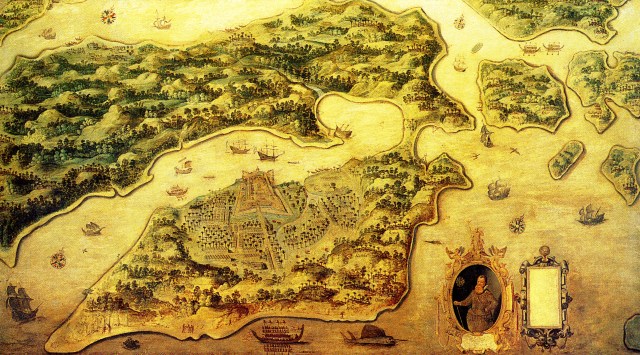
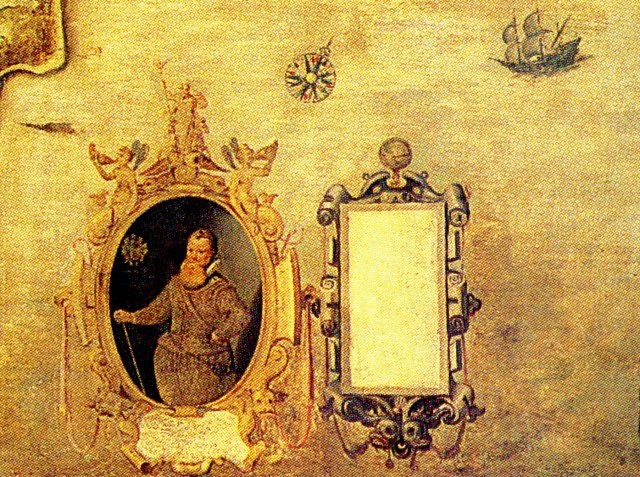
On the lower left is the first painting known to be commissioned by the Dutch East India Company. In 1617, the directors of the VOC commissioned a large-scale oil painting, known as View of Ambon  for the Great Hall of their Amsterdam headquarters, the Dutch East India House. The painting has exaggerated the size of Fort Victoria on Ambon and the cartouche shows the image of Frederick de Houtman, the first VOC governor of Ambon.

41_Painting of Fort Victoria on Ambon

View of Ambon, attributed to David Mayne, 1617, Rijksmuseum

The reason that the wording in the cartouche has been painted out is because it credited Frederick de Houtman with capturing Fort Victoria from the Portugese, which was not correct.

41_Painting of Fort Victoria on Ambon - Copy

Frederick de Houtman, the first VOC governor of Ambon

In 1599 Frederick de Houtman had been taken prisoner by the forces of the Sultan of Aceh on his second expedition to the East Indies.  The Sultan offered him the position of his commercial agent if he could prove his loyalty by converting to Islam. De Houtman refused this offer but used the eighteen months he spent in captivity to learn Malay and compile the first Dutch-Malay-Malagasy dictionary.

Fredrick de Houtman_Kamus-Belanda-Melayu

http://www.ianburnetbooks.com


Posted in Uncategorized | Tagged , , , , , , , | 2 Comments

Indonesia’s path to Independence 1901-1945

1901        Under the aegis of what became known as the ‘Ethical Policy’ the Dutch Government slowly began to extend opportunities, to the children of the Indonesian elite to attend Dutch language primary and secondary schools. The best of the young Indonesian graduates were to continue their studies in the Netherlands.

DSCN2296

A class in West Java in the 1920’s

1908        Perhimpoenan Indonesia (The Indonesian Association)  was founded by the Indonesian students in the Netherlands. It was important because it was one of the first organisation to campaign for full independence for Indonesia from the Netherlands (and to use the term Indonesia). Many of the P.I students, such as Mohammed Hatta, would later acquire prominent political positions in the independent Indonesia.

DSCN2293 - Copy

The founders of Perhimpoenan Indonesia – G.Mangoenkoewoermo, Mohammed Hatta, Koesoma Soemantri, Sastro Moeijono and R.M.Sartono


DSCN2292 - Copy

A meeting of Perhimpoenan Indonesia probably in Leiden around 1924

1908       The Doctor Djawa School was the first advanced educational institute in the Indies for Indonesians. Dr. Wahidin Sudirhusodo and Dr. Raden Soetomo and their colleagues founded Budi Utomo (Prime Philosophy) which would focus on improving the social, economic and cultural welfare of the Javanese people. Overtime, the organisation also demanded parliamentary rights and autonomy for the Indonesian people.

DSCN2297

The Dokter-Djawa School in Batavia

DSCN2299 - Copy

Dr. Raden Soetomo, one of the founders of Budi Utomo

1909        Muslim merchants formed the Islamic Traders Association to adance their economic interests compared to the Chinese merchants in Java. In 1912 this group became Sarekat Islam (The Islamic Union) under the leadership of R. Oemar Said Tjokroaminoto and from 1915 H. Agus Salim. Increasingly the outward religious emphasis of the organisation yielded place to a political one.

DSCN2303 - Copy

Founding meeting of the Blitar branch of Sarekat Islam in 1914


DSCN2306

H. Agus Salim, one of the leaders of Sarekat Islam

1912            Ahmad Dalan established Meohammadijah in Yogyakarta, aimed at adapting Islam to modern Indonesian life. It established schools along modern lines, where Western subjects as well as religion were taught. By the 1920’s it was the dominant force in Indonesian Islam and the most effective organisation in the country.

DSCN2312 - Copy

Moehammadijah Congress in Solo, 1929

1912              The Indische Partij was a short lived but influential political organisation founded by the Eurasian journalist, Earnest Douwes Dekker and Javanese physicians Tjipto Mangoenkoesoemo and Soewardi Soerjaningrat. The parties aim was to unite all the people of the Indies in the struggle for an independent nation, using the slogan of ‘The Indies for the Indiers’. In 1913 the party was banned and its leadership exiled to the Netherlands.

DSCN2314

Members of the Indische Partij probably taken in The Hague. Standing from left to right, F. Bording, G.L. Topee and J. Vermaesen. Seated from left to right Dr. Tjipto Mangoenkoesoemo, Dr. E.F.E Douwes Dekker and Soewardi Soerjaningrat.

1918         Jong Java was founded by Raden Satiman Wirjosandjojo. The major aim of the association was to establish good relations between the Indonesian students in Java, so they could come to some agreement about the future direction of their land and people. This was followed by Jong Sumatren Bond (The Young Sumatren Association) led by Mohammed Hatta and Mohammed Yamin, and other groups such as Jong Minahasa, Jong Ambon and Yong Celebes.

DSCN2301 - Copy

Mohammed Yamin, one of the founders of the Yong Sumatren Bond

DSCN2301 - Copy (2)

Dr. Sam Ratulangi, one of the founders of Jong Celebes

1924              The Algamene Studie Club (General Study Club) was formed in Bandung by Sukarno, a student at the Technische Hoogeschool (Technical College), who was familiar with the the ideas and work program of the Perhimpoenan Indonesia. A year later a new student association came into being which was the P.P.I.I (Perhimpoenan Pelajar-Pelajar Indonesia, which sought to unify the existing youth associations and the committee was the driving force behind the organisation of the first (1926) and second (1928) Youth Congress.

DSCN2328 - Copy

Sukarno

1927                          The Partai Nasional Indonesia was founded in Bandung by former student leaders (Sukarno) and ex-Perhimpoenan Indonesia members. In an important move towards independence the P.N.I was based on the idea of non-cooperation with the government of the Dutch East Indies.

DSCN2310 - Copy

P.N.I. Congress in Batavia, including Sukarno in the centre, 1928

1927                 Four members of the Perhimpoenan Indonesia (The Indonesian Association) were arrested by the Municipal Police in the Hague and charged with subversion in alliance with the Communists.

DSCN0561 - Copy

Abdul Madjid Djojoadhiningrat, Ali Satromidjojo, Mohammed Hatta and Nazir Pamuntjak together with their Dutch lawyers, J.E.W.Duys, Eleonara P.A. Weber and Tj. Mobach.

1928                   The second Indonesia Youth Congress was held in Batavia on the 28 October, the following resolution was passed and became known as the Sumpah Pemuda or Youth Pledge:

Pertama. Kami poetra dan poetri Indonesia mengakoe bertoempah darah yang satoe, tanah air Indonesia. We the sons and daughters of Indonesia acknowledge one motherland of Indonesia.

Kedoea. Kami poetra and poetri Indonesia mangakoe bebangsa yang satoe, bangsa Indonesia. We the sons and daughters of Indonesia acknowledge one nation, the nation of Indonesia.

Ketiga. Kami poetra dan poetri Indonesia mendjoendjoeng bahasa persatoen, bahasa Indonesia. We the sons and daughters of Indonesia respect the language of unity, Bahasa Indonesia.

DSCN2325 - Copy

Delegates from Pemuda Indonesia at the Second Indonesia Youth Congress, 1928

1929           P.N.I meetings and activities are infiltrated and disrupted by agents of the colonial secret police and Sukarno and other key P.N.I leaders are arrested. In 1930 he gave his famous speech against colonialism, ‘Indonesia Menggugat’ or ‘Indonesia Accuses’ in the Langraad courthouse in Bandung, before the court process was interrupted and he is sentenced to four years in prison. He was released from prison in 1932 and then exiled to Ende in Flores in 1933 and Bengkulu in 1938


Indonesia Accuses 2

Soekarno, his three co-accused and their lawyers at the Langraad Courthouse


1934           The New P.N.I leaders, Hatta and Sjahir are arrested and later sent into internal exile first to Boven Digoel in Papua and then to the island of Banda in the Moluccas. Where they joined other exiled nationalists such as Iwa Kusumasumantri and Dr. Cipto Mangunkusumo.

1942                            After the Japanese invasion and the collapse of the Dutch Colonial Government, Sukarno, Hatta and Sjahir meet again in Batavia and start working towards Indonesian Independence under the Japanese Occupational Government.

17 August 1945.        Two days after the Japanese surrender, Indonesia’s independence is proclaimed in a short statement signed by Sukarno and Hatta.

DSCN0662 - Copy

Hatta and Sukarno working on an early draft of the Proclamation of Independence

Soekarno Proclamation

Sukarno reading the Proclamation of Independence on 17 August 1945


Thanks to Erasmus Huis, in conjunction with the Nationaal Archief in the Netherlands and the Arsip National in Indonesia, for organising the exhibition on ‘The Birth of the Indonesian Youth Movement’ from 2 July until 3 September 2018, which is on display at the Kerta Niaga building in Jakarta Kota and from which much of this material was drawn.

http://www.ianburnetbooks.com


Posted in Uncategorized | Tagged , , , , , , | 4 Comments

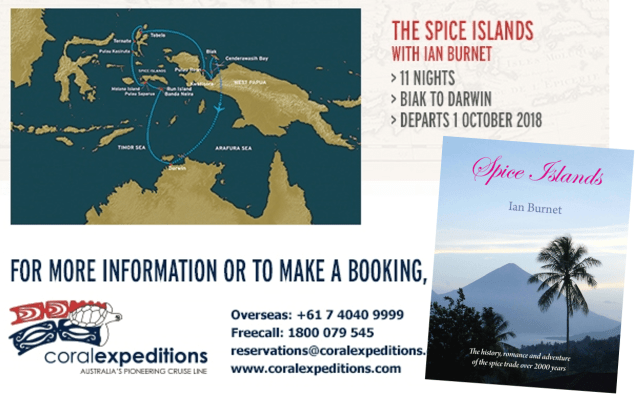
Explore the Spice Islands

This is your chance to explore the Spice Islands with Coral Expeditions at a special discount rate.

Ian Burnet promo

Posted in Uncategorized | Tagged , , , , , , | 2 Comments