
This church in Semarang had the creative inspiration to decorate its exterior with colourful umbrellas strung on wire —- beautiful!


This church in Semarang had the creative inspiration to decorate its exterior with colourful umbrellas strung on wire —- beautiful!
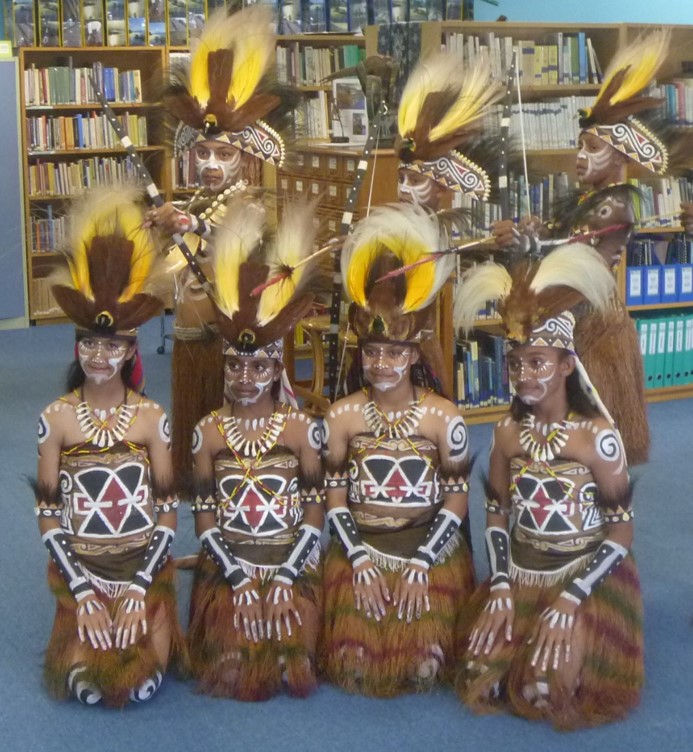
These Papuan school children are preparing for a dance performance in Jakarta. Look at their magnificent headdresses, each one a complete bird-of-paradise.
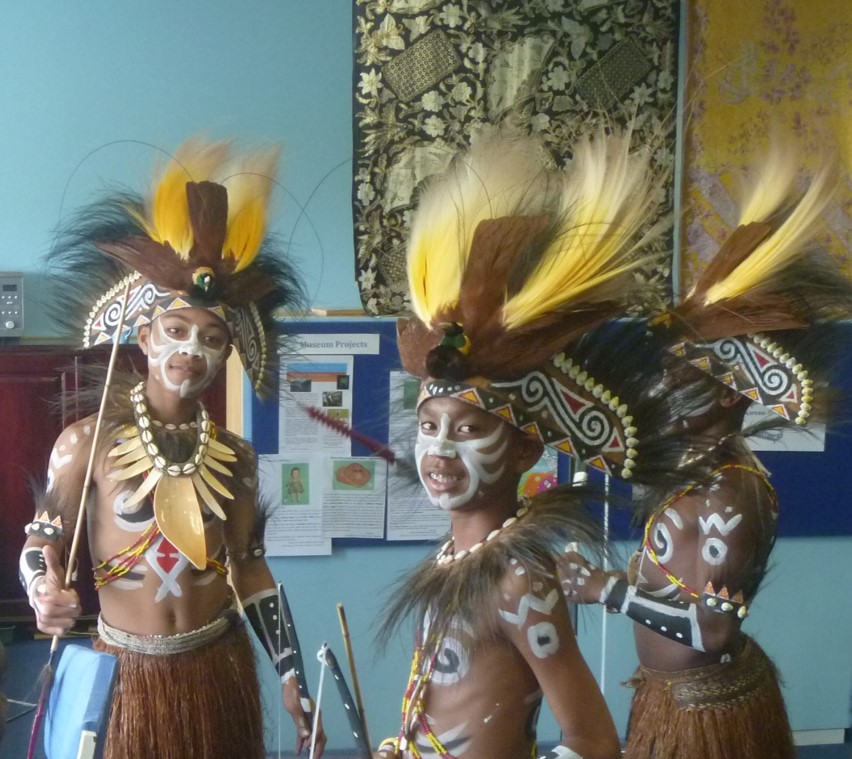
Hopefully these birds are still not endangered and are a renewable resource

There is time for one last practice dance before the performance – to watch the dance just follow the link below:
http://www.youtube.com/watch?v=00IPsCcAC48
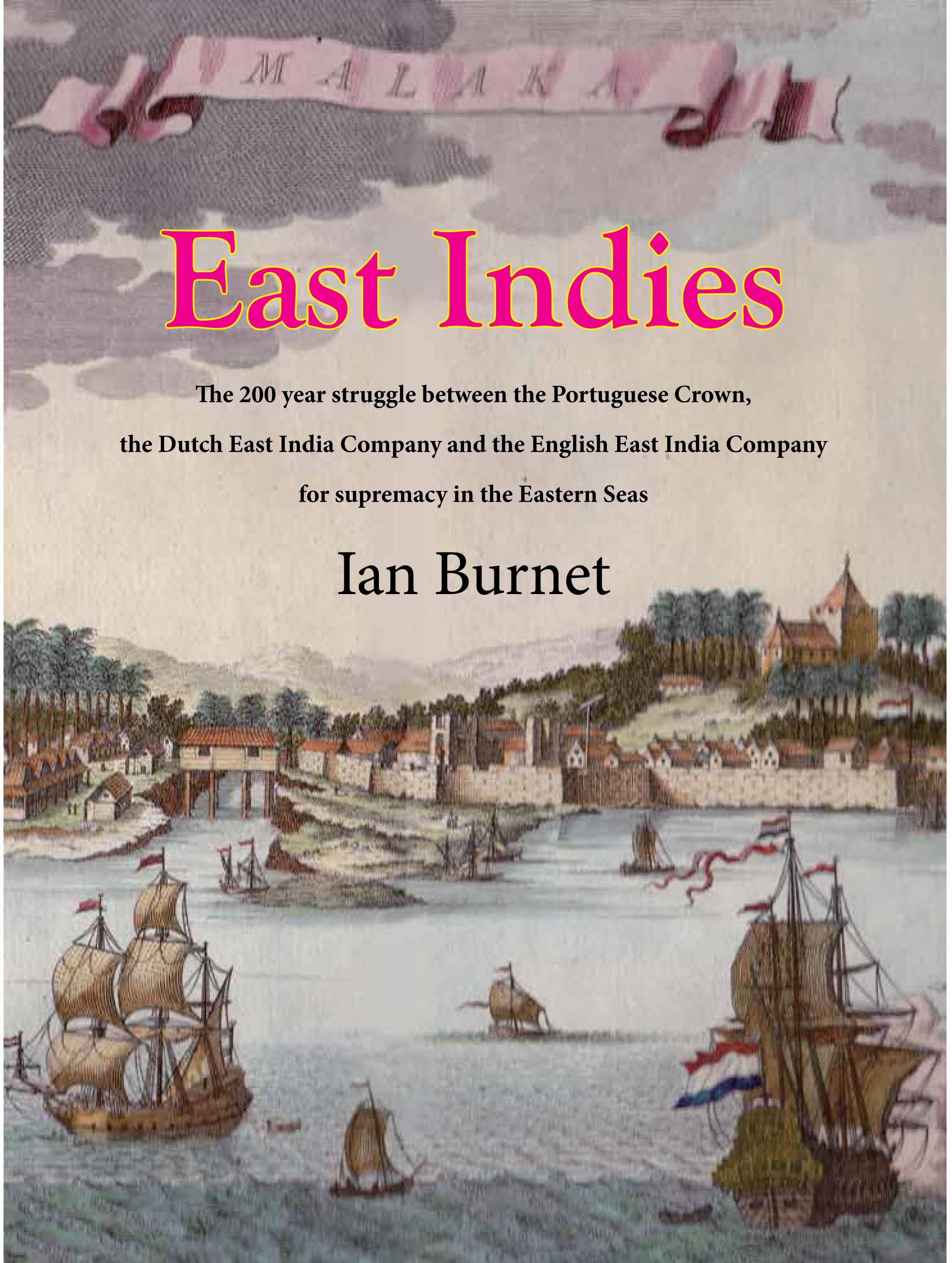
A fascinating talk about the spice trade and its little known associated collateral. It documents the 200 year struggle between the Portuguese Crown, the Dutch East India Company and the English East India Company for trade supremacy in the Eastern Seas. It documents the rise of the world’s first joint stock and multinational trading companies and their conversion to huge colonial states ruling over millions of people in Indonesia, India and Malaya.
Cost and booking information
Cost: Members $20 Guests $25. A light sandwich lunch will be served after.
Bookings essential:book now
Enquiries: +61 2 9298 3644 or email members@anmm.gov.au

East Indies —- Book Review
When you read East Indies by Ian Burnet, you can almost smell exotic spices over salt spray and wet wood of the ships that transported the goods back to Europe.
Following on from his previous book, Spice Islands, in which Ian documented the history of the spice trade in the Maluku and Banda Islands in Indonesia, where two very important and highly sought spices – cloves and nutmeg – originated, East Indies looks at the impact of the European explorers and traders.
When Vasco da Gama’s fleet rounded the Cape of Good Hope in 1497, it was a game changing moment. Over the next 100 years, the Portuguese concentrated on growing their monopoly in the Eastern Seas from Goa in India as far east as the Moluccas and Timor in Indonesia, and as far north as China and Japan, trading in spices, sandalwood, silks, gold, silver, porcelains and other exotic oriental goods.
Things began to get more complicated when the Dutch East India Company and English East India Company began to challenge Portugal’s monopoly. Wars were fought. Cities were bombarded and captured. Gunboat diplomacy reigned. The English gained prominence in the tea trade over the Dutch and, of course, they were not above leveraging the illegal sale of opium to ensure their supply of tea from China remained uninterrupted.
Ian has once again researched his topic thoroughly, and East Indies is beautifully illustrated, filled with gorgeous maps and pictures evoking the age of sail.
Highly recommended.
Melanie Ryan
Limelight Book Reviews
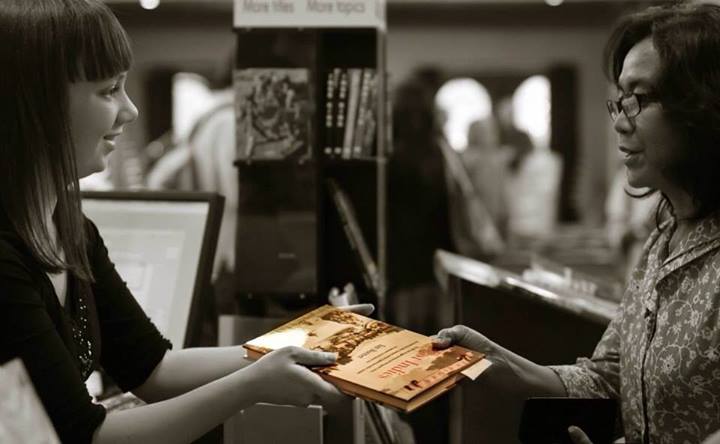
The book reviews for ‘East Indies’ have started coming out and here is what they say:
East Indies —- Book Review
When you read East Indies by Ian Burnet, you can almost smell exotic spices over salt spray and wet wood of the ships that transported the goods back to Europe.
Following on from his previous book, Spice Islands, in which Ian documented the history of the spice trade in the Maluku and Banda Islands in Indonesia, where two very important and highly sought spices – cloves and nutmeg – originated, East Indies looks at the impact of the European explorers and traders.
When Vasco da Gama’s fleet rounded the Cape of Good Hope in 1497, it was a game changing moment. Over the next 100 years, the Portuguese concentrated on growing their monopoly in the Eastern Seas from Goa in India as far east as the Moluccas and Timor in Indonesia, and as far north as China and Japan, trading in spices, sandalwood, silks, gold, silver, porcelains and other exotic oriental goods.
Things began to get more complicated when the Dutch East India Company and English East India Company began to challenge Portugal’s monopoly. Wars were fought. Cities were bombarded and captured. Gunboat diplomacy reigned. The English gained prominence in the tea trade over the Dutch and, of course, they were not above leveraging the illegal sale of opium to ensure their supply of tea from China remained uninterrupted.
Ian has once again researched his topic thoroughly, and East Indies is beautifully illustrated, filled with gorgeous maps and pictures evoking the age of sail.
Highly recommended.
Melanie Ryan
Limelight Book Reviews
<
East Indies —– Book Review
Ian Burnet has followed his scholarly and eminently readable book, Spice Islands, with his follow up East Indies. Burnet has been enthralled with the history of the Spice Islands and Indonesia to the point of extensive travel and living in the region.
Where his first book examined the great spread of history of the development of the spice trade and its impact on Europe (not to mention the islands themselves), the second book focuses on the struggles for dominance over 200 years between the great trading and naval powers of the Portuguese, Dutch and the English.
The book provides a wonderful snapshot of European activity in the East Indies including the establishment of Singapore and Hong Kong as significant trading ports. This book will appeal to readers who want to take further their understanding of the development of the region.
Paul Talbot
Afloat Magazine
The hardback version of East Indies is available on order from your favorite bookstore or from the usual online retailers, the e-book is now available in Kindle, Apple, EPUB and PDF versions
More details are available on the author website at http://www.ianburnetbooks.com
Built in 1910 by the Sarkie Brothers the Hotel Majapahit exceeds their Eastern and Orient Hotel in Penang, and their Raffles in Singapore in size, style and elegance. Lovingly restored, it is absolutely amazing and a nights accommodation costs one third the price of the other hotels
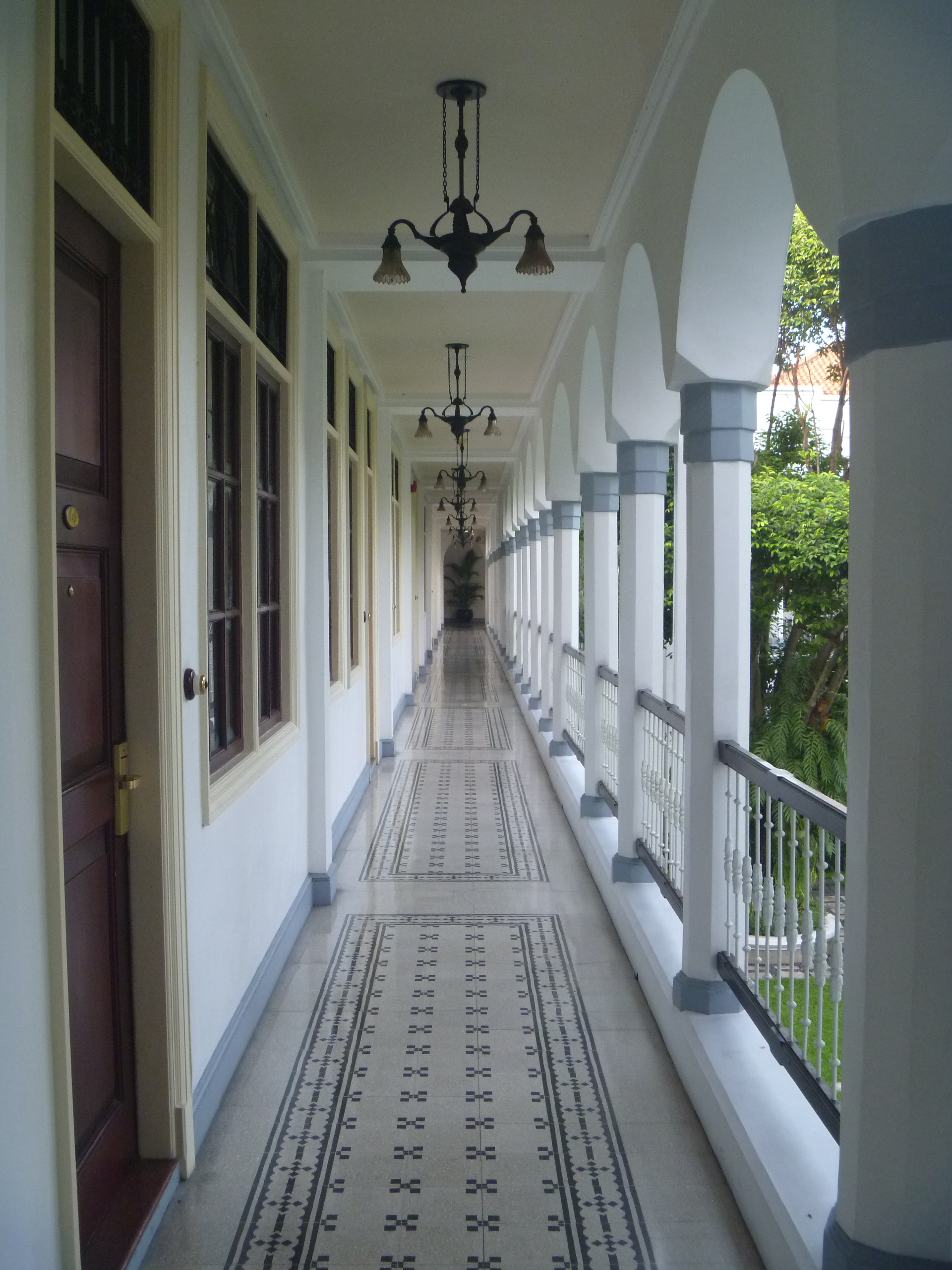
The hotel is characterized by its gracious corridors set around a perfectly manicured garden which looks beautiful by day or night.


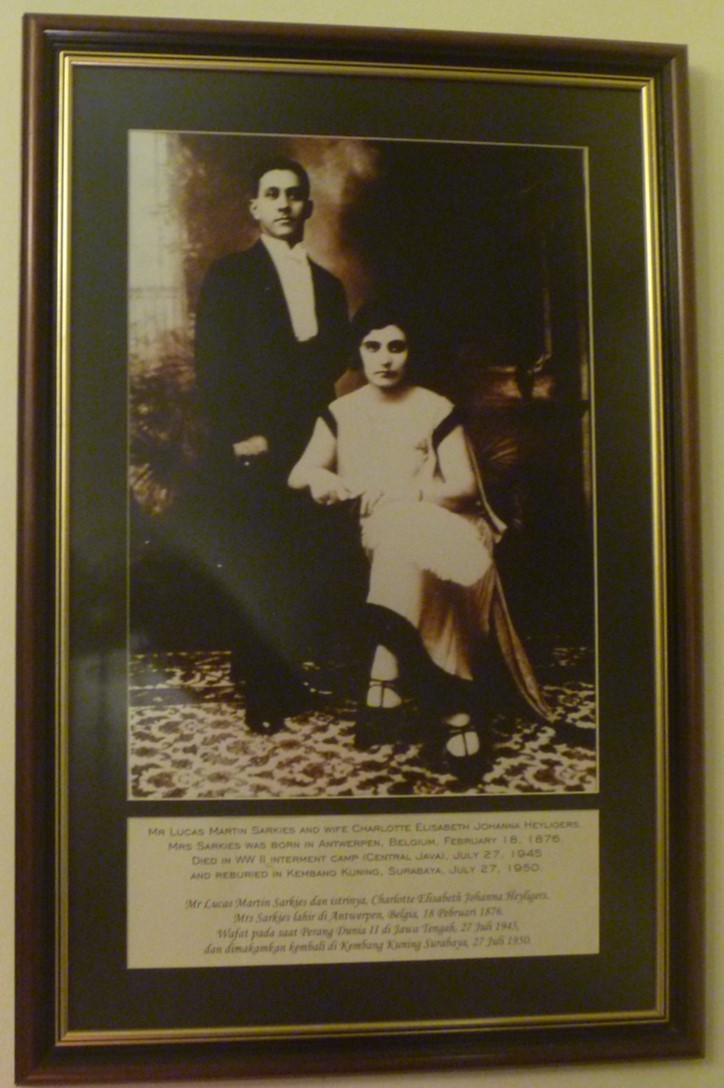
The hotel must have been the center of social life in the Netherlands Indische world of Surabaja until World War II when the Japanese invasion brought and end to all of this forever, as well as tragedy to the Sarkie family
The Hotel Majapahit became part of Indonesia’s revolutionary history when at the end of WW II the Dutch flag was raised again over the hotel. This enraged the revolutionary youth of Surabaja who stormed the hotel and raised the Indonesian flag.
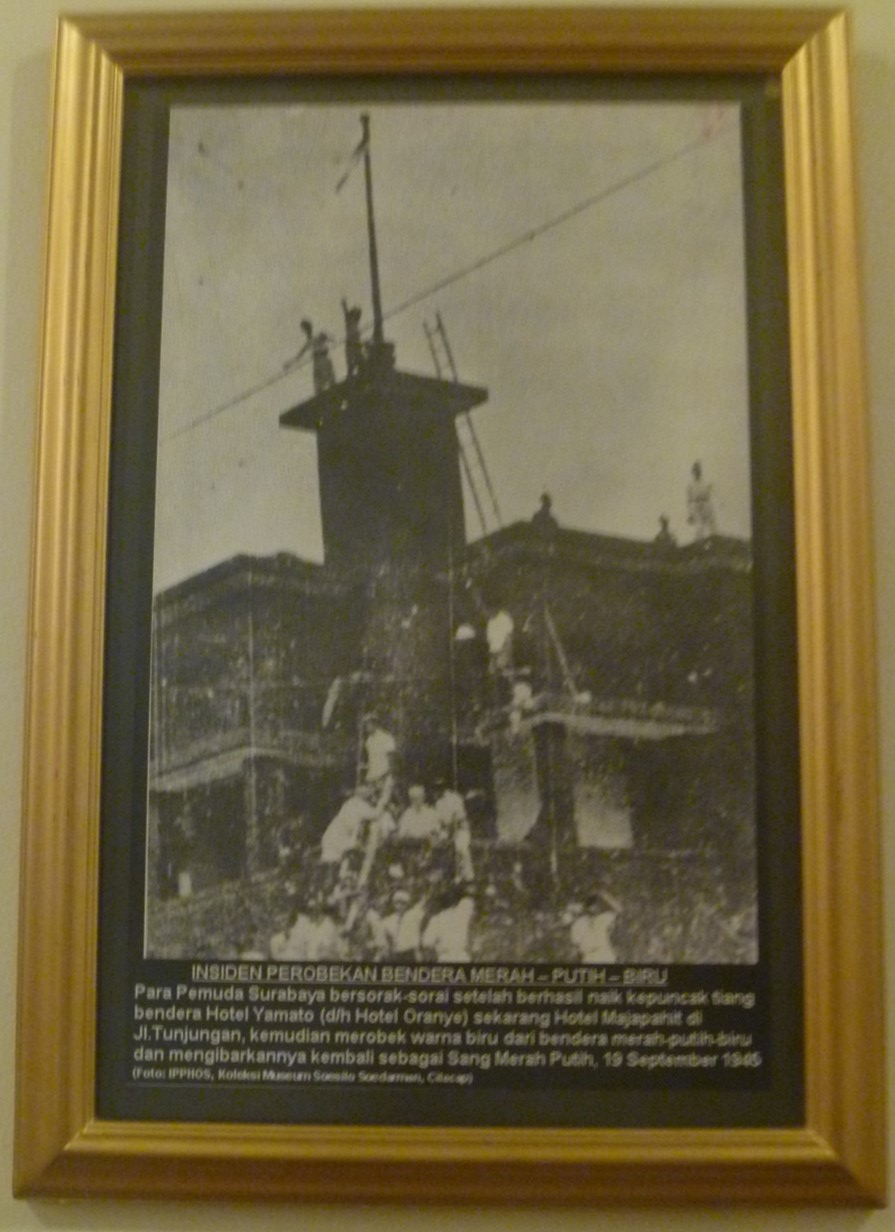
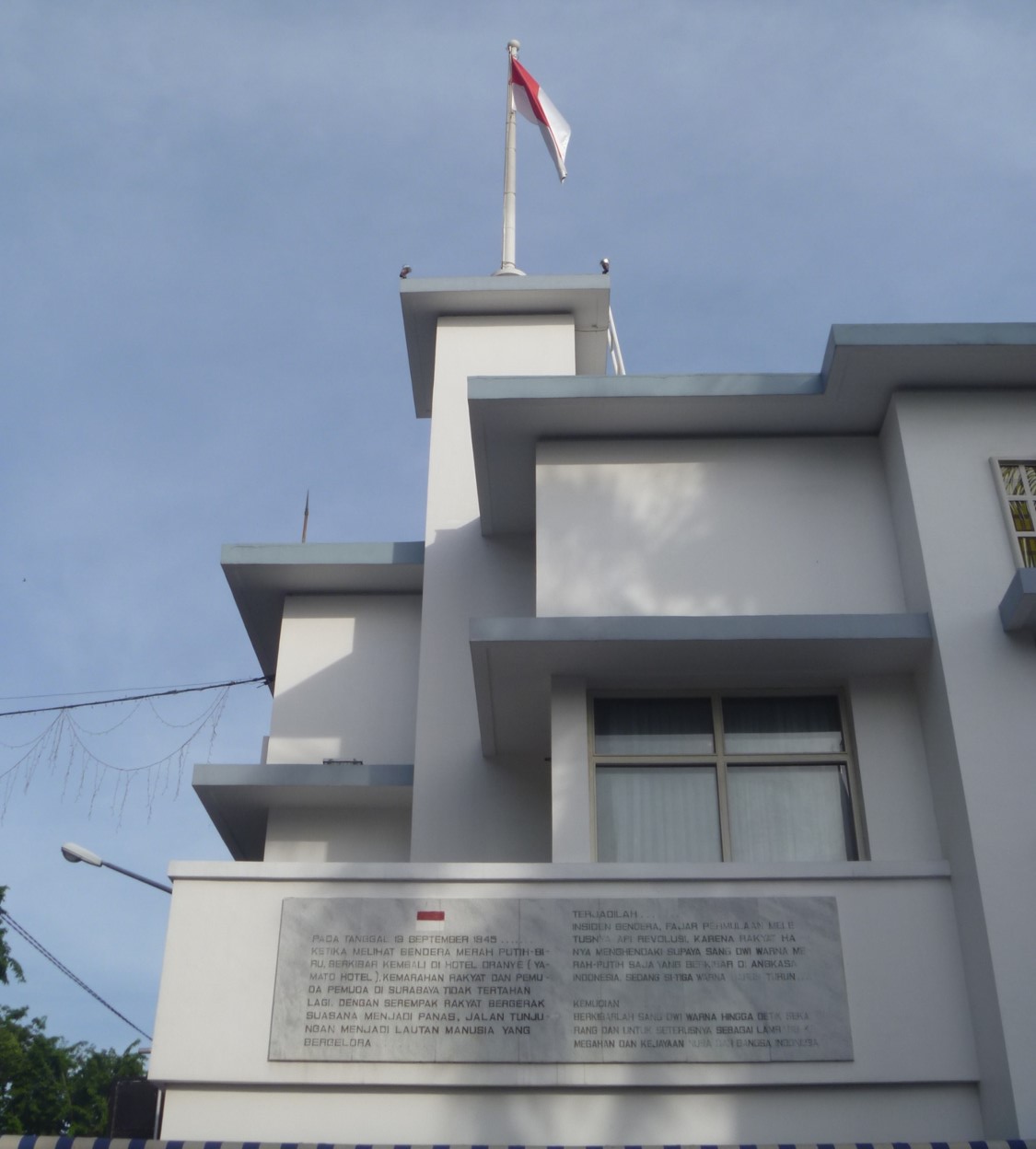
And so from that time ‘sang dwi warna’ waves until now and forever as the symbol of the victory and glory of the Indonesian country and people.
This contemporary Asian-influenced, 3 bedroom villa with a pool and beautiful tropical garden is nestled in the rice fields next to the traditional village of Banjar Padang in Kerobokan. Yet located only 15 minutes by car from the beaches, restaurants, shops and nightlife of fashionable Seminyak.

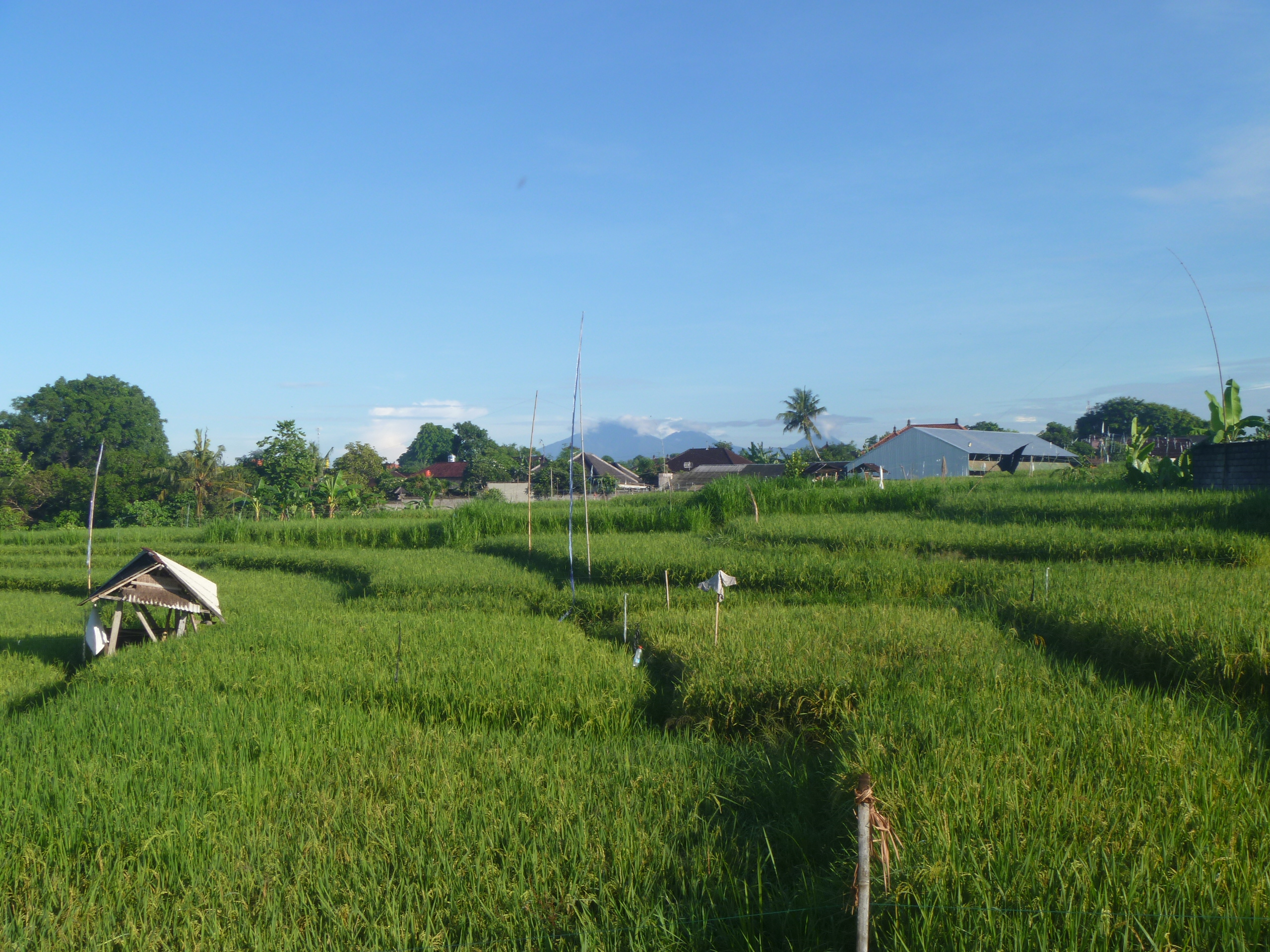
The rice fields adjacent to Villa Baliku and the traditional village of Banjar Padang, change with the seasons as the padi fields are ploughed and prepared for a new planting, gently irrigated by streams bringing the rich nutrients from the soils of the distant volcanoes, then harvested, threshed and bagged in the nearby rice mill. The private and secluded Villa Baliku is in the distant centre of this picture.
There is plenty of parking in the driveway leading up to the villa, entry to the garden and the villa is through this modern styling of a traditional Balinese gate where you will be greeted by your gracious hostess, Komang.

There are three large bedrooms each with a queen size bed and their own ensuite bathroom. Each bedroom opens out on to the pool and garden area, where you will spend most of your time swimming and relaxing.

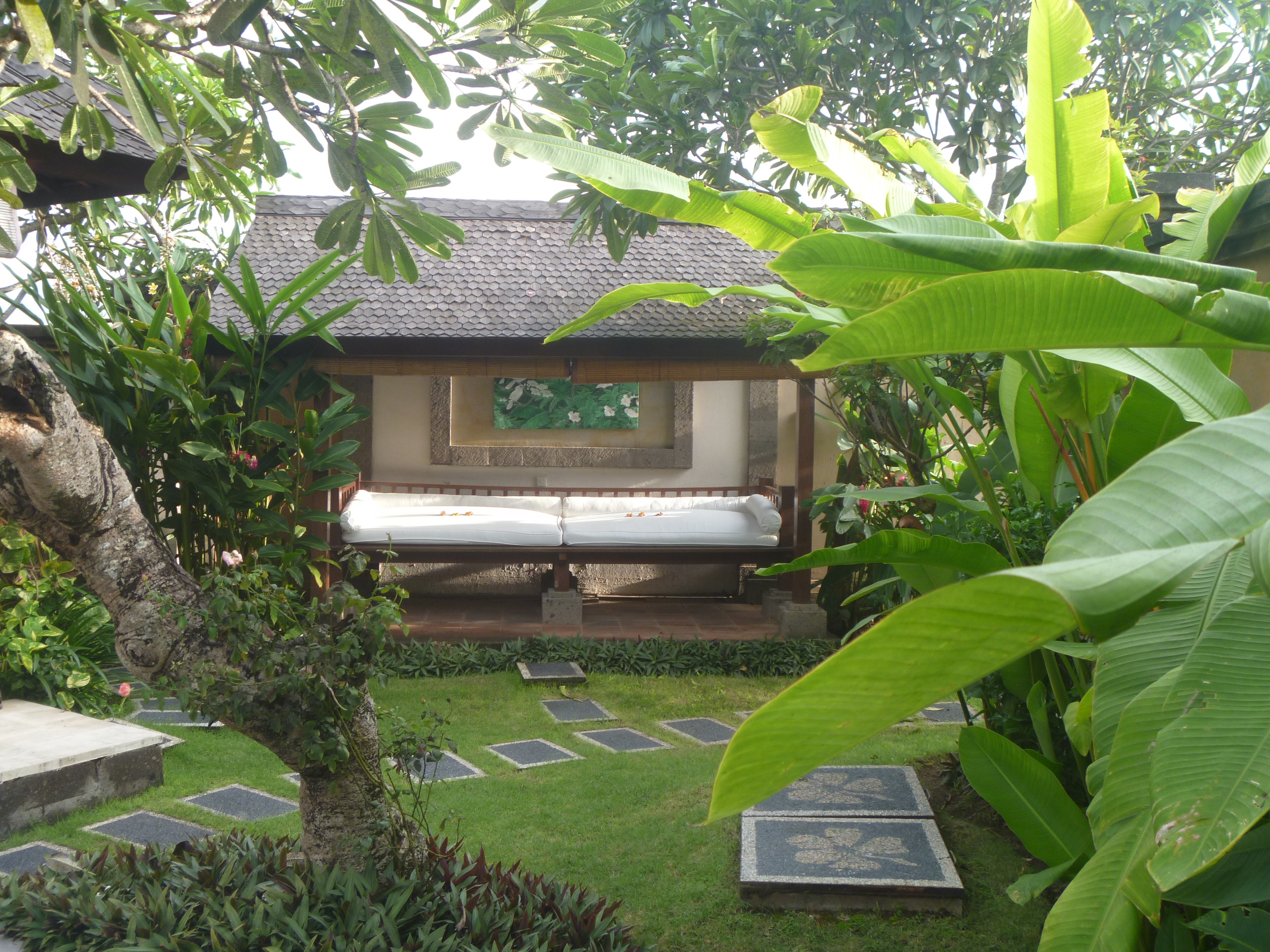
After your long journey its time to get a cool drink, a good book, and relax in the garden gazebo while the kids splash about in the large 4 X 7 meter pool.
Bookings for Villa Baliku can be made through Airbnb by following this link:
https://www.airbnb.com/rooms/1938448?preview
With a few days to spare before the departure of the Spice Islands Sailing Adventure 2013, I had time to explore Ambon and Fort Nieuw Victoria. A fort on this location was built by the Portuguese in the 1500’s and then captured by the first war fleet commissioned by the Dutch East India Company in 1605 and commanded by Steven van de Hagen. The fort was the first permanent settlement of the VOC in the East Indies and the first three Governor’s-General of the VOC were based here, prior to the establishment of Batavia in 1619.
The first Governor-General was Frederick de Houtman from 1605-1611, who happened to speak fluent Malay as a result of his eighteen month imprisonment by the Sultan of Aceh. A painting of Ambon and a greatly exaggerated Fort Victoria hangs in the Rijksmuseum in Amsterdam with an adjacent cartouche showing an image of Frederick de Houtman.

The cartouche that is painted out is where Frederick de Houtman apparently claimed credit for the capture of the fort, credit which belonged to Steven van de Hagen.
The fort was severely damaged by an earthquake in 1754 and rebuilt as Fort Nieuw Victoria. Ambon and its surrounding islands became more important to the VOC as it was here that they concentrated their clove plantations so as to control and monopolize the production of cloves from the Moluccas.
Fort Nieuw Victoria is still a military base so there is no public access and even photography of the outside of the fort is forbidden. When I visited I was able to see a very impressive changing of the guard ceremony (no photographs allowed) and tried to convince the guard on duty if I could take a photograph of the historic entrance, no success until one of the commanding officers came along and said “ok, let that crazy foreigner take his photo, but remember only the gate”.

There are memorial plaques inside the gate and perhaps someone can help translate them for me.

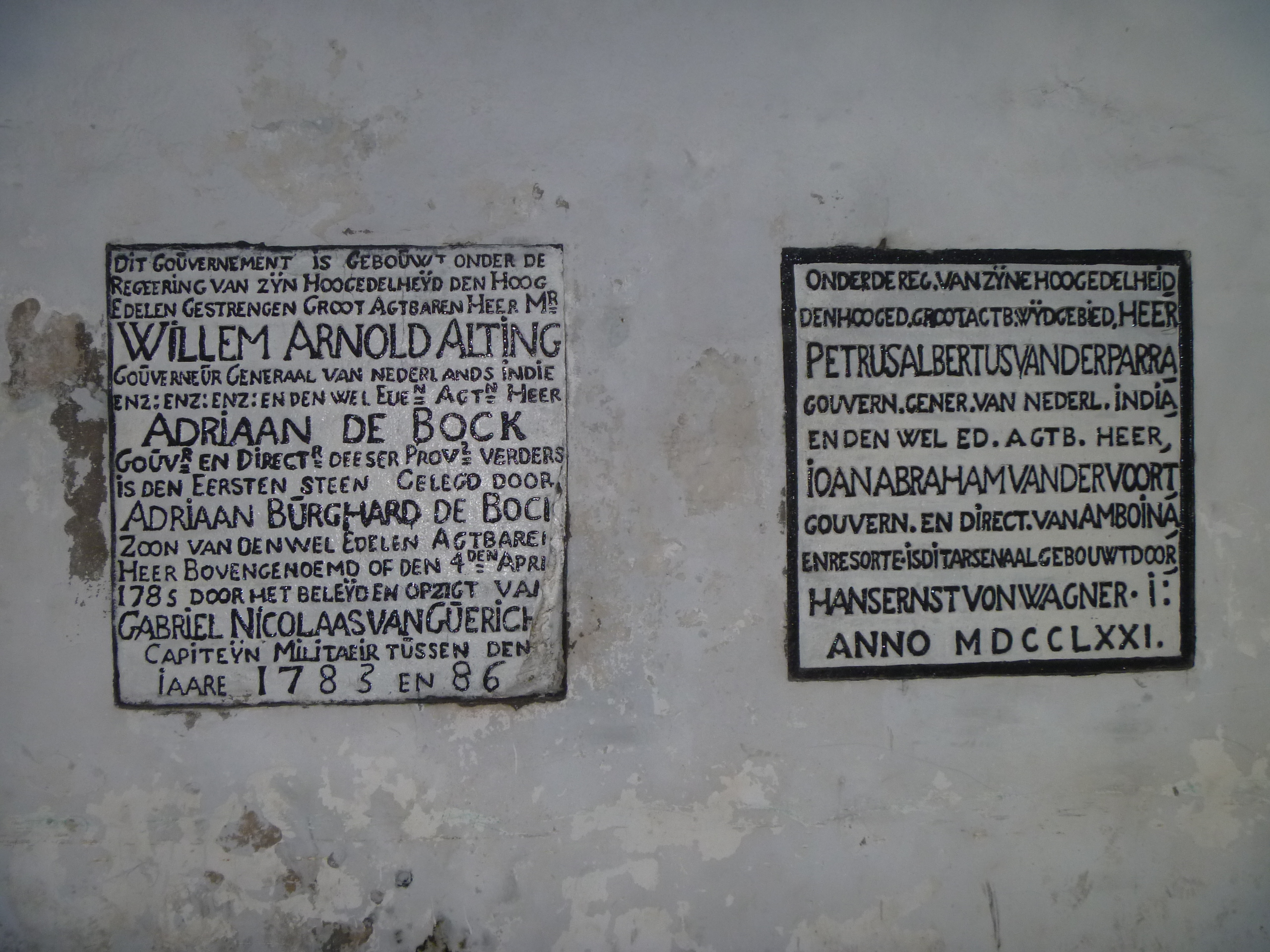
I explored as much of the outer walls where I could get access, many are cracked and collapsing, as a result of earthquakes and old age.

Each of the bastions is named and on exploring the outer walls I found Groeningen and Hollandia but could not get access to the others.
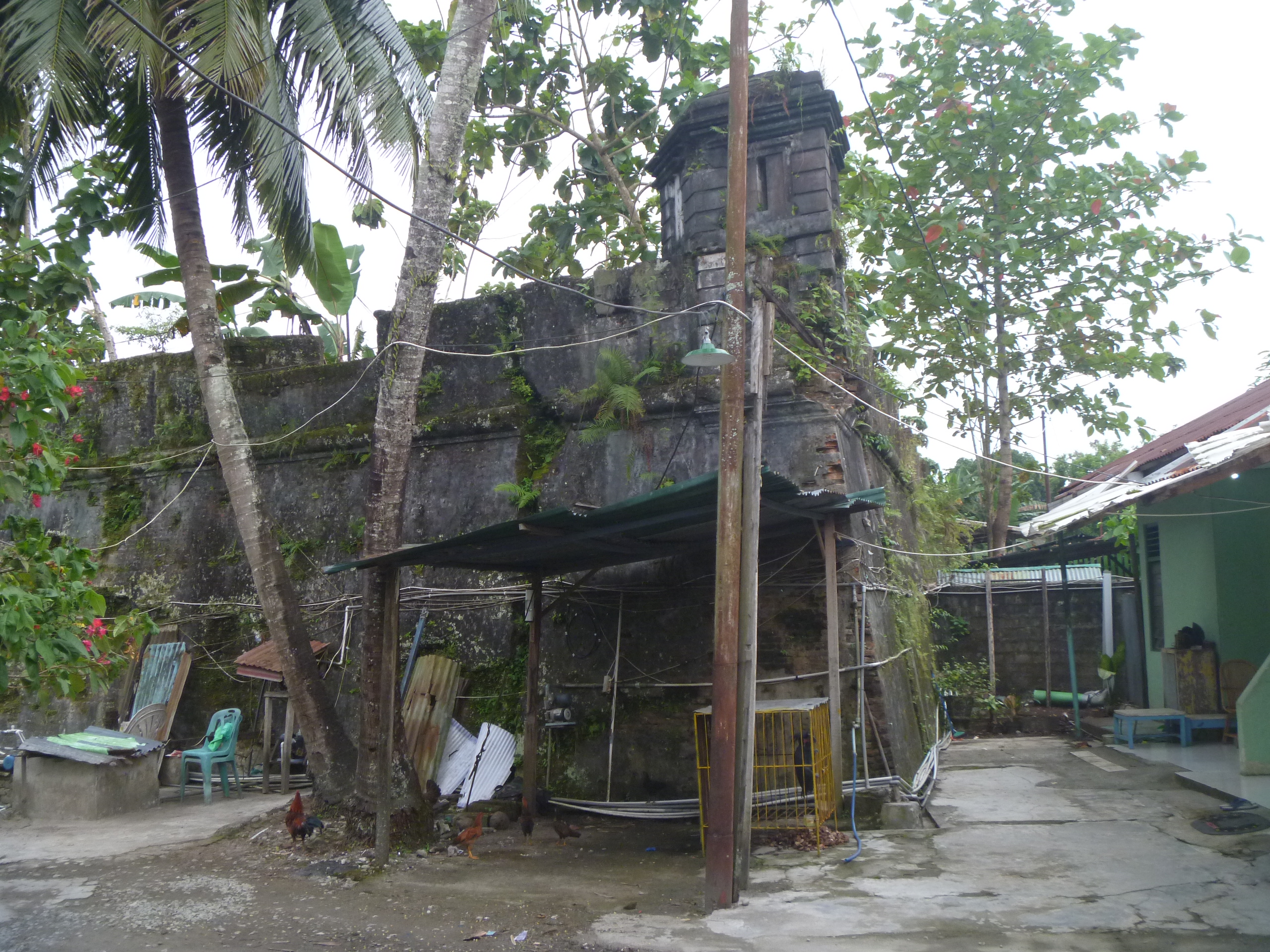

I also found a plaque with the name of Adriana Johanna, does anyone know who this is?

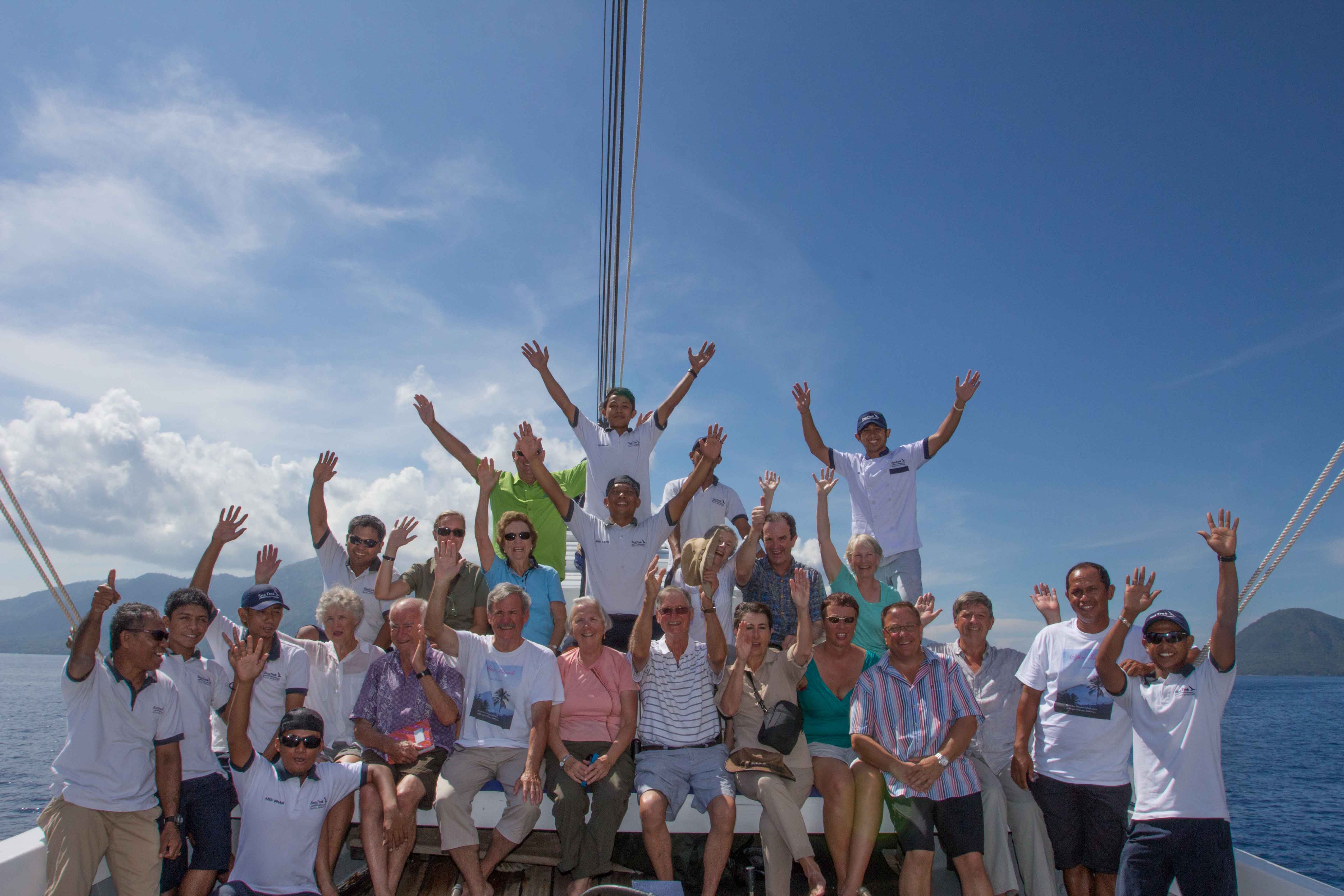
This year we had a multinational group of 5 Canadians, 6 Australians, 3 English, 2 Dutch and 2 Germans making up our passenger list, we were ably led by our guides Jennifer and Arif, and the whole crew of the Ombak Putih. We also added some new islands to our itinerary – Run, Lei-Lei and Machian.

The Ombak Putih sailed overnight from Ambon on October 24 and the next day arrived at the island of Run. For those who know the history of the Banda Islands, the English famously swapped Run in 1667 for the Dutch island of Manhattan, in what was the real estate deal of the millennium. Who knew that Manhattan would become the ‘world’s capital’ and that the valuable nutmeg bearing island of Run would sink into obscurity?

Run village was delightful, the people friendly, the houses freshly painted and tidy. We even found the Manhattan Guest House for those who are interested in staying there overnight. Modern technology has also come to the village as we saw a recently installed set of solar panels and storage batteries to supply electric power to the village. We then explored the nutmeg plantations on the upper part of the island and remembered the islands colorful history in the struggle between the Dutch and the English East India Companies for a share of the nutmeg trade. Watch out for a separate blogpost on the history of Run and the adjacent island of Ai

Banda was as delightful as ever and we enjoyed our two days exploring the old colonial buildings that were built by the Dutch East India Company (VOC) and the perkeniers they installed on the island. Perhaps the highlight of our visit was the rhythmic ‘nutmeg dance’ performed for us on the bastion of Fort Belgica by a dance group of twelve accomplished Bandanese girls.

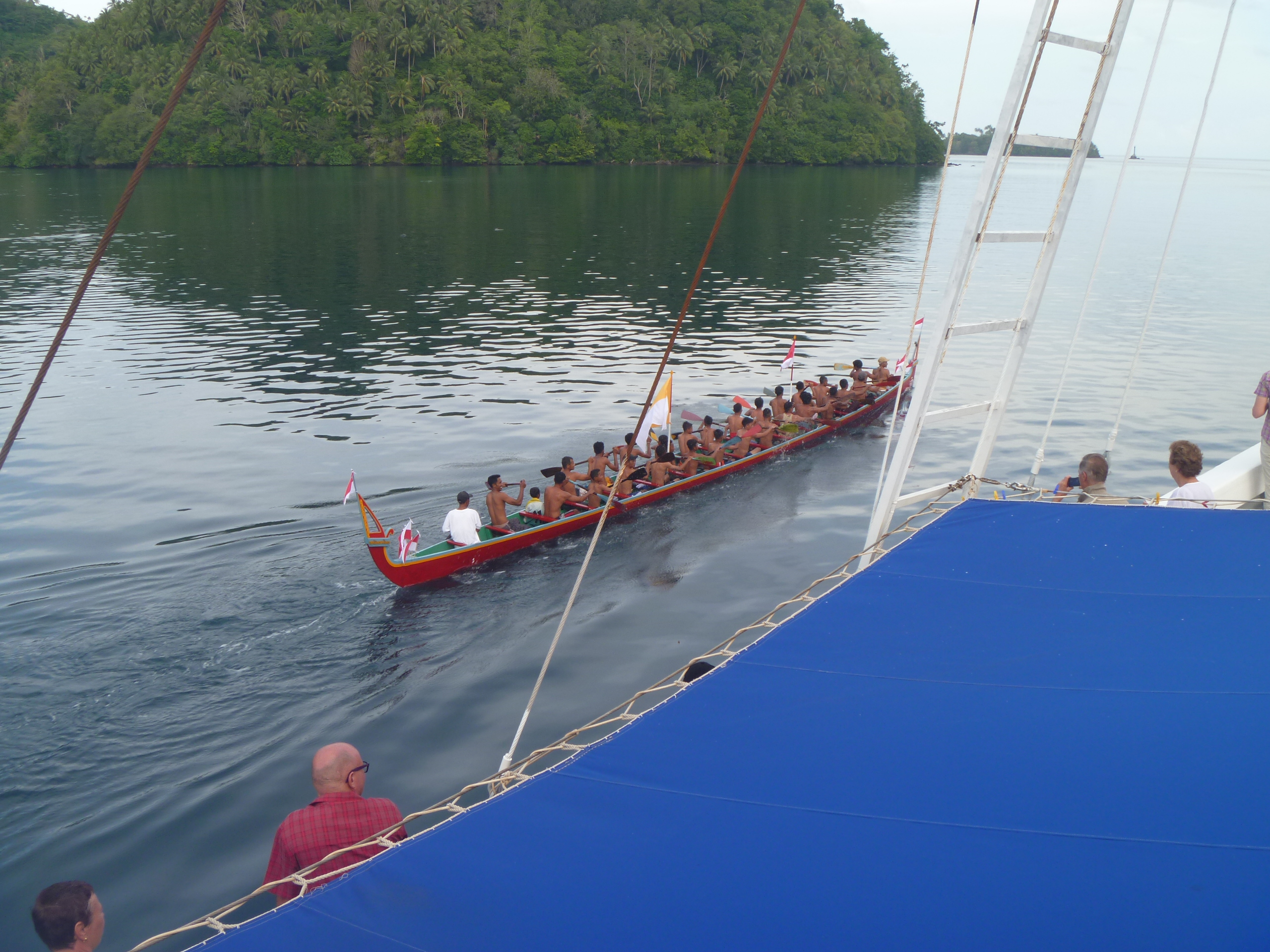
The following day we had a spirited departure from Banda with chants and drumming from two kora-kora racing either side of the Ombak Putih, as they accompanied us through the ‘Sonnengat’.
Again, some of the best snorkeling was off the white sandy beach of the island of Molana near Saparua. The small dive resort here must do some business in other times of the year but was deserted when we arrived, so we had the whole island to ourselves.
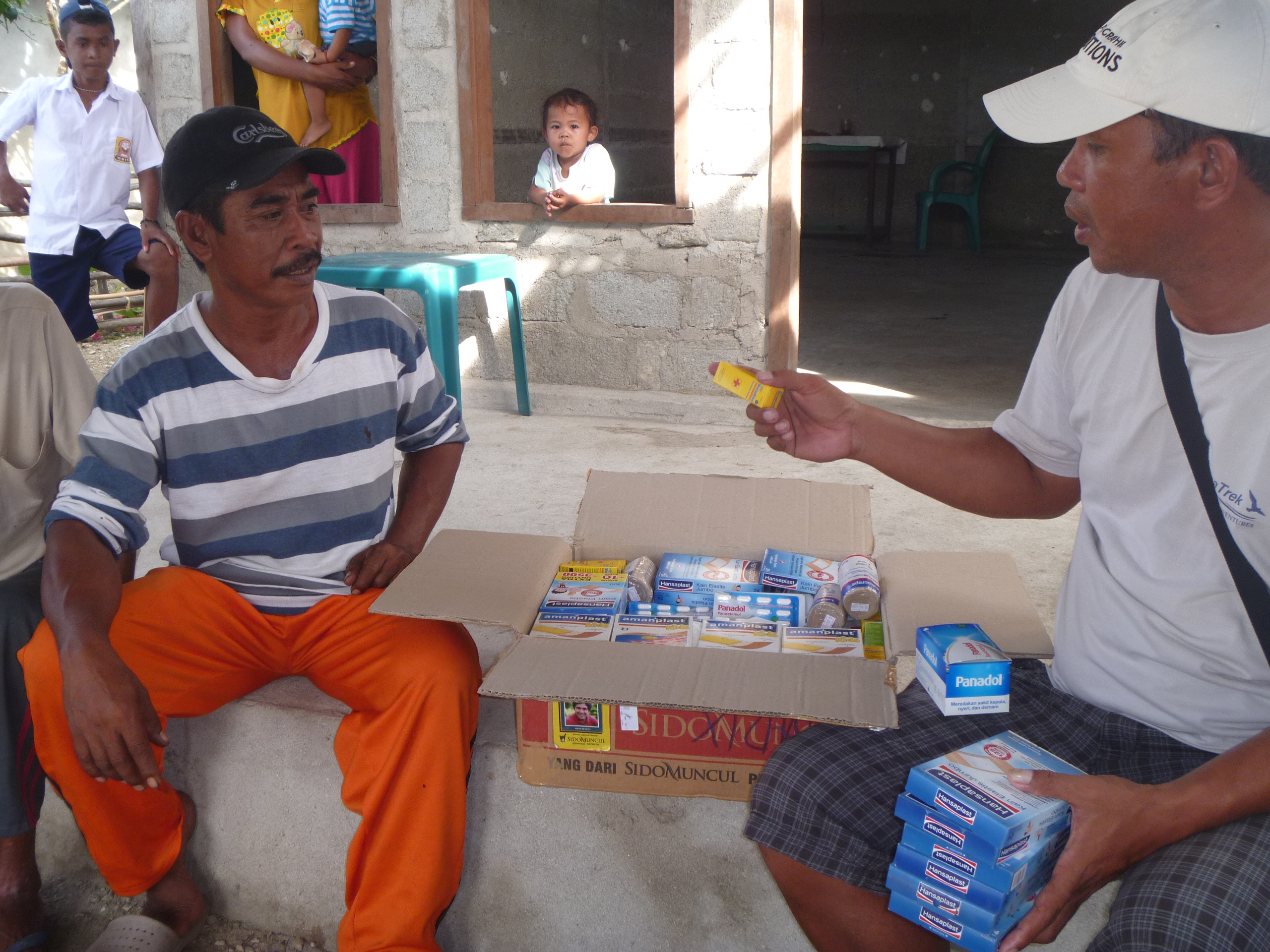
Thanks to the generosity of the ‘friends of the Ombak Putih’ we were able to deliver boxes of medical and school supplies to the villages on the more remote islands of Manipa, Obliatu and Daworolama. The crew of the Ombak Putih especially enjoyed handing out the school supplies to the enthusiastic school children in these villages.
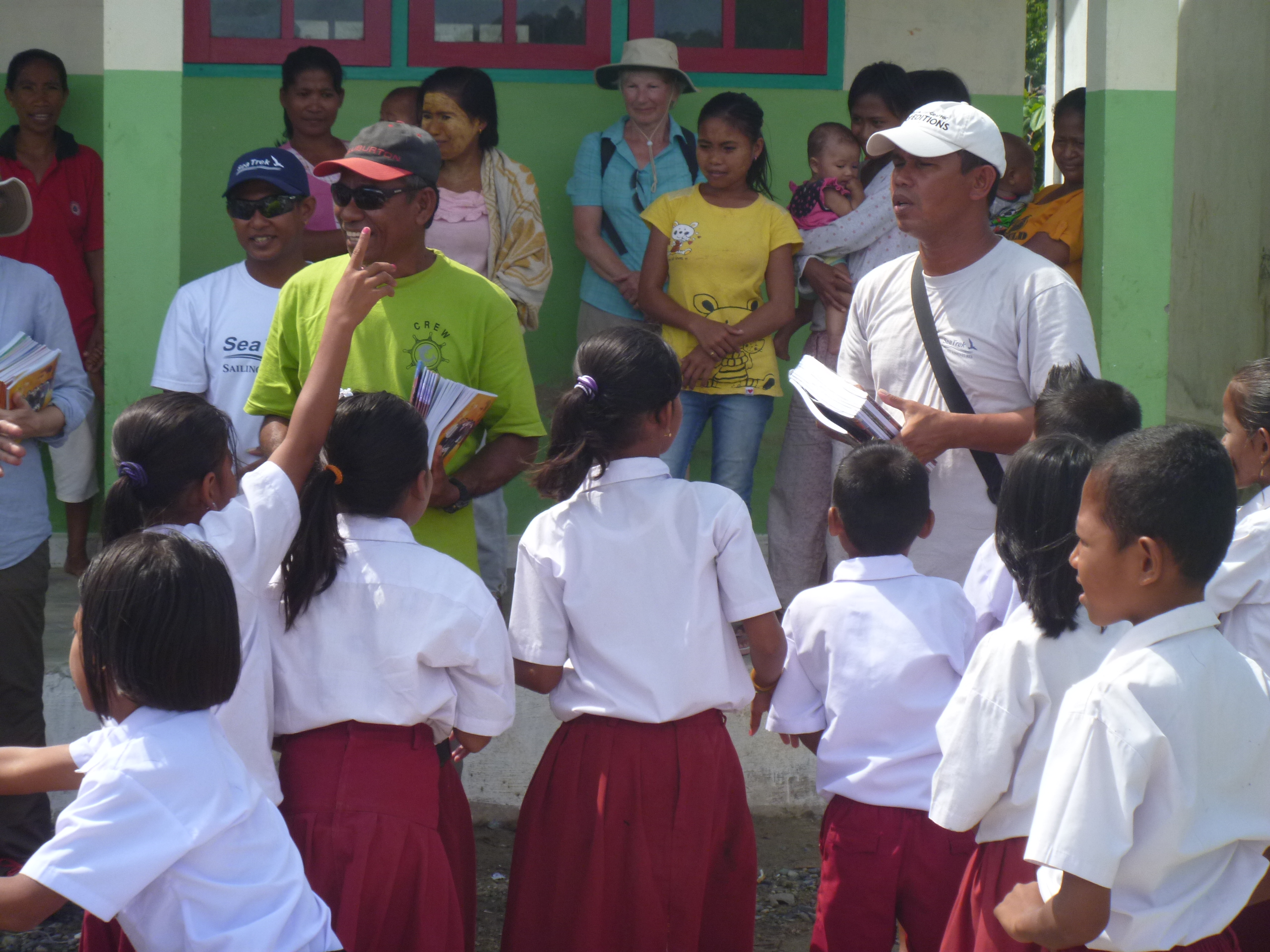
A new dive spot was in the Guarici archipelago, just north of Bacan. Here, money has been invested in constructing a road of paving around the island of Lei Lei, and building some very nice wooden villas and a dive center to accommodate the tourists who are expected to come to here from Ternate.

It would be a great experience to fly to Ternate, then voyage down the Patinti Strait with its line of volcanoes arising directly out of the sea, and spending a few days diving off your own tropical island. Certainly no sign of the tourists this year but the facilities were still being completed and hopefully we will see some activity next year. After our walk around the island the villagers organized an impromptu traditional dance for us, very similar to an English ‘barn dance’, and probably based on a Portuguese folk dance introduced to the islands some 500 years ago.

This year we were able to go ashore on the island of Machian which is about in the middle of the line of volcanic islands that form the Patinti Strait. Machian has the reputation of being the most prolific of the clove bearing islands and sailors have written how the aroma of the cloves could be smelt far out to sea. We landed in one village and then did a ‘jungle walk’ through the clove, nutmeg, and coconut trees to the next village, for me one of the highlights was some native orchids we found growing in the jungle.

Captain Ibrahim managed to time our arrival at the island of Tidore in the late afternoon and the sunset behind the islands had all the cameras clicking.

We then spent a morning exploring Tidore and an afternoon exploring Ternate before our final shipboard party and fond farewells the following day.
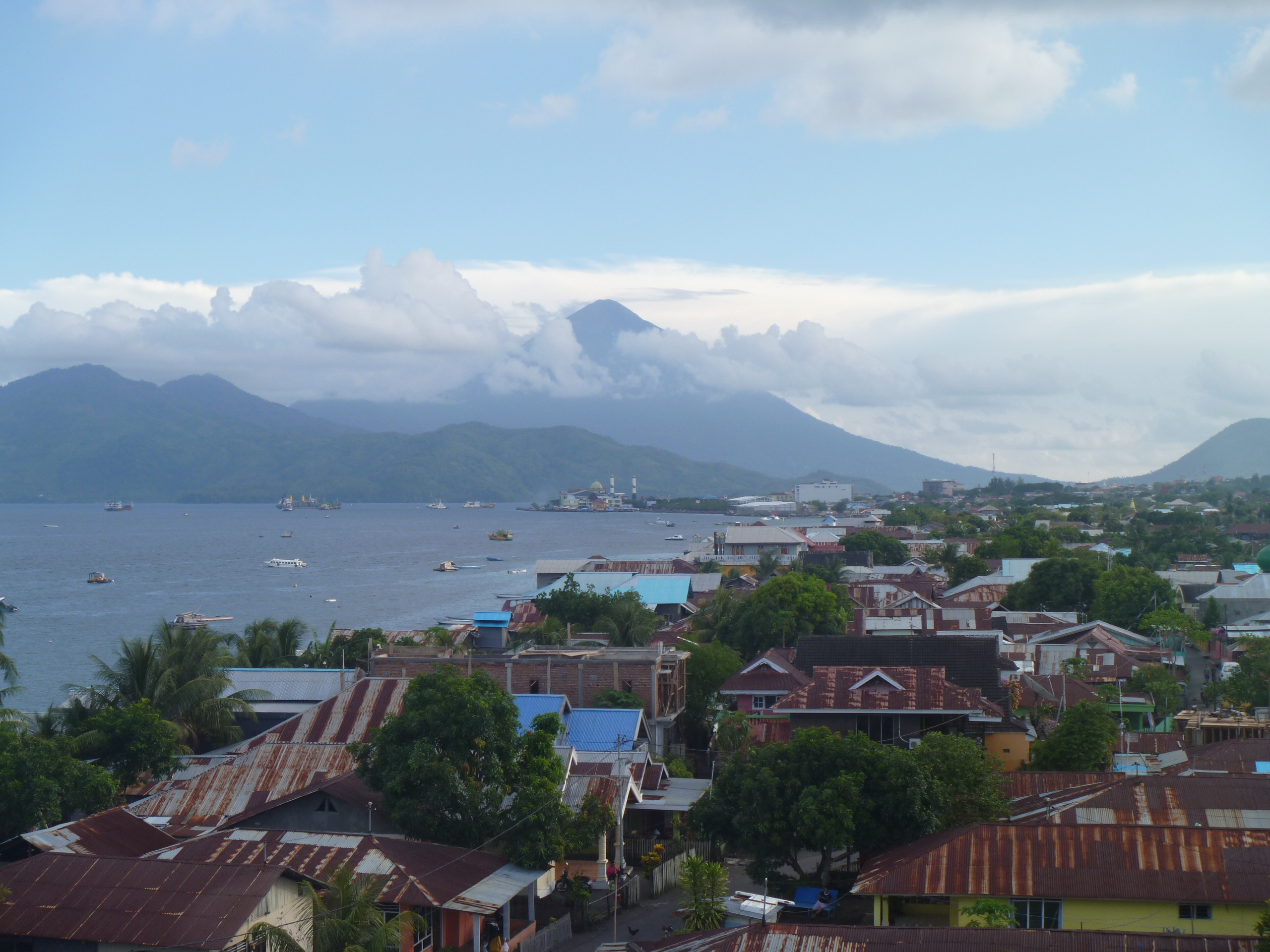
A date has been set for next year’s Spice Islands Sailing Adventure, it will be from October 8 -19, 2014. More details at http://www.seatrekbali.com

IAN BURNET, IAN HEMPHILL with moderator DAVID SLY
Two men who have dedicated their lives to spices: Ian Hemphill – a modern-day spice merchant & Ian Burnet – authority on Indonesia’s spice islands & trade. Join them in an exotic journey from India to Indonesia along the legendary spice route, discussing the romance of spices & their impact on the modern world.

The full audio of the session can be heard by following the link to:
http://www.ubudwritersfestival.com/category/audio/page/5/



 spiceislandsblog