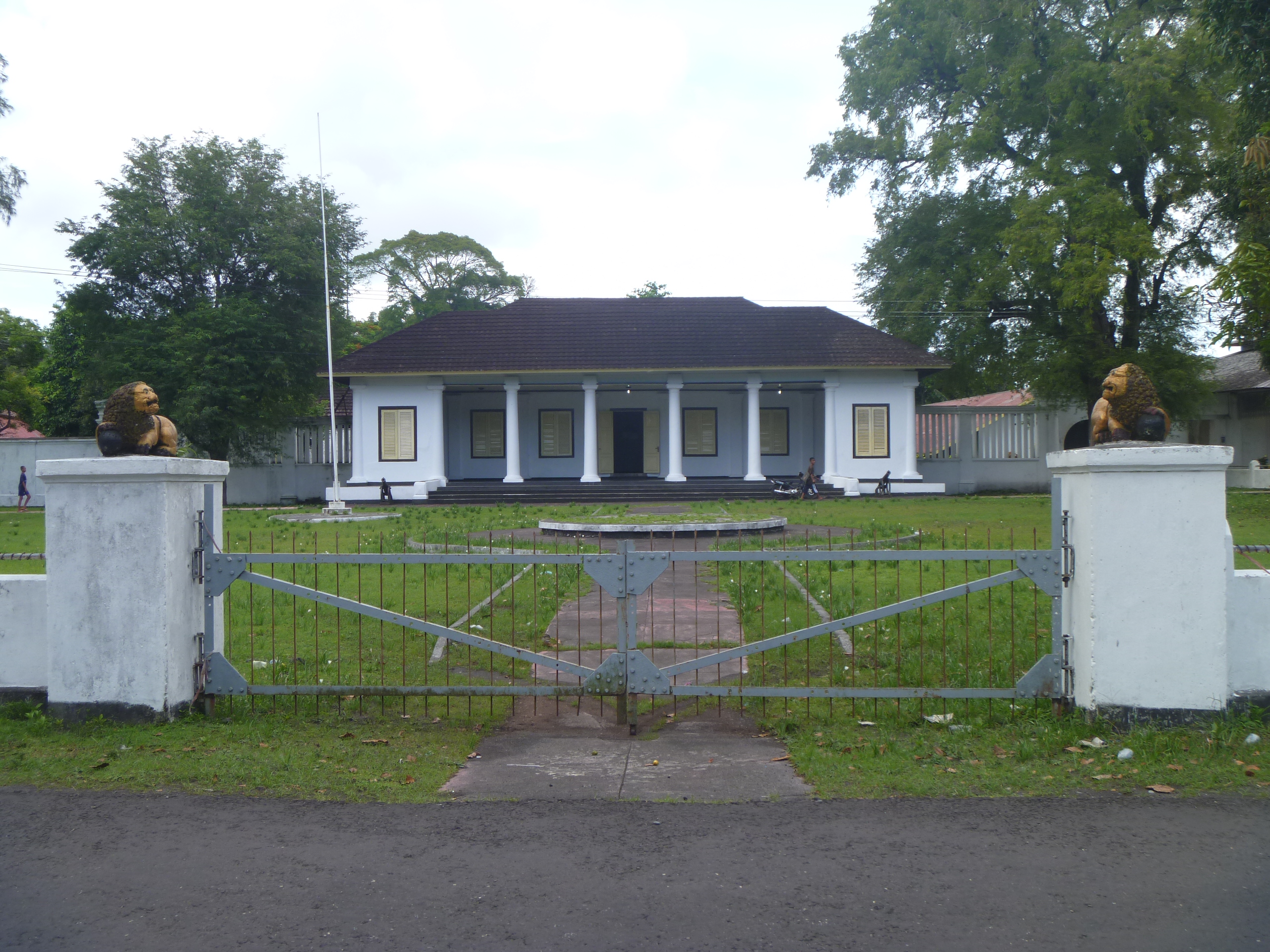
A guest blog from Jennifer Hayes, tour leader, photographer and writer with Sea Trek Sailing Adventures
SeaTrek, the Ombak Putih and Ian Burnet will be sailing to the Spice Islands from 8-19 October 2014, for more details go to http://www.seatrekbali.com/cruise/spice-routes-spice-wars/

The Banda Islands
PARADISE LOST
Imagine if you will, a tropical Paradise: a miniscule string of emerald green islands immersed in an aquamine equatorial waters, far from the cares of outside world. The shorelines of these lush island gems playfully alternate between dense jungle, volcanic lavaflow, dramatic cliffs, and white dreamy beaches. The warm equatorial sun, and rich volcanic nutrients have all magically combined to create pristine and colorful sub-aqua wonderland In fact, the water is so clear that one can see the brilliant coral reefs and teeming fish life from the surface of the sparkling turquoise sea.
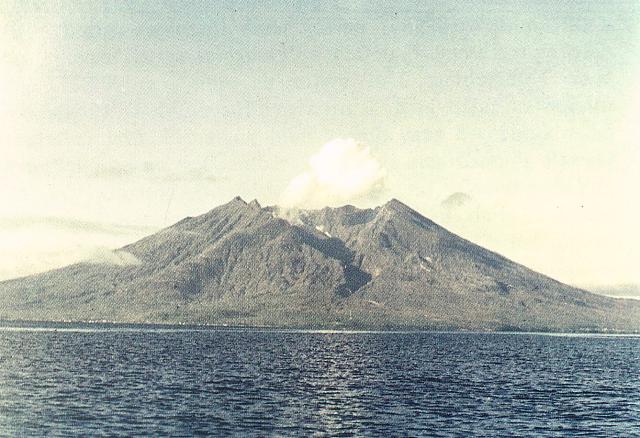
This land is rich and verdant, the dark soil of the islands enriched by neighboring Gunung Api, whose conical volcanic peak soars out of the sea like a towering beacon keeping watch over the resident farmers and fishermen of the island chain. An enticing scent stirs on the equatorial breeze, radiating from the thick jade forest that covers the island slopes. Here, under the shady canopy of the towering Kanari forest thrives an abundance of trees whose leaves shake and gyrate with the clumsy movements of resident wild pigeons who emit a loud booming cry as they snack on the plentiful yellow fruits that adorn its branches.
Swollen and juicy, a globular peach- like fruit swells with ripeness until bursting open down the middle to reveal a black, glossy nut enclosed in a brilliant crimson lace. The branch buckles under the weight of this ripened orb until the twig snaps and the newly freed fruit lands softly on the lush and verdant forest floor below. This fruit might seem like an insignificant product of nature, but it’s discovery and journey past its native islands is pregnant with consequence both for the people of these islands and those outside world. If this image of the Banda Islands seem like a tropical Eden, then this is a portrait of the garden before the fall, only instead of an apple, it was the nutmeg tree that tempted mankind with it’s irresistible fruit.
Nutmeg, Mace and Cloves were both a blessing and a curse to their native Moluccan islands. These Islands were so favored with thick with fragrant clove forests and bountiful nutmeg trees that they would soon be known the world over as “ The Spice Islands.” The aroma of this fragrant island bounty could be smelled on the breeze far out at sea, inviting close and unwanted attention from those who would do anything to take it. It seemed to some that the Spice Islands were ripe for the picking.
The huge impact that these tiny and remote islands had on the European continent at that time was immense, since the search for them gave rise to the Great Age of Discovery and enormous leaps in science, cartography and naval exploration. But the early European spice trade was also remarkable for its competitive ferocity as the great nations of Europe viciously struggled and fought for control of this lucrative market. Perhaps no other trade was so contested and no other group of commodities so exercised nations or so changed the course of history. The pursuit of profit and the desire to monopolize the trade of a few unessential luxury itemss would eventually be the demise of what was once a peaceful paradise. In a sad twist of fate, the very fruit that had brought life to the locals, also made life in Eden a living hell.
But once Eve had her first taste of that intoxicating spicy fruit, there was no turning back for Indonesia’s Eden.

A TASTE FOR TROPICS
In Medieval Times and throughout the Renaissance, spices were highly prized and coveted in Europe. The problem for consumers was that the north’s temperate climate limited locally grown spices to mustard. Only warm, tropical climates could produce the double-rainbow of intoxicating spices desired to liven up bland banquets. Therefore spices had to travel great distances and were hard to come by. That rarity commanded a hefty premium, so having these pungent products on the table was a truly a symbol of wealth and extravagance.
But the wealthy were gaga over spices for more than their distinct taste. In particular, Nutmeg, Mace and cloves were used as aphrodisiacs, and nutmeg even doubled as a hallucinogen. In Elizabethan times, it was all the rage to wear a collection of theses precious twigs and berries around one’s neck as a lucky gambling charm or to prevent and cure countless ailments and diseases. It was even thought that nutmeg and cloves effectively warded -off the bubonic plague, which only made the popularity of these “it- items” skyrocket further.

The Clove Islands
A SPICY SECRET
For most of history, what endowed spices with their unique appeal was the mystery of where they came from. Gradually the source of most spices found in Europe’s markets was revealed, but by the later Middle Ages, only 3 of the finest spices still eluded geographical identification: cloves, nutmeg, and mace.
Arab traders brought these three spices to Europe’s markets via on the overland “Spice Route.” On this long voyage, the spices passed through the hands of countless middlemen, multiplying the price of the goods with each transaction. By the time the Asian spices reached Venetian merchants, the Arab traders were selling their wares at nearly a 6,000 percent markup. These spices had literally become worth their weight in gold, but Nutmeg, Mace and Clove were so highly coveted by Europe’s elite that the supply still couldn’t match the demand.
The Arab traders never divulged the exact location of their secret source of fragrant fortune, and no European was able to deduce their location. Discovering this highly-guarded mystery source provoked speculation, and was perceived as a challenge to many. All that was known about these exotic goods was that they hailed from islands that were unfathomably remote and far away, the fabled ‘Spice- Islands’ of the Indies.
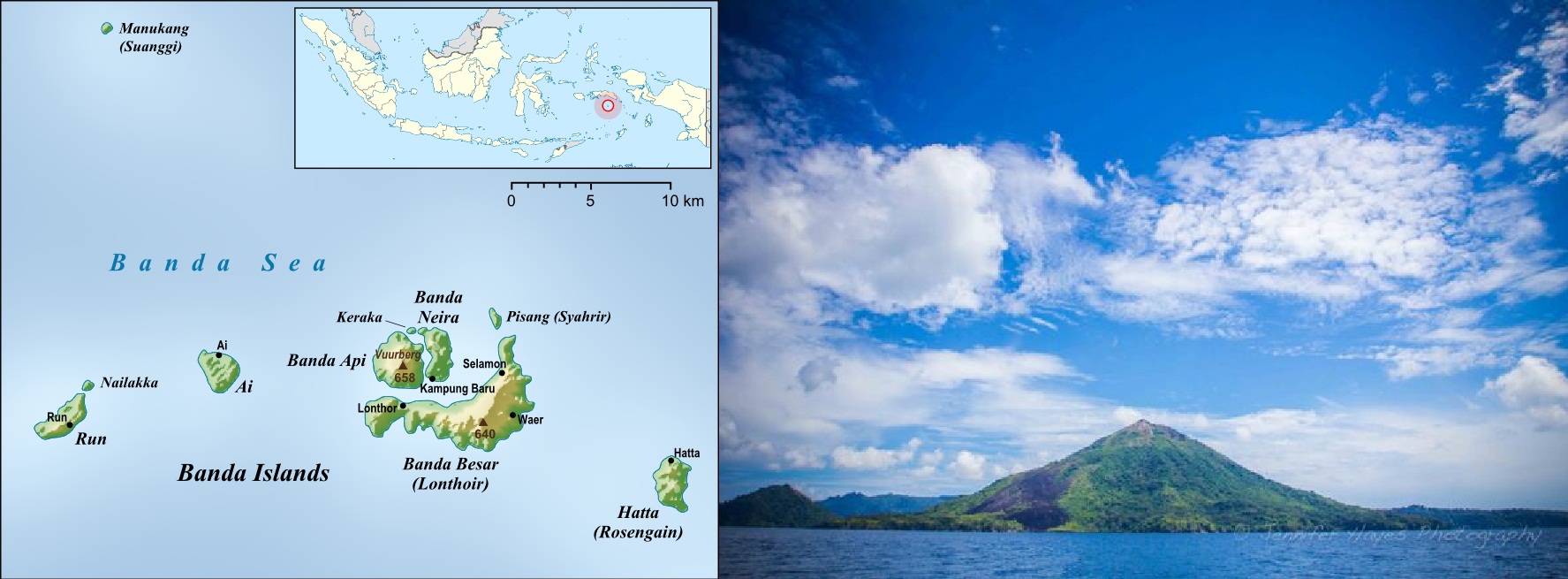
A TREASURE MAP TO THE ISLANDS OF SPICE
As the Arabs, Chinese and Javanese traders already knew, these mythical “Spice Islands” laid in the labyrinth of the South Pacific in what is now the province of Maluku in eastern Indonesia. While cloves were more abundant and could be found scattered around several islands in The Mollucas (Maluku,) Nutmeg and Mace were native to just ten miniscule volcanic islands, surrounded by a vast expanse of ocean. Laying just below equator and 800km north of Darwin, “the Banda Islands” historically were one of the remotest locations imaginable. It would seem that isolation gave nutmeg, mace and cloves their unique character and intoxicating influence, which the outside world found so irresistable.
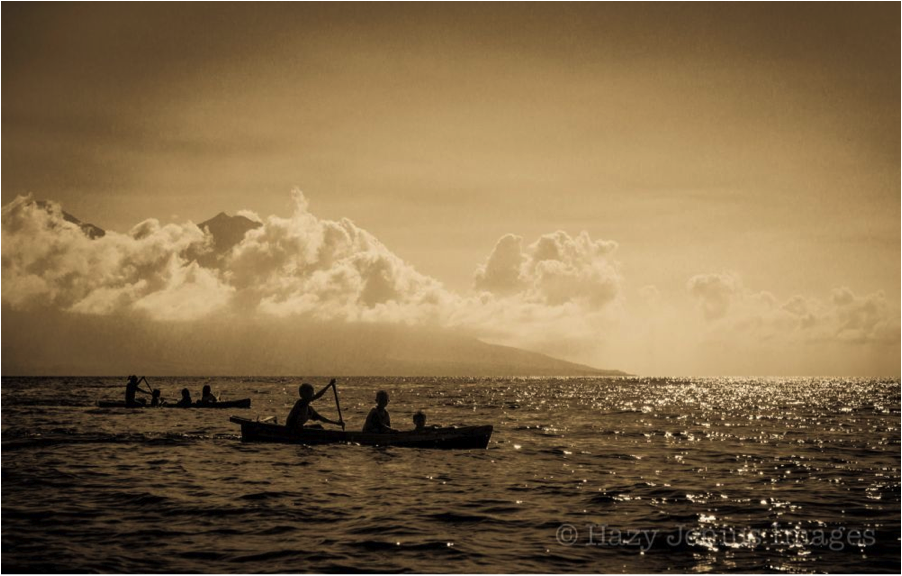
NATURE’S MARKETPLACE
Though isolated, the Moluccan islands have attracted regional and international traders for more than 3,000 years, long before Europeans had even heard of the Spice Islands. The Bandanese were already long a part of an Indonesia-wide trading network, taking cargo as far as Malacca. The gifted sailors of Indonesia relied on the 6 month trade winds to carry them back and forth across the Archipelago.
Before Europeans arrived, the people of the Spice Islands were able were able to trade their spices for everyday necessities needed for survival. The Javanese, Arab, and Indian traders for example brought indispensable traditional trade products such as rice and cloth, and even such useful treasures as steel knives, copper, medicines and prized Chinese porcelain. In comparison, the trade items that would later be offered by the Dutch traders included heavy woolens, damasks, and unwanted manufactured goods, which were useless to the people of these tropical islands.

THE SULTANS OF SPICE
The volcanic islands of Tidore and Ternate were to become the capitals of the clove producing Mollucas. The combination of fertile volcanic soil and the province’s location right on the Equator has resulted in an extremely lush vegetation covering these islands, whether it is primary rainforest or spice plantation. The clove, like most understory trees, it is unable to regenerate under the full tropical sun and its seed is only viable for a short period – which may explain its limited distribution to these tiny islands.
The natives of the Mollucas had long traded spices with other Asian nations, but as China’s interest in regional maritime dominance waned in the late 15th Century, regional trade became dominated by Arab traders. The Arabs not only brought with them Islam, but also a new technique of social organization, the sultanate, which replaced traditional Mollucan councils of local rich men (orang kaya) on the more significant islands such as Tidore and Ternate. The adoption of a Sultanate system by the clove islands would prove to be more effective in dealing with the outsiders that would come.
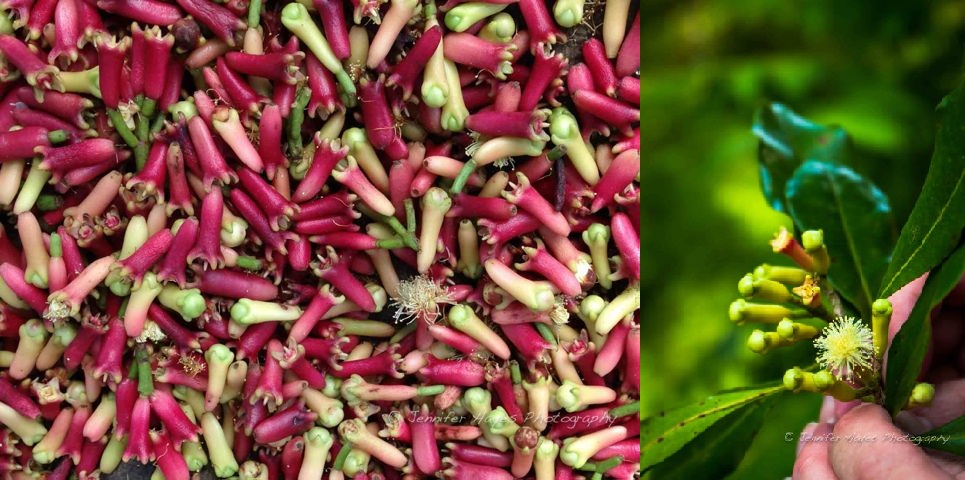
CLOVE ME TENDER
In Moluccan folklore, villagers treated blossoming clove trees “like a pregnant woman,” taking great care was not to alarm them lest the tree drop its fruit too soon like the untimely delivery of a woman who has been frightened in her pregnancy. Although modern attitudes have changed, in some villages a clove tree is still planted at the birth of a baby, with the belief that if the tree flourishes, so will the child.
The clove spice is actually the unopened flower bud of the evergreen clove tree, which gradually turn from green to pink to signal that they are ripe for the picking. Once collected the buds are dried in the sun until they turn brown in color. It takes more than 3000 highly valued flower buds to produce one kilo of dried cloves, which may explain why they are so valuable.
With their round, flat top and tapered stem, cloves resemble tiny nails, in fact, the spice gets its name from the French word “clou” which means nail. But don’t be fooled by its “tough” name, although cloves have hard exterior, their flesh features a rich oily compound which is the source of which their warm flavor and sweet aroma that evokes the sultry tropical climates where they are grown. Since Ancient times cloves and their oil have been used for their antibacterial and analgesic properties, which were especially valued in a world without medicine. Even today clove essential oil is used for cosmetics, dentistry, medicine, and as a clearing agent in microscopy.

THE ORANG KAYA AND THE CASE OF THE CURIOUS NUT
Before the arrival of Europeans, Banda had an oligarchic form of government led by orang kaya (‘rich men’) that was never replaced by a Sultanate system like it’s Moluccan neighbors to the north. The Bandanese had an active and independent role in trade throughout the archipelago, making their living by trading spices from the Nutmeg trees that were only indigenous only to their little islands. A single mature tree could produce up to 2,000 nutmegs per year for up to 75 years. Since nutmeg has no particular season, it’s harvest supplied the Banda islanders with a steady harvest, and subsequently a steady income year round.
Although Myristica is a genus found all over Asia, no other species achieves the special powers of the Myristica Fragrens, or nutmeg tree. The mere existence of this magical tree on these impossibly remote islands is an incredibly unlikely phenomenon. The Bandas are surrounded by ocean, and unlike the coconut, the nutmeg isn’t a “seafaring nut.” Floating in the salty sea to a nearby island would have the same sterilizing effect as pickling the pepper. Additionally a nutmeg seed needs both male and female trees to germinate. The odds of this unusual species of arriving on a wayward desert isle and happening to find and couple with another of its kind are beyond extraordinary. Perhaps the bland ancestral nutmeg, arrived by chance at the windswept volcanoes and became concentrated and intense, like a pool of elixir evaporating in the sun. The Bandanese were indeed were in a rare position to have such a mixed blessing from nature in their possesion.
NUTTY FOR NUTMEG
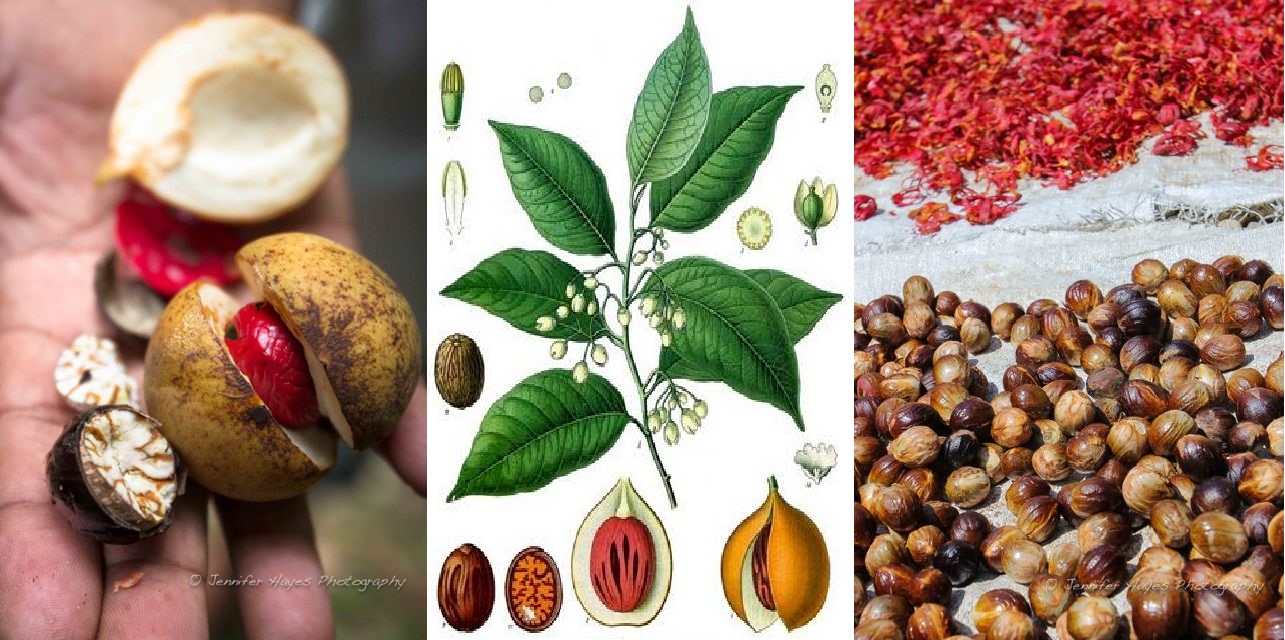
The nutmeg fruit, resembling an apricot or a large plum, is the only tropical fruit that is the source of two different spices. When ripe, the fruit bursts open to reveal the seed. The glistening wet aril, is what we know as the mace. This soft, red, and lacy placenta clings to the shell of the glossy black nutmeg like a hand with its fingers holding so tightly that they leave little indentations to show where they’ve been. After collection, the mace is peeled away from the nutmeg seed, and each is dried in the sun. Once dry, the nutmeg seed rattles within its smooth, mace-embossed outer shell, and oxidization has turned the mace from a brilliant scarlet, to a rusty red–orange.
A Bandanese legend claims that the nutmeg’s musky scent is so overpowering when ripe, that it causes Birds of Paradise to fall to the ground. Indeed, the name nutmeg comes from Latin, nux muscat, meaning musky nut. It turns out that the nutmeg is indeed intoxicating. The spice has long been ingested for it’s hallucinogenic qualities, but the side effects are so unpleasant that it is generally only used by those with no access to other drugs, such as soldiers and prison inmates. Nutmeg overdoses had become such a problem in US prisons that the spice had to be banned from their kitchens.
No wonder it had such an intoxicating effect…
THE PRICE PAID OF SPICE
By trading with Muslim states, Venice had come to monopolize the spice trade in Europe between 1200 and 1500. After traditional overland connections were disrupted by a war between the Mongols and the Turks, Venice turned to dominate Mediterranean seaways to ports such as Alexandria. The rest of Europe had enough of paying the Venetians top dollar for thiers spices. Finally It was a financial incentive to discover an alternative to Venice’s spice monopoly of this most lucrative business that was possibly the single most important factor precipitating Europe’s Age of Exploration.
The Gold Rush was on. The great nations of Renaissance Europe would take to the seas in a quest to beat all quests. The race to the Spice Islands of the exited monopolists fired up patriots and coaxed investors to risk all they had to find this proverbial Pot of Gold at the end of the rainbow. But it would be the Spice Islands themselves that in the end would pay the biggest price. The Great Age of Discovery was on its way bringing the unsuspecting inhabitants of The Spice Islands just a step away from meeting their doom.
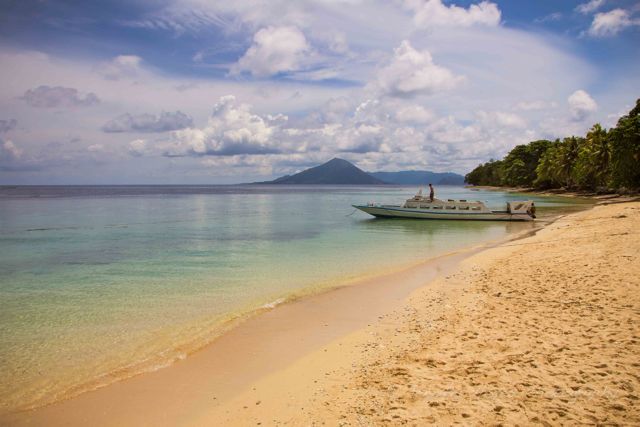
The Banda’s from Ai Island