Terra Australis 1606

Terra Australis 1606 – The voyages of Willem Janszoon and Luis Vas de Torres and the first European discovery of Australia

This talk was presented at the SMSA and will be broadcast by ABC Radio National on their ‘Big Ideas’ program. The maps and a brief text are presented here for the benefit of listeners to that program.
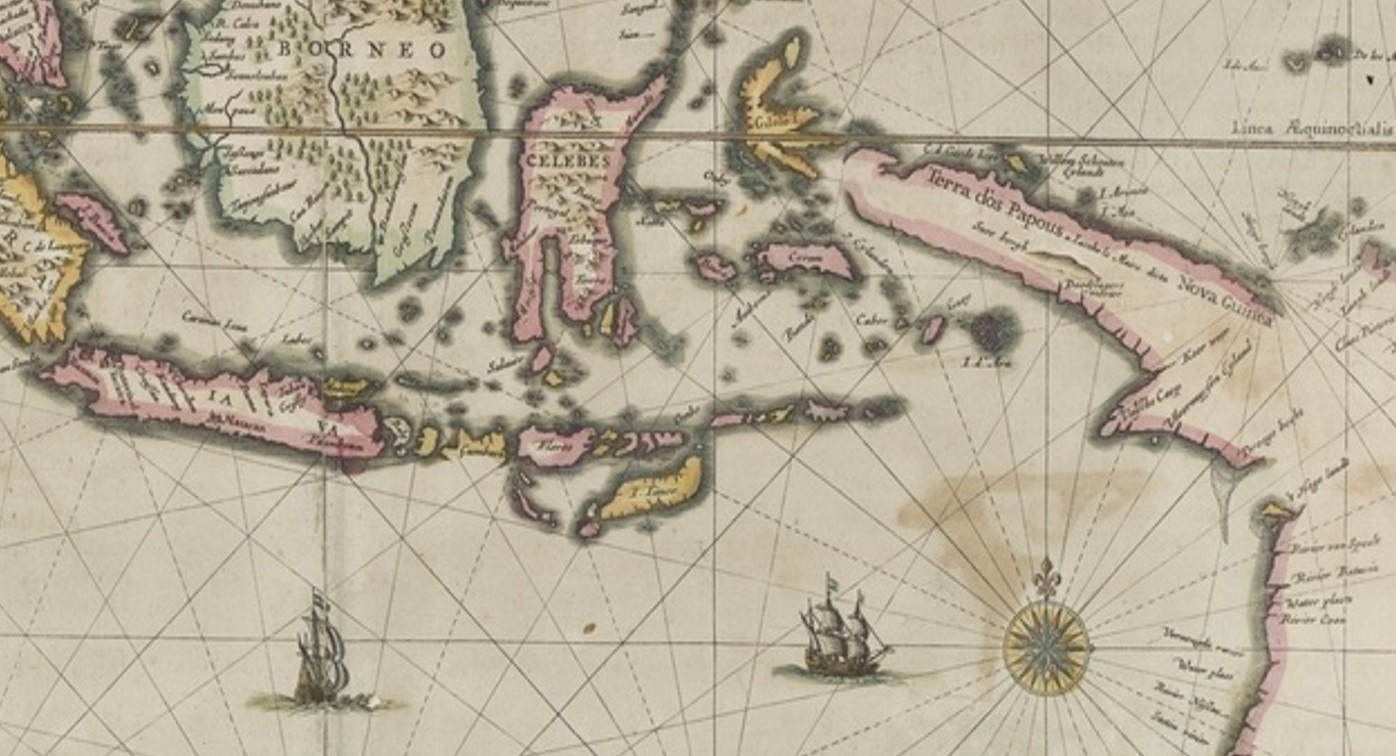
Hendrick Hondius 1641

Hendrick Hondius 1641

In 1528, the Spaniard Alvaro de Saavedra commanding the Santiago attempted to sail from the Spice Islands of Eastern Indonesia back across the Pacific and charted the north coast of New Guinea which he named Isola Del Oro (Island of Gold). To be renamed Nueva Guinea by another Spaniard, Inigo Ortez de Retez in 1545.

Petrus Plancius 1594

Petrus Plancius 1594

In 1595 the yacht Duyfken (Little Dove) sailed with the first Dutch expedition to the East Indies which was funded by ‘The Company for Far Distant Lands’ a precursor to the United Dutch East India Company (VOC). The fleet reached Banten near the Sunda Straits and began trading for spices, this map shows the fleet in the Java Sea and the Duyfken is the smaller of the vessels.
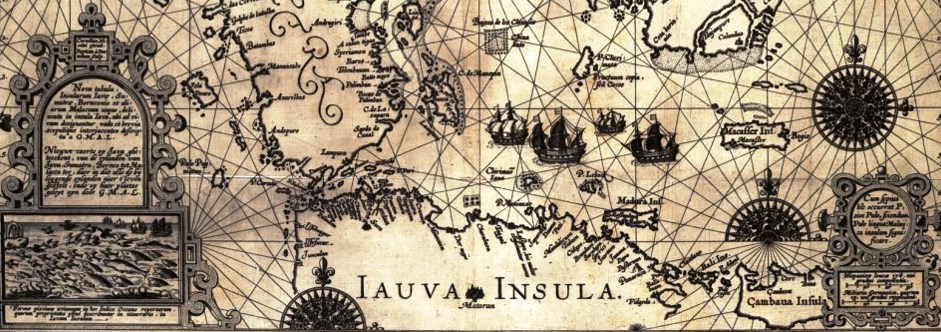
Willem Lodewijcksz 1595

Willem Lodewijcksz 1595

Willem Janszoon in the Duyfken

After the first VOC war fleet captured the Portuguese forts in Ambon,Banda and Ternate in 1605 the Duyfken commanded by Willem Janszoon departed Banten and then Banda for a voyage of discovery along the south coast of New Guinea. Captain John Saris of the English East India Company in Banten reported:

The eighteenth (November 1605) here departed a small pinnasse of the Flemings, for the discovery of the island called Nova Ginnea, which, as it is said, affordeth great store of Gold.

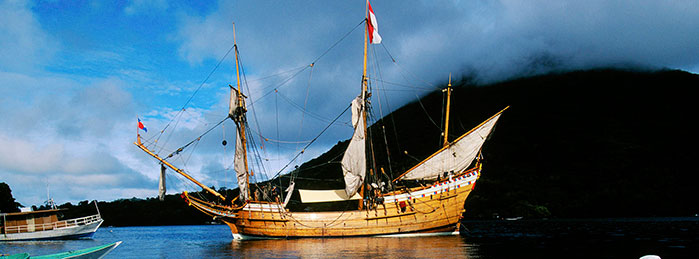
The replica Duyfken in Banda

The replica Duyfken in Banda

The ships log and maps of the 1606 Duyfken voyage have never been found in the VOC archives. But it was while examining the volumes of a Blaeu Atlas originally belonging to Prince Eugene of Savoy, first in 1920 and again in 1931 at the Hofbibliothek in Vienna, that Dr F.C.Wieder found it also contained the “Secret Atlas of the East-India Company “–copies of original maps no longer in the company’s archives–including the charts of the voyages of the Duyfken to New Guinea and Australia in 1606, and also of the Arnhem, which accompanied the Pera in 1623.

The voyage of the Duyfken 1606 from the 'Secret Atlas of the VOC'

The voyage of the Duyfken 1606 from the ‘Secret Atlas of the VOC’

In March 1606 the Duyfken reached what is now Cape York and made the first European encounter with the Australian Aborigines, then returning via the south coast of New Guinea where some of the crew were killed in an encounter with the Papuans.
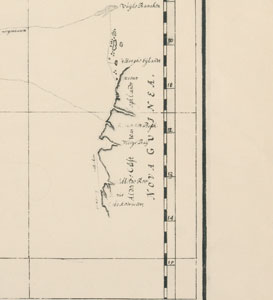
Detail of the west coast of Cape York from the 'Secret Atlas of the VOC'

Detail of the west coast of Cape York from the ‘Secret Atlas of the VOC’

The Duyfken returned to Banda,then Banten, and Captain John Saris of the English East India Company again reported:

The fifteenth of June (1607) here arrived Nockhoda Tingall a Cling man from Banda in a Java Junke, laden with mace and nutmegs …
He told me that the Flemmings Pinnasse, which went upon the discovery for Nova Ginny, was returned to Banda, having found the island: but in sending their men on shoare to intreate of trade, there were nine of them killed by the heathens, which are man-eaters: so they were constrained to return, finding no good to be done there

Luis Vas de Torres in the San Pedrico

In 1606 Pedro Ferdinandes de Queirós led a Spanish expedition across the Pacific to discover the ‘Great South Land’. They reached Vanuatu and named it Tierra Australis de Espiritu Santo. On the night of 11 June 1606, Queirós in the San Pedro y San Pablo became separated from the two other ships of his fleet in bad weather and then sailed to Acapulco in Mexico. Luis Vaz de Torres with the galleon San Pedrico and the tender Los Tres Reyes sailed south east looking for the Great South Land, before turning north to sail to Manila. Unable make the north coast of New Guinea due to the prevailing winds, they turned east to follow the south coast of New Guinea.

William Dalrymple 1764 Showing the Torres voyage

William Dalrymple 1764
Showing the Torres voyage

Again the ships logs and maps of the Torres voyage are missing but details have been reconstructed from a letter by Torres from Manila in 1607 and by a report by the second in command, Diego Prado y Tovar after he returned to Spain in 1615. The San Pedrico finally cleared the Torres Strait between the Dutch named De Hooghe Island (High Island) and Cape York and as descibed by Prado:

We were amongst reefs and shoals for 34 days’… there were many large islands and they appeared more on the southern side
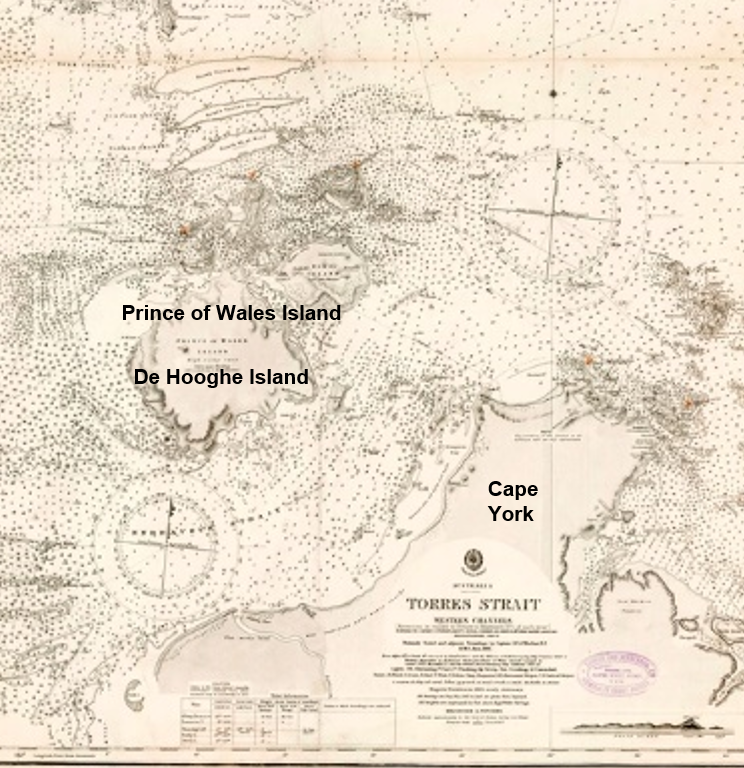
Endevour Strait

After clearing the Torres Strait the Spanish ships sailed for the Spice Islands where Torres left 20 men and the tender Los Tres Reyes to reinforce the Spanish fort on Ternate before continuing to Manila.
A credible outline of New Guinea appears on a World Map by the Portuguese cartographer Godinho de Eredia in 1613, since we know that Prado returned to Spain via Goa then he could have given details of his voyage with Torres to Eredia who was based in Goa or Malacca.

World map Godinho Eredia 1613

World map Godinho Eredia 1613

A detailed map of New Guinea was discovered in the ‘Dutchess du Berry Atlas’ dated around 1628 and it must have come from the Torres voyage. Torres and Prado were apparently unaware of the significance of the larger island they describe to the south as any indication of this island or Australia does not appear on the map.
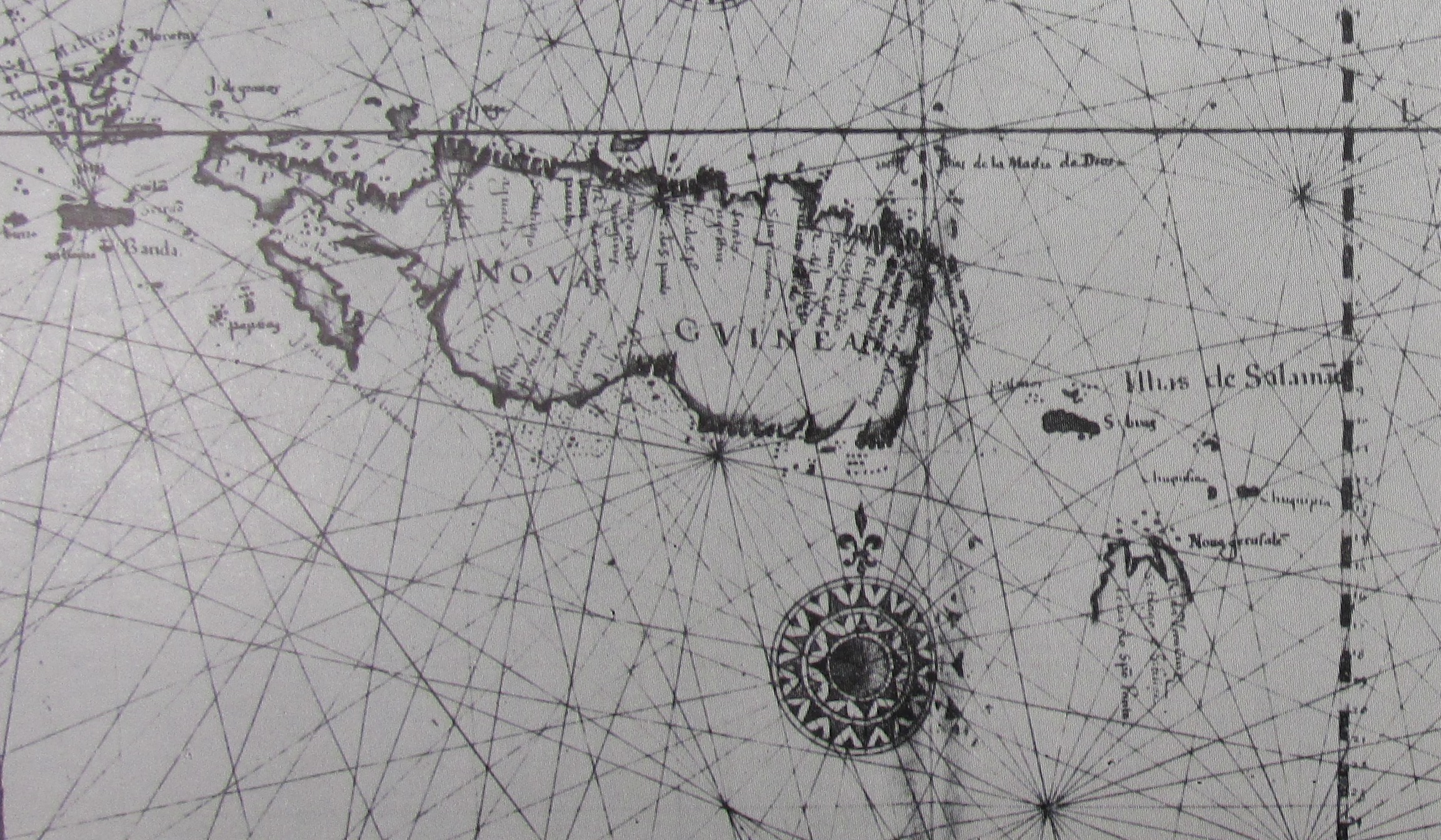
Map of New Guinea from the 'Duchess du Berry Atlas' 1628?

Map of New Guinea from the ‘Duchess du Berry Atlas’ 1628?

The first image of Australia on a world map appears on the map ‘Mar del Sur’ of the Pacific Ocean by the VOC mapmaker Hessel Gerritz in 1622 and is obviously the most significant map in Australian history.

Hessel Gerritsz

The text on this map adjacent to the west coast of Cape York indicates that the Dutch had heard of the Torres voyage but were unable to confirm the detail, as it reads:

These parts were sailed into with the yacht of De Quiros (Torres) about Nueva Guinea on 10 degrees westward through many islands and dry banks and over 2, 3,4 fathoms for full 40 days. Presuming Nueva Guinea not to stretch over the 10 degrees south – if this were the case – then the land from 9 to 14 degrees (Australia!)must be separate and different from the other Nueva Guinea.

Detail from Hessel Gerritsz map 1622
Detail from Hessel Gerritsz map 1622
Posted in Uncategorized | Tagged , , , , , | Leave a comment

Treasure Ships – Art in the Age of Spices – Part 2

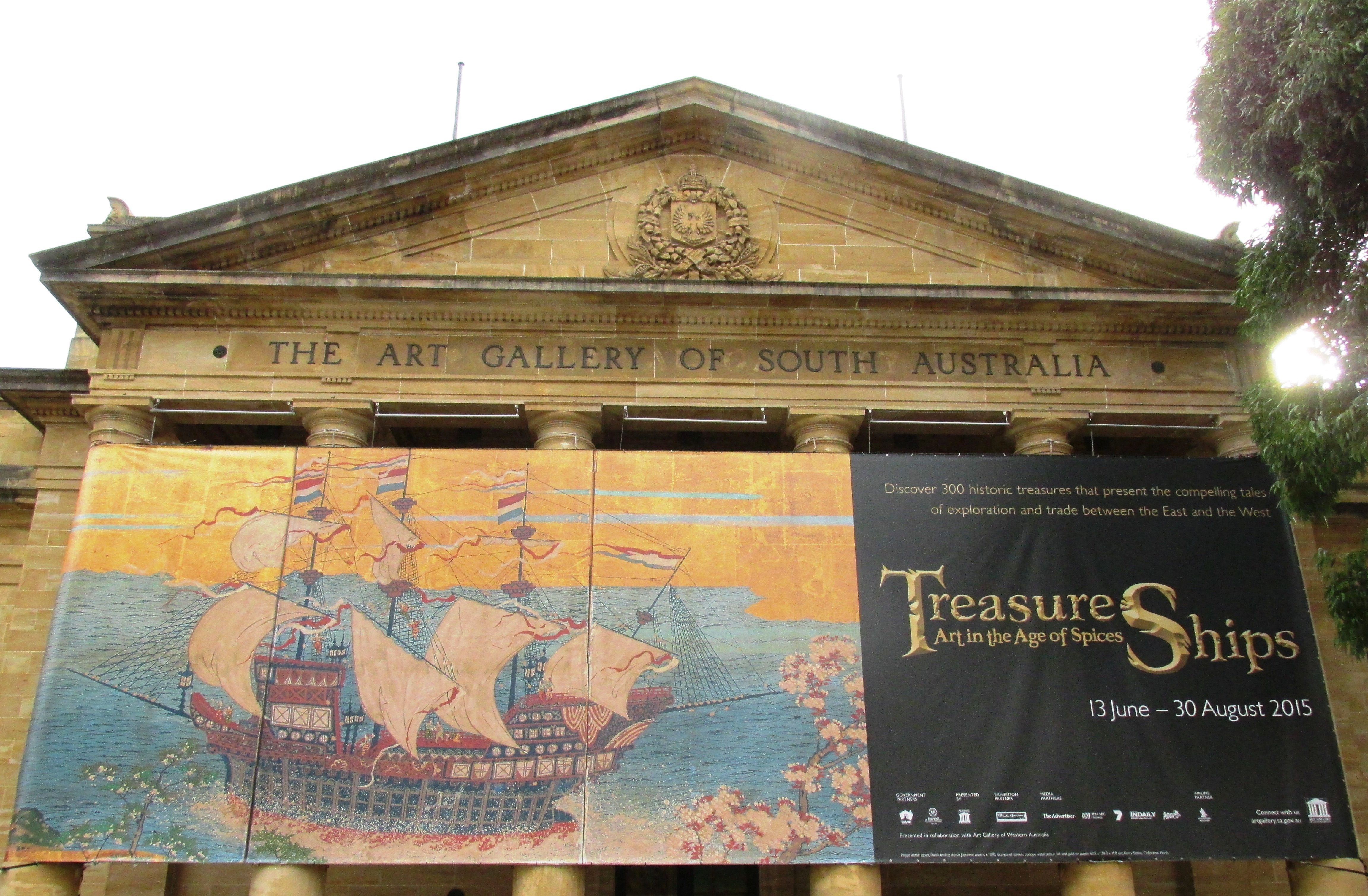
This exhibition at the Art Gallery of South Australia is the first exhibition in Australia to present the complex artisitic and cultural interactions between the East and the West from the 16th to the 19th centuries – a period known as the ‘Age of Spices’.

IMG_0998 - Copy

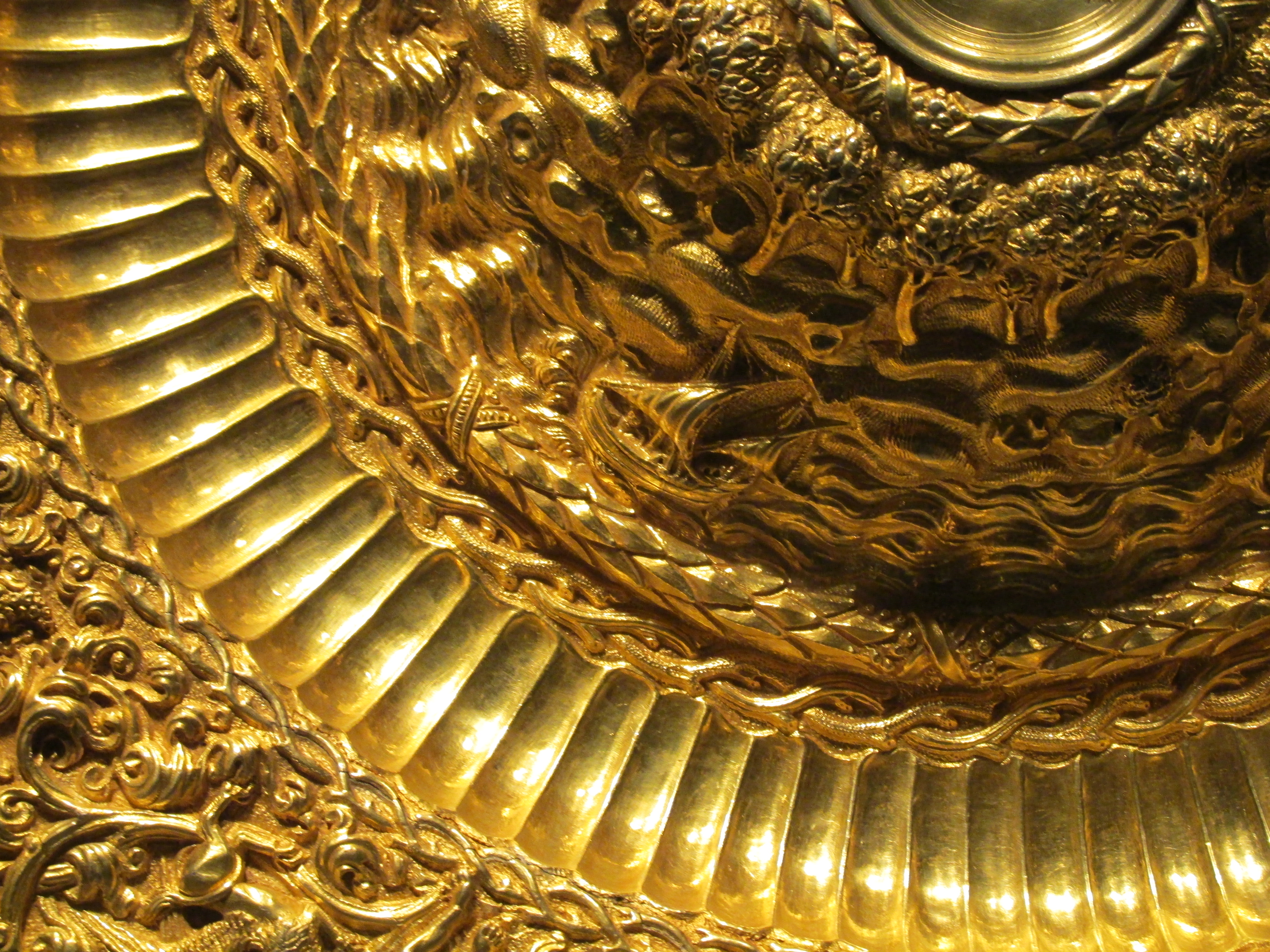
A feature of the exhibition is the diverse range of Christian artwork created at ports such as Goa and Nagasaki and on loan from Portugal and India. Especially this large golden salver used in religious ceremonies and illustrating the Manueline taste of the period. When filled with water the central part represented an island surrounded by the sea.

IMG_1017 - Copy

It is decorated with animals, foliage and a maritime scene of a caravel in stormy seas.

IMG_1025

Speaking of stormy seas the Jesuit priest Saint Francis Xavier sailed to Goa, then Malacca and then the Spice Islands to bring the Christian message to the Eastern Seas. A frightful storm arose off Ambon and the saint immersed his cross in the water to calm the seas but the cross was lost in the water. It is believed that later when Saint Francis was walking on the beach a crab emerged from the sea holding the cross in its claws and the cross was later enshrined in this silver reliquary.

IMG_0947 - Copy

The Portuguese, Dutch and English traders soon learned of the popularity of Indian textiles throughout the archipelago and that textiles could replace silver as a trading currency. Here is a baju or jacket in the style of Indian chintz and a sembagi or waist wrap garment made in India and both found in Indonesia.

IMG_0968

Court garments like this voluminous dodot waist wrap were popular with the aristocracy throughout Indonesia and have often been preserved as heirloom items.

IMG_0979 - Copy

The most valued Indian cloth was the patolu or double ikat cloth from Gujarat such as this one displaying a procession of elephants with their royal passengers and foot-bearers found in Indonesia.

Elephant patula

Here is the Rice Godess Dewi Sri and her consort Mas Sadono seated in front of a Gujurati patolu with a ‘flowering basket’ design. Mas Sadono is also wearing an Indian silk patolu cloth as a waistwrap under his belt.

IMG_1120 - Copy

The exhibition will be at the Art Gallery of South Australia until the end of August when it will move to the Art Gallery of Western Australia until the end of January.

IMG_0995 - Copy


ianburnetbooks.com

Posted in Uncategorized | Tagged , , , , , | Leave a comment

Terra Australis 1606

Terra Australis 1606: The Voyages of the Duyfken & the San Pedrico
Tuesday, 16 June 2015, 12:30pm – 1:30pm
Venue: SMSA Mitchell Theatre
280 Pitt Street
Sydney NSW 2000

Hendrik Hondius 1641 State Library of NSW

Hendrik Hondius 1641
State Library of NSW

Maritime historian Ian Burnet discusses the background of these significant voyages, and their impact on subsequent events. Although Torres’ charts of his crossing were lost, Ian will review the available maps showing their voyages and reveal Australia’s first appearance on a subsequent world map.

The year 1606 saw Europeans sighting Australia twice.

The voyage of the Duyfken, captained by William Janszoon, is as important to Australian history as the Santa Maria is to Americans, producing the first chart of the Australian coastline. Reaching the west coast of Cape York, in northern Queensland, the crew of the Duyfken were the first Europeans to set foot on the continent. Their meeting with the local people was the first documented contact between the Indigenous Australians and Europeans.

Just months later, a Spanish expedition was looking for the reputed Terra Australis, the Great Southern Land of legend. After an unsuccessful search, the expedition split and second-in-command Luis de Torres, sailed west in his own ship, the San Pedrico, and a 20 foot launch. He eventually navigated the Torres Strait while contending with fierce storms and reached the Cape York Peninsula.

FREE & OPEN TO THE PUBLIC

The replica Duyfken at Banda

The replica Duyfken at Banda

Posted in Uncategorized | Tagged , , , , , , | 1 Comment

Treasure Ships: Art in the Age of Spices — Symposium

Treasure Ships: Art in the Age of Spices is the first major exhibition in Australia which presents the complex artistic and cultural interactions between Europe and Asia from the 16th to 19th century, a period often referred to as the ‘Age of Spices’.

If you are planning on attending the exhibition why not join the one day symposium on Saturday June 13.

Treasure Ships: Art in the Age of Spices

Treasure Ships: Art in the Age of Spices

Join us for a one day symposium with exhibition curators James Bennett and Rusty Kelty and fellow scholars Ian Burnet, Father Warner D’Souza and Joanna Barrkman for a lively exploration of the artistic and cultural interactions between Europe and Asia during the ‘Age of Spices’.

Topics include the preservation of Christian art in India, the history and trade of exotic spices of Eastern Indonesia and the role and influence of Indian textiles in trade throughout the Indonesian archipelago.

When Saturday 13 June, 11am – 3pm
Where Art Gallery of South Australia, Radford Auditorium
Cost $45, $35 Members/Concession
Bookings essential Call 08 8207 7035 or Book online

All registrants are invited to attend lunch and post symposium drinks in the Function Room

Full Program
11am
Welcome
Nick Mitzevich, Director, Art Gallery of South Australia

11.05am
Introduction and overview
James Bennett, co-curator, Treasure Ships: Art in the Age of Spices and Curator of Asian Art, Art Gallery of South Australia

11.15am
Journeys around the Spice Islands
Ian Burnet, author, scholar and adventurer.
A talk about the history, romance and adventure of the spice trade from Eastern Indonesia over a period of 2000 years, and how this drove ‘The Age of Discovery’.

11.50am
Preserving the heritage of Christian art in India and setting up the Museum of the Archdiocesan of Bombay
Father Warner D’Souza, a priest of the Roman Catholic Archdiocese of Bombay, Fr Warner speaks of his passion, inspiration and challenges encountered in the establishment of a heritage museum in Bombay.

12.30pm
lunch Break in the Function Room and exhibition viewing
Including a book signing by Ian Burnet – 1pm

1.30pm
Encounters with traces of Indian trade cloths in Eastern Indonesia and Timor-Leste
Joanna Barrkman, PhD candidate at the Australian National University researching the Baguia Collection.
This talk recounts encounters with Indian trade cloths and elucidates some of the key styles of cloths that were popular for trade into the Indonesian archipelago.

2.15pm
Guns, Christians, gold and lacquer: The arrival of the southern barbarians and their black ships
Russell Kelty, co-curator, Treasure Ships: Art in the Age of Spices and Assistant Curator of Asian art, Art Gallery of South Australia
The arrival of the Portuguese at the tiny island of Tanegashima in 1543, off the southern coast of Japan, was the first recorded contact between Japanese and the Europeans and initiated the nanban or ‘southern barbarian’ era. The art created during this era evokes the cross cultural atmosphere at ports along the spice trade routes particularly at the terminus of Nagasaki. The annual arrival of the Portuguese black ships and their exotic menagerie depicted on Japanese screens as well as sacred Christian paintings embellished with Japanese gold and black lacquer portray the confluence of European and Japanese aesthetics which took place during this era.

3pm
Panel discussion and Q&A

3.30pm
Post symposium drinks in the Function Room

Treasure Ships: Art in the Age of Spices

Treasure Ships: Art in the Age of Spices

Posted in Uncategorized | Tagged , , , , , , , , | Leave a comment

Insight Indonesia –Spice Islands Saga

I realised that the 2011 Berita Satu/Jakarta Globe TV interview on Spice Islands for Insight Indonesia had never been posted to the blogsite. I hope you find it interesting.

Posted in Uncategorized | Tagged , , , , , , , , , | Leave a comment

The Spice Islands — Underwater

Moluccan Spice Discovery 2012

Moluccan Spice Discovery 2012

The seas of the Moluccas (Maluku) in Eastern Indonesia have pristine waters and some of the greatest variety of marine life on the planet. On our 12 day voyage from Ambon to Banda to Ternate the Ombak Putih will usually find a suitable site for snorkelling and underwater exploration every day.
Here is an image of one of the members of our Spice Routes/Spice Wars 2014 sailing adventure with the Ombak Putih in the background.

Another day, another dive site

Another day, another dive site

Thanks to Randall Rutledge for the use of his underwater photographs taken on our 2014 Spice Routes/Spice Wars voyage and here are some examples of the clarity of the water and the variety of beautiful tropical fish.

Spice Islands underwater

Spice Islands underwater

OLYMPUS DIGITAL CAMERA

OLYMPUS DIGITAL CAMERA

A beautiful collection of soft corals

OLYMPUS DIGITAL CAMERA

OLYMPUS DIGITAL CAMERA

And strange sea creatures

OLYMPUS DIGITAL CAMERA

OLYMPUS DIGITAL CAMERA

East Indies Spice Exploration 2015
The Ombak Putih will be sailing again, September 26 to October 7 from Maumere on Flores to the Banda Islands and then to Ambon.
Details are available on this blogsite and from SeaTrek Sailing Adventures.

ianburnetbooks.com

Posted in Uncategorized | Tagged , , , , , , , , | Leave a comment

Ubud Food Festival, 5-7 June 2015

Mari Makan Competition Graphic

Food Forum | The Spice Islands Friday June 5, 2:30pm, at Taman Baca

For a serving of spice island history, Ian Burnet will dish up a tale of the high seas and colonial rule focusing on Indonesia’s legendary spices, cloves and nutmeg.

Spices-300x300

Fascinated by its rich history and diverse cultures, Ian Burnet has lived, worked and travelled in Indonesia for 30 years. His two historical books – Spice Islands and East Indies – are highly revered, while his third, Archipelago – a personal story of a journey across the archipelago, will be published this year.

Ian-Burnet-274x300

Please go to the Ubud Food Festival website for the full Program

FoodFestivalBanner

Posted in Uncategorized | Tagged , , , , , , , , , , , | Leave a comment

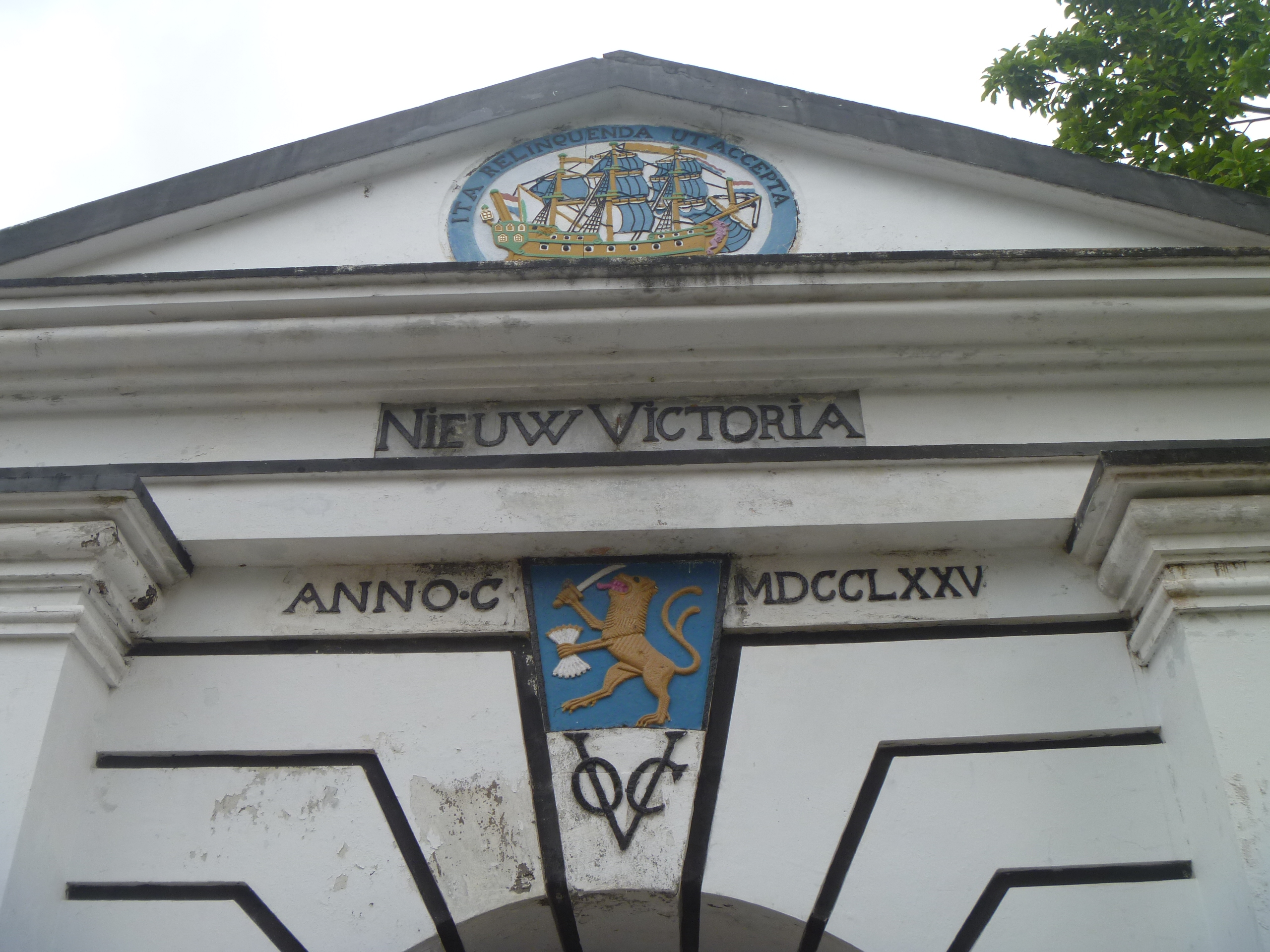
Fort Nieuw Victoria, Ambon — A Mystery Solved?

A fort on this location was built by the Portuguese in the 1500’s and then captured by the first war fleet commissioned by the United Dutch East India Company in 1605 and commanded by Steven van de Hagen. The fort was the first permanent settlement of the VOC in the East Indies and the first three Governor’s-General of the VOC were based here, prior to the establishment of Batavia in 1619.

The first Governor-General was Frederick de Houtman from 1605-1611, who happened to speak fluent Malay as a result of his eighteen month imprisonment by the Sultan of Aceh. A painting of Ambon and a greatly exaggerated Fort Victoria hangs in the Rijksmuseum in Amsterdam with an adjacent cartouche showing an image of Frederick de Houtman. The cartouche that is painted out is where Frederick de Houtman apparently claimed credit for the capture of the fort, credit which belonged to Steven van de Hagen.

Fort Victoria

Fort Victoria

The fort was severely damaged by an earthquake in 1754 and rebuilt as Fort Nieuw Victoria. Ambon and its surrounding islands became more important to the VOC as it was here that they concentrated their clove plantations so as to control and monopolize the production of cloves from the Moluccas.
Fort Nieuw Victoria is still a military base so there is no public access and even photography of the outside of the fort is forbidden. When I visited I was able to see a very impressive changing of the guard ceremony (no photographs allowed) and tried to convince the guard on duty if I could take a photograph of the historic entrance, no success until one of the commanding officers came along and said “ok, let that crazy foreigner take his photo, but remember only the entrance”.

Fort Nieuw Victoria 1755

Fort Nieuw Victoria 1755

Each of the bastions is named and on exploring the outer walls I found Groeningen and Hollandia but could not get access to the others.

Fort Nieuw Victoria

Fort Nieuw Victoria

Bastion Hollandia

Bastion Hollandia

Near the northwest bastion I found a plaque with the words Adriana Iohanna (Johanna?) which I assumed to be a name or names, and I was curious as to its significance.

Adriana Johanna

Adriana Johanna

Could this be Adriana de Stuers-de Kock? Her father headed the Dutch contingents that fought against Diponegoros’ armies in the ‘Java Wars’. Adriana was born in Surabaja in 1809, grew up in Batavia, and married her father’s adjudant in 1828. In 1837 her husband was appointed governor of the Moluccas. Unfortunately the ship carrying the new governor and his family founded on a coral reef on route to Ambon. Here the 140 passengers and crew including Adriana, who was now expecting her fifth child, managed to survive by clinging to the reef and the wreck. After four weeks of this ordeal they were finally rescued and brought to Ambon.

Is this the same Adriana on the plaque or somebody else? My thanks to Abe Smits a voyager on our 2014 Spice Routes/Spice Wars sailing adventure who brought the name of Adriana Johanna Bake to my attention.

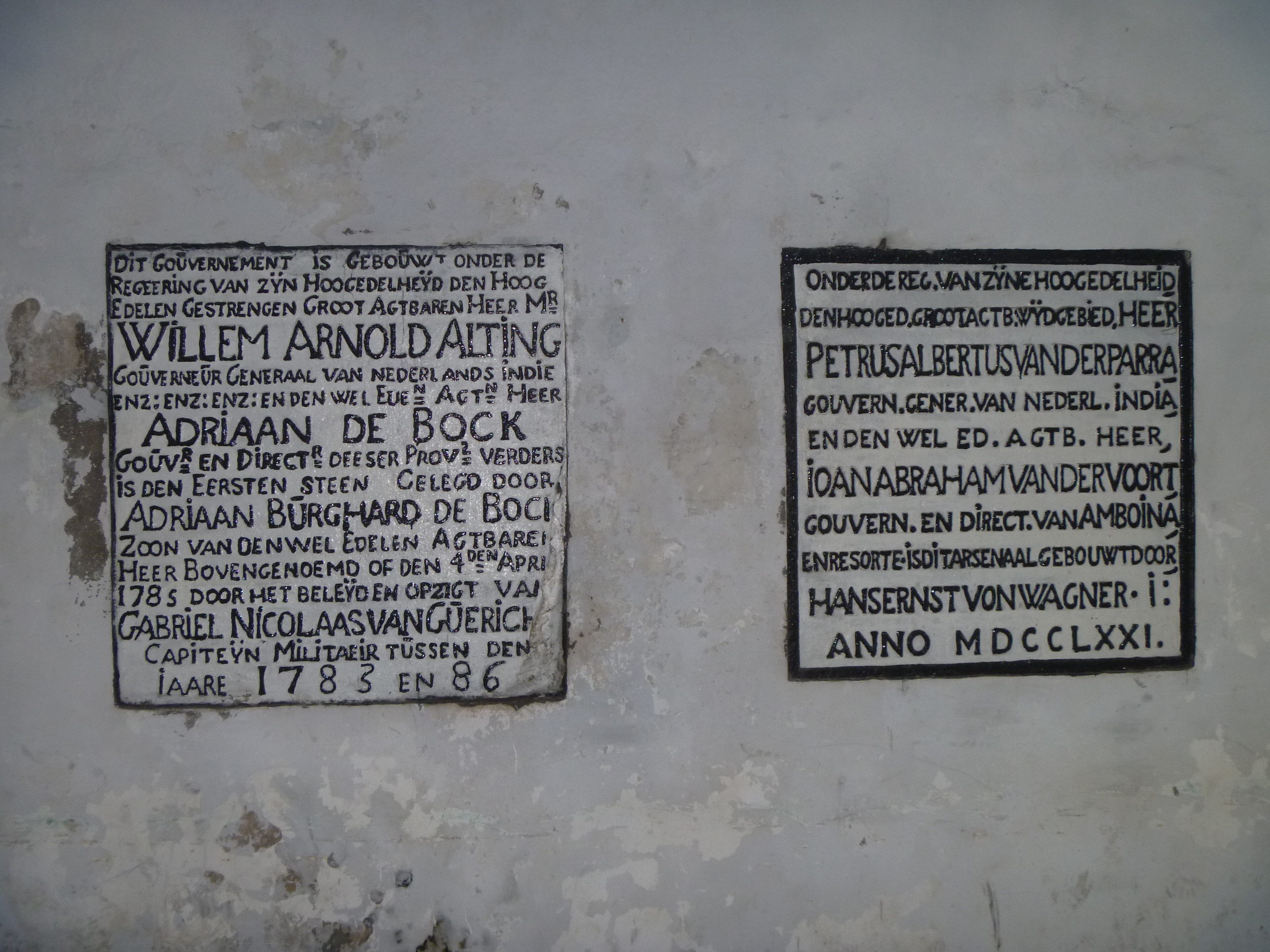
It now seems more likely that the plaque is for Adriana Johanna Bake who was born in Ambon in 1724 and married in 1743 in Batavia to Petrus Albertus van Parra who became Governor-General of the East Indies in 1761, and for whom an inscription is seen on the entrance to the fort. Of course we still need to know the significance of the plaque in her name, but we can imagine her visiting the town of her birth and newly rebuilt Fort with her husband the Governor-General and being honoured in this way.

P1010999

ianburnetbooks.com

Posted in Uncategorized | Tagged , , , , , , | Leave a comment

East Indies Spice Exploration 2015 – Flores to Ambon (Updated)

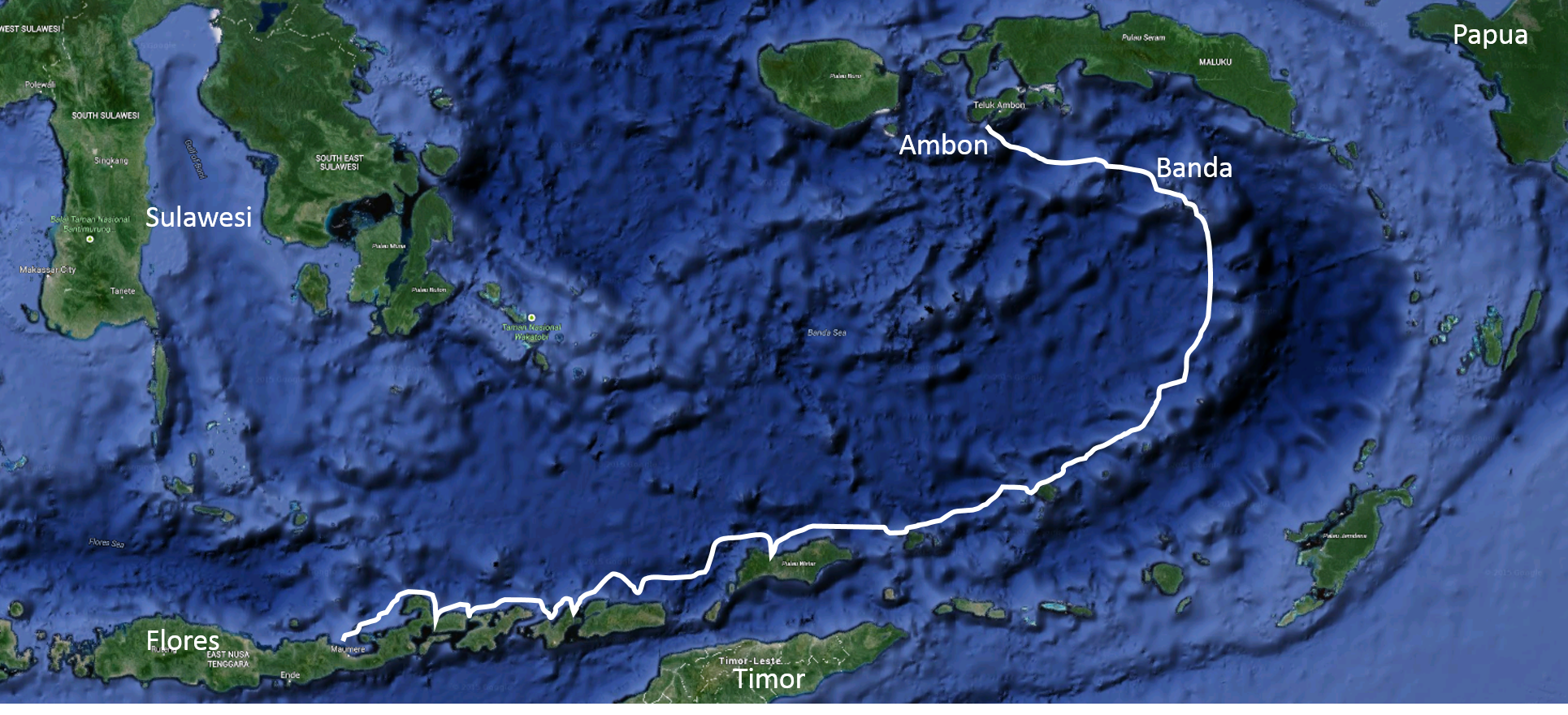
Departure from Maumere on Flores September 26 for 12 days until October 7 in Ambon

The Ombak Putih

The Ombak Putih

“ …I would dream of the fabled Spice Islands. Images of palm-fringed tropical islands backed by towering volcanoes filled my imagination and I saw myself arriving on their sandy shores by sailing boat, like the explorers, adventurers and traders that had gone before me…“ (from ‘Spice Islands’, 2011, by Ian Burnet)

SeaTrek has teamed up with author and Spice Islands expert Ian Burnet to curate this fascinating look at the colonial history of Indonesia and it’s role in the international spice trade of the 17th century. This 12-day voyage travels in an eastward arc capturing the maritime route of early colonials who traversed the Indonesian waters in search of the precious spices found within this small band of islands. Ian Burnet will lend his expertise and you will be transported back in time as you learn about historic outposts, see the colorful native villages, experience the marketplaces, and smell the aroma of the spice plantations. These unforgettable excursions on land will be matched by those at sea as the Ombak Putih wends her way through stunning volcanic islands with stops at pristine beaches, giving guests ample time to swim and snorkel in some of the richest and most magical waters in the world.

Maumere to Ambon

Maumere to Ambon

Day 1
Our guide will meet you and organize your transfer from Maumere airport to the harbor and boarding on the Ombak Putih. For those who may have arrived the previous day, in the morning after boarding the ship we will tour the small village of Watoblapi to enjoy a village dance and see a demonstration of their local traditional weavings. Watublapi is a small community in the Sikka district well known for its fine traditional ikat weaving. Whereas many other local weaving communities switched to industrially spun yarn and chemical dyes for the sake of saving time and money, the weavers of Watublapi still use the traditional, handspun yarn made out of local cotton, as well as local natural dyes.
When all voyagers have arrived and settled in their cabins, we will weigh anchor and navigate the Cape of Flowers (Cabo de Flores), so named by a Portuguese expedition crew in the early 16th century, and head for the port of Larantuka. Enroute, we are certain to enjoy a first swim and snorkel in these beautiful waters.

Maumere to Lembata

The Flores Strait with the islands of Adonara, Lembata and Solor

The Flores Strait with the islands of Adonara, Lembata and Solor

Day 2
In the morning we will moor close to the town of Larantuka, the capital of Flores Timur and a central hub for early colonization and Catholic clerical activities. There we will see the five Catholic Churches and the ‘Stations of the Cross’ built along the waterfront. Later we will cross the Flores Strait and visit the village of Lohayong on the island of Solor, a lot of the villagers here make a living by processing sea salt. The process is seasonal, but with a bit of luck we will be able to witness the process. After that we will visit the ruins of Fort Henricus built by Dominican Friars in 1566 to protect their spiritual work from enemies. Early Portuguese sandalwood traders left this task to the missionaries. The fort was later captured by the Dutch East Indies Company. Back on the ship we will have a beautiful sail through the Solor Strait with the Lili Boleng volcano on the island of Adonara as backdrop as we as we navigate to Lembata Island. As always, we will work to plan time to stop for a swim and a snorkel.

Churches along the waterfront in Larantuka

Churches along the waterfront in Larantuka

Day 3
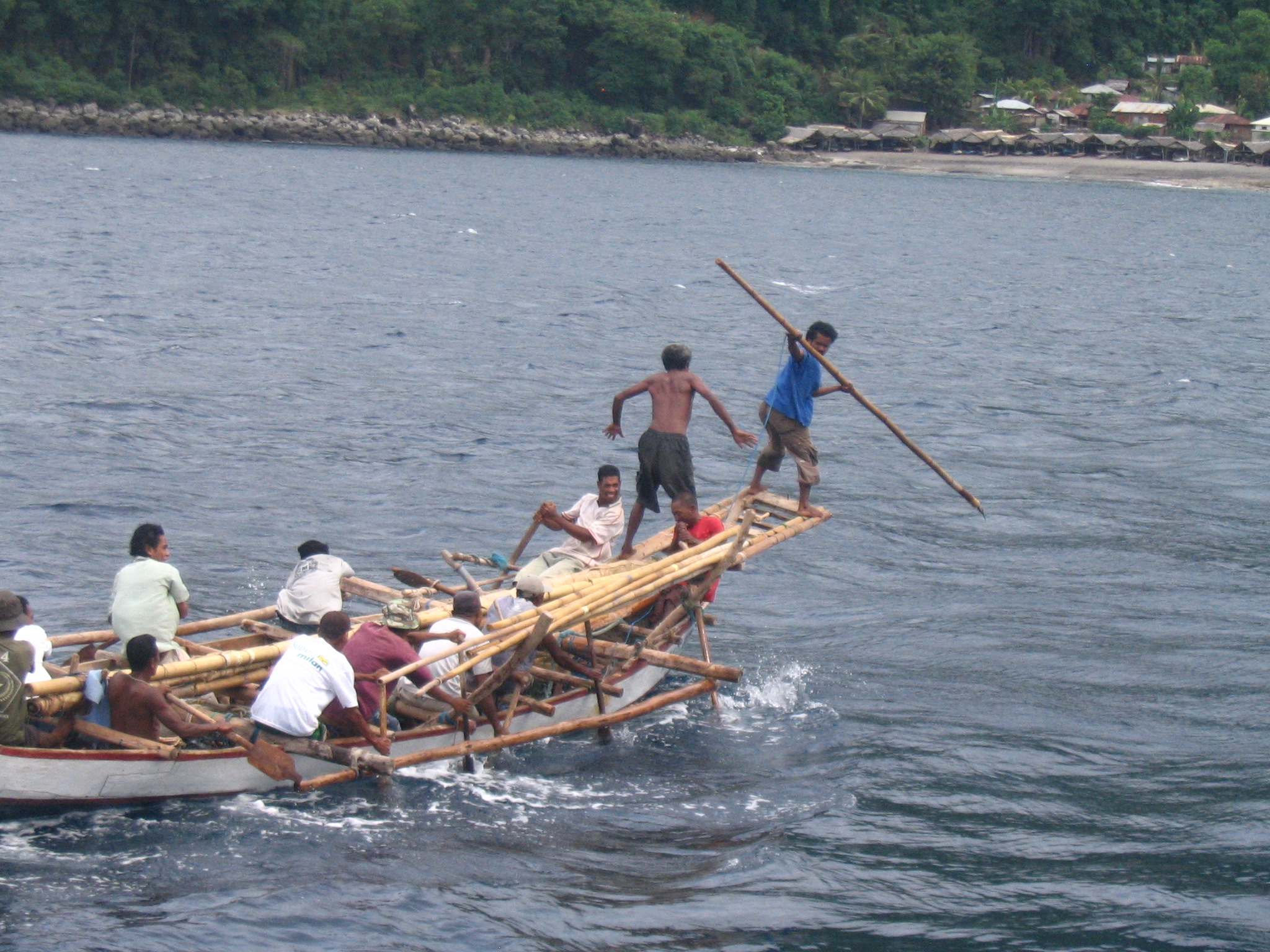
Today we arrive in Lamalera, island of Lembata, which is one of the two remaining whaling villages in Indonesia. Bordering the Timor Straits, the village is in an area long recognized as hunting-grounds on the nineteenth century British and American whaling voyages. Since at least 1836 these villages have taken various species of whales and yet today, these traditions remain available to observe. On the beach we will see the small craft for the hunting of the sperm whales and perhaps preparation for their hunt if whales are in the vicinity. This small-scale hunting (no more than 25 per year) is considered sustainable, and the local economy has some dependency upon it. We might join a short sailing on of one of the boats, admiring the harpoonist standing on the edge of the bowsprit. In the afternoon, we begin our sail to Alor.

Traditional whaling at Lamalera

Traditional whaling at Lamalera

Day 4
The bay of Kalabahi on Alor is enchanting in the morning. We will visit a traditional village in the mountains where we may witness a war dance around the mesbah, the ritual center of the village. Here we will see the moko drums, which for centuries have been part of a wife’s dowry as well as played for New Year celebrations and are thought to originate from Indochina. Alor produces Ikat cloth famous for its intricate patterns and bright colors. In the evening we will proceed further to the east and the western Daya Islands in the southern Banda Sea.

Kalabahi Bay

Kalabahi Bay

Traditional Ikat weaving and bronze Moko drums on Alor

Traditional Ikat weaving and bronze Moko drums on Alor

Day 5
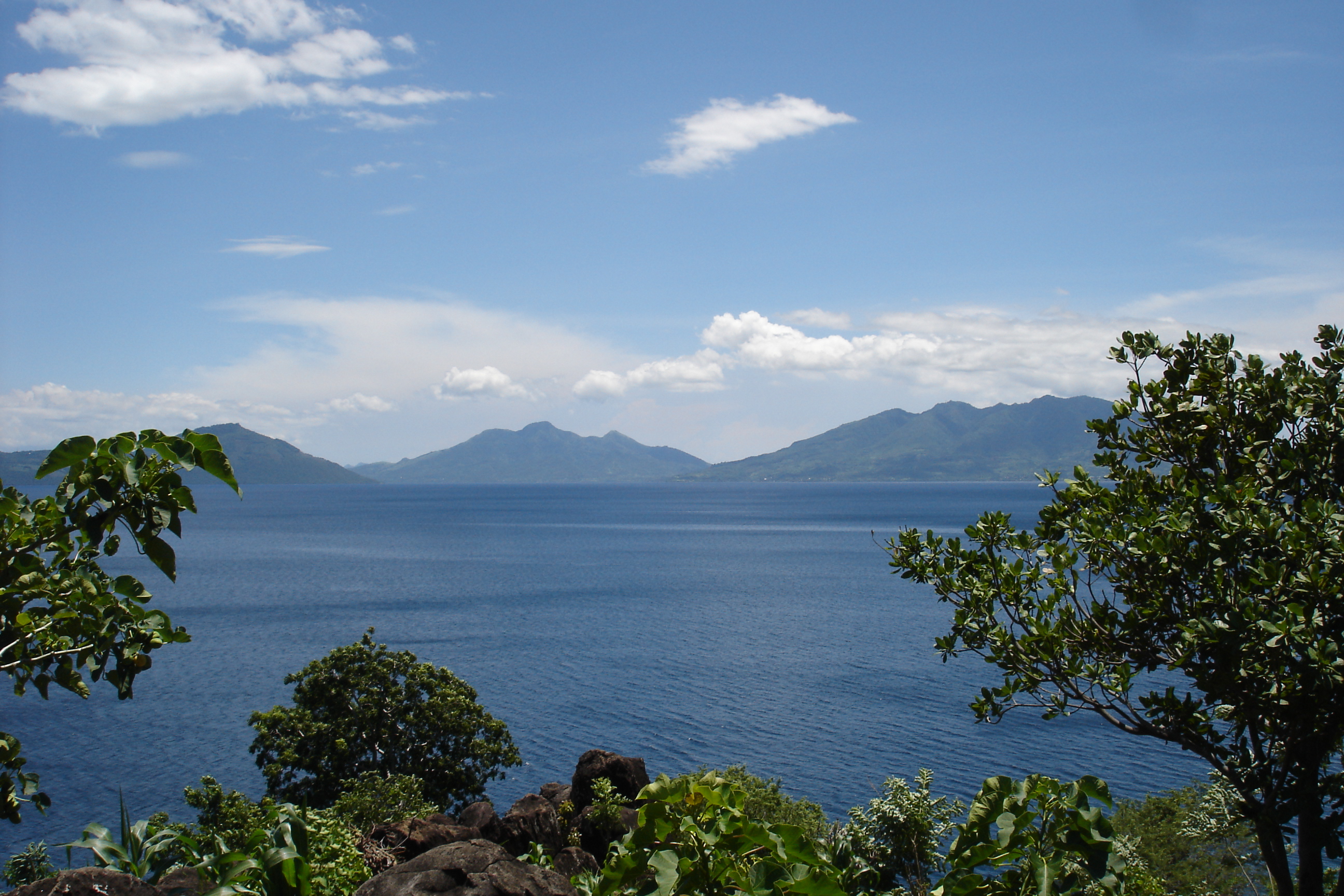
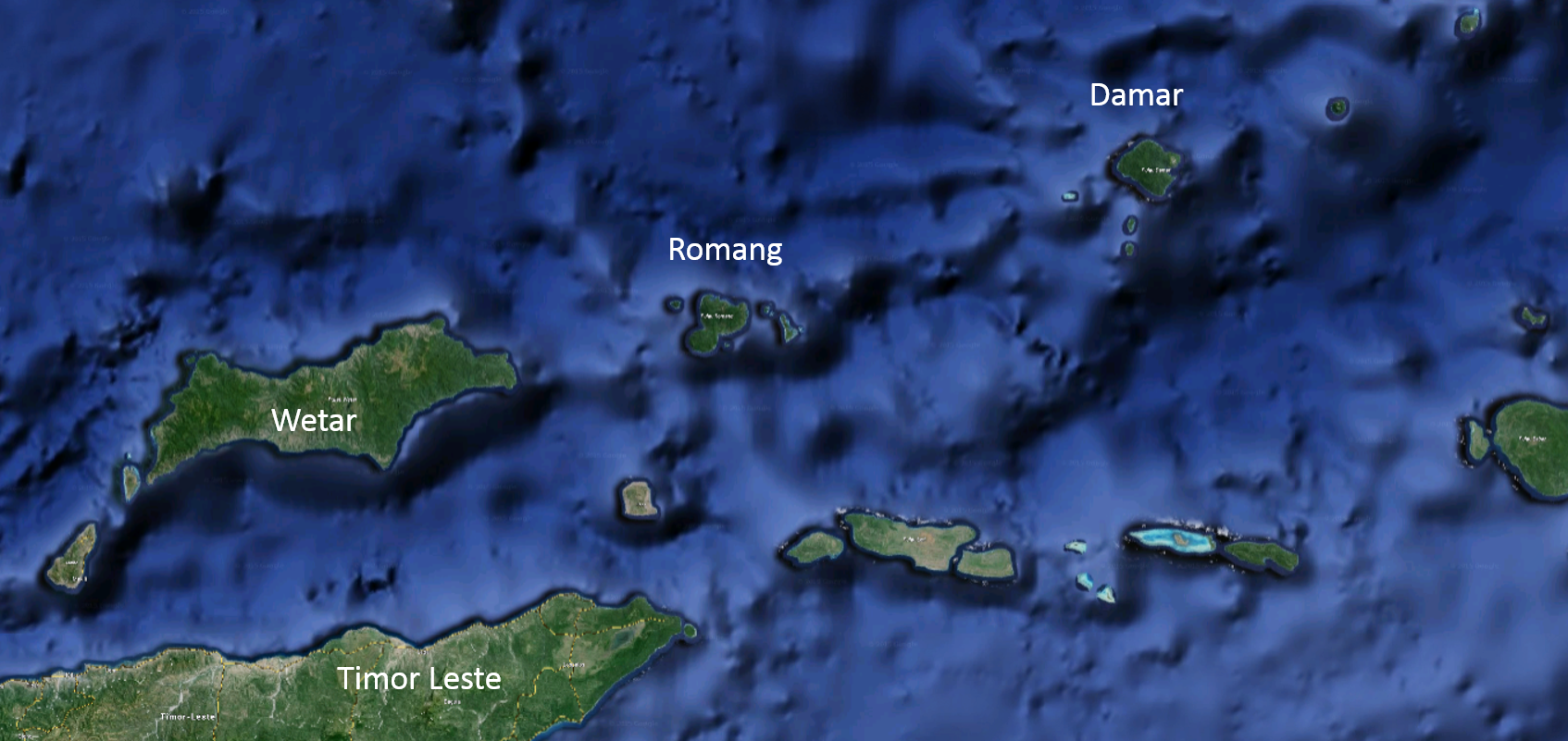
Today we cross between the Lesser Sunda Islands group and the Moluccas of the region known as Maluku. The first Moluccan island we will enounter is Wetar. We will anchor here in a delightful bay. The island appears virtually impenetrable from the sea. It and close by islands comprise part of Wallacea, the area of deep water separating the Asian and Australian continental shelves. We will find fishermen drying their catch on the beach, great swimming/snorkeling and visit local villages. In the evening the captain will set the Ombak Putih on an easterly course towards Romang.

Wetar, Romang and Damar

Wetar, Romang and Damar

Day 6
We will awaken off the island of Romang. After our breakfast gathering on the deck we will have a chance to trek around the island. Back on the boat we will have lunch while we sail eastward to the tiny island of Mapora here we spend the rest of the afternoon snorkeling and beachcombing.

Fish for Dinner

Fish for Dinner

Day 7
In the morning we will reach Damar, the next island in the Ring of Fire chain. This island, volcanic in nature, was one of the few islands outside of the Bandas that produced nutmeg. All the trees were destroyed by the V.O.C. in 1648 to further monopolize the spice trade. We will visit a small village consisting of simple huts made from leafs of the sago palm. Staple foods of the locals are sweet potatoes (ubi), bananas and fish.

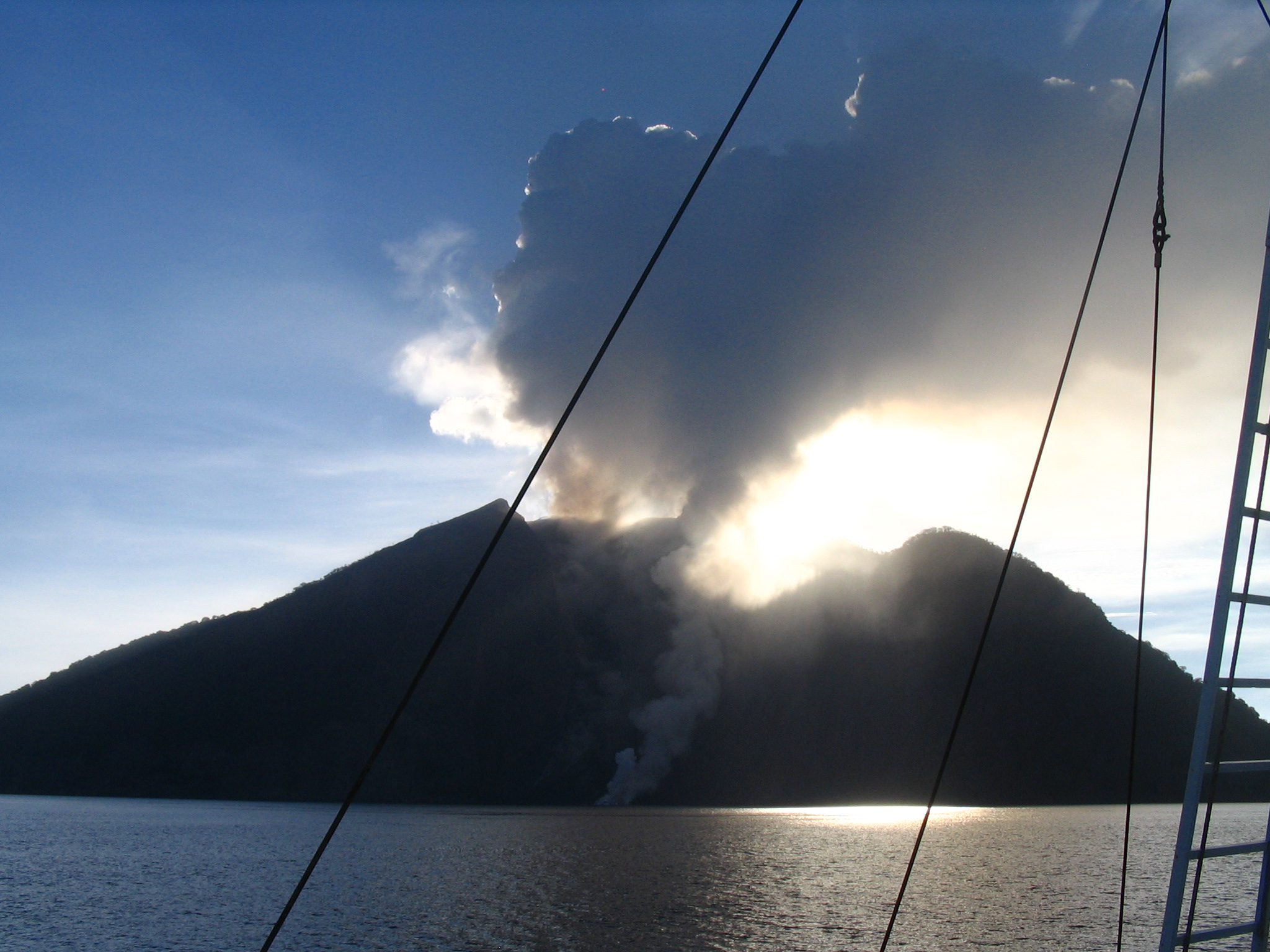
A volcano erupting in the Flores Sea

A volcano erupting in the Flores Sea

Day 8
We will pass four spectacular volcanic islands virtually standing alone and jutting from the clear blue ocean. Known as stratovolcanoes, meaning built up over successive millenniums of periodic eruptions, they express a quiet beauty for us to enjoy. We will make a stop at Serua, the last in this extended chain of volcanoes. It is home to one of the few villages in the chain. If time allows we visit to experience their remote lifestyle. Since the eruptions in the sixties and seventies, many of these island populations have migrated to other islands in the Moluccas. Today, we also reach the small island of Manuk which is uninhabited by humans but truly a bird and marine sanctuary. Frigate birds, gannets and other marine birds have their nests in the trees. If the tide allows, we will make a landing and go in for an up close look at the birds and wildlife. In the late afternoon we proceed towards the Spice Islands.

The Banda Islands

The Banda Islands

Day 9
The first of the Banda Islands is Run. An amazing historical footnote is the fact that in 1667, under the Treaty of Breda, this small island was ceded by the English to the Dutch in exchange for Manhattan. After rounding Run we will reach the Island of Ai. Here we go ashore on a beautiful beach to meet with the villagers. A short walk brings us to Fort Revenge which was built by the English before being captured by the Dutch. Behind the fort we find the first nutmeg plantations. During lunch the captain will move us to the main island of Bandaneira. With the Ombak Putih moored in the bay, we will spend the afternoon strolling through the old town and get a feel for its incredible history viewing the restored planters’ mansions, fortifications and churches. We will find that Fort Belgica built by the Dutch East India Company (VOC) was an early blueprint of the Pentagon. Even today this island population is an interesting mix of Malay, Arab, Dutch and Melanesian. At the end of the day we will spend a quiet evening under the stars in the lagoon.

The Banda Islands

The Banda Islands

Day 10
In the course of the morning we cross over to visit Lonthor, the largest island in the chain. We visit the fortress Hollandia and the nutmeg plantation of the last perkenier,small land owner, on the island. By lunch-time we get back to the ship and in the afternoon there will be time to go snorkeling at the black lava stream caused by the eruption of Gunung Api.

Day 11
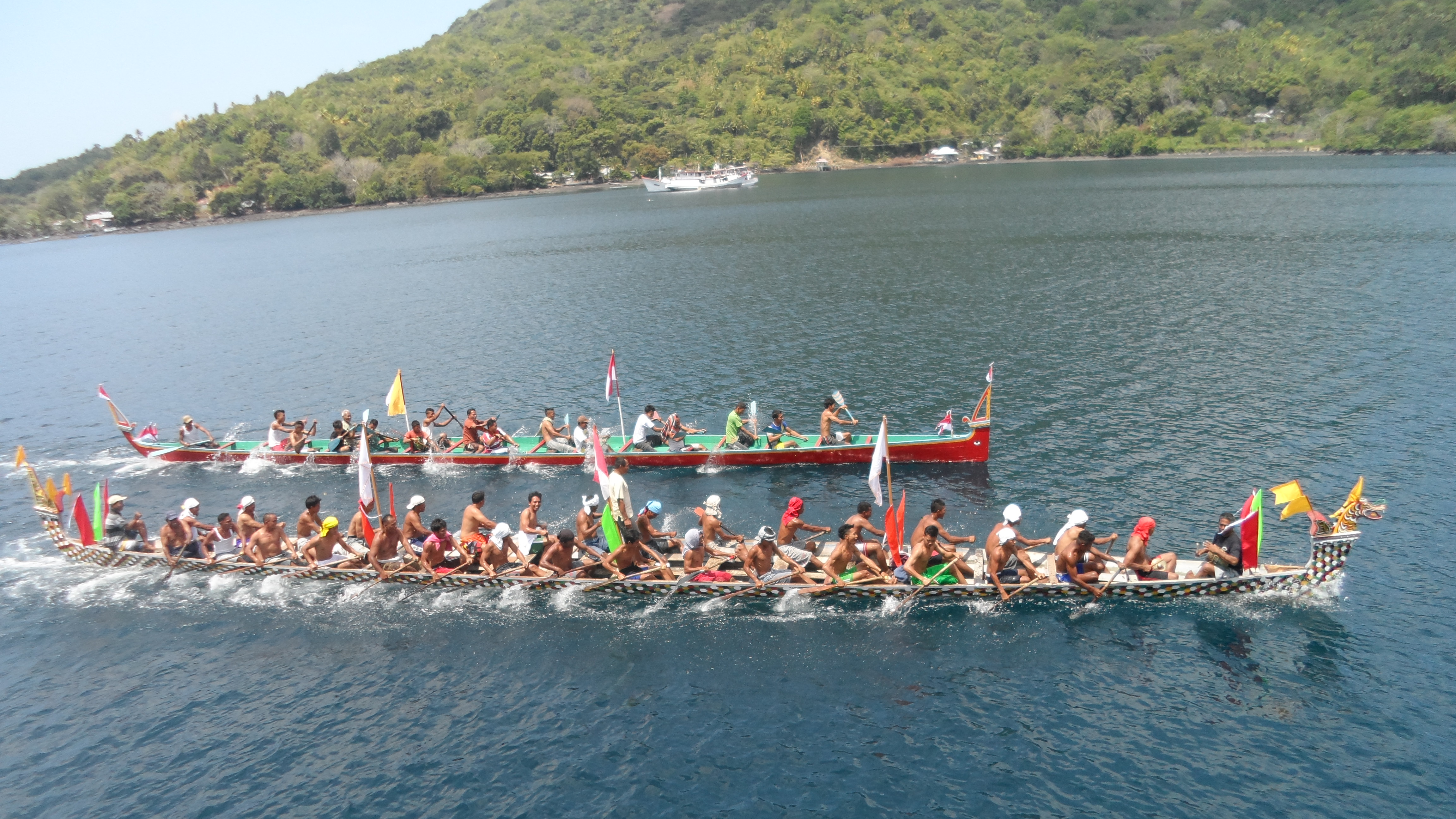
The morning is free to spend at leisure in Banda Neira. We invite the fit and ambitious to first come along for an early morning ascent of the Gunung Api volcano. While this is a challenging climb up a narrow track to an elevation of about 600 meters the reward to reach the top of the “Fire Mountain” is more than worth it: a stunning and unforgettable view over the Banda Sea, the surrounding islands and the crater itself. On our way out the ‘Sonnegat’ (sun’s gap) between Bandanaira and Gunung Api we are often escorted by one or two ‘Kora-Kora’, long sea canoes, rowed by over a dozen muscled men and used in ancient times to attack the invading colonists.

Kora kora at Banda

Kora kora at Banda

Day 12
We arrive at the harbor on the island of Ambon. After breakfast, it’s time to say a final farewell to the crew and the Ombak Putih. Depending upon flight departure times we may have a morning program to see the town, the markets and a visit to the local museum, we then board a coach for our transfer to Ambon airport for the flight via Makassar to Denpasar.

Ian Burnet’s latest book ‘Archipelago – A Journey Across Indonesia’ is now available.

Please go to http://www.ianburnetbooks.com for a synopsis and book review.

Posted in Uncategorized | Tagged , , , , , , , , , | 1 Comment

Old Batavia – Public Enemy Number One

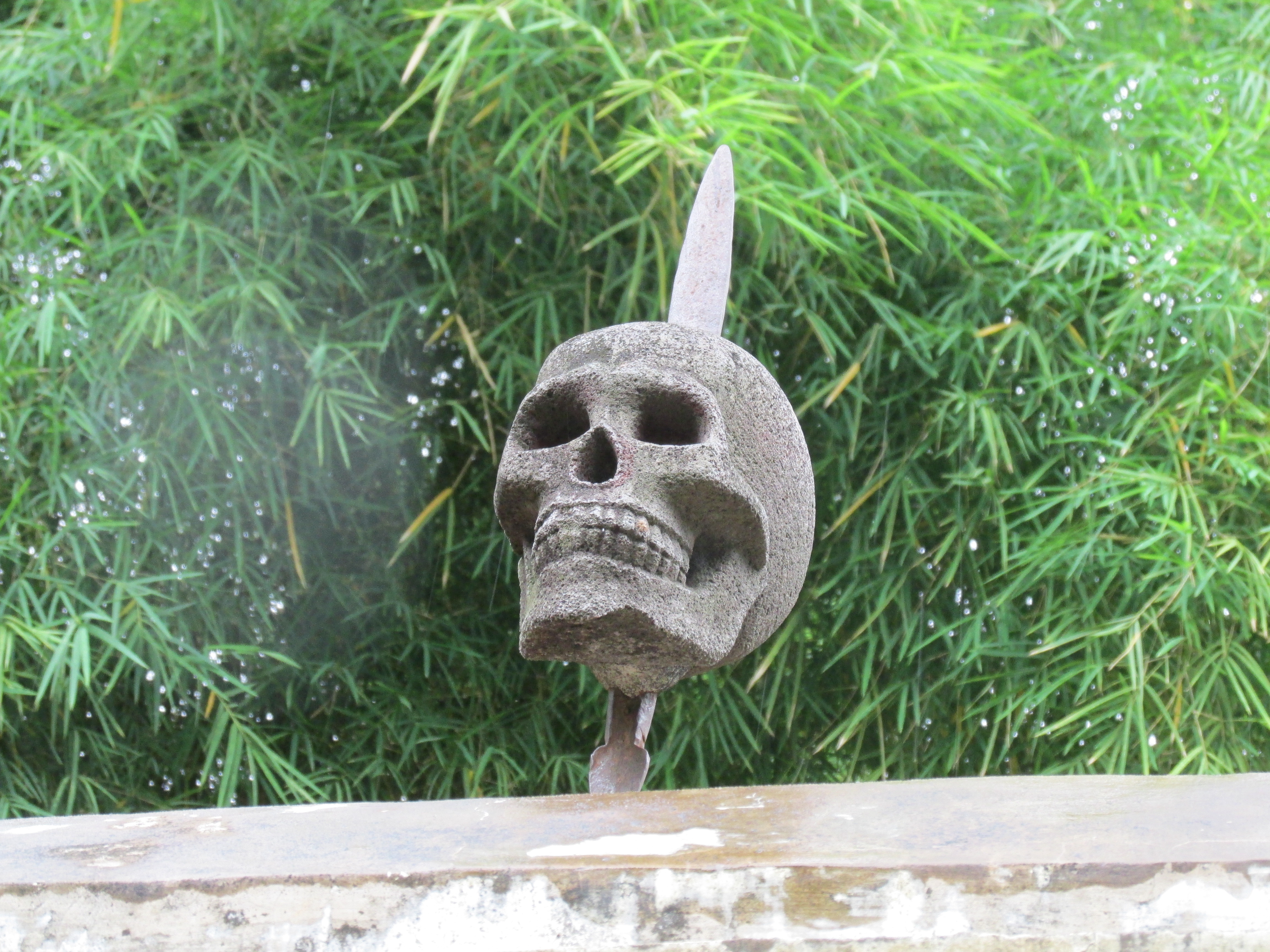
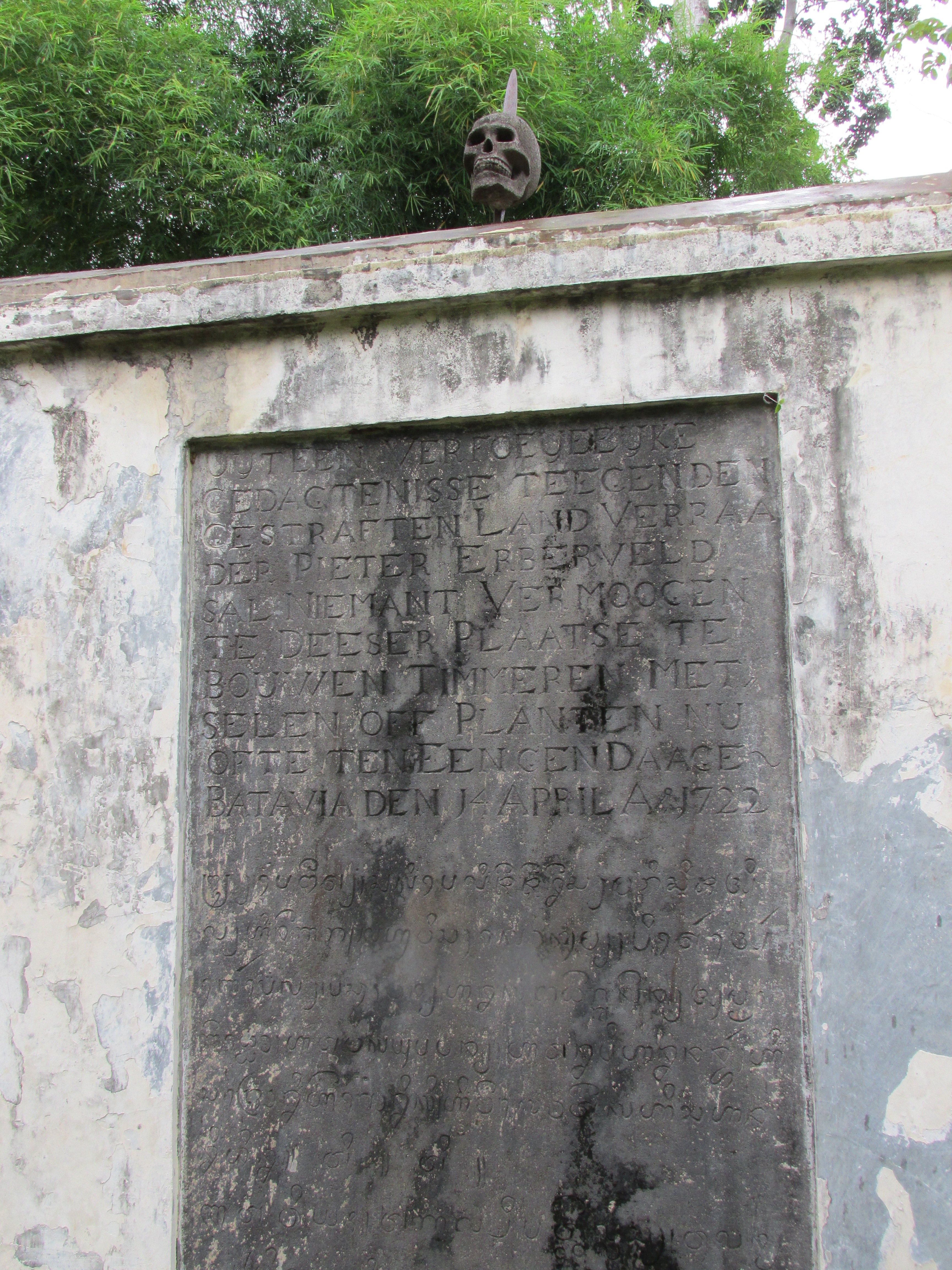
The tombstone of Peter Erberveld has been relocated from its original site on Jalan Pangeran Jayakarta (Near Gereja Sion or the Portuguese Church) to Taman Prasasti (The Garden of Tombstones) in Tanah Abang. The spike through the skull is a graphic reminder of his fate and the tombstone reads:

IMG_0487

As a detestable memory of the punished traitor Pieter Erberveld nobody shall now or ever be allowed to build, to carpenter, to lay bricks, or to plant in this place. Batavia, 14th of April 1722.

Peter Erberveld was of mixed blood and his crime was to plot a rebellion against the Dutch East Indies Company (VOC), and according to his accusers, kill all the Dutch inhabitants of Batavia on New Year’s Eve of 1721/22.

A few days before that date, he, his co-conspirator a Javanese named Raden Kartadria and seventeen followers were arrested during a secret meeting at his house on Jalan Pangeran Jayakarta. This was followed by the arrest of another thirty of his followers. After confessions were obtained by torture, he and his followers were cruelly put to death on the Gallows Field in front of Kasteel Batavia and not as usual in front of the Stadhuis. This may have done for security reasons as the VOC was afraid of a continuation of the planned rebellion or since the leading conspirators were ‘hung, drawn, and quartered’, the horror may have been considered too much for the general citizens of Batavia.

???????????????????????????????

The stone tablet in memory of the traitor Peter Erberveld is inscribed in both Dutch and Javanese as a warning to all the 18th century inhabitants of Batavia.

[Reference – The Historical Sites of Jakarta, A.Heuken SJ, Cipta Loka Caraka ]

ianburnetbooks.com

Posted in Uncategorized | Tagged , , , | 3 Comments